Side-by-Side Cognitive Profile
The Cosmic Pet Pet IQ Lab employs a five-dimensional framework to assess canine intelligence, offering a granular view beyond general aptitude. Here, we examine the specific cognitive strengths of the Belgian Tervuren and the Chesapeake Bay Retriever.
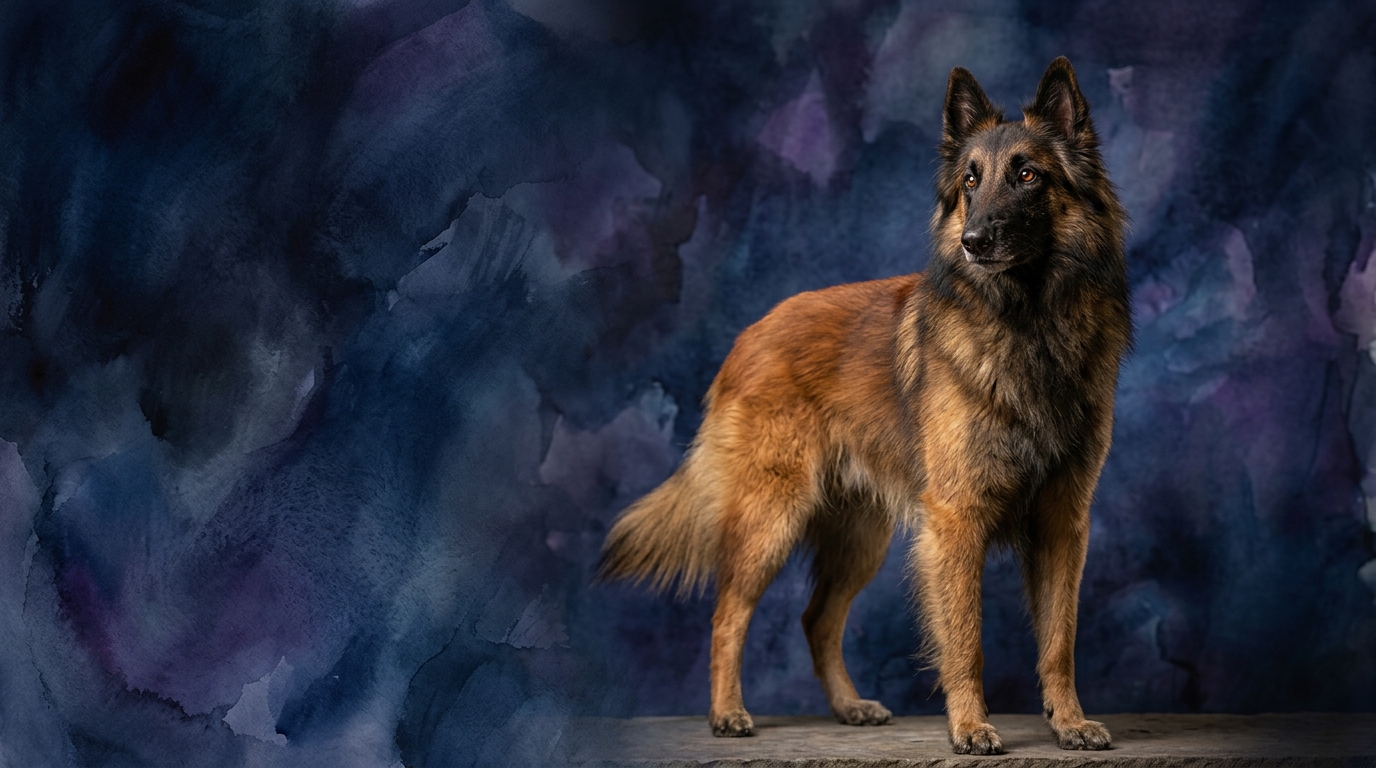
For the Belgian Tervuren (Herding Group, Coren Rank #14): Problem Solving (5/5) indicates an exceptional capacity for navigating complex situations, interpreting environmental cues, and devising independent solutions, manifesting as quick adaptation and resourcefulness. Training Speed (5/5) signifies remarkable swiftness in absorbing new commands and routines, often requiring minimal repetitions due to their eagerness and sharp focus. Social Intelligence (3/5) suggests a moderate social acumen; they are discerning with strangers and may rely on their handler for social cues, requiring careful, positive introductions. Instinctive Drive (3/5), primarily herding, is present but generally manageable, effectively channeled through structured activities rather than overwhelming learned tasks. Memory (5/5) denotes outstanding recall for commands, locations, and past experiences, aiding consistency and accurate performance of complex sequences.
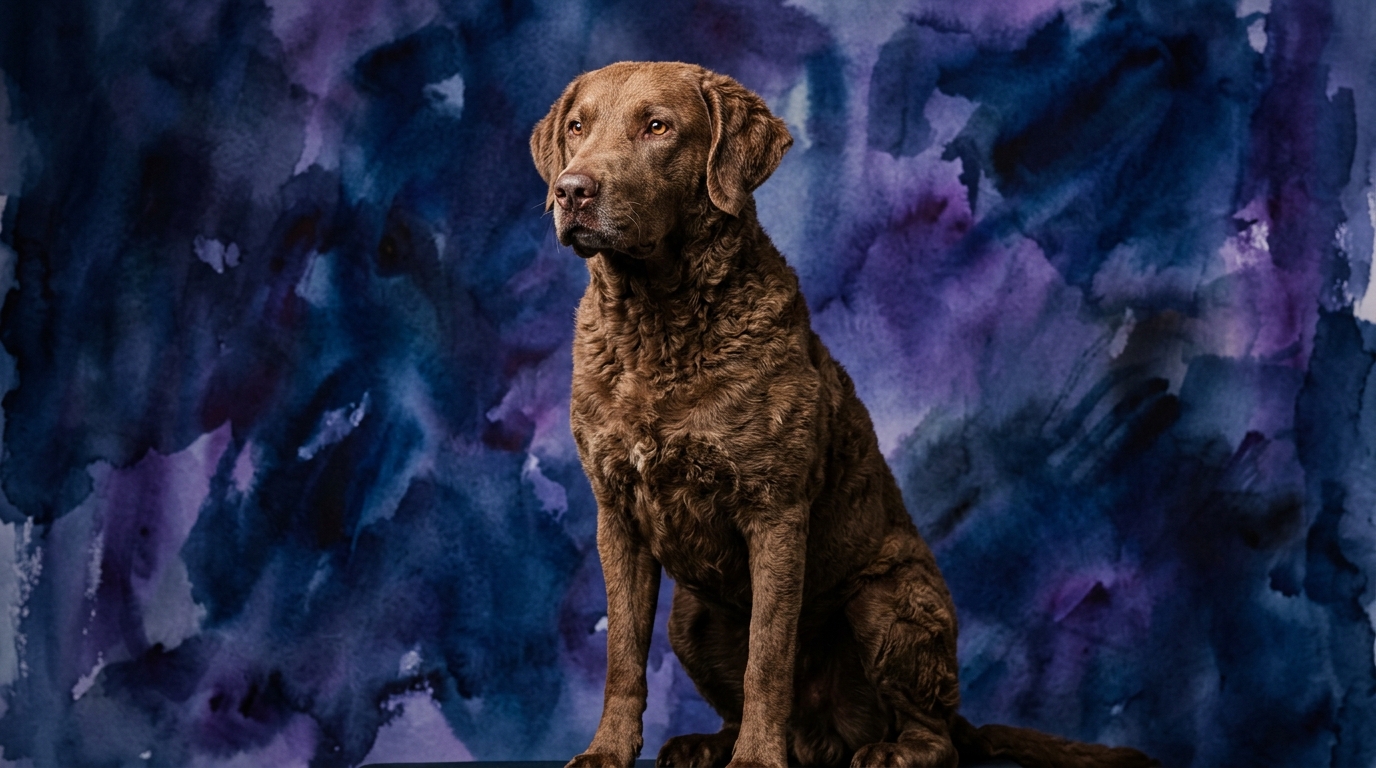
For the Chesapeake Bay Retriever (Sporting Group, Coren Rank #27): Problem Solving (4/5) displays strong capabilities, readily tackling challenges with determination, adept at navigating terrain or minor barriers, often using a direct, persistent trial-and-error approach. Training Speed (4/5) means they learn new tasks efficiently, picking up commands with good speed, and are highly trainable with consistent positive reinforcement. Social Intelligence (3/5) is moderate, as they form strong family bonds but can be reserved or wary with strangers, requiring early socialization for comfort in diverse social situations. Instinctive Drive (3/5), focused on retrieving and water work, is robust but well-directed; their natural inclination to carry objects and powerful swimming are assets in appropriate activities. Memory (4/5) indicates good recall for commands and routines, retaining learned behaviors reliably over time, though perhaps with a slightly longer refresh period for less frequently practiced tasks compared to the Tervuren.
Where Belgian Tervuren Wins Cognitively
The Belgian Tervuren's perfect 5/5 in Problem Solving and Training Speed sets it apart in terms of cognitive agility. They independently analyze new situations and adapt strategies with unparalleled ingenuity, such as devising multi-step plans to retrieve toys from complex scenarios. This superior cognitive processing means they absorb new information with remarkable efficiency, mastering complex command sequences in fewer repetitions than most breeds. Their 5/5 Memory further ensures these learned skills are deeply retained, allowing consistent, accurate performance of intricate routines over extended periods, even after a break from practice. This combination of swift learning, deep retention, and inventive problem-solving makes the Tervuren an exceptional candidate for demanding mental work and advanced competitive disciplines like obedience, agility, or competitive protection sports.
Where Chesapeake Bay Retriever Wins Cognitively
While the Tervuren excels in raw cognitive speed, the Chesapeake Bay Retriever offers distinct strengths rooted in its working heritage. Their 4/5 Problem Solving manifests as tenacious resourcefulness in physical challenges, particularly those involving water or retrieval, like tirelessly working to find a downed bird in dense cover or navigating strong currents. Their 4/5 Training Speed is highly respectable, indicating a trainable breed responsive to consistent guidance. The Chessie's advantage often lies in the specific application of its Instinctive Drive (3/5) and Memory (4/5) within its sporting context. Their focused drive for retrieving, combined with good memory, makes them exceptionally reliable in tasks such as marking and retrieving multiple birds in a hunting scenario. This breed's cognitive prowess is deeply intertwined with its physical capabilities and unwavering dedication to its working role.
Which Is Easier to Train and Why
Based on The Cosmic Pet Pet IQ Lab data, the Belgian Tervuren is demonstrably easier to train due to its top-tier 5/5 scores in both Training Speed and Memory. A Tervuren often grasps a new command after just a few repetitions, retaining that knowledge for extended periods. Their high problem-solving ability also contributes to their trainability, as they can often generalize learned concepts to new situations without explicit instruction for every variation, leading to faster progression to advanced concepts. The Chesapeake Bay Retriever, with 4/5 scores in Training Speed and Memory, is certainly trainable but typically requires more repetitions and consistent reinforcement to solidify new behaviors. Their independent nature, while valuable in the field, can sometimes translate to a slight resistance to direction if not motivated correctly, requiring a patient handler. While both respond well to positive reinforcement, the Tervuren's inherent cognitive speed offers a smoother, faster training journey.
Which Suits Active Owners vs. Relaxed Owners
Neither the Belgian Tervuren nor the Chesapeake Bay Retriever is particularly suited for truly 'relaxed' owners in the sense of a sedentary lifestyle; both demand significant physical and mental engagement. However, their specific needs diverge. The Belgian Tervuren, with its exceptional cognitive agility and high training speed, thrives with owners who are committed to advanced training, dog sports like agility, obedience, or protection work, and constant mental stimulation. They need a 'job' to do and an owner who can consistently challenge their intellect. An active owner who enjoys competitive dog sports or complex training regimens will find the Tervuren an incredibly rewarding and engaging companion. The Chesapeake Bay Retriever also demands an active owner, but their activity often centers around their retrieve drive and physical endurance. They excel in activities like hunting, dock diving, long hikes, and vigorous swimming sessions. An owner who enjoys outdoor adventures, especially those involving water or focused retrieval tasks, will find a dedicated partner in the Chessie. While both need daily exercise, the Tervuren's need leans more towards structured mental work, whereas the Chessie's need is often satisfied by robust physical outlets that engage their natural sporting instincts.
The Verdict
Opt for the Belgian Tervuren if you seek a highly adaptable, quick-learning companion eager for advanced training, competitive dog sports, and intricate mental challenges, requiring an owner dedicated to consistent intellectual engagement.
Select the Chesapeake Bay Retriever if you desire a tenacious, resilient partner for outdoor adventures, hunting, or water sports, thriving with an active owner who appreciates their pragmatic intelligence and focused retrieve drive.
🧠 Find Your Pet's IQ Score
Our Pet IQ Lab assessment covers 25+ tests across 5 cognitive dimensions — personalized to your breed.
Take the Full IQ Test →Frequently Asked Questions
How do their instinctive drives differ in everyday life?
The Tervuren's 3/5 instinctive drive often manifests as a strong desire to herd, which can translate into nipping at heels or circling family members if not properly channeled into activities like herding trials or structured play. The Chessie's 3/5 instinctive drive, focused on retrieving, means they will likely carry objects around the house, enjoy games of fetch for extended periods, and have a strong draw to water, which can be a delightful trait for water-loving families.
Are either breed good with children or other pets given their social intelligence scores?
Both breeds have a 3/5 social intelligence, meaning they can be good with children and other pets, but it requires careful socialization from a young age and ongoing supervision. They tend to bond deeply with their immediate family but may be reserved or wary of strangers, so proper introductions and training are crucial to ensure positive interactions and prevent any potential issues arising from their discerning nature.
Does Coren rank directly correlate with the Pet IQ Lab scores?
Coren rank provides a general indication of a breed's working and obedience intelligence, largely reflecting training speed and problem-solving in a structured context. The Pet IQ Lab scores offer a more granular breakdown across five distinct cognitive dimensions, providing a nuanced view of intelligence that complements the Coren rank by detailing specific strengths and weaknesses beyond a single numerical placement.