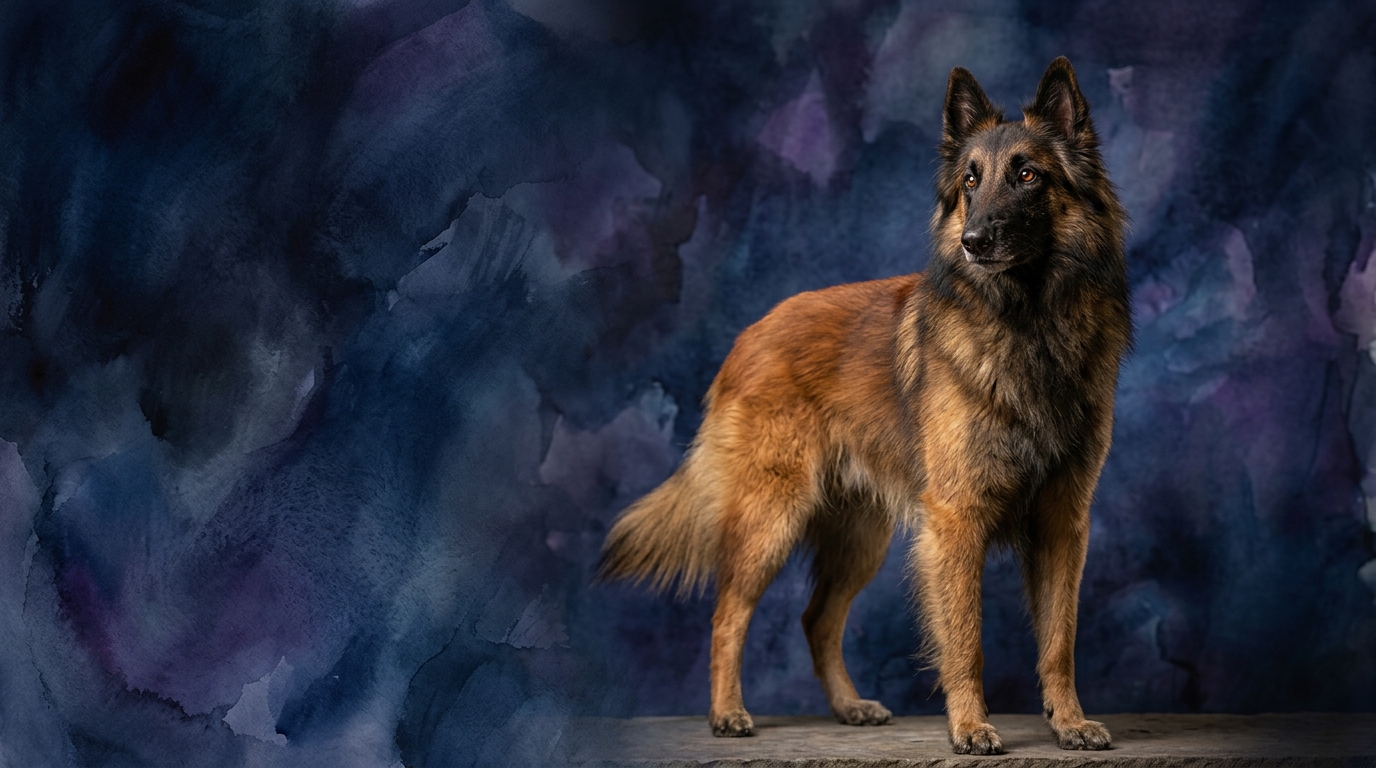
Side-by-Side IQ Profile: Belgian Tervuren
The Belgian Tervuren, a member of the Herding group, registers an impressive Coren rank of #14, signifying its advanced capacity for obedience and working intelligence. Our Pet IQ Lab assessment highlights its exceptional cognitive abilities across several key dimensions. This breed earns a perfect 5/5 in Problem Solving, indicating an outstanding capacity to analyze novel situations and devise effective solutions, whether it's navigating an agility course or figuring out how to open a gate.
Further showcasing its mental prowess, the Tervuren achieves a 5/5 in Training Speed, meaning it absorbs new commands and behaviors with remarkable alacrity, often requiring minimal repetitions. Its Memory also scores a top-tier 5/5, suggesting an enduring retention of learned information and experiences, rarely forgetting a task or a person. Social Intelligence and Instinctive Drive are rated at 3/5, indicating a balanced capacity for understanding social cues and channeling inherent predispositions, without being overwhelmingly people-focused or driven by raw instinct.
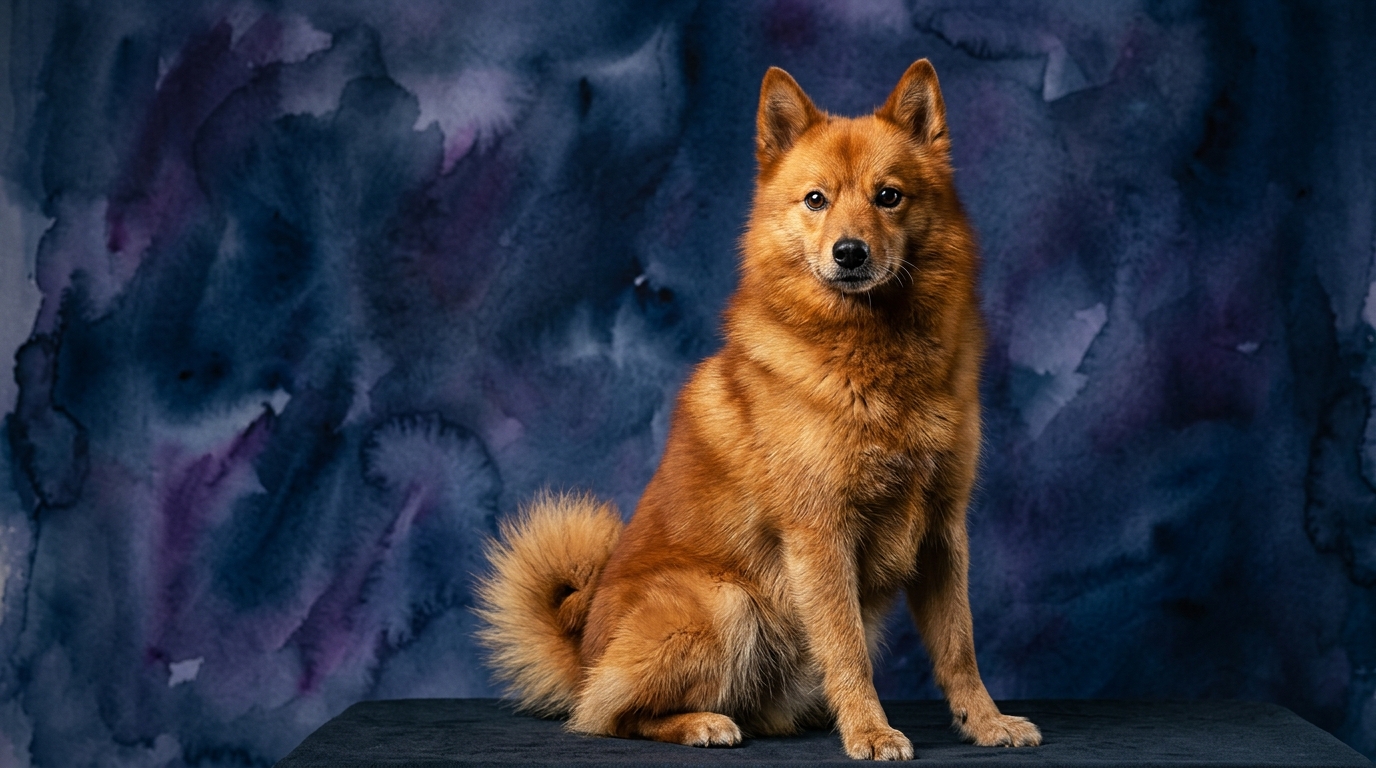
Side-by-Side IQ Profile: Finnish Spitz
The Finnish Spitz, a lively Non-Sporting breed, does not appear on Coren's ranking, which often reflects a different kind of working intelligence not centered on obedience. Our Pet IQ Lab provides a balanced cognitive profile for this breed, with consistent scores across all dimensions. It earns a 3/5 in Problem Solving, demonstrating a solid ability to tackle challenges, though perhaps with a more deliberate or independent approach compared to the Tervuren.
In Training Speed, the Finnish Spitz scores 3/5, indicating it is capable of learning but may require more patience and creative motivation than a breed designed for rapid instruction. Its Memory also sits at 3/5, meaning it retains information adequately but might not possess the encyclopedic recall of a Tervuren. Social Intelligence and Instinctive Drive are also rated 3/5, aligning with the Tervuren in these aspects, suggesting a similar foundational capacity for social bonding and inherent behavioral patterns, though expressed through its unique breed characteristics.
Where the Belgian Tervuren Wins Cognitively
The Belgian Tervuren's cognitive strengths are evident in its superior scores for Problem Solving, Training Speed, and Memory. Its 5/5 Problem Solving aptitude means it excels at tasks requiring complex thought and adaptive strategy. Owners can observe this in their ability to master intricate obedience routines, navigate challenging obstacle courses, or even figure out puzzles designed for humans. This breed doesn't just follow instructions; it often anticipates and understands the underlying goal.
The Tervuren's rapid Training Speed (5/5) and exceptional Memory (5/5) combine to create an animal that is not only quick to grasp new concepts but also retains them for life. This makes them exceptionally well-suited for advanced canine sports, protection work, or service roles where precision, speed of learning, and consistent recall are paramount. Their mental agility allows for a dynamic partnership, where the dog can respond effectively to nuanced commands and adapt to changing scenarios with impressive efficiency.
Where the Finnish Spitz Presents Unique Mental Strengths
While the Finnish Spitz may not boast the Tervuren's high scores in human-directed tasks, its consistent 3/5 across all cognitive dimensions signifies a robust and self-sufficient mental framework that is a distinct advantage in its own right. This breed exhibits a balanced aptitude for problem-solving and memory that is often applied with a degree of independence, rather than solely seeking human direction. Their cognitive makeup is perfectly adapted to their historical role as an independent bird dog, requiring self-reliance and initiative.
The Finnish Spitz's moderate instinctive drive (3/5) means its inherent behaviors, while present, are often channeled into specific, less demanding roles like vocal alerting during hunting, rather than requiring constant redirection for complex tasks. This self-contained cognitive approach offers a distinct advantage for owners seeking a companion whose mental engagement isn't solely reliant on intricate human-led activities. Their intelligence manifests as a thoughtful, sometimes stubborn, approach to the world, valuing their own judgment.
Which is Easier to Train and Why
When it comes to ease of training, the Belgian Tervuren holds a clear advantage. Its 5/5 Training Speed and 5/5 Memory mean it is inherently predisposed to absorb and retain commands with remarkable efficiency. Rooted in its herding heritage, the Tervuren is bred to work in close partnership with a human, taking direction and executing complex, multi-step tasks. This translates into high biddability and a strong desire to engage in cooperative learning, making them responsive and eager students.
The Finnish Spitz, with its 3/5 scores in Training Speed and Memory, presents a different training challenge. This breed's independent hunting heritage, which involved ranging ahead and barking to alert hunters to game, means it is not instinctively driven to please humans in the same way a herding dog is. While capable of learning, training a Finnish Spitz requires greater patience, consistency, and creative motivation. They are intelligent, but their intellect is often applied to their own interests, requiring an owner to understand and respect this independent streak rather than expecting immediate, unwavering compliance.
Which Suits Active Owners vs. Spirited Independence
For owners seeking an intensely active and deeply engaged companion, the Belgian Tervuren is an ideal match. Its high Problem Solving, Training Speed, and Memory scores indicate a significant demand for consistent mental stimulation and physical exertion. Tervurens thrive when given a 'job' to do, whether it's excelling in dog sports like agility, participating in advanced obedience, or engaging in extensive outdoor adventures. An understimulated Tervuren can quickly become bored, potentially leading to destructive behaviors as it invents its own challenges.
The Finnish Spitz, while certainly not a couch potato, caters to owners who appreciate a spirited, vocal, and somewhat independent companion. While they require regular exercise and mental engagement, their cognitive demands might be less focused on constant, human-directed tasks. Their moderate instinctive drive means their energy might be channeled into self-directed exploration, playful antics, or their characteristic vocal alerts. Owners who enjoy a dog with a unique personality and are willing to embrace a certain level of independence in their companion will find the Finnish Spitz a rewarding partner.
The Verdict
Choose the Belgian Tervuren if you seek a highly biddable, quick-learning partner for advanced training, dog sports, or a demanding working role, and can provide ample mental and physical stimulation.
Choose the Finnish Spitz if you appreciate a spirited, vocal, and somewhat independent companion, willing to invest patience in training, and who enjoys a dog with a unique personality and moderate but consistent activity needs.
🧠 Find Your Pet's IQ Score
Our Pet IQ Lab assessment covers 25+ tests across 5 cognitive dimensions — personalized to your breed.
Take the Full IQ Test →Frequently Asked Questions
Are Belgian Tervurens suitable for first-time dog owners?
Belgian Tervurens are generally not recommended for first-time dog owners due to their significant cognitive demands and need for consistent, experienced guidance. Their high intelligence and drive require an owner who understands how to channel their energy and provide structured mental and physical engagement.
Do Finnish Spitz bark a lot?
Yes, Finnish Spitz are known for their distinctive and frequent barking, often referred to as 'yodeling.' This is a key part of their historical role as bird dogs, used to alert hunters, and is a natural expression of their breed characteristics.
How much exercise does each breed need daily?
The Belgian Tervuren requires at least 60-90 minutes of vigorous exercise daily, often needing structured activities like jogging, advanced training, or dog sports to satisfy their mental and physical needs. The Finnish Spitz also needs daily exercise, typically 45-60 minutes of brisk walking, play, or securely fenced yard time, alongside mental stimulation to keep them content.