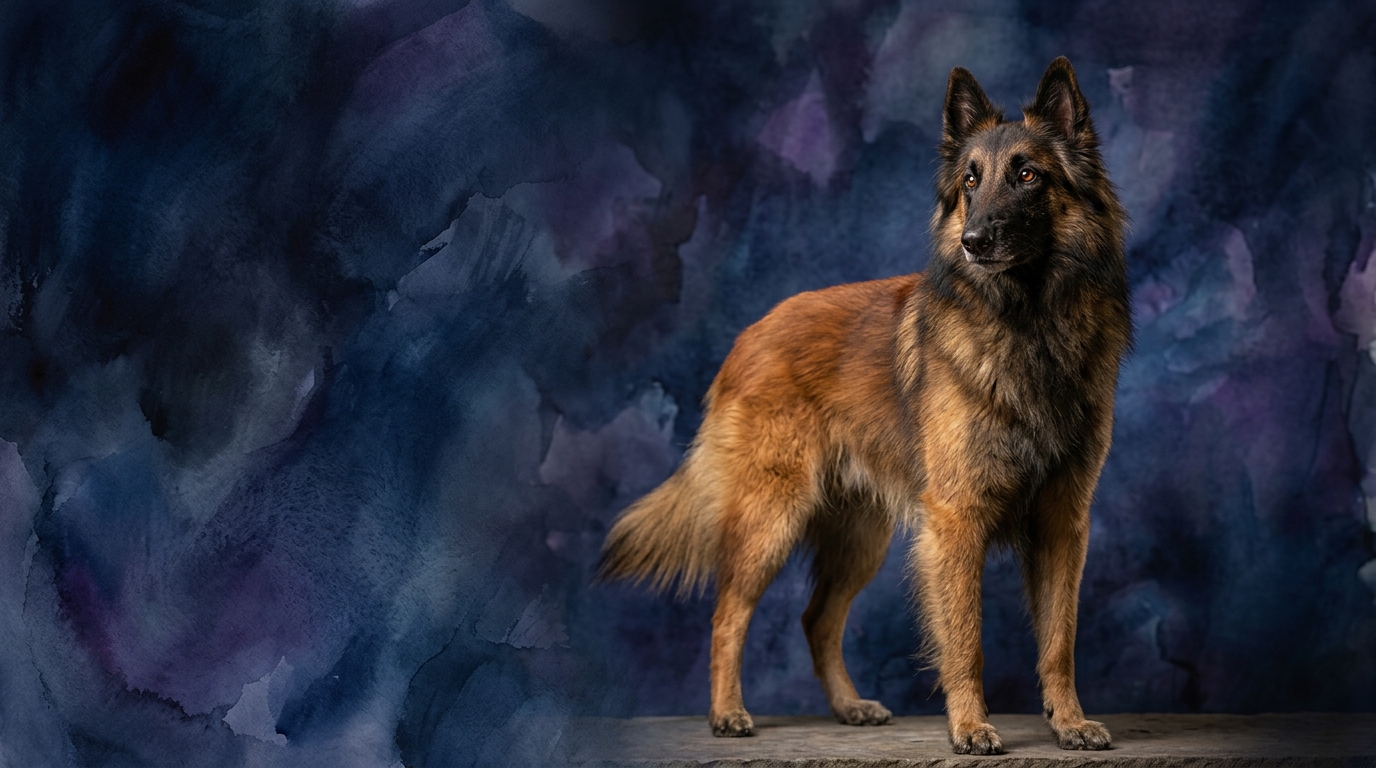
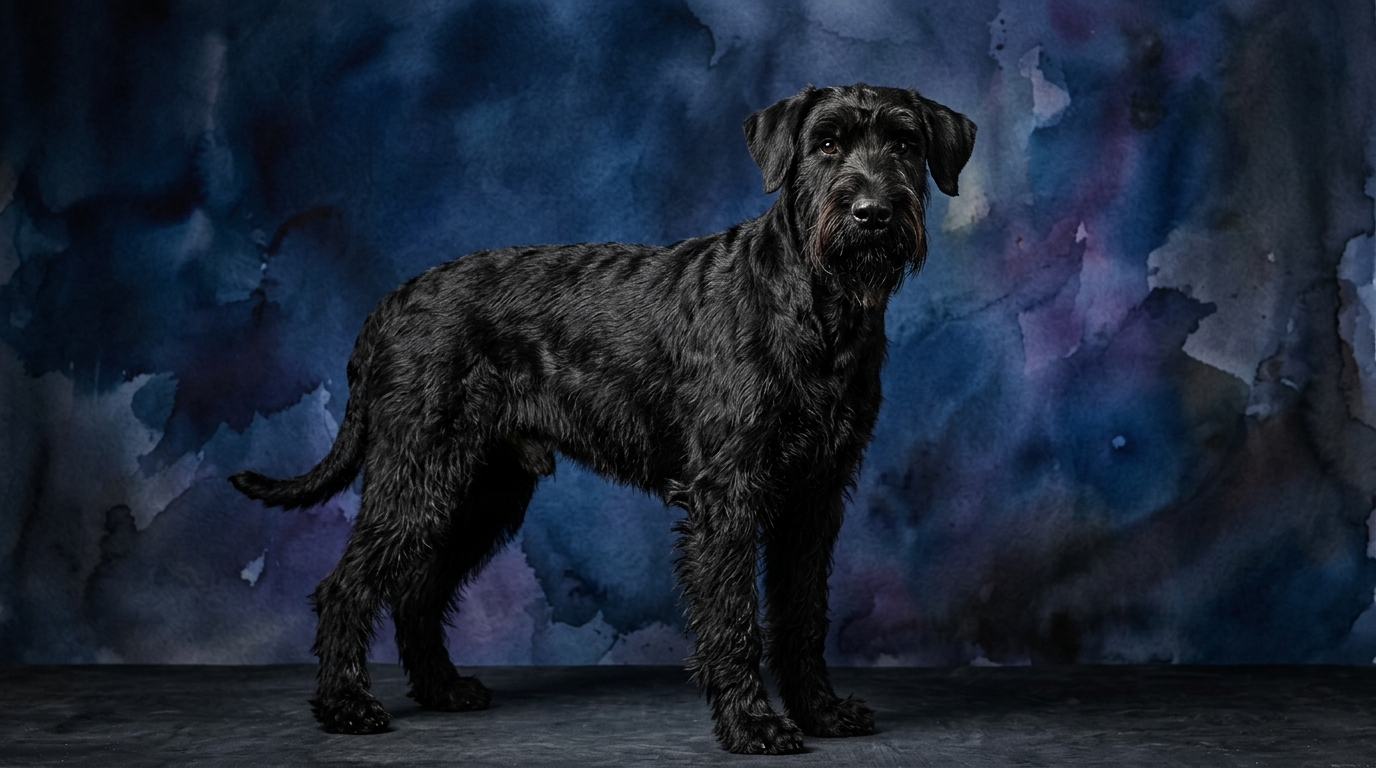
Side-by-Side IQ Profile: Tervuren vs. Giant Schnauzer
The Cosmic Pet Pet IQ Lab employs a five-dimensional framework to assess canine cognition, offering a granular view beyond general perceptions. For the Belgian Tervuren, a member of the Herding Group with a Coren ranking of #14, its cognitive blueprint is marked by exceptional Problem Solving (5/5), rapid Training Speed (5/5), moderate Social Intelligence (3/5), a balanced Instinctive Drive (3/5), and outstanding Memory (5/5). This profile paints a picture of a dog adept at complex mental gymnastics and quick acquisition of new behaviors.
In contrast, the Giant Schnauzer, a formidable presence from the Working Group with a Coren ranking of #28, presents a slightly different cognitive architecture. Its Problem Solving ability stands at a robust 4/5, its Training Speed also at a strong 4/5, mirroring the Tervuren in Social Intelligence (3/5) and Instinctive Drive (3/5), and possessing a commendable Memory of 4/5. This suggests a capable learner and executor, albeit with a subtle distinction in the speed and depth of certain cognitive functions when directly compared to the Tervuren.
Delving deeper into Problem Solving, the Tervuren's 5/5 indicates an aptitude for abstract thought and multi-step tasks, allowing them to devise novel solutions and adapt quickly to unfamiliar challenges. The Giant Schnauzer's 4/5 signifies powerful practical problem-solving; they excel at understanding and navigating real-world obstacles, perhaps leaning less towards abstract conceptualization but demonstrating steadfastness in applying learned strategies. Regarding Training Speed, the Tervuren's 5/5 means it often grasps new commands with minimal repetitions, demonstrating an almost intuitive understanding of human intent. The Giant Schnauzer's 4/5 still represents a swift learner, but might benefit from slightly more structured reinforcement to solidify new behaviors consistently.
Both breeds share a Social Intelligence score of 3/5, suggesting a moderate capacity for interpreting human social cues and intentions. They are attentive enough to form strong bonds and understand expectations without being overly sensitive or needing constant validation, indicating a balanced approach to social dynamics within a family unit. Similarly, their Instinctive Drive at 3/5 implies a manageable level of inherent working drive; it's present enough to engage in purposeful activities and training but not overwhelming to the point of constant, unchanneled energy. Finally, the Tervuren’s 5/5 Memory signifies an impressive ability to retain vast amounts of information, from complex command sequences to routines and past experiences, over extended periods. The Giant Schnauzer’s 4/5 Memory is also highly effective, ensuring reliability and consistency in learned behaviors, though perhaps not with the same intricate detail retention as its Tervuren counterpart.
Where the Belgian Tervuren Wins Cognitively
The Belgian Tervuren's cognitive profile provides distinct advantages, primarily in its exceptional Problem Solving, Training Speed, and Memory, all rated 5/5. This combination allows the Tervuren to excel in situations demanding rapid learning and intricate mental processing. Owners will observe their Tervuren quickly grasping multi-stage commands, often anticipating the next step in a sequence or devising creative solutions to novel obstacles in agility courses or obedience trials.
Their superior memory means that once a behavior or task is learned, it is deeply ingrained, requiring minimal refreshing even after long periods. This makes them exceptionally efficient partners for advanced dog sports where precision, speed, and complex pattern recognition are crucial. A Tervuren can process new information, integrate it with prior knowledge, and execute it flawlessly with remarkable consistency, making them formidable competitors and highly adaptable working dogs in dynamic environments.
Where the Giant Schnauzer Wins Cognitively
While the Tervuren shines in abstract speed, the Giant Schnauzer's cognitive strengths, particularly its robust 4/5 scores in Problem Solving, Training Speed, and Memory, translate into a powerful, practical intelligence that excels in different contexts. The Giant Schnauzer's win lies in its steadfastness and resilience, making it a superb choice for roles demanding unwavering focus and consistent application of learned behaviors in real-world, often high-pressure situations.
Their cognitive style favors a grounded, less abstract approach, which is invaluable in protection work or guarding duties where predictable, reliable responses are paramount. A Giant Schnauzer will methodically apply learned protocols with precision and unwavering commitment, rather than constantly seeking new interpretations. This practical prowess, coupled with their strong physical presence and inherent protective instincts, allows them to 'win' in scenarios where sustained vigilance, consistency, and steadfast execution of duties are prioritized over lightning-fast, highly adaptive abstract problem-solving.
Which is Easier to Train and Why
Determining which breed is 'easier' to train depends significantly on the owner's experience and specific training goals. The Belgian Tervuren, with its 5/5 in Training Speed and Problem Solving, will generally grasp new commands and concepts with fewer repetitions. Their rapid comprehension means they can advance quickly through training levels, making them an ideal choice for experienced handlers who enjoy pushing cognitive boundaries in complex disciplines like competitive obedience, agility, or advanced protection work. However, this same mental agility means a Tervuren can become easily bored or mischievous if not provided with consistent, engaging mental stimulation, potentially leading to them 'training' their owner if not properly channeled.
The Giant Schnauzer, scoring a commendable 4/5 in Training Speed, is still a very capable and willing learner. While they might require slightly more structured repetition to achieve mastery compared to a Tervuren, their practical intelligence ensures they learn what is useful and retain it effectively (4/5 Memory). Their training style might be more straightforward and less prone to the Tervuren's tendency to overthink or independently devise alternative solutions if under-stimulated. For an owner seeking a reliable, consistent, and robust working companion, the Giant Schnauzer's training process can be highly rewarding, producing a dog that is dependable and unwavering in its learned tasks, particularly in roles requiring steadfastness and presence.
Which Suits Active vs. Demanding Owners
Neither the Belgian Tervuren nor the Giant Schnauzer are suitable for genuinely relaxed owners; both are working breeds requiring substantial engagement. The Belgian Tervuren is ideally suited for highly active and demanding owners who thrive on providing intense mental and physical stimulation. Their 5/5 Problem Solving and Memory mean they require constant intellectual challenges, such as advanced training, complex puzzle toys, and participation in dog sports like agility, herding, or competitive obedience. An owner who cannot meet these cognitive demands will likely find a Tervuren bored, potentially destructive, or developing undesirable behaviors out of sheer mental under-stimulation.
The Giant Schnauzer also demands an active owner, but perhaps one whose focus leans more towards consistent, purposeful work and robust physical exercise rather than constant intellectual novelty. They excel with owners who can provide long, vigorous walks, engage them in guarding tasks, or participate in consistent training routines that reinforce their practical skills. While they appreciate mental challenges, their cognitive profile suggests they may be more content with a stable routine of work and exercise than the Tervuren's almost insatiable quest for new intellectual puzzles. They are best for owners who appreciate a steadfast, reliable companion for active outdoor pursuits and structured training.
The Verdict
Choose the Belgian Tervuren if you are an experienced owner seeking a highly adaptable, rapidly learning partner for advanced dog sports, complex tasks, or if you relish the challenge of channeling exceptional mental agility.
Choose the Giant Schnauzer if you are an active owner seeking a steadfast, resilient working companion who excels in practical application, consistent routines, and protective roles, valuing reliability alongside strong cognitive capabilities.
🧠 Find Your Pet's IQ Score
Our Pet IQ Lab assessment covers 25+ tests across 5 cognitive dimensions — personalized to your breed.
Take the Full IQ Test →Frequently Asked Questions
Are Belgian Tervurens good for first-time dog owners?
Belgian Tervurens are generally not recommended for first-time dog owners due to their exceptional mental agility and high energy levels. Their need for consistent, advanced training and mental stimulation can be overwhelming for those new to dog ownership, potentially leading to behavioral challenges if not properly managed.
Do Giant Schnauzers require a lot of grooming?
Yes, Giant Schnauzers require regular grooming to maintain their distinctive wiry coat. This typically involves weekly brushing to prevent matting and professional stripping or clipping every few months, in addition to regular beard and eyebrow trimming.
Which breed is better with children?
Both breeds, with their 3/5 social intelligence, can be good with children when properly socialized and trained from a young age. However, due to their robust nature and strong drives, supervision is always recommended, and children should be taught how to interact respectfully with dogs.