Side-by-Side IQ Profile: Tervuren vs. Harrier
The Cosmic Pet Pet IQ Lab employs a five-dimensional framework to assess canine intelligence, providing a nuanced view beyond a single 'smartness' score. Let's examine how the Belgian Tervuren and Harrier stack up across these specific cognitive domains.
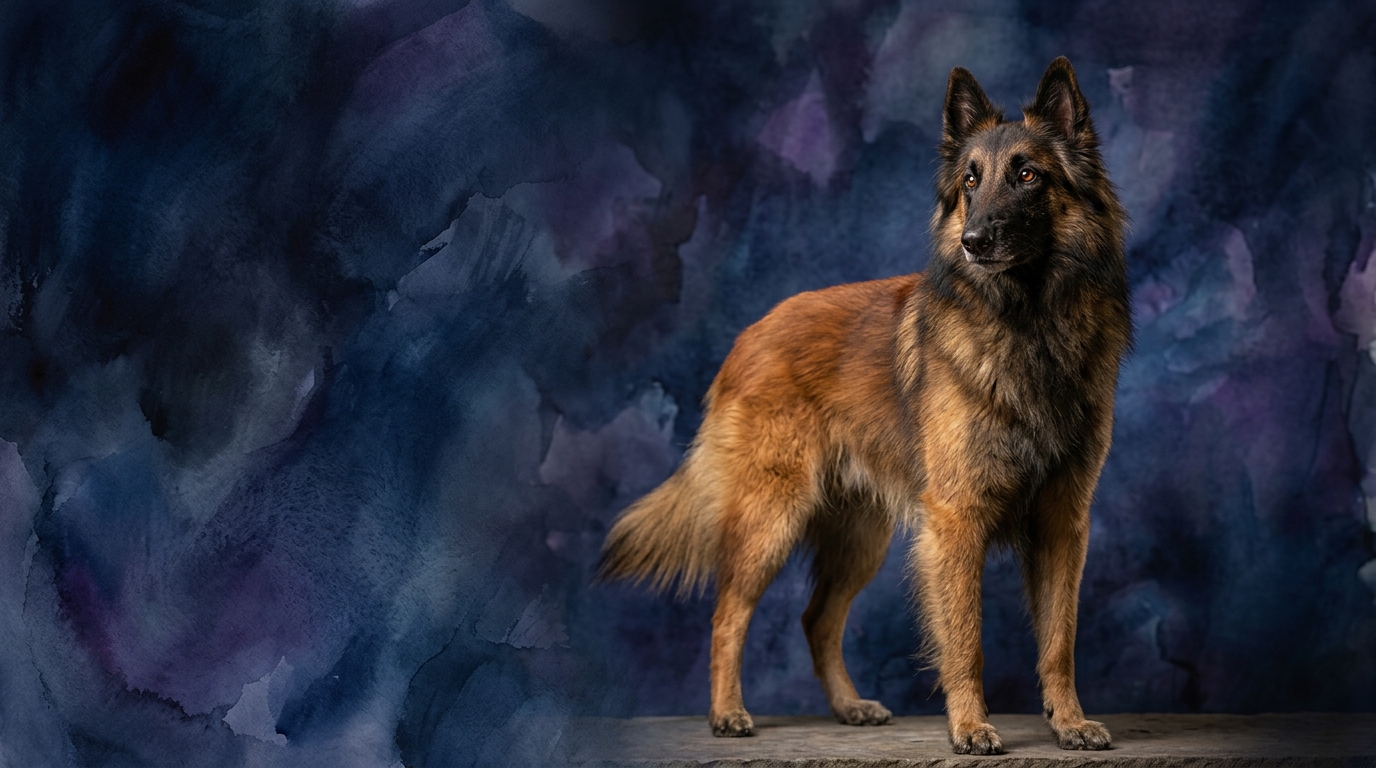
The Belgian Tervuren, a member of the Herding group, registers an impressive Coren rank of #14, placing it among breeds that typically understand new commands with fewer repetitions and obey them reliably on the first attempt. Its IQ scores are notably high in several areas: Problem Solving 5/5, Training Speed 5/5, and Memory 5/5. This suggests a dog capable of complex thought, rapid learning, and excellent retention of information. However, its Social Intelligence and Instinctive Drive both score 3/5. While capable of forming bonds, its social interactions might be more nuanced, and its instinctive drive, while present, isn't overwhelming in all contexts.
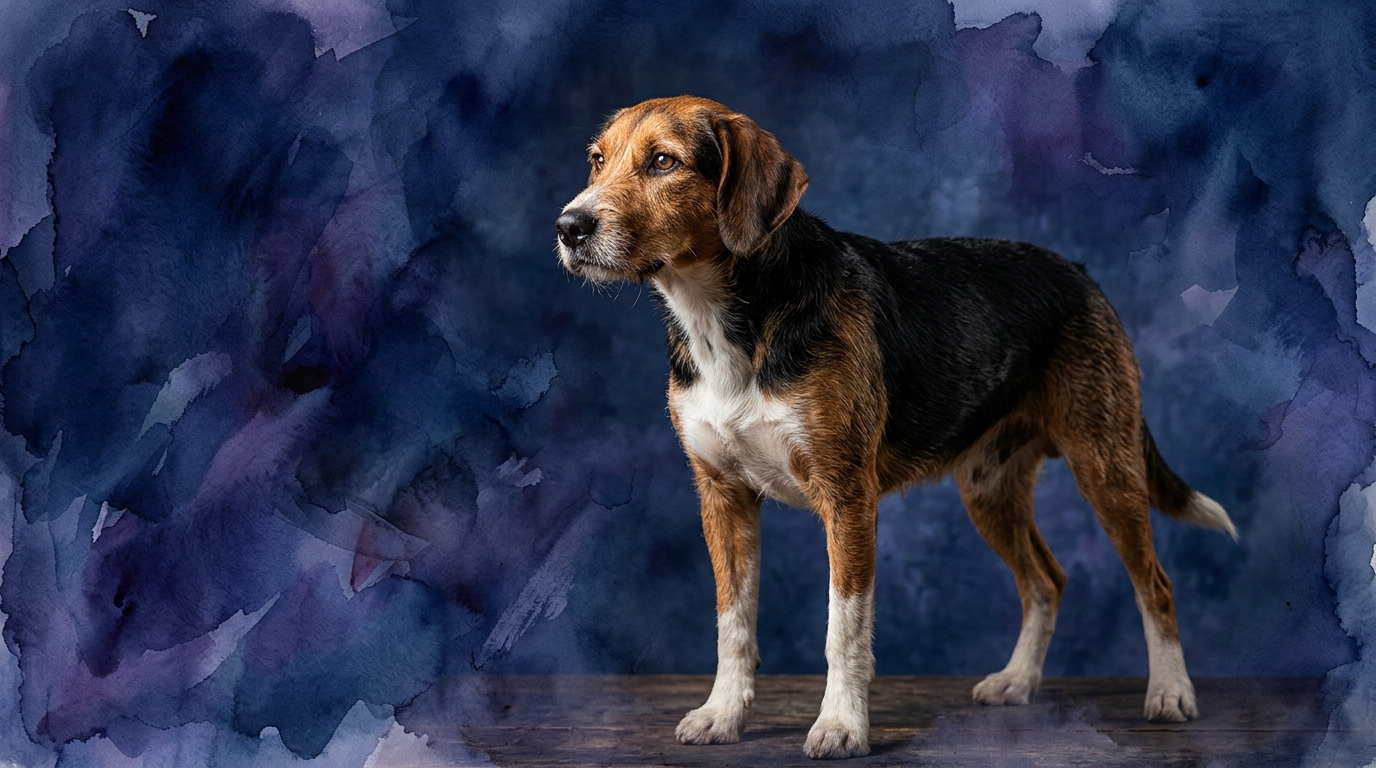
Conversely, the Harrier, a robust member of the Hound group, is not listed in Coren's ranking, indicating a different cognitive approach shaped by its historical role. Its IQ profile shows a consistent score across all five dimensions: Problem Solving 3/5, Training Speed 3/5, Social Intelligence 3/5, Instinctive Drive 3/5, and Memory 3/5. These scores depict a dog with solid, average cognitive capabilities that are well-suited to its original purpose of tracking game. Harriers possess enough problem-solving ability to navigate varied terrains and follow a scent, learn commands at a moderate pace, and remember what's important for their work, all while maintaining a balanced social demeanor and a focused, but not extreme, instinctive drive.
The contrast between the two breeds' profiles is striking. The Tervuren's scores reflect a breed bred for intricate cooperation with humans, requiring foresight, quick adaptation, and a capacity for complex tasks. The Harrier's scores, while lower in comparison to the Tervuren's peaks, represent a highly functional intelligence specifically honed for independent scent work and pack dynamics, where relentless focus on a primary instinct often takes precedence over human-directed obedience in the field.
Where the Belgian Tervuren Excels Cognitively
The Belgian Tervuren's cognitive strengths lie primarily in its exceptional Problem Solving, Training Speed, and Memory, all rated 5/5. This breed demonstrates a remarkable capacity for analytical thought, quickly assessing novel situations and devising effective solutions. For instance, a Tervuren might swiftly figure out how to open a complex latch or navigate an agility course with minimal prior exposure, showing an inherent aptitude for understanding spatial relationships and cause-and-effect. This isn't just about following instructions; it's about anticipating outcomes and adapting strategies.
Their 5/5 Training Speed means they absorb new commands and routines with very few repetitions, making them highly responsive to structured learning environments. An owner might introduce a multi-step trick, and a Tervuren could grasp the sequence in a fraction of the time it would take many other breeds. Coupled with a perfect 5/5 Memory score, they retain this learned information over long periods, allowing for the building of an extensive repertoire of behaviors and skills. This combination makes them highly proficient in disciplines requiring precision, complex sequences, and sustained focus, such as competitive obedience, protection work, or search and rescue. Their cognitive framework is built for intricate, human-directed tasks.
Where the Harrier Excels Cognitively
While the Harrier's individual cognitive scores are consistently 3/5, its collective intelligence profile highlights a different form of cognitive strength, particularly in its applied instinctive drive and social intelligence within a specific context. Harriers excel in persistent, focused scent work, a skill that demands a unique blend of problem-solving and memory applied to olfactory cues rather than abstract human commands. Their 3/5 Problem Solving, for example, is perfectly suited to independently navigating varied terrain, overcoming obstacles, and deciphering complex scent trails without constant human direction. This isn't about solving puzzles for human approval, but about solving the puzzle of a lost scent.
Their 3/5 Instinctive Drive, while not overwhelming, is robustly channeled into their primary purpose: tracking. This means they possess the enduring motivation to follow a scent for hours, demonstrating a cognitive stamina and single-mindedness crucial for their historical role. Furthermore, their 3/5 Social Intelligence often manifests as excellent pack cohesion. While they might not be as eager to please a single human as a Tervuren, they thrive in group dynamics, understanding and responding to the subtle cues of their canine companions and human handlers within a hunting context. Their memory, also 3/5, is efficient for remembering scent patterns, familiar territories, and the routines of their pack, ensuring they are effective and reliable in their specialized work.
Training Dynamics: Tervuren vs. Harrier
When considering ease of training, the Belgian Tervuren presents a significantly different experience from the Harrier, directly reflecting their IQ scores. The Tervuren's 5/5 Training Speed and 5/5 Memory mean they learn new commands and complex sequences with remarkable rapidity and retain them for extended periods. This breed often anticipates instructions and seeks to understand expectations, making them highly receptive to positive reinforcement methods. Their cognitive structure allows for the swift establishment of robust behavioral patterns, whether it's mastering an agility course or performing intricate obedience routines. However, their high cognitive capacity also means they require consistent mental engagement; without it, their problem-solving skills might be applied to less desirable activities, like finding ways to open cabinets or outsmarting fence lines.
The Harrier, with its 3/5 Training Speed and 3/5 Memory, requires a more patient and consistent approach. While capable of learning, they may take more repetitions to solidify a new command, and their recall might not be as immediate or infallible as a Tervuren's, especially if a compelling scent is present. Their instinctive drive (3/5) is primarily focused on scent work, which means their attention can be easily diverted by interesting smells. Training a Harrier often involves competing with its nose, requiring owners to develop strong recall cues and engage in training that leverages their natural tracking abilities. While not difficult to train, per se, a Harrier demands a handler who understands and respects its independent, scent-driven nature, often requiring more creative and persistent methods to maintain focus compared to the Tervuren's eager-to-please mentality.
Matching Breeds to Lifestyles: Active vs. Relaxed Owners
For owners seeking an active, highly engaged companion, the Belgian Tervuren is an exceptional match. Its high Problem Solving, Training Speed, and Memory demand constant mental stimulation and physical activity. Tervurens thrive in environments where they have a 'job' to do, whether it's competitive dog sports, advanced obedience, or even complex trick training. An owner who enjoys daily challenging activities, such as long runs, intricate puzzle toys, or regular training sessions that push cognitive boundaries, will find the Tervuren to be an incredibly rewarding partner. This breed is not suited for a relaxed, sedentary lifestyle, as their unspent mental and physical energy can lead to destructive or anxious behaviors.
The Harrier, while still an active dog, appeals to a different kind of active owner. Its consistent 3/5 scores across the board suggest a dog that enjoys activity, particularly those involving scent work and exploration, but perhaps without the intense cognitive demands of a Tervuren. Owners who enjoy long walks, hiking, or even recreational tracking will appreciate a Harrier's endurance and nose-driven curiosity. They are generally content with a good daily exercise routine and opportunities to follow interesting smells, rather than requiring constant, complex mental challenges. While they can be calm indoors after sufficient exercise, their independence and focus on scent mean they are less likely to be a 'velcro' dog and might not be the best fit for owners seeking a constant, intense intellectual partnership in the same vein as a Tervuren.
The Verdict
Choose the Belgian Tervuren if you are an active owner seeking a highly trainable, cognitively demanding dog for advanced sports, complex tasks, or a deep, intellectually engaged partnership.
Opt for the Harrier if you appreciate an independent, scent-driven companion for active outdoor pursuits like hiking or tracking, and are prepared for a consistent, patient training approach.
🧠 Find Your Pet's IQ Score
Our Pet IQ Lab assessment covers 25+ tests across 5 cognitive dimensions — personalized to your breed.
Take the Full IQ Test →Frequently Asked Questions
Do Belgian Tervurens need a lot of mental stimulation?
Yes, absolutely. With 5/5 scores in Problem Solving, Training Speed, and Memory, Belgian Tervurens require extensive daily mental engagement through training, puzzles, and structured activities to prevent boredom and potential behavioral issues. Their minds are constantly seeking challenges.
Are Harriers good off-leash dogs?
Harriers can be good off-leash in secure, controlled environments, but their 3/5 Instinctive Drive heavily focused on scent means they are prone to following interesting smells. Strong recall training is essential, and vigilance is required, especially in open, unfenced areas where their nose might lead them far afield.
Which breed is better for a first-time dog owner?
Neither breed is typically recommended for a first-time dog owner without significant commitment to training and understanding breed-specific needs. The Tervuren's intensity and the Harrier's independence both require an experienced hand, though a Tervuren's eagerness to please might make it slightly more manageable for a dedicated novice willing to invest heavily in training.