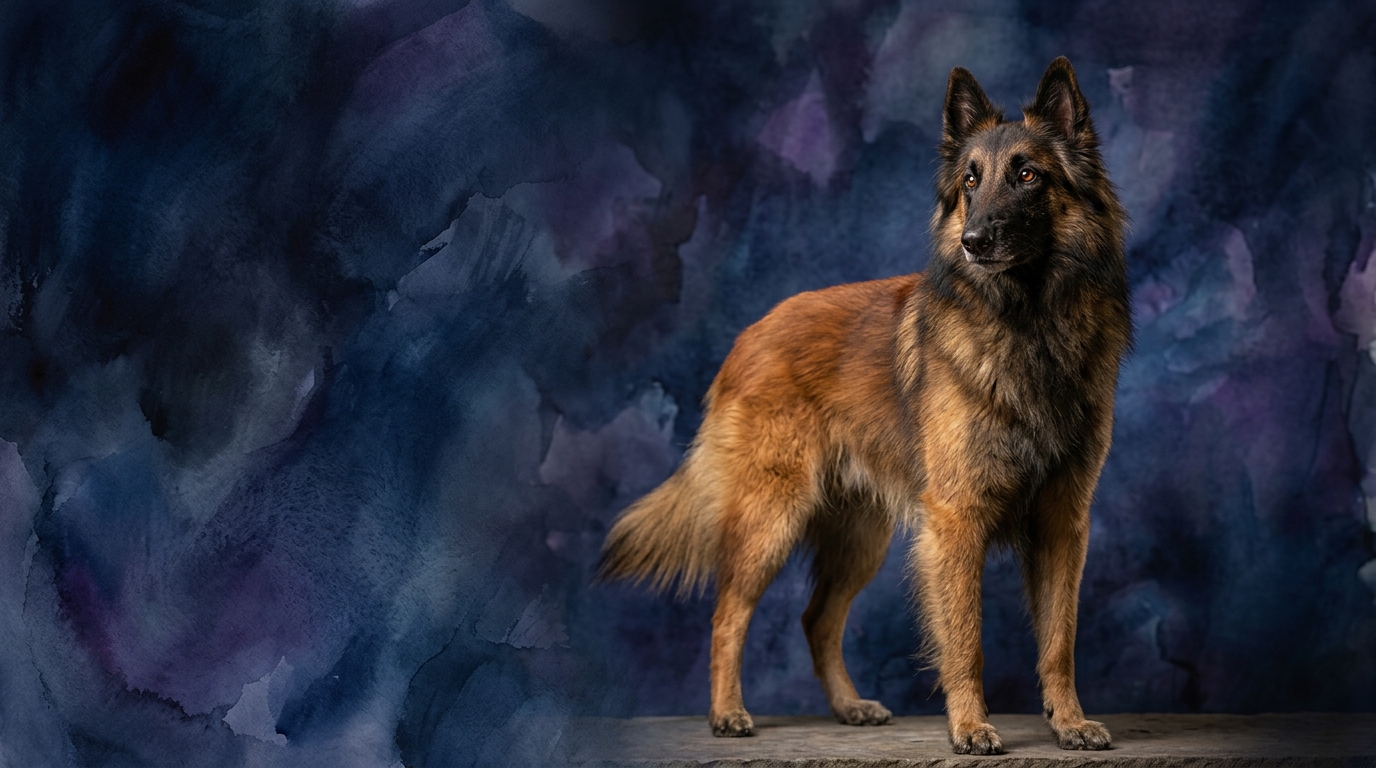
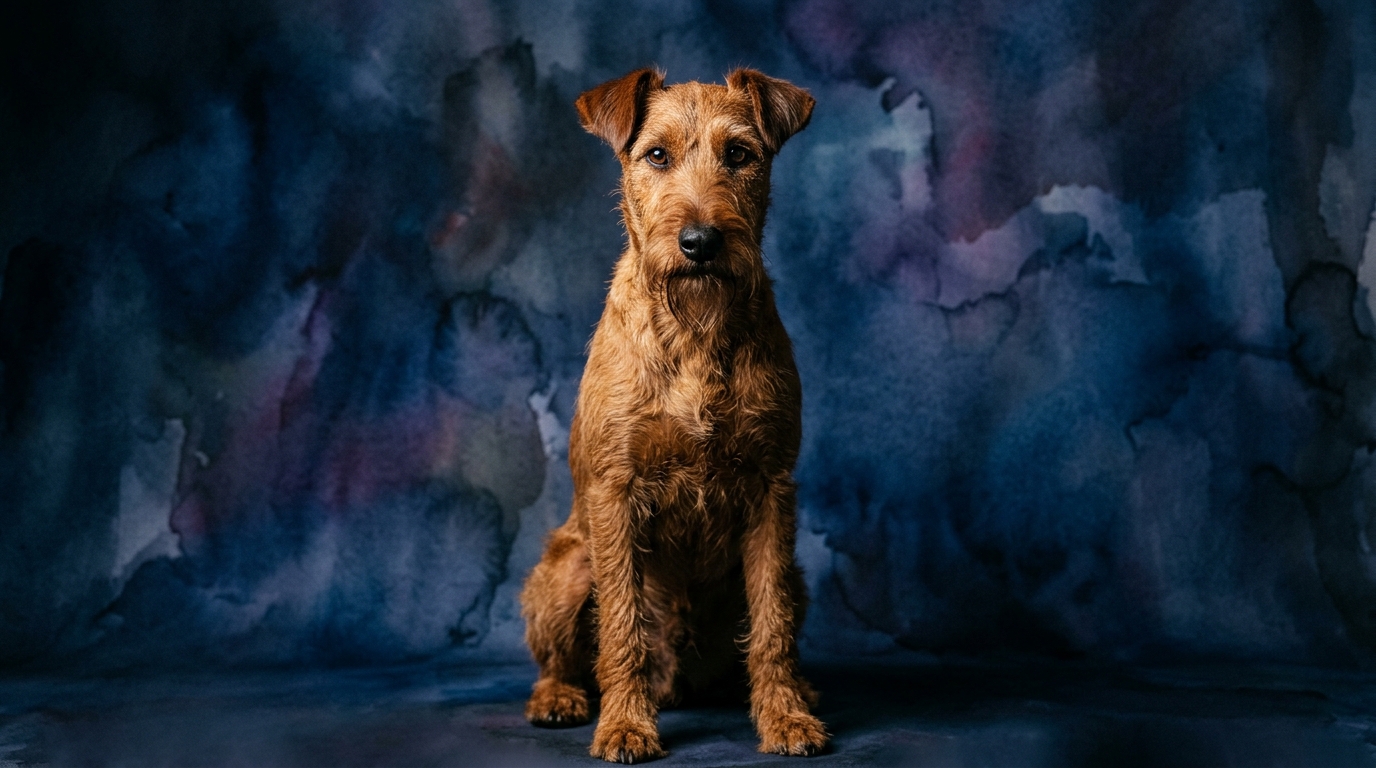
Side-by-Side Cognitive Profiles: Tervuren vs. Irish Terrier
The Cosmic Pet Pet IQ Lab provides a structured framework for evaluating canine cognition across five crucial dimensions, offering a fascinating glimpse into each breed's mental strengths and tendencies. For the Belgian Tervuren, a Herding breed, its cognitive blueprint reflects its heritage of complex task performance and vigilant oversight. It earns a perfect 5/5 in Problem Solving, indicating an exceptional capacity to analyze novel situations and devise effective solutions independently. Its Training Speed also scores 5/5, suggesting a rapid assimilation of new commands and routines, often requiring fewer repetitions than most breeds. Social Intelligence is rated 3/5, pointing to an average ability to interpret human cues and social dynamics, while Instinctive Drive, also 3/5, denotes a moderate inherent pull towards its ancestral herding behaviors. Finally, its Memory is outstanding at 5/5, enabling it to retain learned information and experiences with remarkable fidelity. The Tervuren's overall cognitive prowess is further evidenced by its Coren rank of #14, placing it among the most responsive and capable breeds.
In contrast, the Irish Terrier, a member of the Terrier group, presents a different cognitive landscape, shaped by its history as a tenacious hunter and independent problem-solver. It holds a Problem Solving score of 3/5, indicating an average ability to navigate challenges, often preferring to rely on persistence and instinct rather than strategic planning. Its Training Speed is also 3/5, meaning it learns at a moderate pace, requiring consistent and patient instruction to solidify new behaviors. Social Intelligence registers 3/5, similar to the Tervuren, suggesting an average capacity for understanding social cues. Instinctive Drive is likewise 3/5, reflecting a moderate, but often intense, pull towards its prey drive and independent nature. Memory for the Irish Terrier is 3/5, signifying a typical ability to recall past lessons and experiences. Notably, the Irish Terrier is not listed on the Coren ranking, which often suggests a breed whose intelligence, while functional and effective for its purpose, doesn't align with the specific metrics emphasized in Coren's obedience-focused assessment.
Where the Belgian Tervuren Excels Cognitively
The Belgian Tervuren's cognitive superiority is most evident in its unparalleled Problem Solving and Memory capabilities. A 5/5 in Problem Solving means a Tervuren can independently assess complex situations, such as figuring out how to open a child-proof gate or navigating an intricate agility course without prior training. They don't just react; they strategize. This translates into a dog that can quickly adapt to new environments or tasks, often anticipating outcomes and adjusting its approach proactively. For instance, if a familiar route is blocked, a Tervuren is likely to quickly identify and execute an alternative path rather than becoming stuck or overly reliant on human direction.
Equally impressive is the Tervuren's 5/5 Memory. This isn't just about remembering commands; it encompasses recalling sequences of actions, the location of objects, and past experiences with remarkable detail. An owner might find their Tervuren remembering a specific training routine learned months ago with minimal refresher, or recalling the precise location of a hidden toy from a previous play session. This formidable memory contributes significantly to their training efficiency and their ability to build upon past learning, allowing for the rapid progression through advanced tasks and multi-step commands. Their Coren ranking of #14 further supports their capacity for consistent obedience and quick comprehension of human directives, making them exceptional candidates for competitive dog sports and demanding working roles.
Where the Irish Terrier Shows Its Unique Cognitive Strengths
While the Irish Terrier's scores might appear lower than the Tervuren's, its 3/5 Problem Solving and 3/5 Instinctive Drive contribute to a distinct cognitive strength: tenacious independence. An Irish Terrier's problem-solving, though not as rapid or strategic as a Tervuren's, is characterized by persistent, often physical, attempts to overcome obstacles. If a Tervuren might strategize how to open a door, an Irish Terrier might try pushing, pawing, or even digging at it until it yields. This isn't a lack of intelligence, but a different cognitive approach – one rooted in relentless determination and a willingness to try multiple, often physical, solutions.
Their 3/5 Social Intelligence and Instinctive Drive, while average, mean they possess a balanced blend of companionability and self-reliance. They understand human social cues sufficiently to be loving family members, but their moderate instinctive drive ensures they retain a spirited, independent character. This means they are less likely to become overly dependent or stressed by an owner's absence, and their problem-solving, though slower, is often driven by an internal motivation to achieve their own objectives, such as pursuing a scent or investigating a new sound. This blend results in a dog that is engaged with its environment and possesses a plucky resilience, rather than requiring constant direction or external validation for every action.
Training Dynamics: Which is Easier and Why?
When it comes to ease of training, the Belgian Tervuren clearly holds an advantage due to its 5/5 Training Speed and 5/5 Problem Solving. A Tervuren is typically eager to learn, quickly grasps new concepts, and is highly motivated by positive reinforcement. Their exceptional memory means that once a command is learned, it is retained with minimal refreshers, allowing for rapid progression to more complex sequences and advanced skills. Behavioral differences manifest as a Tervuren often offering behaviors proactively, attempting to figure out what is being asked, and demonstrating sustained focus during training sessions. They thrive on mental challenges and will often seek to please their handler by mastering new tasks, making them highly responsive to consistent, engaging instruction.
The Irish Terrier, with its 3/5 Training Speed and 3/5 Problem Solving, presents a different training experience. They are capable of learning, but typically require more repetitions and a highly consistent approach. Their problem-solving often leans towards independent, sometimes stubborn, action, meaning they might try to solve a situation their own way first, rather than immediately deferring to human instruction. This can manifest as a dog that requires more patience, shorter training sessions to maintain focus, and a strong emphasis on making training fun and rewarding to overcome their innate independence. While they are certainly trainable, their learning curve is generally flatter, and their motivation often stems from their own enjoyment or the pursuit of a valuable reward, rather than an inherent desire to work collaboratively on complex tasks with the same intensity as a Tervuren.
Lifestyle Match: Active Owners vs. Relaxed Owners
The cognitive profiles of these breeds strongly dictate their suitability for different lifestyles. The Belgian Tervuren, with its high Problem Solving, Training Speed, and Memory, requires significant mental engagement in addition to physical exercise. These dogs thrive with active owners who can provide daily structured activities like advanced obedience, agility, herding trials, or protection work. A Tervuren that lacks sufficient mental stimulation will often invent its own 'jobs,' which can manifest as undesirable behaviors like excessive barking, digging, or destructive chewing. They need an owner who is ready to be an active participant in their cognitive development, consistently providing challenges that utilize their sharp minds.
The Irish Terrier, while also an active breed, requires a different kind of engagement. Its 3/5 scores across most cognitive dimensions suggest a dog that is less demanding in terms of complex mental stimulation, but still needs consistent physical outlets for its energy and tenacious spirit. They are well-suited for active owners who enjoy regular walks, hikes, and playful interactions, but perhaps don't need a canine partner for competitive dog sports or intricate problem-solving tasks. A 'relaxed' owner for an Irish Terrier isn't sedentary; rather, they are someone who can provide consistent exercise and clear boundaries, appreciating a dog with a sturdy, independent streak that is content with simpler forms of engagement like fetch or exploring a yard, rather than constantly seeking to master new, intricate skills.
The Verdict
Choose the Belgian Tervuren if you are an experienced, active owner seeking a highly trainable, cognitively demanding partner for advanced training, dog sports, or working roles.
Opt for the Irish Terrier if you appreciate a resilient, independent, and spirited companion who enjoys an active lifestyle but demands less intensive, complex mental stimulation.
🧠 Find Your Pet's IQ Score
Our Pet IQ Lab assessment covers 25+ tests across 5 cognitive dimensions — personalized to your breed.
Take the Full IQ Test →Frequently Asked Questions
Do Belgian Tervurens make good family dogs?
Belgian Tervurens can be excellent family dogs, especially with proper socialization and training from a young age. Their social intelligence of 3/5 means they are generally receptive to family dynamics, but their strong instincts require consistent guidance to ensure they channel their energy positively within a household setting.
Are Irish Terriers difficult to train for beginners?
Irish Terriers can be a moderate challenge for beginners due to their 3/5 training speed and independent nature. They respond best to consistent, positive reinforcement methods and an owner who understands their tenacious terrier spirit, making patience and engaging training crucial for success.
Which breed requires more mental exercise?
The Belgian Tervuren undoubtedly requires more complex and consistent mental exercise, with its 5/5 Problem Solving and Memory demanding intricate challenges. The Irish Terrier, while benefiting from mental engagement, is less reliant on highly structured cognitive tasks and thrives more on physical activity combined with moderate mental stimulation.