
Side-by-Side IQ Profile
The Belgian Tervuren demonstrates a formidable cognitive toolkit, with 5/5 in both Problem Solving and Training Speed, indicating a breed that swiftly grasps concepts and adeptly navigates complex situations independently. Its Memory is also exceptional at 5/5, suggesting a capacity for retaining vast amounts of information vital for intricate tasks. Social Intelligence and Instinctive Drive are rated 3/5; its instincts are channeled specifically towards herding and working alongside a handler, rather than broad independent action or overt social bonding with strangers.
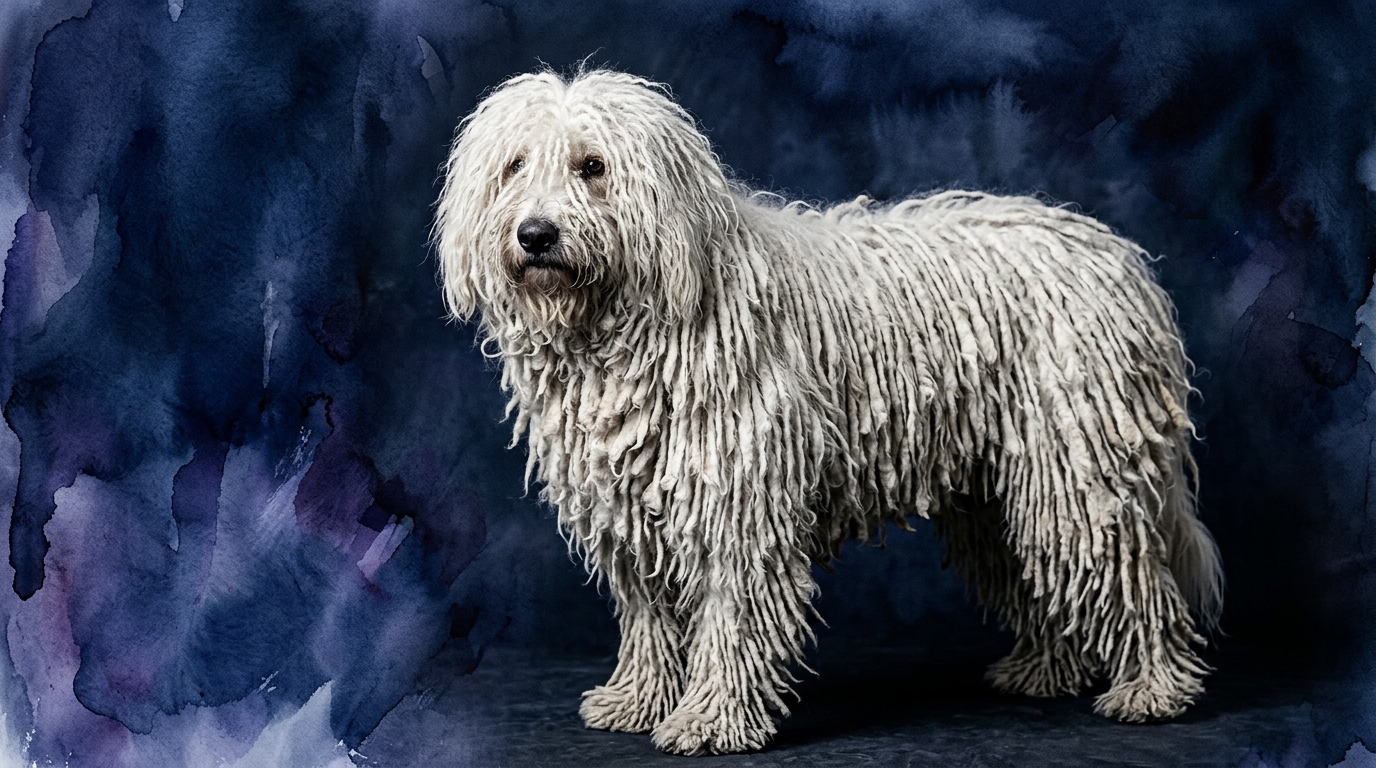
The Komondor presents a distinct cognitive blueprint, scoring 3/5 across Problem Solving, Training Speed, Social Intelligence, Instinctive Drive, and Memory, reflecting its autonomous livestock guardian role. This consistent mid-range indicates a robust, functional intelligence with a different emphasis. Its problem-solving involves independent assessment of threats and strategic defense. Training Speed at 3/5 signifies learning at a deliberate pace, requiring more repetition. Social Intelligence at 3/5 means strong family bonds but reservation with outsiders. Its 3/5 Instinctive Drive points to unwavering dedication to guarding, a self-directed motivation. Memory at 3/5 retains crucial information for its territory and charges.
Where Belgian Tervuren Wins Cognitively
The Belgian Tervuren's cognitive edge shines in rapid skill acquisition and flexible problem-solving, aligning with its Coren rank #14. Its 5/5 Problem Solving ability allows it to swiftly assess novel situations and devise effective strategies, from agility courses to complex tasks. Coupled with 5/5 Training Speed, the Tervuren absorbs new commands and routines with remarkable efficiency, requiring minimal repetition. This makes them exceptionally responsive to advanced disciplines like obedience or service work. Furthermore, its 5/5 Memory significantly enhances trainability, enabling recall of extensive command sequences and retention of lessons over long periods, ensuring consistency and adaptability as a working partner.
Where Komondor Wins Cognitively
While the Komondor's cognitive scores are generally lower, its strengths lie in the *application* of its intelligence for its specialized livestock guardian role. Its 3/5 Instinctive Drive represents a profound, unyielding dedication to protecting its charges and territory, an autonomous vigilance crucial for its ancient purpose. Its 3/5 Problem Solving manifests as independent judgment in critical situations; a Komondor evaluates threats and acts autonomously without waiting for human direction. This independent problem-solving, combined with its 3/5 Social Intelligence that fosters loyalty to family while maintaining reservation towards strangers, ensures focus on duty. Its 3/5 Memory is specifically tuned to remembering territory, charges, and dangers, effectively retaining what is critical for its unique job.
Which is Easier to Train and Why
The Belgian Tervuren offers a significantly easier training experience due to its exceptional cognitive profile. With 5/5 Training Speed, Tervurens grasp new commands with minimal repetition and often anticipate expectations. Their 5/5 Problem Solving ability means active engagement in learning, allowing rapid progression through complex sequences and generalization of behaviors. Conversely, the Komondor's 3/5 Training Speed signals a deliberate pace. This reflects its independent nature; a Komondor often questions command purpose, requiring patient motivation, especially if tasks don't align with guarding instincts. Its independent Problem Solving, while valuable for autonomous guarding, can translate to a "why should I?" attitude in obedience, making training a longer, trust-focused endeavor.
Which Suits Active Owners vs Relaxed Owners
The Belgian Tervuren unequivocally suits active owners prepared to provide substantial mental and physical engagement. Their 5/5 Problem Solving and Training Speed mean they thrive on challenges, requiring consistent training, dog sports, or mentally stimulating jobs to prevent boredom. An owner enjoying agility, obedience, or herding will find a Tervuren an eager, capable partner, as their 3/5 Instinctive Drive makes them handler-focused for collaborative activities. In contrast, the Komondor, with its 3/5 scores and history of independent guarding, suits owners appreciating a more self-sufficient companion with strong territorial instincts. A Komondor's "activity" involves patrolling and independent decision-making, meaning owners must provide a secure environment and understand its guarding tendencies, not expect a dog for fast-paced, handler-directed sports.
The Verdict
Choose the Belgian Tervuren if you are an experienced, active owner seeking a highly trainable, versatile working partner eager for complex mental and physical challenges, from competitive sports to advanced obedience. Its rapid learning and problem-solving make it ideal for a handler who wants to push cognitive boundaries.
Opt for the Komondor if you understand and appreciate a highly independent, dedicated guardian breed, capable of autonomous decision-making and requiring a secure environment for its territorial instincts, rather than seeking a dog for fast-paced, handler-directed activities.
🧠 Find Your Pet's IQ Score
Our Pet IQ Lab assessment covers 25+ tests across 5 cognitive dimensions — personalized to your breed.
Take the Full IQ Test →Frequently Asked Questions
Can a Komondor be trained for obedience like a Belgian Tervuren?
While a Komondor can certainly learn obedience commands, its 3/5 Training Speed and independent nature mean the process will be slower and require more patience and consistency than with a Belgian Tervuren. Their motivation often stems from understanding the purpose or building a strong bond, rather than an inherent eagerness to please in traditional obedience contexts.
How does the social intelligence difference impact family life for these breeds?
Both breeds score 3/5 in Social Intelligence, meaning they form strong bonds with their immediate family. However, the Tervuren might be more outwardly engaged with guests once introduced, while the Komondor's guarding instincts mean it will likely remain reserved or even aloof with strangers, always vigilant, even within the home.
Does a lower Coren rank mean a dog is "less smart"?
Not necessarily. Coren ranks primarily measure "working intelligence" or "obedience intelligence," reflecting a dog's ability to learn and follow human commands. A lower rank, like the Komondor's #67, indicates a dog that is more independent and learns at its own pace, but it doesn't diminish its specialized cognitive abilities for its intended purpose, such as autonomous guarding.