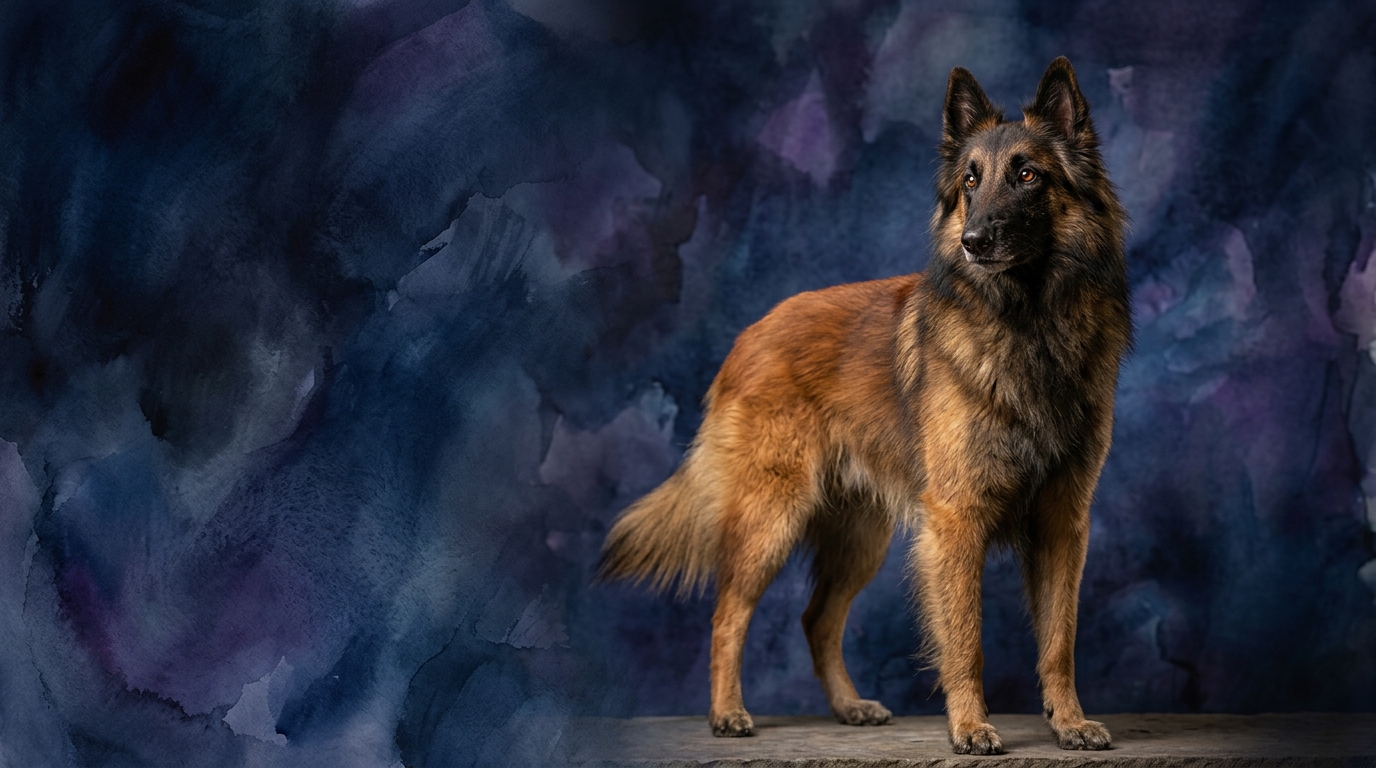
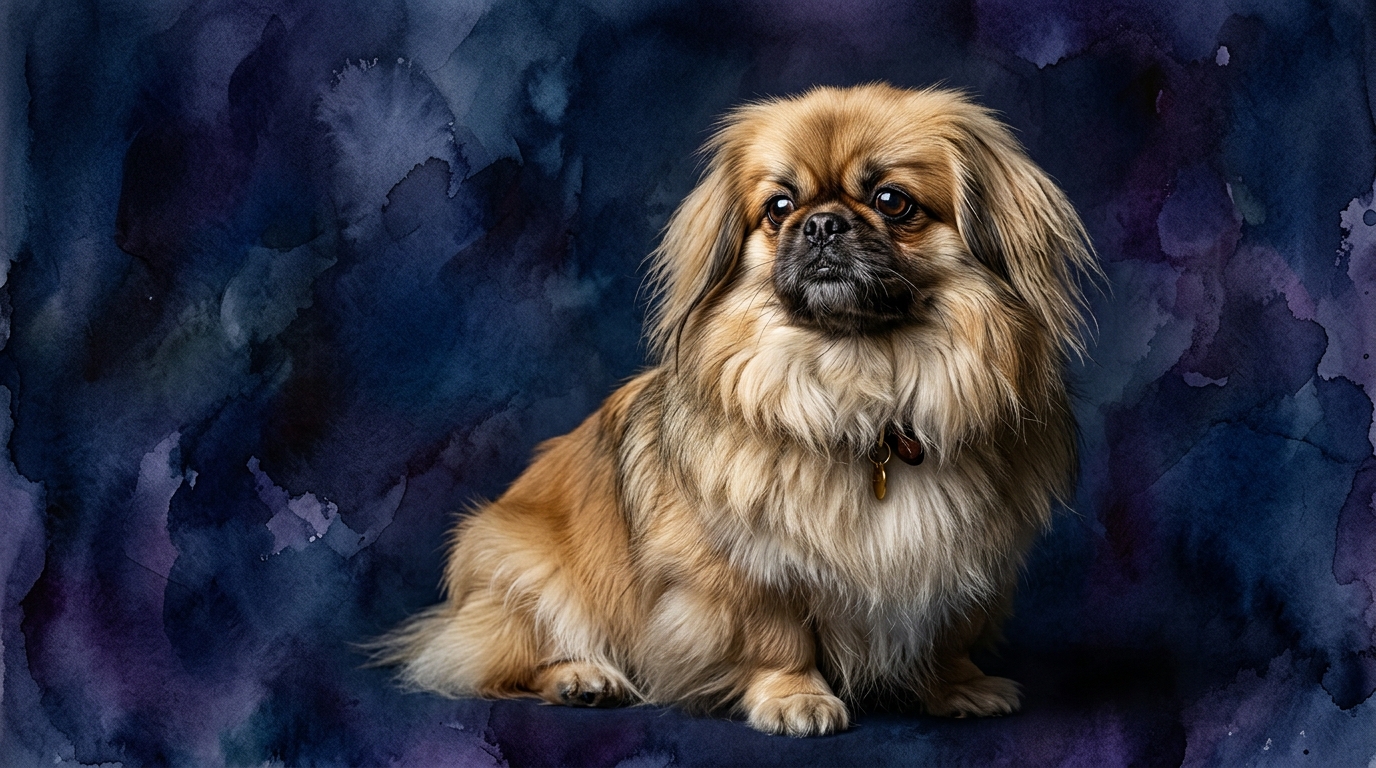
Side-by-Side Cognitive Profiles
The Belgian Tervuren, a member of the Herding group, exhibits a cognitive profile optimized for complex tasks and rapid learning, reflected in its Coren rank of #14. Its Problem Solving is rated an exceptional 5/5, indicating a profound capacity for navigating novel challenges and devising solutions. Training Speed also scores 5/5, suggesting an ability to grasp new commands and routines with remarkable swiftness. Social Intelligence stands at 3/5, pointing to a moderate understanding of human cues and social dynamics, while Instinctive Drive is 3/5, signifying a balanced but present urge for ancestral behaviors like herding. Memory is a perfect 5/5, highlighting an impressive recall for learned information and experiences.
In stark contrast, the Pekingese, a Toy group member, possesses a cognitive makeup tailored for companionship, with a Coren rank of #77. Its Problem Solving is rated 3/5, indicating a competent but not overly eager approach to intricate mental puzzles. Training Speed is 3/5, meaning they can learn at a steady pace, though perhaps not with the immediate absorption of a Tervuren. Social Intelligence is 3/5, mirroring the Tervuren's moderate capacity for interpreting social signals. Instinctive Drive is also 3/5, suggesting a modest inclination towards breed-specific behaviors, often expressed as a desire for comfort and companionship rather than intense activity. Memory scores 3/5, demonstrating an adequate ability to retain routines and familiar associations.
Where the Belgian Tervuren Excels Cognitively
The Belgian Tervuren's cognitive strengths are evident in its superior Problem Solving and Memory, both rated 5/5. This breed doesn't just react to commands; it actively processes situations, formulating strategies to overcome obstacles. For instance, presented with a puzzle feeder, a Tervuren is likely to systematically experiment with mechanisms, remembering successful methods for future attempts, rather than relying on trial-and-error alone. Their exceptional Memory allows them to retain complex sequences of commands over long periods, making them adept at advanced obedience, agility, or protection work where precise recall of intricate patterns is crucial. This depth of memory also contributes to their ability to learn and adapt to new environments quickly, building a comprehensive mental map of their surroundings and the rules that govern them.
Furthermore, the Tervuren's 5/5 Training Speed means they absorb new information with remarkable efficiency. This isn't just about learning basic 'sit' or 'stay'; it extends to understanding abstract concepts and applying them in varying contexts. An owner can introduce a new sport, like scent work or competitive obedience, and expect the Tervuren to pick up the foundational skills and rules rapidly, often requiring fewer repetitions than many other breeds. This rapid acquisition of knowledge means they are perpetually ready for new mental challenges, thriving on continuous learning and engagement.
Where the Pekingese's Cognitive Profile Shines
While the Pekingese doesn't boast the Tervuren's high-octane scores, its cognitive profile, particularly its balanced 3/5 ratings across all dimensions, offers unique advantages for specific lifestyles. Their moderate Problem Solving and Instinctive Drive mean they are less prone to creating their own 'work' or developing destructive coping mechanisms out of boredom. A Pekingese is generally content with a predictable routine and doesn't incessantly seek out complex mental puzzles to solve, making them less demanding in terms of constant, structured mental enrichment. Their cognitive energy is often directed towards observing their immediate environment and engaging with their primary human companions in a discerning, rather than overly effusive, manner.
The Pekingese's 3/5 Social Intelligence, while not exceptionally high, contributes to their distinct personality. They are capable of forming strong bonds and understanding their family's dynamics but often display a selective affection, preferring a close-knit circle over widespread social engagement. This means they are not typically driven to please every person they meet, maintaining a certain dignified independence. Their moderate Memory ensures they learn routines and the rules of the household adequately, but they aren't burdened by an overwhelming need to constantly revisit complex past experiences or to be challenged with intricate, multi-step tasks. This balanced cognitive demand makes them excellent companions for those seeking a dog whose mental engagement aligns with a more relaxed, companion-focused lifestyle.
Training Ease: A Tale of Two Speeds
When it comes to training, the Belgian Tervuren presents a significantly different experience than the Pekingese, primarily due to their disparate Training Speed and Problem Solving scores. The Tervuren's 5/5 Training Speed means they are exceptionally quick to grasp new commands and concepts. They possess an inherent drive to understand and perform, often connecting a verbal cue with an action after only a few repetitions. This rapid learning curve means training sessions can be more dynamic, progressive, and cover more ground in a shorter period, allowing owners to move quickly into advanced behaviors or complex sequences. Their 5/5 Problem Solving also makes them adept at figuring out what is expected of them, even if the initial instruction isn't perfectly clear, enabling them to troubleshoot and adapt.
Conversely, the Pekingese, with its 3/5 Training Speed and Problem Solving, requires a more patient and consistent approach. They will learn, but at their own pace, often needing more repetitions and clearer, more consistent cues. Their independent nature, stemming from a moderate social intelligence and drive, means they may not always see the immediate value in performing a command if it doesn't align with their current comfort or desire. Owners should anticipate shorter, more frequent training sessions focused on positive reinforcement and clear communication, understanding that while they are capable of learning, their motivation might be different from a Tervuren's eagerness to work and please. Real behavioral differences include a Tervuren's tendency to actively seek out tasks and learn new skills versus a Pekingese's preference for comfort and selective engagement.
Matching Canine Cognition to Owner Lifestyle
The cognitive profiles of these two breeds dictate vastly different ideal owner lifestyles. The Belgian Tervuren, with its 5/5 Problem Solving, 5/5 Training Speed, and 5/5 Memory, is a natural fit for active owners who relish mental engagement and structured activities. These dogs thrive when given a job, whether it's competitive obedience, agility, protection work, or even complex trick training. Their moderate Instinctive Drive (3/5) means they possess the foundational energy for these tasks without being perpetually frantic, but their high cognitive scores demand consistent mental stimulation to prevent boredom-induced behaviors. Owners who enjoy spending significant time teaching, training, and exploring advanced dog sports will find a Tervuren an incredibly rewarding partner.
The Pekingese, with its consistent 3/5 scores across the board, is better suited for relaxed owners seeking a companion whose cognitive demands align with a calmer home environment. They appreciate routine and comfort, and while they benefit from mental engagement, it doesn't need to be as intense or continuous as a Tervuren's. Their moderate Instinctive Drive means they are typically content with moderate walks and indoor play, rather than requiring extensive physical and mental work. Owners who prefer a less demanding training partner, value an independent spirit, and enjoy a companion that is discerning in its affections will find the Pekingese's cognitive makeup to be a perfect match for a serene, companion-focused lifestyle, where their primary 'job' is to be a cherished family member.
The Verdict
Choose a Belgian Tervuren if you are an active individual or family prepared to consistently engage a highly capable mind in complex training, sports, or demanding tasks, thriving on a partner who learns with extraordinary speed and recalls intricate details.
Opt for a Pekingese if you seek a calm, independent companion whose cognitive needs are met with consistent routines, moderate mental engagement, and a discerning social approach, fitting seamlessly into a relaxed, companion-centric lifestyle.
🧠 Find Your Pet's IQ Score
Our Pet IQ Lab assessment covers 25+ tests across 5 cognitive dimensions — personalized to your breed.
Take the Full IQ Test →Frequently Asked Questions
Does the Pekingese's lower problem-solving score mean it cannot learn tricks?
Not at all. A 3/5 Problem Solving score means the Pekingese can absolutely learn tricks and commands; it just may take more repetitions and patience than a breed with a 5/5 score. They are capable of understanding and performing, but might not independently seek out complex mental challenges.
How does the Belgian Tervuren's high memory score impact its behavior?
The Tervuren's 5/5 Memory contributes to its ability to quickly learn and retain complex sequences, making it excellent for advanced obedience, agility, and protection work. This also means they recall past experiences, both positive and negative, vividly, which influences their ongoing training and social interactions.
Is a Pekingese's moderate social intelligence a disadvantage?
A 3/5 Social Intelligence is not a disadvantage; it simply means Pekingese often exhibit a more selective, dignified social approach. They form deep bonds with their family but may not be overtly friendly with strangers, which many owners appreciate for its discerning companionship rather than universal eagerness to please.