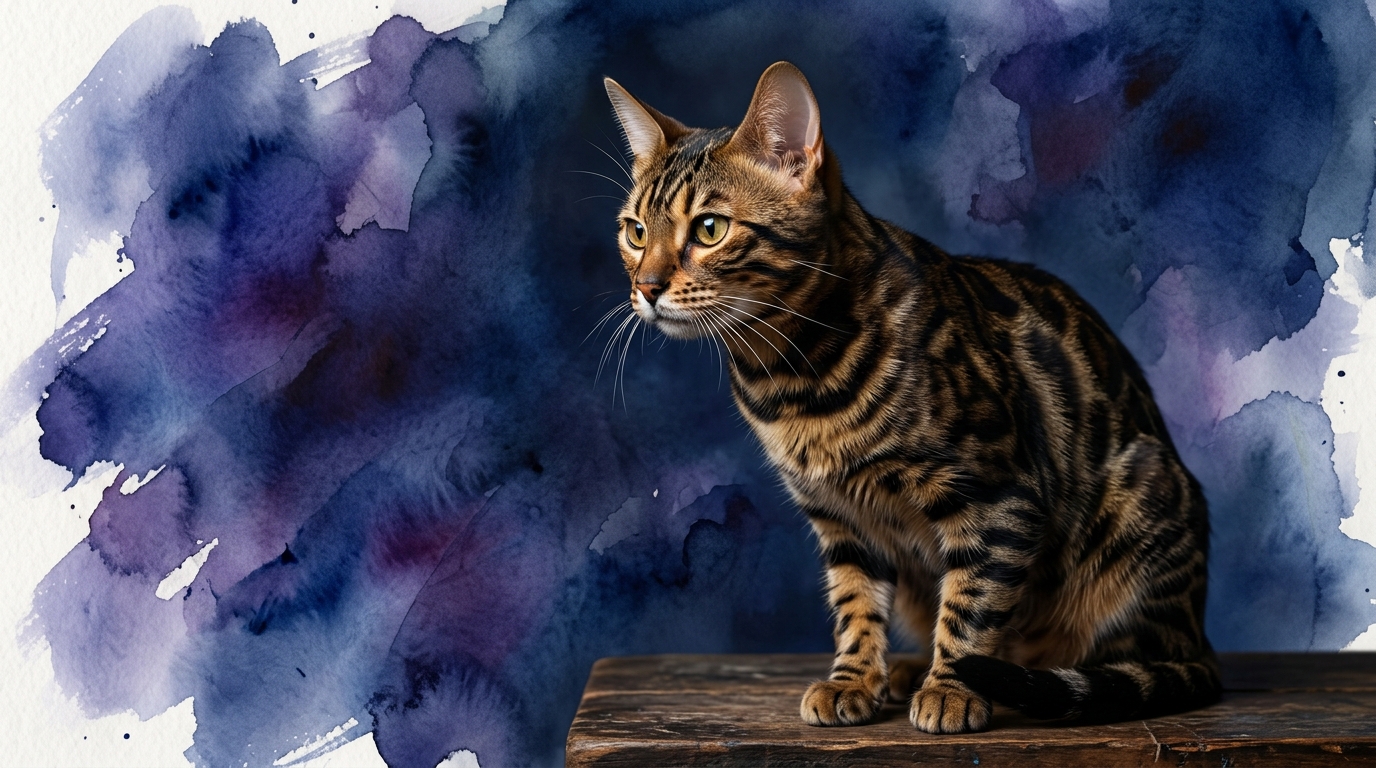

Side-by-Side Cognitive Profiles: Bengal vs. Bombay
The Cosmic Pet Pet IQ Lab offers a structured view into feline cognitive strengths, assessing five key dimensions. Understanding these profiles for the Bengal and Bombay reveals their fundamental intellectual differences.
Bengal Cat Cognitive Profile:
Problem Solving (5/5): This breed approaches challenges with remarkable ingenuity, often devising multi-step solutions to access desired objects or navigate complex environments. They don't just try one method; they experiment, learn, and adapt with impressive flexibility.
Training Speed (4/5): Bengals absorb new commands and routines with impressive swiftness. Their focus and desire for engagement make them highly responsive learners, particularly when positive reinforcement is consistently applied, allowing for rapid skill acquisition.
Social Intelligence (4/5): They keenly observe human behavior and routines, often anticipating actions and responding to subtle cues. Bengals form deep bonds, express affection clearly, and can adapt their social interactions based on the individual they are engaging with.
Instinctive Drive (5/5): Their wild leopard cat heritage is profoundly evident in a powerful drive for hunting, exploration, and physical activity. This manifests as a strong prey drive, a persistent need for climbing, and an insatiable curiosity about their surroundings.
Memory (5/5): Bengals possess an exceptional capacity to recall complex sequences, locations of hidden toys, and past interactions. This contributes significantly to their advanced problem-solving and training abilities, allowing them to build upon learned experiences.
Bombay Cat Cognitive Profile:
Problem Solving (3/5): Bombay cats exhibit a moderate capacity for problem-solving. They can figure out simple puzzles or routines, but complex, multi-stage challenges might prove frustrating or beyond their typical interest. Their approach is often direct rather than deeply analytical.
Training Speed (3/5): While capable of learning, Bombays learn at a steady, unhurried pace. They respond well to gentle, consistent training but may not demonstrate the rapid command acquisition seen in other breeds. Repetition and patience are key to their learning process.
Social Intelligence (3/5): These cats are generally affable and enjoy companionship, reading basic human moods and intentions. Their social interactions are typically straightforward and affectionate, preferring predictable routines and clear communication.
Instinctive Drive (3/5): The Bombay possesses a balanced level of instinctive drive. They enjoy play and exploration but lack the intense hunting or territorial impulses of breeds with wilder ancestry. Their curiosity is present but less overwhelming, allowing for a calmer demeanor.
Memory (3/5): Bombays have a solid, functional memory for routines, familiar faces, and the locations of their favorite spots. They remember pleasant and unpleasant experiences, which influences their future interactions, though not with the same intricate detail as a Bengal.
Where Bengal Cats Exhibit Cognitive Superiority
The Bengal's cognitive strengths lie in their unparalleled problem-solving aptitude and robust memory. Their ability to strategize, remember intricate solutions, and apply them in novel situations sets them apart from most domestic felines. For instance, a Bengal might not merely knock over a cup to get a treat but might learn to open a specific cupboard, retrieve a tool, and then use it to dislodge the treat. This isn't just about persistence; it's about understanding cause and effect on a deeper, more analytical level, indicative of their 5/5 Problem Solving score.
Their high instinctive drive (5/5), combined with superior memory (5/5), means they are constantly seeking out new challenges and retaining the lessons from previous explorations. This fuels a continuous learning cycle, making them particularly adept at navigating complex environments or even learning to perform tricks that involve multiple steps. Their social intelligence, rated 4/5, allows them to leverage human interaction in their problem-solving, observing cues and even 'requesting' help in a sophisticated manner, making them formidable partners in crime for any puzzle-solving endeavor.
Where Bombay Cats Offer a Different Cognitive Advantage
While the Bengal excels in intricate cognitive tasks, the Bombay's cognitive profile, marked by a balanced 3/5 across all dimensions, offers a different kind of advantage: cognitive ease and adaptability within a domestic setting. Their moderate instinctive drive (3/5) means they are less prone to destructive behaviors born from unchanneled energy or intense curiosity. An owner won't constantly be battling against a cat determined to scale the highest shelves or dismantle complex household items, as their exploratory impulses are less intense.
The Bombay's social intelligence (3/5), while not as complex as a Bengal's, fosters a more predictable and generally less demanding companionship. They are content with straightforward affection and routine, making them excellent companions for those who appreciate a relaxed, steady presence. Their moderate problem-solving and training speed mean they are perfectly capable of learning household rules and basic commands, but without the intense need for constant mental stimulation that a Bengal exhibits. This translates to a cat that integrates seamlessly into a quieter home, offering a calm, affectionate presence without requiring an elaborate intellectual engagement strategy. Their memory, while not photographic, is perfectly adequate for remembering their beloved humans, mealtimes, and comfortable sleeping spots, contributing to their overall placid demeanor.
Training Dynamics: Bengal vs. Bombay
The Bengal, with its 4/5 training speed and 5/5 problem-solving, is generally easier to train for complex behaviors and tricks. Their quick grasp of concepts, coupled with a strong desire for engagement and a keen memory, means they pick up new commands rapidly. They thrive on challenge and positive reinforcement, often surprising owners with their capacity to learn fetch, walk on a leash, or even perform agility courses. However, this ease of training comes with a caveat: their high instinctive drive (5/5) means they also need consistent mental stimulation. If not appropriately challenged, their cognitive prowess can be directed towards 'solving' household problems in ways owners might not appreciate, such as opening cupboards or finding ways to escape.
The Bombay, with a 3/5 in both training speed and problem-solving, will require more patience and repetition during training. They are certainly trainable for basic commands and litter box etiquette, but they won't exhibit the same rapid learning curve or enthusiasm for intricate tricks. Their lower instinctive drive means they are less likely to seek out trouble if not constantly engaged, making them generally less demanding in terms of training volume. While a Bengal might learn a new trick in a few sessions, a Bombay might take several weeks, but once learned, they tend to stick to it reliably. The 'ease' of training a Bombay often lies in the lower cognitive demand placed on the owner to keep the cat constantly stimulated and challenged; they are content with simpler routines and less intensive intellectual engagement.
Matching Feline Cognition to Owner Lifestyles
Active owners seeking a feline companion for adventure and intellectual partnership will find the Bengal an ideal match. Their 5/5 instinctive drive and 5/5 problem-solving mean they require substantial physical exercise and consistent mental challenges. These are cats that enjoy interactive play, puzzle toys, and even outdoor adventures on a leash. An owner who can dedicate time to daily play sessions, provide stimulating environments (like climbing structures and cat wheels), and engage them in learning new tricks will see a Bengal flourish. They thrive on interaction and can become bored or destructive if their cognitive and physical needs are not met, demanding a truly engaged lifestyle from their human companions.
Relaxed owners, or those seeking a more placid and predictable companion, will likely find the Bombay more suitable. With a balanced 3/5 across all cognitive dimensions, the Bombay is content with a less demanding routine. While they enjoy play and affection, their instinctive drive is moderate, meaning they won't constantly demand intense physical or mental engagement. They appreciate a comfortable lap, a sunny window, and gentle play sessions. Their moderate social intelligence means they are affectionate without being overwhelming, offering a steady, comforting presence. These cats integrate well into quieter homes where their primary role is companionship rather than an active participant in complex games or training regimens, providing a serene and undemanding presence.
The Verdict
Choose the Bengal if you are an engaged owner ready to provide consistent mental stimulation and physical activity for a cognitively agile and curious companion that thrives on challenge.
Choose the Bombay if you seek a calm, affectionate, and predictable feline friend who thrives on routine and offers steady companionship without intense intellectual demands.
🧠 Find Your Pet's IQ Score
Our Pet IQ Lab assessment covers 25+ tests across 5 cognitive dimensions — personalized to your breed.
Take the Full IQ Test →Frequently Asked Questions
Do Bengals need specific types of toys to stay mentally stimulated?
Yes, Bengals benefit greatly from puzzle feeders, interactive toys that mimic prey, and climbing structures that allow them to exercise their high instinctive drive and problem-solving skills. Toys that can be manipulated or hidden will keep their keen minds engaged and prevent boredom-driven behaviors.
Are Bombay cats more prone to certain behavioral issues due to their cognitive profile?
Bombay cats, with their moderate instinctive drive and social intelligence, are generally less prone to complex behavioral issues driven by boredom or extreme curiosity. They might become withdrawn if neglected, but destructive behaviors stemming from unfulfilled mental needs are less common than in more intensely driven breeds, contributing to their reputation as adaptable house cats.
Can a Bombay cat be trained to do tricks like a Bengal?
While a Bombay can learn basic commands and simple tricks, their training speed and problem-solving abilities (both 3/5) mean they typically won't achieve the same repertoire or complexity of tricks as a Bengal (4/5 training speed, 5/5 problem-solving). Patience and positive reinforcement will be crucial for any training efforts with a Bombay, focusing on consistency over speed.