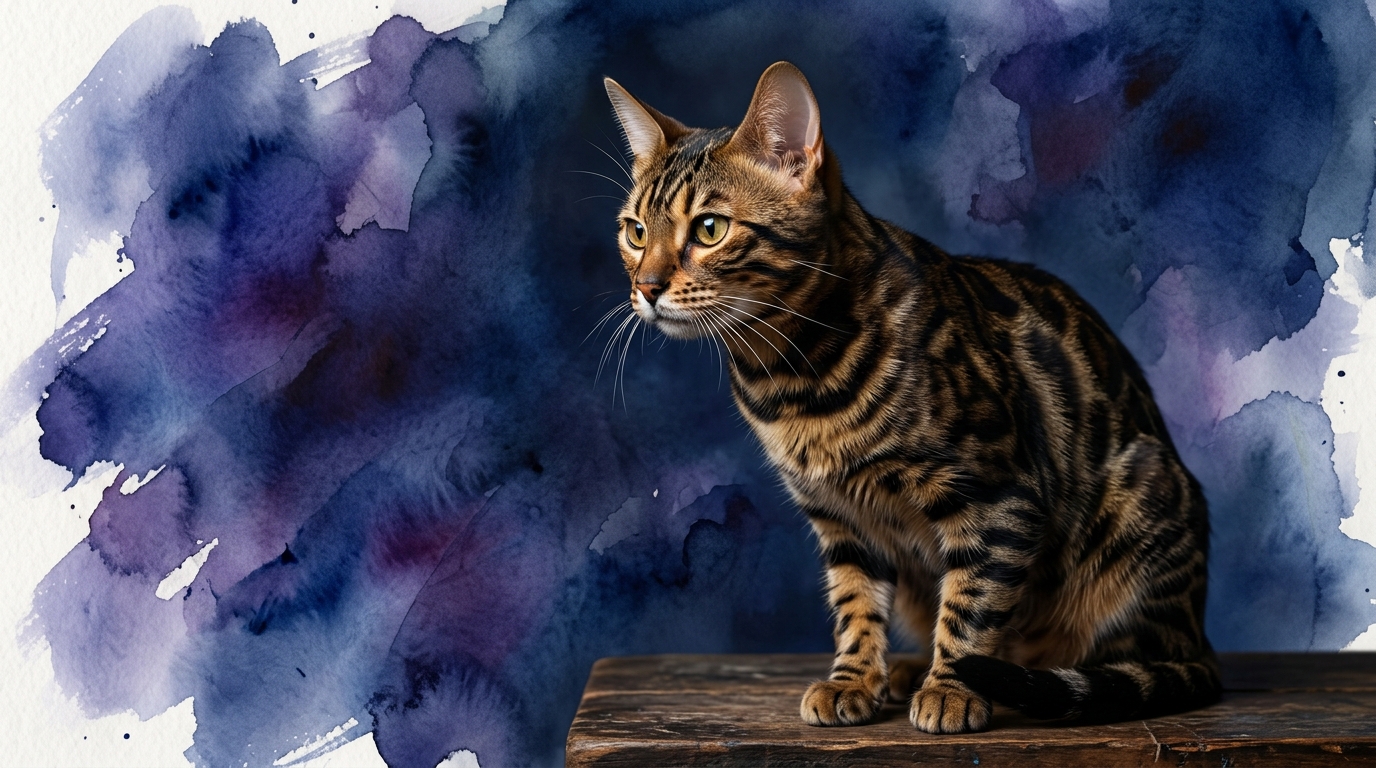
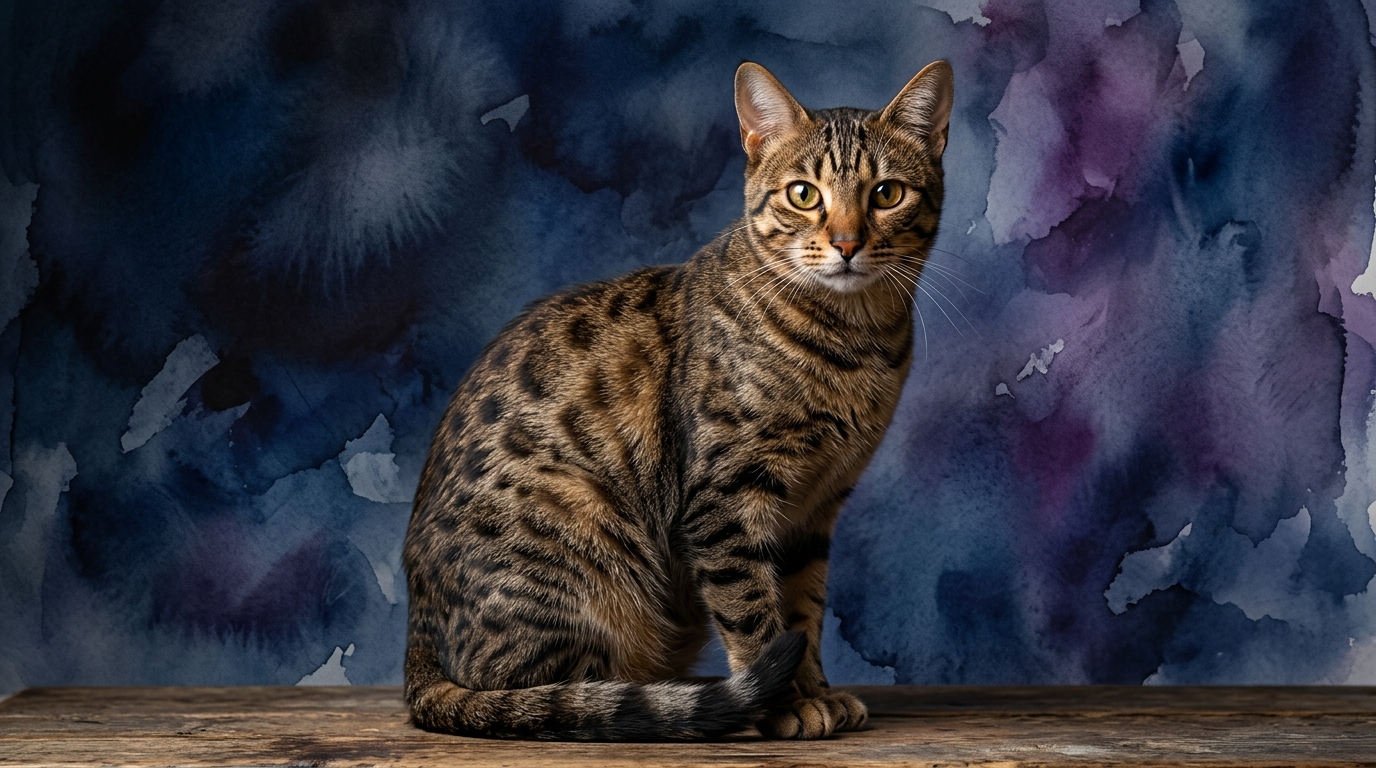
Side-by-Side IQ Profile: Bengal vs. Egyptian Mau
The Cosmic Pet Pet IQ Lab employs a five-dimensional framework to evaluate feline cognitive abilities, providing a nuanced understanding beyond simple 'smart' labels. For the Bengal, their cognitive profile reveals a cat built for intense engagement and intricate interaction. Their Problem Solving is rated an exceptional 5/5, indicating an outstanding capacity to navigate complex challenges, figure out mechanisms, and strategize. Training Speed stands at 4/5, reflecting their quick grasp of commands and routines. Social Intelligence, at 4/5, suggests a strong ability to interpret human cues and form deep, if sometimes selective, bonds. Their Instinctive Drive is a powerful 5/5, underscoring a profound natural inclination for hunting, exploring, and engaging with their environment. Finally, Memory is an impressive 5/5, allowing them to retain vast amounts of information regarding their surroundings, learned behaviors, and social interactions.
In contrast, the Egyptian Mau presents a cognitive profile that, while competent, leans towards a more measured and focused engagement. Their Problem Solving ability is rated 3/5, indicating they can tackle straightforward puzzles but may not consistently seek out or excel in highly complex cognitive tasks. Training Speed also sits at 3/5, meaning they are capable learners but typically require more patience and consistent reinforcement to master new skills. Social Intelligence is rated 3/5, pointing to a capacity for deep affection and loyalty, often directed towards a select few, while potentially being more reserved with strangers. Their Instinctive Drive is 3/5, suggesting a healthy interest in play and exploration, but without the relentless intensity seen in some other breeds. Lastly, their Memory is 3/5, enabling them to remember routines and familiar faces, though perhaps not with the same intricate detail or long-term recall as a Bengal.
Where the Bengal Excels Cognitively
The Bengal's cognitive strengths are particularly evident in their superior problem-solving capabilities. A 5/5 rating means these cats don't just observe their environment; they actively seek to understand and manipulate it. Owners frequently report Bengals learning to open doors, cabinets, and even complex latch mechanisms, not out of malice, but pure intellectual curiosity. This isn't random trial and error; it often involves a strategic approach to environmental challenges, demonstrating an advanced capacity for spatial reasoning and cause-and-effect understanding. Their high problem-solving also fuels their engagement with elaborate puzzle toys, where they quickly decipher the steps required to retrieve treats, often devising their own efficient methods.
Furthermore, the Bengal's powerful 5/5 Instinctive Drive isn't just about physical activity; it's deeply cognitive. This drive manifests as an intense focus during 'hunt' simulations, where they will strategize, stalk, and execute complex pounces with remarkable precision. This requires significant cognitive processing – assessing prey movement, calculating trajectories, and adapting tactics. Their exceptional 5/5 Memory further amplifies these traits, allowing them to recall successful hunting strategies, remember the location of hidden toys, and quickly learn complex routines. This combination of intense curiosity, strategic thinking, and robust memory makes them adept at navigating and mastering their world, constantly seeking new mental challenges.
Where the Egyptian Mau Shines Cognitively
While the Bengal's scores paint a picture of intense cognitive engagement, the Egyptian Mau's profile offers a different kind of cognitive advantage, particularly for specific lifestyles. Their 3/5 in social intelligence, while not as broadly expressive as the Bengal, signifies a deeply focused and discerning social acumen. Maus often form profound, singular bonds, allowing them to anticipate and respond to the subtle cues of their chosen human with remarkable attunement. This focused social intelligence means they excel in creating a calm, predictable social environment, where their cognitive energy is directed towards nurturing a few close relationships rather than engaging with a wide array of stimuli. For an owner seeking an intimate, devoted companion who reads their mood and routine with precision, this focused social intellect can be a significant 'win'.
Furthermore, their moderate instinctive drive (3/5) means their cognitive needs, while present, are less relentlessly demanding. They enjoy engaging with their environment and play but don't possess the same intense, ceaseless drive to manipulate and conquer every puzzle. This translates to a cognitive profile that requires less constant, high-octane mental strategizing from their human, offering a more relaxed yet still engaging companionship. While their problem-solving (3/5) and memory (3/5) are not as high as the Bengal's, they are perfectly capable of learning routines, enjoying moderate puzzle toys, and navigating their familiar environment effectively, providing stimulating interaction without overwhelming demands.
Ease of Training: Behavioral Differences
When it comes to training, the Bengal (Training Speed 4/5) generally presents a swifter learning curve compared to the Egyptian Mau (Training Speed 3/5). Bengals, driven by their high problem-solving abilities and powerful instinctive drive, are often eager students. They quickly make connections between actions and rewards, and their exceptional memory allows them to solidify learned behaviors rapidly. This makes them excellent candidates for leash training, complex trick learning, and even agility courses. Their inherent curiosity means they often view training sessions as another form of engaging mental stimulation, responding well to positive reinforcement and consistency. They thrive on the mental workout that training provides, often enjoying the process as much as the reward itself.
The Egyptian Mau, while trainable, typically requires a more patient and consistent approach. Their moderate training speed means that while they can learn commands and routines, it may take more repetitions and a longer period to achieve mastery. Their social intelligence, focused on deep bonds, means they respond best when training is a positive, trust-building interaction with their primary caregiver. They may not be as inherently driven to 'figure out' the training game as a Bengal, so sessions need to be kept fun, engaging, and relatively short to maintain their interest. Owners should be prepared for a slower progression, celebrating small successes and maintaining a calm, encouraging demeanor to get the best results from their Mau.
Matching Owners: Active vs. Relaxed Lifestyles
The distinct cognitive profiles of the Bengal and Egyptian Mau mean they are ideally suited for different types of owners and household environments. An active owner, someone who thrives on constant engagement and enjoys providing rich mental and physical stimulation, will likely find immense satisfaction with a Bengal. These cats require owners who are prepared to dedicate significant time to interactive play, puzzle toys, regular training sessions, and environmental enrichment like cat wheels or elaborate climbing structures. A Bengal's high problem-solving and instinctive drive mean they will actively seek out challenges; an owner who can meet this need will find a deeply rewarding and interactive companion.
Conversely, a more relaxed owner, one who appreciates a devoted companion without the need for constant, high-octane mental gymnastics, would likely find the Egyptian Mau a better fit. While Maus are playful and enjoy interaction, their moderate cognitive demands mean they don't require the same relentless intellectual challenge as a Bengal. They are content with a comfortable routine, regular but not exhaustive play sessions, and deep, affectionate bonds with their chosen humans. They provide companionship that is engaging and loving, but less intensely demanding of the owner's time and creativity in devising new cognitive tasks. This makes them suitable for homes where a calmer, yet still playful, presence is preferred.
The Verdict
Choose a Bengal if you are an active owner seeking a highly interactive, intellectually demanding feline companion who thrives on complex mental stimulation, enjoys learning tricks, and displays advanced problem-solving skills.
Choose an Egyptian Mau if you appreciate a devoted, affectionate cat with a more moderate cognitive demand, preferring focused social bonds and a calmer, yet still playful, home environment.
🧠 Find Your Pet's IQ Score
Our Pet IQ Lab assessment covers 25+ tests across 5 cognitive dimensions — personalized to your breed.
Take the Full IQ Test →Frequently Asked Questions
Are Bengals suitable for first-time cat owners?
Bengals can be challenging for first-time cat owners due to their high energy, intense cognitive needs, and strong instinctive drives. They require significant commitment to training, enrichment, and consistent interaction to prevent boredom-related behaviors.
Do Egyptian Maus get along well with other pets?
Egyptian Maus can generally get along with other pets, especially if introduced properly and socialized from a young age. Their social intelligence, while focused, allows them to integrate into a multi-pet household, though they might prefer a calmer dynamic.
What kind of enrichment do Bengals need to keep their minds engaged?
Bengals thrive on a variety of enrichment including complex puzzle feeders, interactive toys that simulate hunting, regular leash training for outdoor exploration, vertical climbing spaces, and consistent daily play sessions that challenge both their physical and mental abilities.