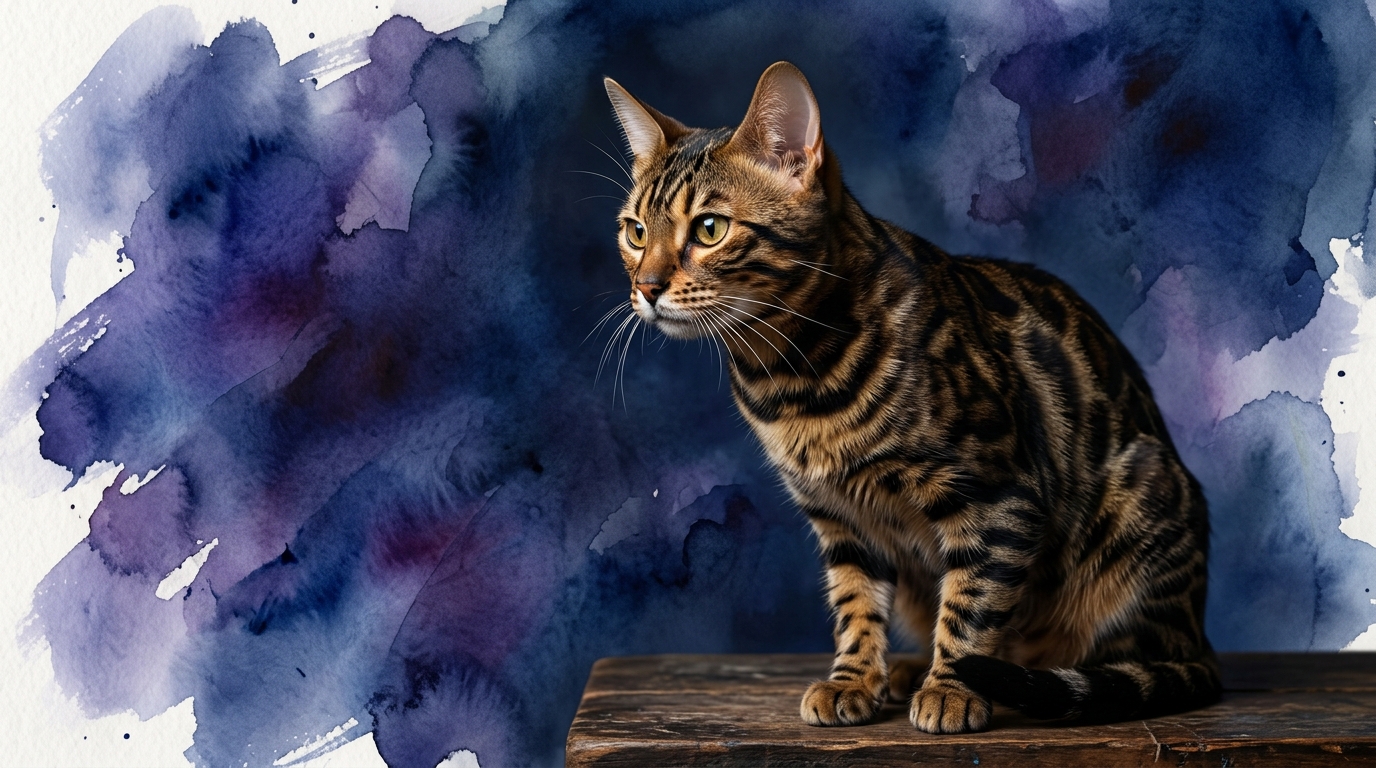
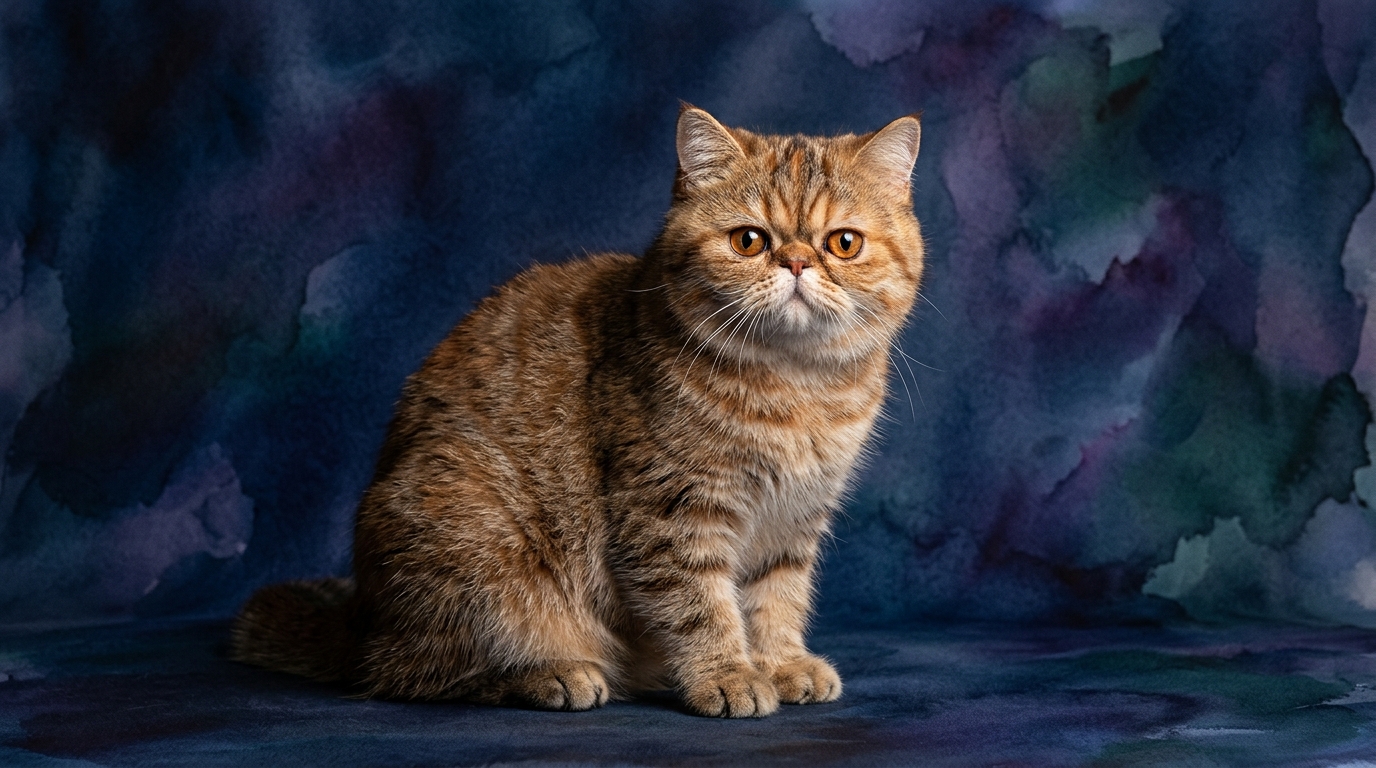
Side-by-side IQ profile
The Cosmic Pet Pet IQ Lab's framework provides a detailed lens through which to compare the mental faculties of these distinct felines. Understanding their individual strengths across five key dimensions reveals why a Bengal's mind operates so differently from an Exotic Shorthair's.
For the Bengal, a breed celebrated for its vibrant energy and striking appearance, cognitive scores reflect a highly active and engaged intellect: Problem Solving (5/5): Bengals readily navigate complex challenges, opening latches, deciphering puzzle feeders, or accessing forbidden spaces. Their curiosity drives them to manipulate their environment. Training Speed (4/5): These cats pick up new commands and routines with impressive swiftness, responding well to clicker training and positive reinforcement for tricks or leash walking. Social Intelligence (4/5): Bengals form strong, interactive bonds, adept at reading emotional cues, initiating play, and seeking out owners for companionship. Instinctive Drive (5/5): Their wild ancestry translates into a powerful drive for exploration, hunting simulation, and climbing, fueling intense physical and mental engagement. Memory (5/5): A Bengal's memory is robust, retaining complex information, intricate routes, hidden toy locations, and a wide repertoire of learned behaviors.
In stark contrast, the Exotic Shorthair, often described as a "lazy man's Persian" due to its placid nature and low-maintenance coat, exhibits a cognitive profile geared towards comfort and calm companionship: Problem Solving (3/5): Exotic Shorthairs approach challenges with a relaxed attitude, solving simpler puzzles like finding their food bowl, but less inclined to persist with complex tasks. Training Speed (3/5): While capable of learning basic commands, Exotic Shorthairs typically take more time and repetition, motivated more by comfort and gentle affection than challenge. Social Intelligence (3/5): These cats offer gentle, unwavering companionship, enjoying being near owners for lap time or quiet petting. Their social intelligence centers on a calm, consistent presence. Instinctive Drive (3/5): The Exotic Shorthair's instinctive drives are moderate; they enjoy play but lack the intense prey drive or exploratory zeal, prioritizing relaxation over rigorous activity. Memory (3/5): Exotic Shorthairs possess functional memory for daily routines, familiar faces, and preferred resting spots, but less detail for complex sequences or less reinforced tasks.
Where Bengal wins cognitively
The Bengal's cognitive strengths distinctly outshine the Exotic Shorthair's in areas demanding active engagement and complex mental processing. Their problem-solving prowess is unparalleled, allowing them to quickly understand and manipulate their environment, whether opening doors or figuring out a new toy. This breed's high instinctive drive, combined with superior memory, means they not only seek intellectual challenges but remember solutions and apply them consistently. For instance, a Bengal might remember a multi-step sequence to access a treat. Their quick training speed also means they can assimilate vast amounts of information, from complex agility courses to an extensive vocabulary of human commands.
Where Exotic Shorthair wins cognitively
While the Exotic Shorthair's cognitive profile emphasizes different priorities, it reveals a distinct "winning" strategy centered around emotional regulation and comfort-oriented intelligence. Their moderate instinctive drive and problem-solving scores make them masters of efficiently seeking optimal comfort and tranquility. They excel at discerning the quietest sunbeam or the softest blanket, demonstrating a finely tuned ability to optimize their environment for relaxation. Their social intelligence, though less about complex interaction, is superior in providing a steadfast, calming presence. An Exotic Shorthair's cognitive strength lies in its profound ability to be a gentle, predictable companion, often sensing a need for quiet affection without demanding high-energy engagement.
Which is easier to train and why
When considering ease of training, the Bengal generally offers a more straightforward and rewarding experience for owners willing to invest time. Their high training speed and natural curiosity mean they grasp new concepts rapidly, often with enthusiasm. Bengals are highly motivated by interactive play, food rewards, and mental stimulation, making them receptive to complex commands, leash training, and clicker tricks. However, their strong instinctive drive requires consistency and redirection to channel their energy positively, preventing them from "training themselves" into less desirable behaviors.
The Exotic Shorthair, while trainable, requires a different approach and greater patience. Their moderate training speed means lessons need more repetition, and motivation often comes from gentle praise, comfort, and routine rather than the thrill of a challenge. They are generally easier to house-train due to their preference for cleanliness and predictable habits, but teaching complex tricks or leash walking might prove a longer endeavor. Their calmer nature means they are less likely to get into mischief requiring extensive behavioral correction, demanding less active management.
Which suits active owners vs relaxed owners
The choice between these two breeds largely hinges on an owner's lifestyle and desired level of interaction. Active owners who thrive on engagement and are prepared to provide significant environmental enrichment will find the Bengal an ideal companion. These owners might enjoy teaching their cat tricks, taking them on leash walks, providing puzzle feeders, or setting up elaborate climbing structures. A Bengal's high instinctive drive and problem-solving abilities demand an owner who can consistently meet their need for mental and physical stimulation, transforming potential mischief into constructive activity. They are perfect for households that enjoy a dynamic, playful pet presence.
Conversely, relaxed owners seeking a tranquil, affectionate companion who demands less vigorous activity will find the Exotic Shorthair perfectly suited. These owners appreciate a cat that is content to nap nearby, enjoys gentle petting, and provides a calming presence without needing constant stimulation. An Exotic Shorthair thrives in a predictable, peaceful environment, making them an excellent choice for individuals or families who prefer a more sedate pace and a pet that is a source of quiet comfort.
The Verdict
Choose a Bengal if you are an active, engaged owner seeking a highly interactive, intelligent companion that thrives on mental challenges, complex play, and consistent stimulation.
Opt for an Exotic Shorthair if you desire a calm, affectionate, low-energy companion whose primary contribution is a serene presence and gentle, unwavering affection.
🧠 Find Your Pet's IQ Score
Our Pet IQ Lab assessment covers 25+ tests across 5 cognitive dimensions — personalized to your breed.
Take the Full IQ Test →Frequently Asked Questions
Are Bengals good family pets?
Yes, Bengals can be excellent family pets, especially if introduced to children and other pets early and socialized well. Their playful nature and high energy mean they can be very interactive, but supervision is important to ensure their enthusiastic play doesn't overwhelm smaller children.
Do Exotic Shorthairs need a lot of grooming?
Despite their short hair, Exotic Shorthairs do require regular grooming. Their dense, plush coat can easily mat or shed excessively without consistent brushing, typically several times a week, to keep it healthy and free of tangles.
Can an Exotic Shorthair learn tricks?
Absolutely, Exotic Shorthairs are capable of learning basic tricks like "sit," "stay," or coming when called. While they may not demonstrate the same speed or enthusiasm for complex sequences as a Bengal, with patience, positive reinforcement, and a focus on comfort-based rewards, they can certainly expand their behavioral repertoire.