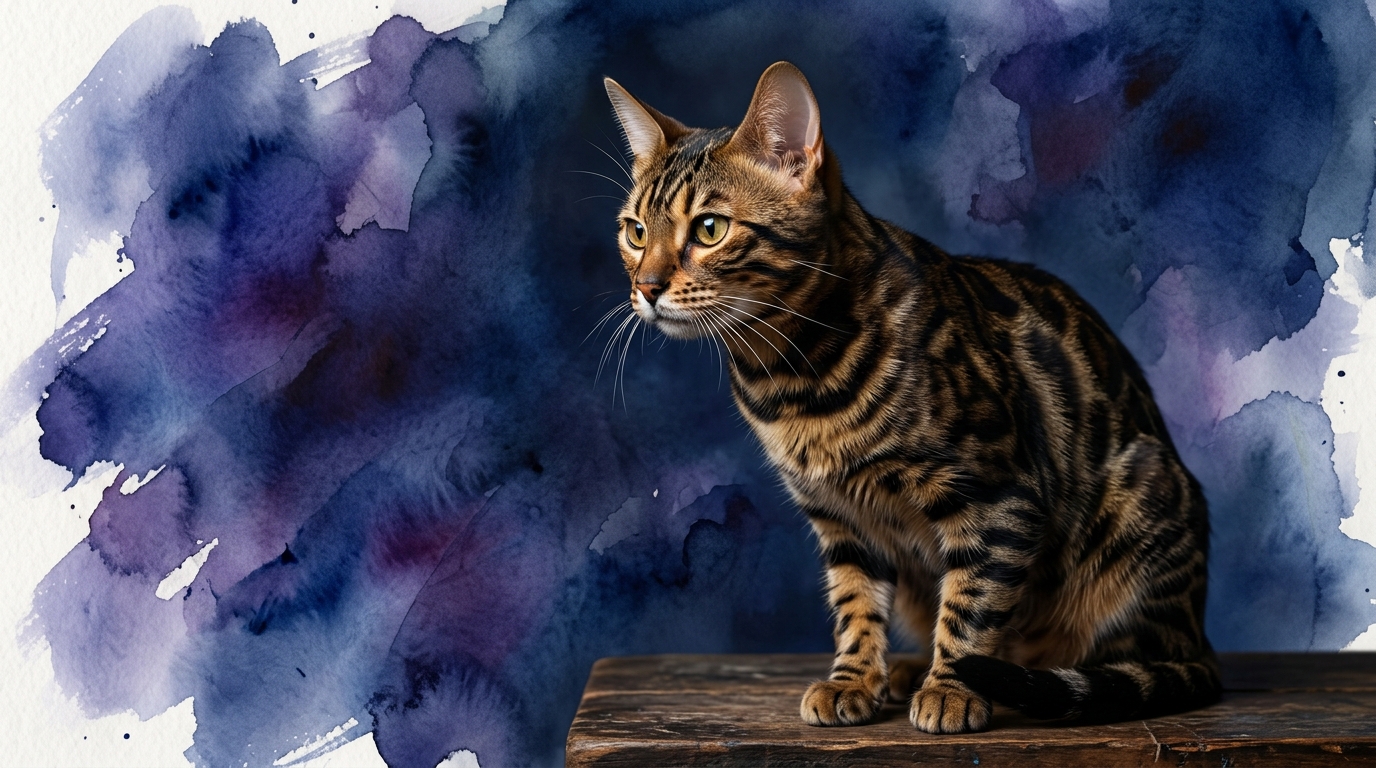
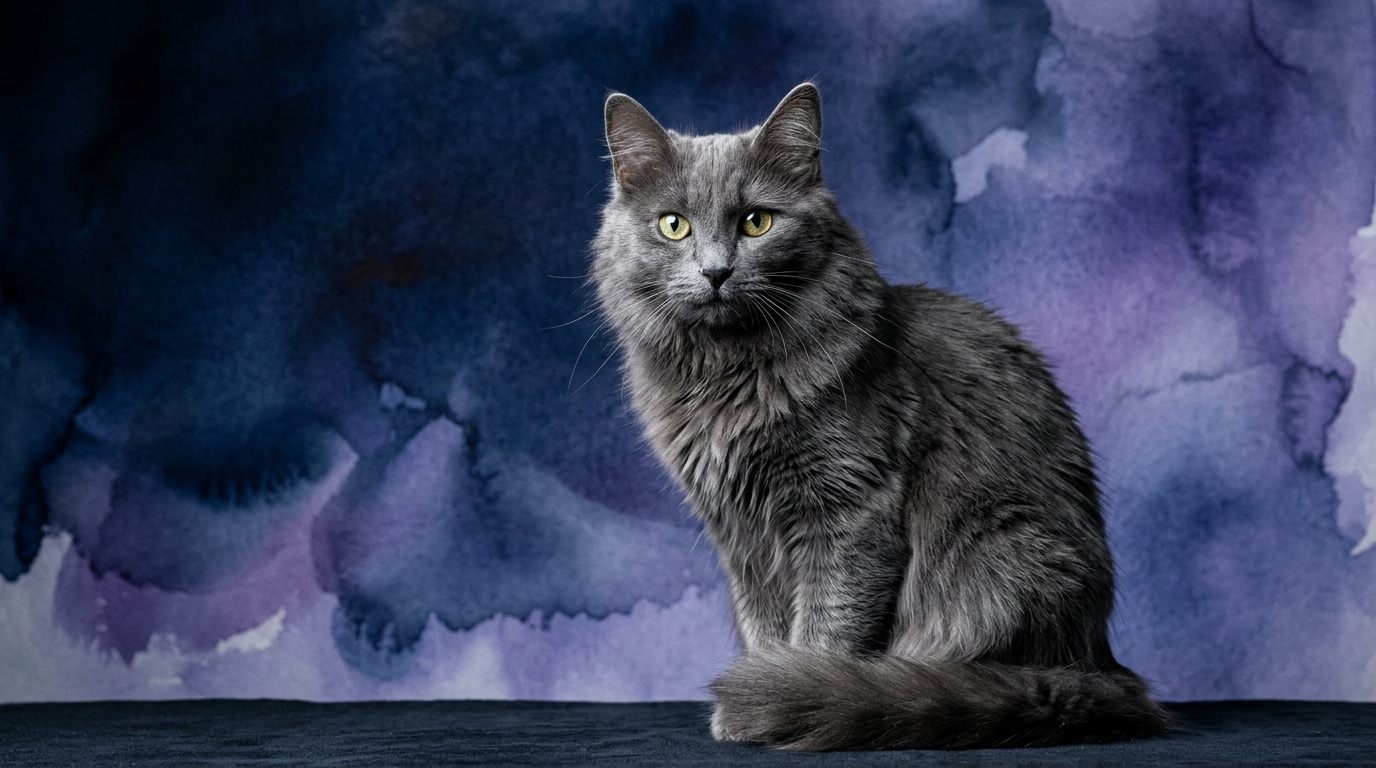
Side-by-Side Cognitive Profiles: Bengal vs. Nebelung
The Cosmic Pet Pet IQ Lab employs five key dimensions to evaluate feline cognitive abilities, offering a nuanced understanding of each breed’s mental landscape. For the Bengal, their profile is marked by exceptional scores: Problem Solving 5/5, Training Speed 4/5, Social Intelligence 4/5, Instinctive Drive 5/5, and Memory 5/5. This suggests a highly engaged and dynamic cognitive system, indicative of a cat that actively processes and interacts with its environment at a sophisticated level.
In contrast, the Nebelung presents a consistently balanced profile: Problem Solving 3/5, Training Speed 3/5, Social Intelligence 3/5, Instinctive Drive 3/5, and Memory 3/5. These scores indicate a more measured and perhaps less overtly complex cognitive style, prioritizing different aspects of interaction and environmental engagement. This doesn't imply a lack of mental capacity, but rather a preference for a more predictable and harmonious approach to their world. Understanding these foundational differences is key to appreciating their unique attributes and how they manifest in daily life.
Bengal's Cognitive Strengths: Agility and Retention
The Bengal's Problem Solving score of 5/5 highlights a remarkable capacity for navigating complex situations and overcoming obstacles. These cats are frequently observed manipulating objects, figuring out how to open closed doors or cabinets, and devising innovative solutions to access desired items or areas. This isn't mere curiosity; it's a persistent, often strategic, approach to achieving their goals, reflecting a deeply analytical mind that thrives on mental challenges and discovery.
Their Instinctive Drive, also rated 5/5, profoundly influences their cognitive engagement. This translates into a relentless focus during interactive play, a keen awareness of their surroundings for potential 'prey,' and an inherent need for consistent mental and physical stimulation. This powerful drive, while sometimes demanding for owners, signifies a highly active mind continuously processing and reacting to its environment, making them adept at tasks requiring focus, determination, and quick reflexes.
Furthermore, the Bengal's Memory, rated 5/5, is exceptional. They consistently retain specific training cues, intricate spatial layouts, and the consequences of past actions over extended periods. This robust memory enables them to build a comprehensive internal map of their world and apply prior experiences to novel situations, contributing significantly to their adaptability, rapid learning curve, and ability to form strong, lasting associations with their environment and companions.
Nebelung's Cognitive Strengths: Depth and Consistency
While their scores are moderate, the Nebelung's cognitive strengths lie in their depth and consistency, particularly in social contexts. Their Social Intelligence score of 3/5 reflects a nuanced approach to relationships, characterized by forming profound, often exclusive, bonds with their chosen humans. This indicates a sophisticated ability to discern trusted individuals and commit emotional resources, leading to a subtle understanding of their inner circle's moods and routines, even if they appear reserved with strangers. They process social cues with a quiet discernment, valuing stable connections.
The Nebelung’s Training Speed (3/5) and Memory (3/5), though not as rapid as the Bengal’s, are perfectly suited to their preference for routine and calm. They consistently learn and retain specific household rules, preferred interaction patterns, and litter box habits with a steady reliability. This consistent learning style contributes to their reputation as predictable and harmonious companions, demonstrating an ability to integrate information efficiently within their established comfort zones and routines, fostering a sense of order and security.
Their Problem Solving (3/5) is often more considered and less impulsive. While they may not dismantle a complex puzzle box with the same urgency or flair as a Bengal, they can methodically work through simpler challenges, often preferring to observe and understand before acting. This reflects a cognitive style that values contemplation and efficiency, particularly when it leads to a comfortable and predictable outcome within their established environment, rather than seeking constant novelty.
Training Dynamics: Bengal's Quick Wit vs. Nebelung's Steady Pace
When considering trainability, the Bengal (Training Speed 4/5) learns remarkably quickly, often picking up complex commands or tricks in short order. However, their high Instinctive Drive (5/5) and Problem Solving (5/5) can present a unique challenge; a Bengal might master 'fetch' with impressive speed, but then use their acute problem-solving skills to open a pantry door, driven by curiosity or a desire for exploration. Successful training for Bengals requires consistent, engaging sessions that tap into their innate drives, such as clicker training, leash training, or even agility courses, which provide vital mental and physical outlets to prevent boredom-driven mischief. Their robust memory (5/5) means they retain both positive and negative associations, making consistent reinforcement critical.
The Nebelung (Training Speed 3/5) learns at a steady, reliable pace. Their moderate Instinctive Drive (3/5) means they are less prone to using their developing skills for disruptive or overly exploratory purposes, making them generally more compliant in a household setting. They respond favorably to gentle, positive reinforcement and thrive on established routines, finding comfort in predictability. While they may not master an elaborate repertoire of tricks, they excel at learning household manners, responding to their name, and understanding boundaries. Their Social Intelligence (3/5) often means they are motivated by the desire to please their chosen humans, making training a calm, bonding experience rather than a high-octane challenge.
Matching Owners: Active Engagement vs. Calm Companionship
For active owners, the Bengal is an ideal match. Owners who enjoy interactive play, puzzle toys, and potentially leash training or cat agility will find the Bengal a profoundly stimulating companion. Their high instinctive drive and superior problem-solving abilities demand an environment rich with challenges and opportunities for exploration and engagement. Bengals require significant daily interaction and structured play to prevent boredom-driven behaviors, which can sometimes manifest as mischief. An owner prepared to dedicate substantial time to training, environmental enrichment, and perhaps even outdoor adventures in a secure catio will find immense joy with a Bengal, as their cognitive needs are met through dynamic interaction.
Conversely, relaxed owners will find the Nebelung to be a perfect fit. Owners seeking a calm, affectionate, and predictable companion will appreciate their moderate energy levels and preference for routine. Nebelungs are content with regular, gentle play sessions and quiet companionship, not demanding constant mental gymnastics but instead offering a comforting and steady presence. An owner who enjoys quiet evenings, gentle petting, and a cat content to observe from a comfortable perch or curl up nearby will find a Nebelung to be a deeply rewarding companion, offering profound, albeit sometimes reserved, affection and a harmonious household presence that doesn't require intense cognitive engagement.
The Verdict
Opt for a Bengal if you desire a highly interactive, mentally agile companion eager to engage in complex play and training, and you are prepared to meet their significant need for stimulation and activity.
Select a Nebelung if you value a serene, deeply bonded companion that thrives on routine, offers quiet affection, and doesn't require constant, high-octane mental or physical engagement.
🧠 Find Your Pet's IQ Score
Our Pet IQ Lab assessment covers 25+ tests across 5 cognitive dimensions — personalized to your breed.
Take the Full IQ Test →Frequently Asked Questions
Are Bengals good with other pets given their high instinctive drive?
Bengals can coexist with other pets, especially if introduced thoughtfully and socialized early. Their high prey drive (5/5) means smaller pets like rodents or birds might be viewed as prey, but with proper supervision and training, they can adapt to living with other cats or cat-friendly dogs, often forming playful bonds, provided their stimulation needs are met.
Do Nebelungs get along with children?
Nebelungs can be good with older, respectful children who understand their need for personal space and quiet interactions. Their social intelligence (3/5) means they form close bonds, but they prefer calm environments and might retreat from very boisterous play, making them better suited to quieter family dynamics where their boundaries are respected.
How much mental stimulation does a Bengal cat truly need daily?
A Bengal cat benefits from at least 30-60 minutes of dedicated interactive play daily, often broken into several sessions, alongside access to puzzle feeders, climbing structures, and rotating toys. Their high problem-solving (5/5) and instinctive drive (5/5) make consistent mental challenges crucial to their overall well-being and contentment, preventing boredom-related behaviors.