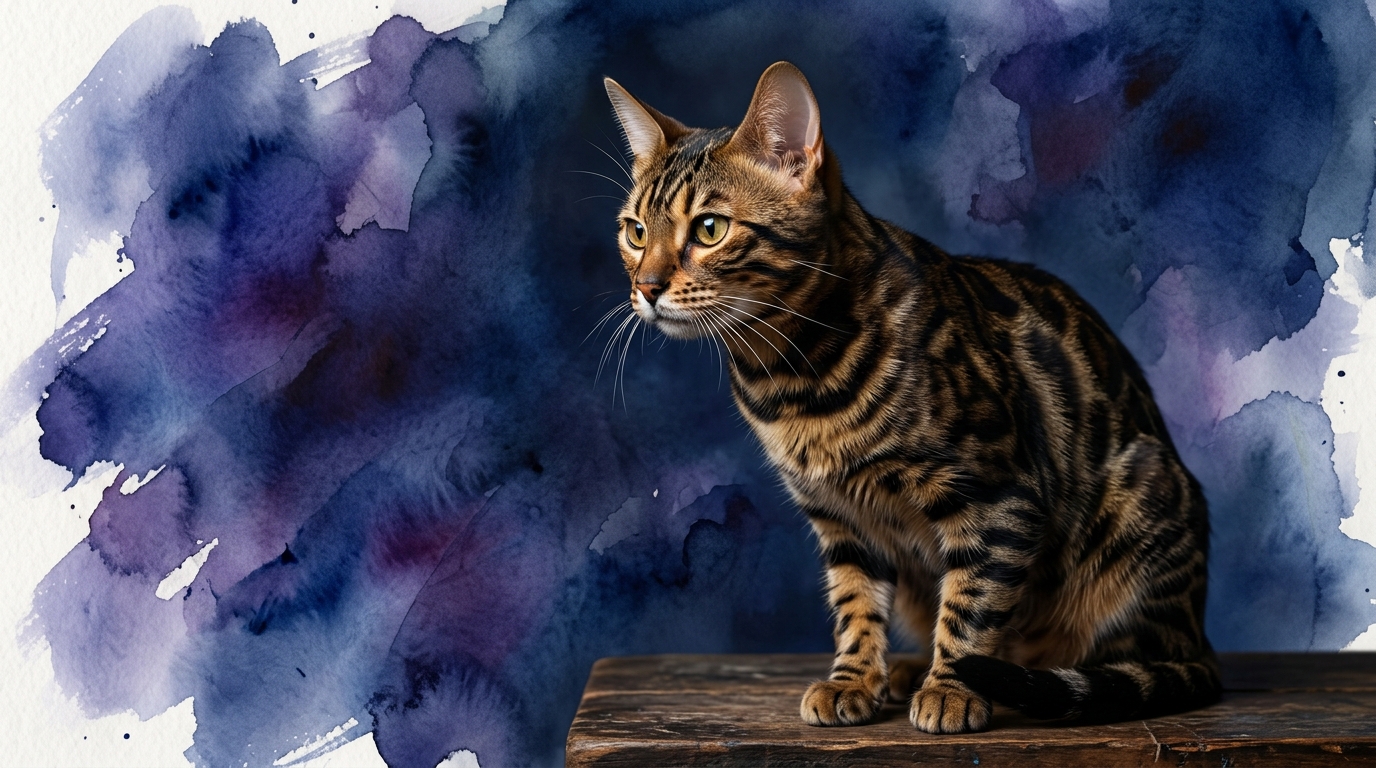
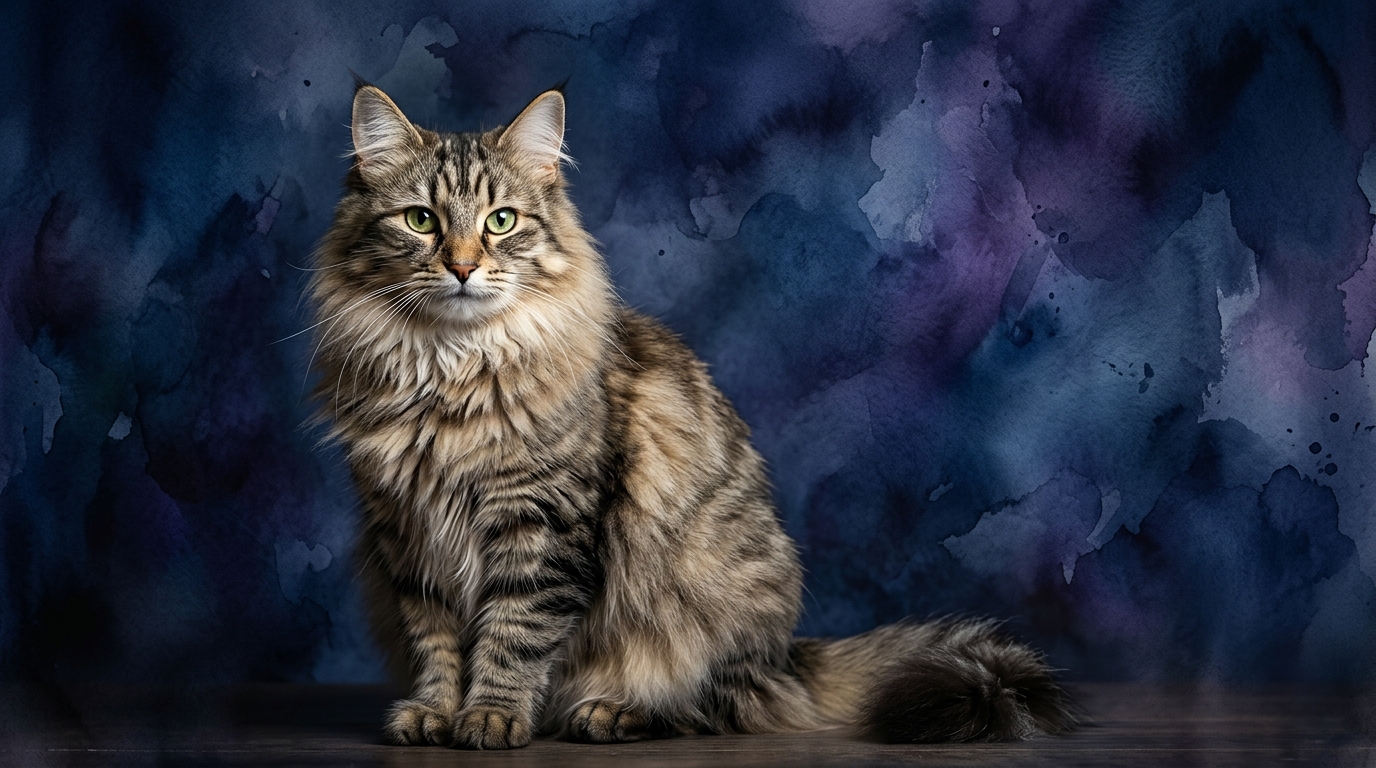
Side-by-Side Cognitive Profiles
The Cosmic Pet Pet IQ Lab employs a five-dimensional framework to assess feline cognition, offering a granular view beyond general perceptions. For the Bengal, their cognitive profile indicates a remarkable mental agility across the board. They achieve a perfect 5/5 in Problem Solving, demonstrating an exceptional capacity to decipher complex situations, manipulate objects to achieve goals, and overcome obstacles. Their Training Speed is rated at 4/5, reflecting a quick uptake of new commands and routines. Social Intelligence for Bengals stands at 4/5, indicating a strong ability to interpret human cues and engage interactively. Their Instinctive Drive is a commanding 5/5, showcasing intense predatory behaviors and a profound curiosity for exploration. Finally, their Memory is also a flawless 5/5, suggesting a robust ability to recall learned behaviors, locations, and previous interactions over extended periods.
In contrast, the Norwegian Forest Cat presents a profile emphasizing a blend of practicality and independence. Their Problem Solving ability is rated at 4/5, signifying a competent capacity to navigate their surroundings and figure out straightforward challenges, perhaps more focused on environmental mastery than intricate puzzles. Training Speed for the Norwegian Forest Cat is 3/5, suggesting they can learn but often require more repetition and patience compared to their Bengal counterparts. Social Intelligence is also 3/5, indicating they appreciate companionship but often maintain a more reserved or observant demeanor, engaging on their own terms. Their Instinctive Drive mirrors the Bengal at a robust 5/5, highlighting their deep-seated hunting prowess and natural survival skills honed over centuries. Their Memory score is 4/5, signifying a strong ability to remember key individuals, routines, and safe havens, though perhaps not with the same depth for complex sequences as the Bengal.
Where the Bengal's Mind Shines Brightest
The Bengal cat's cognitive advantages are particularly evident in areas demanding intricate thought and rapid learning. Their 5/5 Problem Solving score means they are adept at tasks requiring multiple steps or the manipulation of novel objects. Owners frequently report Bengals figuring out how to open complex latches on cabinets, operate water faucets, or even escape enclosures that would baffle most other felines. This isn't just about brute force; it's about understanding cause and effect and applying learned solutions to new scenarios. Their superior memory (5/5) synergizes with this, allowing them to retain these complex solutions and apply them consistently.
Furthermore, the Bengal's higher Training Speed (4/5) combined with their strong Social Intelligence (4/5) positions them as particularly receptive to interactive learning. They are quicker to grasp clicker training concepts, learn a variety of tricks beyond basic commands, and understand nuanced human requests. This cognitive nimbleness allows them to participate in more sophisticated forms of engagement, such as agility courses designed for cats or learning specific object retrieval, making them highly interactive companions for those who enjoy active participation in their pet's mental development.
Norwegian Forest Cat's Independent Cognitive Strengths
While the Norwegian Forest Cat may not match the Bengal's scores in every category, their cognitive strengths are deeply rooted in self-sufficiency and environmental mastery. Their 4/5 Problem Solving, paired with a perfect 5/5 Instinctive Drive, means they excel at practical, survival-oriented challenges. This manifests in their ability to navigate complex outdoor terrains, find optimal hunting spots, and locate the warmest or safest resting places. They are less about performing for humans and more about efficiently managing their own needs within their territory, demonstrating a profound understanding of their immediate physical world.
The Norwegian Forest Cat's 4/5 Memory, though slightly lower than the Bengal's, is robust enough to ensure they remember important landmarks, the locations of food sources, and the schedules of their human companions. This memory is often utilized in a more independent context, remembering the best climbing routes on a tree or the most direct path back home. Their Social Intelligence (3/5) encourages a more observational approach; they learn about their environment and its inhabitants by watching, forming a deep, quiet understanding rather than constant interactive engagement. This makes them excellent at adapting to new situations with a calm, considered approach.
Training Aptitude: Bengal's Zest vs. Wegie's Patience
When it comes to training, the differences between these two breeds become quite clear. The Bengal, with its 4/5 Training Speed and 5/5 Problem Solving, generally exhibits a keen eagerness to learn and impress. They thrive on mental stimulation and often pick up new commands, tricks, or even harness training with relatively few repetitions. Their social intelligence means they are often motivated by human praise and interaction, making positive reinforcement highly effective. This leads to a cat that can be taught to fetch, walk on a leash, or perform complex sequences, viewing the training as an engaging game.
The Norwegian Forest Cat, on the other hand, with a 3/5 Training Speed, requires a more patient and consistent approach. While certainly capable of learning, they are less inclined to perform for the sake of it and may need more time and repetition to solidify new behaviors. Their 3/5 social intelligence suggests they might prioritize their own comfort or independent exploration over following a command, especially if not adequately motivated. Training a Norwegian Forest Cat often involves understanding their inherent independence and making the learning process rewarding on their terms, focusing on practical commands like coming when called or using a scratching post, rather than elaborate tricks.
Matching Feline Minds to Lifestyles
For active owners seeking a dynamic, highly interactive companion, the Bengal cat is an exceptional match. Their superior problem-solving and rapid learning mean they thrive on mental challenges, puzzle toys, and consistent engagement. They benefit from owners who enjoy teaching tricks, going for walks on a leash, or even setting up complex enrichment activities to channel their formidable instinctive drive and cognitive energy. An owner who can dedicate time to daily interactive play and training will find a Bengal to be a truly captivating and responsive partner, constantly seeking new forms of stimulation.
Conversely, the Norwegian Forest Cat is better suited for owners who appreciate a more self-reliant and composed feline presence. While they enjoy affection and interaction, their moderate social intelligence and independent nature mean they are content with periods of quiet companionship and self-directed exploration. Owners who provide ample climbing opportunities, secure outdoor access if possible, and a calm home environment will find the Norwegian Forest Cat to be a wonderfully comforting and observant companion. They are ideal for individuals who admire a cat's natural grace and robust self-sufficiency without demanding constant, high-energy intellectual engagement.
The Verdict
Choose a Bengal if you desire a highly interactive, quick-witted companion eager to engage in complex play, learn tricks, and constantly challenge their remarkable problem-solving abilities.
Opt for a Norwegian Forest Cat if you prefer a self-sufficient, observant companion who excels in practical navigation and appreciates a calmer presence, valuing their quiet companionship and natural grace.
🧠 Find Your Pet's IQ Score
Our Pet IQ Lab assessment covers 25+ tests across 5 cognitive dimensions — personalized to your breed.
Take the Full IQ Test →Frequently Asked Questions
Do Bengals require a lot of mental stimulation to prevent destructive behavior?
Yes, Bengals possess a 5/5 problem-solving ability and a 5/5 instinctive drive, meaning they need significant mental and physical outlets. Without adequate enrichment, their powerful cognitive and physical energy can lead to boredom and potentially destructive behaviors as they seek their own stimulation.
Can Norwegian Forest Cats adapt well to apartment living despite their high instinctive drive?
Norwegian Forest Cats, with their 5/5 instinctive drive, can adapt to apartment living if provided with ample vertical space for climbing and secure 'catio' access or supervised outdoor time. Their 4/5 problem-solving skills help them navigate and utilize indoor environments effectively, but opportunities to express their natural behaviors are crucial for their well-being.
Which breed is generally more vocal in expressing their needs or desires?
Bengals, with their higher social intelligence (4/5) and strong desire for interaction, are often more vocal, using a range of chirps, meows, and even trills to communicate with their human companions. Norwegian Forest Cats, with a 3/5 social intelligence, tend to be less vocal, often communicating through body language or soft chirps, preferring a more understated form of expression.