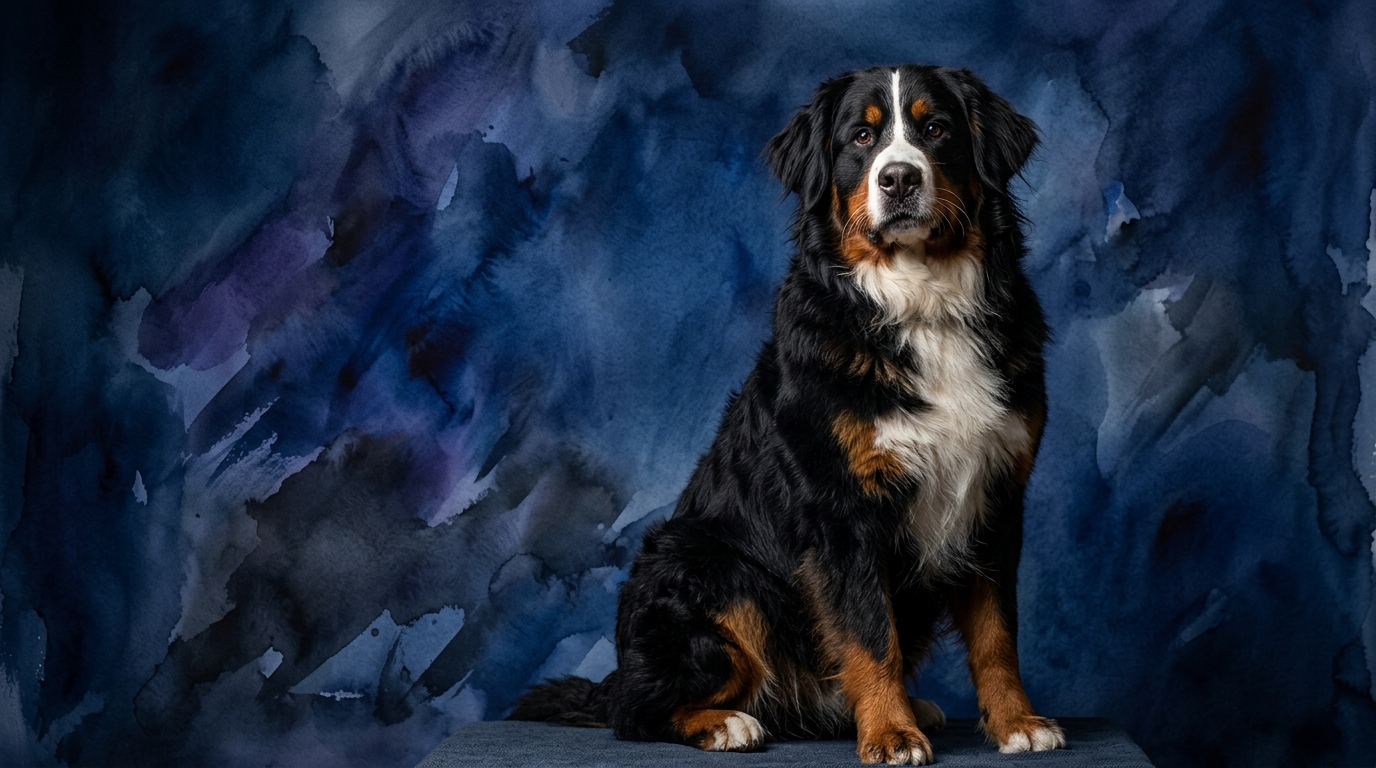
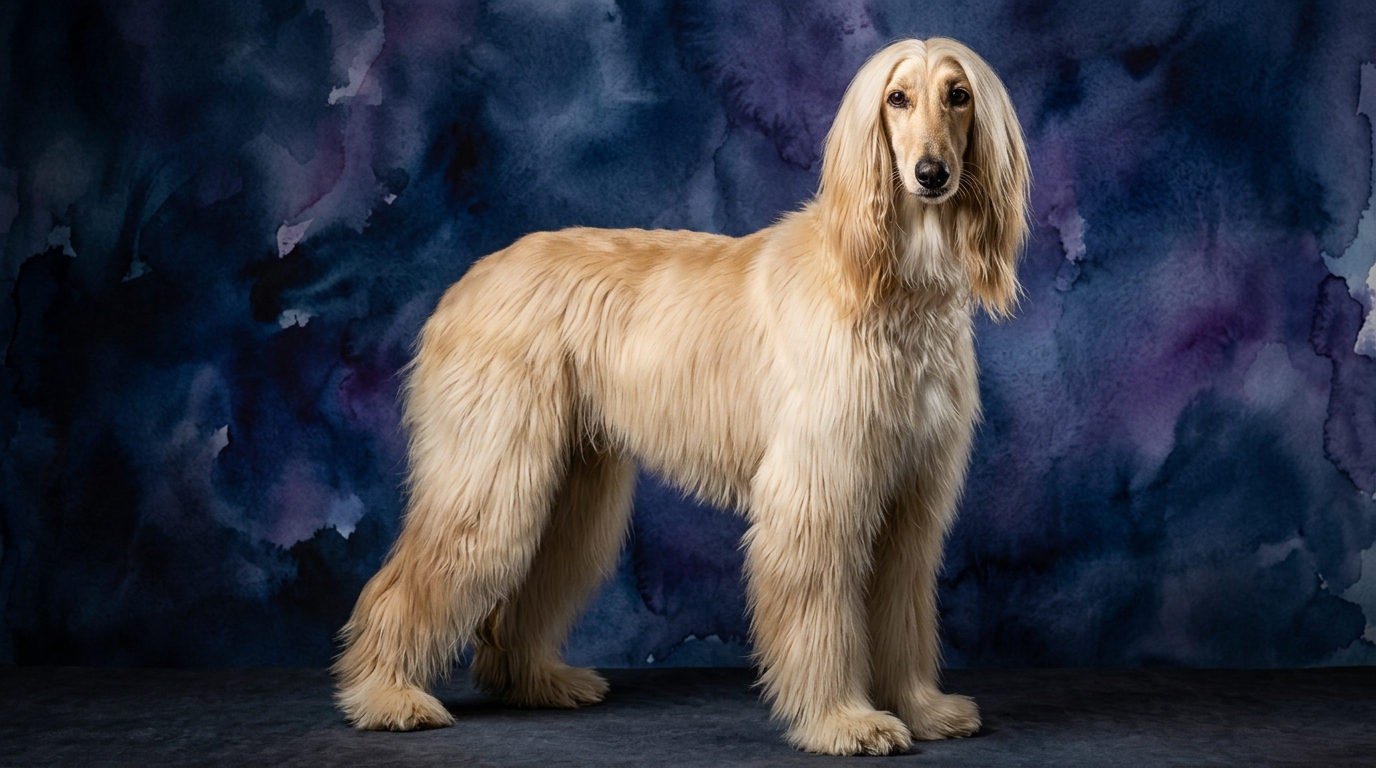
Side-by-Side IQ Profile: Bernese Mountain Dog vs. Afghan Hound
The Cosmic Pet Pet IQ Lab employs five critical dimensions to map a breed's cognitive profile, offering a nuanced understanding beyond simple obedience. For the Bernese Mountain Dog, a Working breed ranked #27 by Coren, its problem-solving ability scores 3/5, suggesting a practical capacity to navigate everyday challenges. Its training speed is a notable 4/5, indicating a quick grasp of commands and routines, while social intelligence shines at a perfect 5/5, reflecting a deep connection to human interaction and understanding social cues. Instinctive drive, typical of a working dog, registers 4/5, and memory stands at 3/5, allowing for retention of learned behaviors and experiences.
In contrast, the Afghan Hound, a graceful Hound breed with a Coren rank of #79, presents a different cognitive blueprint. Its problem-solving ability is surprisingly high at 4/5, indicating a keen capacity for independent thought, often in pursuit of its own objectives. However, its training speed is a modest 1/5, suggesting a more deliberate and less eager approach to formal instruction. Social intelligence is 2/5, pointing to a more aloof or less human-centric interaction style. Instinctive drive, characteristic of a sighthound, is a powerful 5/5, reflecting an innate urge to chase and hunt, while memory, like the Bernese, is 3/5.
Where the Bernese Mountain Dog Excels Cognitively
The Bernese Mountain Dog's cognitive strengths are deeply rooted in its history as a farm dog, requiring cooperation and communication with humans. Its paramount social intelligence (5/5) means it is highly attuned to human emotions, intentions, and social structures within a family. This translates into a dog that not only understands commands but also seeks to participate and please, often anticipating its owner's needs. This strong social bond is a powerful motivator, making them intuitive companions capable of forming deep, empathetic connections.
Coupled with its superior training speed (4/5), the Bernese Mountain Dog readily absorbs and retains new information, making it adaptable to various roles from therapy work to competitive obedience. Their moderate problem-solving (3/5) is often employed in practical, human-directed tasks, such as navigating a familiar environment or learning complex routines. Their robust instinctive drive (4/5) is channeled into purposeful activities like pulling carts or herding, tasks that benefit from their cooperative nature and physical prowess. This combination of social acumen and trainability makes them exceptionally responsive and integrated family members.
Where the Afghan Hound Demonstrates Unique Cognitive Strengths
The Afghan Hound's cognitive profile, while less overtly cooperative, showcases a distinct form of brilliance, particularly in its problem-solving (4/5) and instinctive drive (5/5). These strengths stem from its ancient role as an independent hunter, where quick, decisive action and self-reliance were paramount. An Afghan Hound's problem-solving isn't about pleasing a human; it's about efficiently achieving its own goals, such as finding a way around an obstacle to pursue something interesting or outsmarting a perceived barrier.
Their powerful instinctive drive (5/5) is a testament to their sighthound heritage, fueling an intense focus and determination when a visual stimulus triggers their chase instinct. This drive, combined with their problem-solving ability, allows them to strategize and execute complex pursuit behaviors with remarkable efficiency and independence. While their social intelligence (2/5) is lower, it doesn't mean they lack affection; rather, their affection is often expressed on their own terms, reflecting a self-assured and sometimes aloof personality that values personal space and autonomy. Their memory (3/5) ensures they learn from experiences, particularly those related to their innate drives, allowing them to refine their independent strategies over time.
Trainability: A Tale of Two Motivations
When considering ease of training, the Bernese Mountain Dog and Afghan Hound present starkly different experiences due to their intrinsic motivations and cognitive strengths. The Bernese Mountain Dog, with its training speed of 4/5 and social intelligence of 5/5, is generally eager to please and quick to form associations between commands and actions. They thrive on positive reinforcement and the opportunity to engage collaboratively with their human companions. Their desire for social connection makes them highly motivated by praise, affection, and interactive play, making training sessions productive and rewarding for both dog and owner. They quickly learn household rules, basic obedience, and even more complex tasks because they genuinely enjoy the process of working alongside their people.
In contrast, the Afghan Hound's training speed of 1/5 and social intelligence of 2/5 indicate a less biddable and more independently minded learner. An Afghan Hound is not primarily motivated by human approval in the same way a Bernese is; their strong instinctive drive (5/5) often takes precedence. Training an Afghan requires immense patience, understanding of their sighthound nature, and finding motivators that appeal to their independent spirit, such as lure coursing or opportunities to run. They learn best through consistent, positive reinforcement that makes sense to them, but they may choose to comply only when it aligns with their own interests. Their "problem-solving" often involves figuring out how to get what they want, which might not always be what their owner wants, necessitating creative and persistent training approaches that respect their independent character rather than trying to overpower it.
Matching Canine Companions to Lifestyles
The choice between a Bernese Mountain Dog and an Afghan Hound profoundly impacts the daily rhythm of an owner's life, aligning with either active or relaxed preferences in distinct ways. A Bernese Mountain Dog is an excellent fit for active owners who desire a cooperative and engaged canine partner for shared activities. Their moderate energy levels, combined with their high social intelligence and training speed, make them suitable for hiking, dog sports, or simply being an ever-present, responsive companion during family outings. They enjoy having a role within the family unit and are typically content participating in most human-centric activities, provided they receive adequate exercise and mental stimulation that leverages their desire to work and connect.
Conversely, the Afghan Hound appeals to a different kind of active owner—one who appreciates an independent spirit and can accommodate significant bursts of exercise. While they may appear relaxed indoors, their powerful instinctive drive (5/5) demands opportunities for free, vigorous running in a securely fenced area. They are not typically suited for owners seeking a constantly interactive or highly obedient companion on walks, as their sighthound instincts can lead them to pursue visual stimuli with single-minded intensity. Owners who value a dog's elegant independence, are prepared for their unique exercise needs, and understand that their affection might be more reserved or on their own terms, will find a rewarding companion in the Afghan Hound. They are best suited for those who appreciate their unique form of activity and autonomy rather than a dog that lives to please.
The Verdict
Choose the Bernese Mountain Dog if you seek a highly sociable, cooperative, and trainable companion eager to integrate into family life and participate in shared activities.
Opt for the Afghan Hound if you admire independent spirits, are prepared for their distinct exercise needs, and appreciate a dog whose intelligence manifests in self-reliance and keen instinctive drives.
🧠 Find Your Pet's IQ Score
Our Pet IQ Lab assessment covers 25+ tests across 5 cognitive dimensions — personalized to your breed.
Take the Full IQ Test →