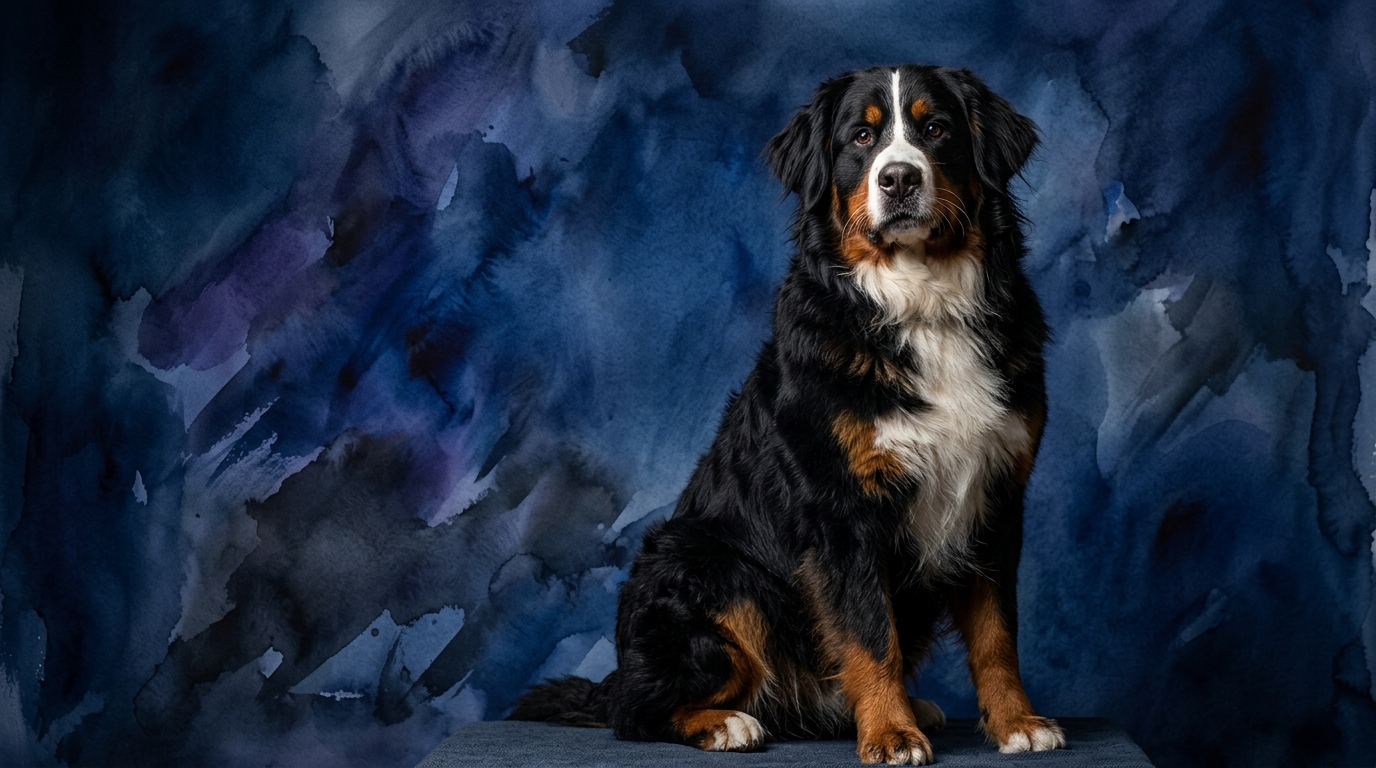
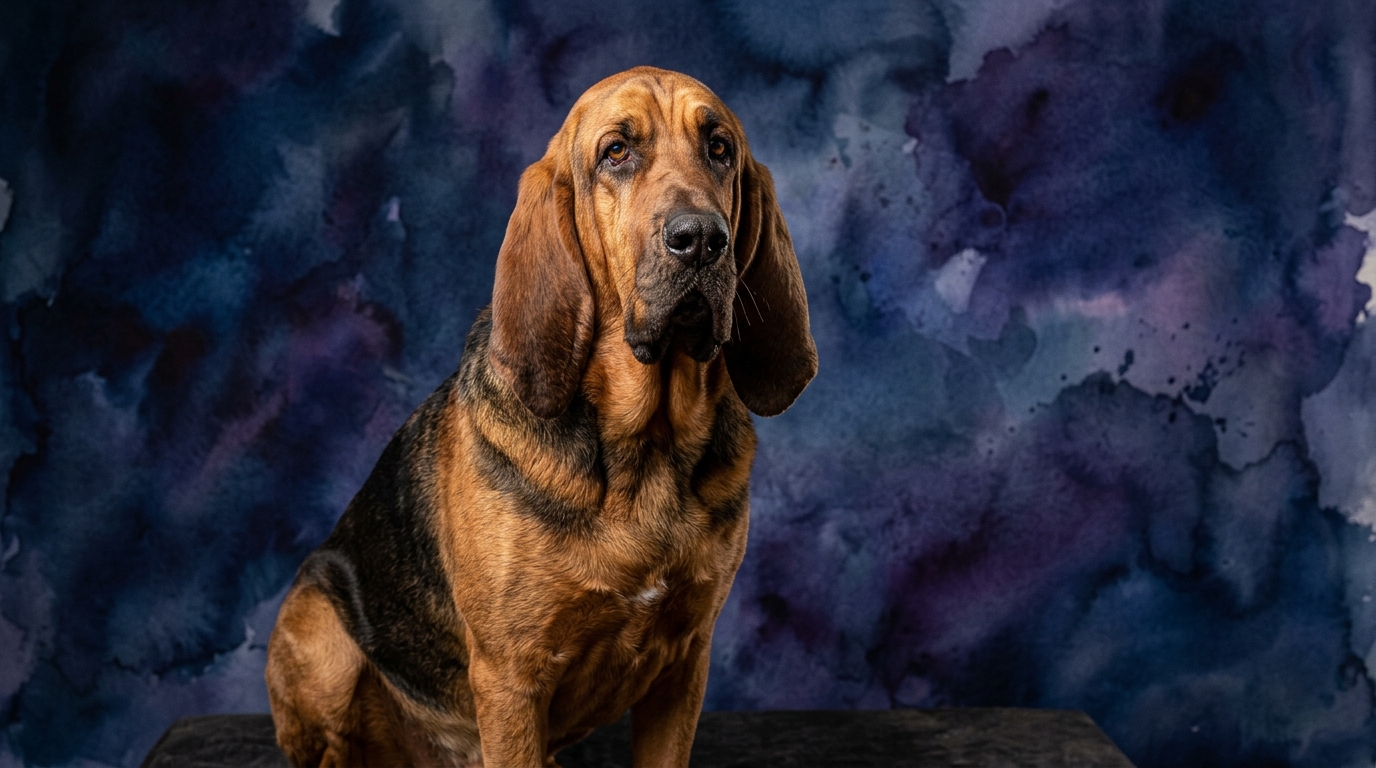
Side-by-Side IQ Profile: Bernese Mountain Dog vs. Bloodhound
The Bernese Mountain Dog, ranking #27 on Coren's list, demonstrates a well-rounded and socially adept cognitive profile. Their Problem Solving is rated 3/5, indicating competence in navigating everyday challenges and learning from experience, without necessarily inventing novel solutions. Training Speed is a strong 4/5, suggesting they absorb new commands and routines with relative ease and consistency. Social Intelligence shines at 5/5, reflecting their exceptional ability to read human cues, understand social dynamics, and cooperate willingly. Their Instinctive Drive is 4/5, manifesting as a strong desire to work alongside their human companions, often in tasks involving hauling or herding. Memory for the Bernese Mountain Dog is 3/5, sufficient for retaining training and recognizing familiar people and places.
In contrast, the Bloodhound, positioned at #74 on Coren's ranking, possesses a highly specialized cognitive toolkit. Their Problem Solving is an outstanding 5/5, particularly when it comes to unraveling complex scent trails and overcoming obstacles to follow a lead. However, this superior problem-solving is often narrowly applied to their primary instinct. Training Speed is a low 1/5, indicating a significant challenge in teaching human-centric commands, as their focus is frequently elsewhere. Social Intelligence is 2/5; while capable of forming bonds, they are less inclined to prioritize human social signals over their powerful instincts. Their Instinctive Drive is a perfect 5/5, almost entirely directed towards scent work and tracking. Memory for the Bloodhound is also a perfect 5/5, allowing them to recall intricate scent patterns and locations with remarkable accuracy, a critical asset for their tracking prowess.
Where the Bernese Mountain Dog Excels Cognitively
The Bernese Mountain Dog's cognitive strengths lie in their exceptional social intelligence and adaptability within a human household. With a 5/5 rating in social intelligence, these dogs possess an innate understanding of human communication, responding readily to verbal cues, body language, and even subtle shifts in mood. This makes them profoundly cooperative companions, eager to engage in shared activities and integrate seamlessly into family life. Their strong social acumen allows them to predict human intentions and adjust their behavior accordingly, fostering a harmonious living environment. This isn't just about 'pleasing' an owner; it's about a deep, intuitive grasp of social structures and a desire to participate constructively within them.
Furthermore, their 4/5 training speed means they process and retain new commands relatively quickly. While not the fastest learners in the canine world, their consistent progress, combined with their willingness to cooperate, makes the training process a rewarding experience. They grasp concepts related to household rules, leash manners, and basic obedience with a commendable efficiency, often requiring fewer repetitions than breeds with lower training speed scores. Their moderate problem-solving (3/5) enables them to navigate typical domestic situations, such as finding a dropped toy or figuring out a gate latch, without undue frustration, demonstrating a practical and functional intelligence for everyday living.
Where the Bloodhound Excels Cognitively
The Bloodhound's cognitive brilliance is undeniably specialized, centered around their unparalleled olfactory capabilities. Their 5/5 score in problem-solving is directly tied to their ability to decipher and follow intricate scent trails, a task that requires complex cognitive mapping, discrimination between countless odor molecules, and persistent focus. This isn't just sniffing; it's a sophisticated form of environmental analysis and deduction. They can piece together fragmented scent information, ignore irrelevant odors, and maintain a track over vast distances and varied terrain, showcasing a depth of analytical thinking that is truly remarkable within their domain. This specific problem-solving skill makes them the gold standard in search and rescue and law enforcement tracking.
Complementing this is their 5/5 instinctive drive, which is almost entirely dedicated to scent work. This intense, unwavering focus allows them to pursue a scent with single-minded determination, often to the exclusion of all other stimuli. This drive isn't merely a physical urge; it's a cognitive imperative that directs their problem-solving and memory functions. Their perfect 5/5 memory score is crucial here, enabling them to recall and build upon complex scent patterns, remembering specific odors and their associations over time and distance. This specialized memory allows them to 'read' a scent trail like a narrative, retaining information about age, direction, and even the emotional state of the subject, making them uniquely equipped for their extraordinary work.
Which is Easier to Train and Why
Based on their cognitive profiles, the Bernese Mountain Dog is demonstrably easier to train for general obedience and household manners. Their training speed of 4/5 means they grasp new commands relatively quickly, and their exceptional social intelligence (5/5) means they are inherently motivated to cooperate and engage with their human handlers. They are attuned to human direction and typically eager to please, making positive reinforcement highly effective. When a Bernese Mountain Dog is given a command, their cognitive processing is geared towards understanding and complying with their human's wishes, leading to a more straightforward and rewarding training experience for the average owner. They are less likely to be distracted by independent interests during a training session, prioritizing the interaction with their person.
The Bloodhound, conversely, presents a significant training challenge for general obedience due to their 1/5 training speed and a powerful 5/5 instinctive drive. While they are problem-solving geniuses in their niche, their cognitive focus is overwhelmingly directed towards scent, making human commands often secondary or entirely unnoticed when a compelling odor is present. Their lower social intelligence (2/5) means they are less inclined to look to their handler for guidance or approval, preferring to follow their nose. Training a Bloodhound requires immense patience, creativity, and a deep understanding of their specialized motivation. Owners must learn to work with, rather than against, their potent scent drive, often incorporating tracking games into their training to capture their attention, rather than expecting a quick response to traditional commands like 'sit' or 'stay' in a distracting environment. Their internal reward system is heavily weighted towards the successful pursuit of a scent, which can overshadow external motivators like treats or praise from a human.
Which Suits Active Owners vs. Relaxed Owners
The Bernese Mountain Dog generally suits owners who seek an active companion willing to participate in family adventures but also appreciate periods of relaxation. While they possess a moderate instinctive drive (4/5) and enjoy activities like hiking, carting, or even agility, their strong social intelligence means they thrive on human companionship and are content to settle down with their family once their exercise needs are met. They are adaptable to a variety of lifestyles, provided they receive consistent mental and physical stimulation. Their cooperative nature makes them excellent partners for owners who enjoy consistent training, socialization, and outdoor exploration, but also desire a calm presence within the home.
The Bloodhound, with its intense 5/5 instinctive drive and perfect 5/5 problem-solving and memory for scent, is ideally suited for highly active and dedicated owners who are prepared to channel their dog's specialized abilities. These are not 'relaxed' dogs in the traditional sense; their mental and physical energy is almost entirely directed towards tracking. Owners must be committed to providing regular, intensive opportunities for scent work, whether through formal tracking sports, search and rescue training, or extensive 'nose work' games. A Bloodhound left without an outlet for their profound drive can become restless and potentially destructive. They require owners who understand and respect their independent, scent-driven nature, and are willing to engage in activities that fulfill their intrinsic purpose, often involving long, focused walks where their nose leads the way, rather than strict heel commands.
The Verdict: When to Choose Each
The Verdict
Choose a Bernese Mountain Dog if you seek a highly cooperative, socially attuned family companion that enjoys shared activities and is relatively straightforward to train for general obedience.
Opt for a Bloodhound if you are a dedicated, active owner passionate about engaging with and harnessing their extraordinary, specialized scent-tracking abilities, understanding their independent, nose-driven nature.
🧠 Find Your Pet's IQ Score
Our Pet IQ Lab assessment covers 25+ tests across 5 cognitive dimensions — personalized to your breed.
Take the Full IQ Test →Frequently Asked Questions
Is a Bernese Mountain Dog good for first-time dog owners?
Yes, their high social intelligence and reasonable training speed make them a good choice for first-time owners who are committed to consistent positive reinforcement and early socialization. They are eager to please and form strong bonds, which simplifies the learning process for both dog and owner.
Do Bloodhounds make good family pets despite their independent nature?
Bloodhounds can be affectionate family pets, but their strong instinctive drive means their primary focus is often on scents rather than human interaction. They require owners who understand this independence and provide ample opportunities for scent work to keep them mentally fulfilled, otherwise they may seem aloof or restless indoors.
Which breed requires more mental stimulation?
While both breeds benefit from mental engagement, the Bloodhound requires significantly more specialized mental stimulation in the form of scent work to satisfy their profound instinctive drive and problem-solving intellect. A Bernese Mountain Dog's mental needs are typically met through varied training, puzzle toys, and social interaction.