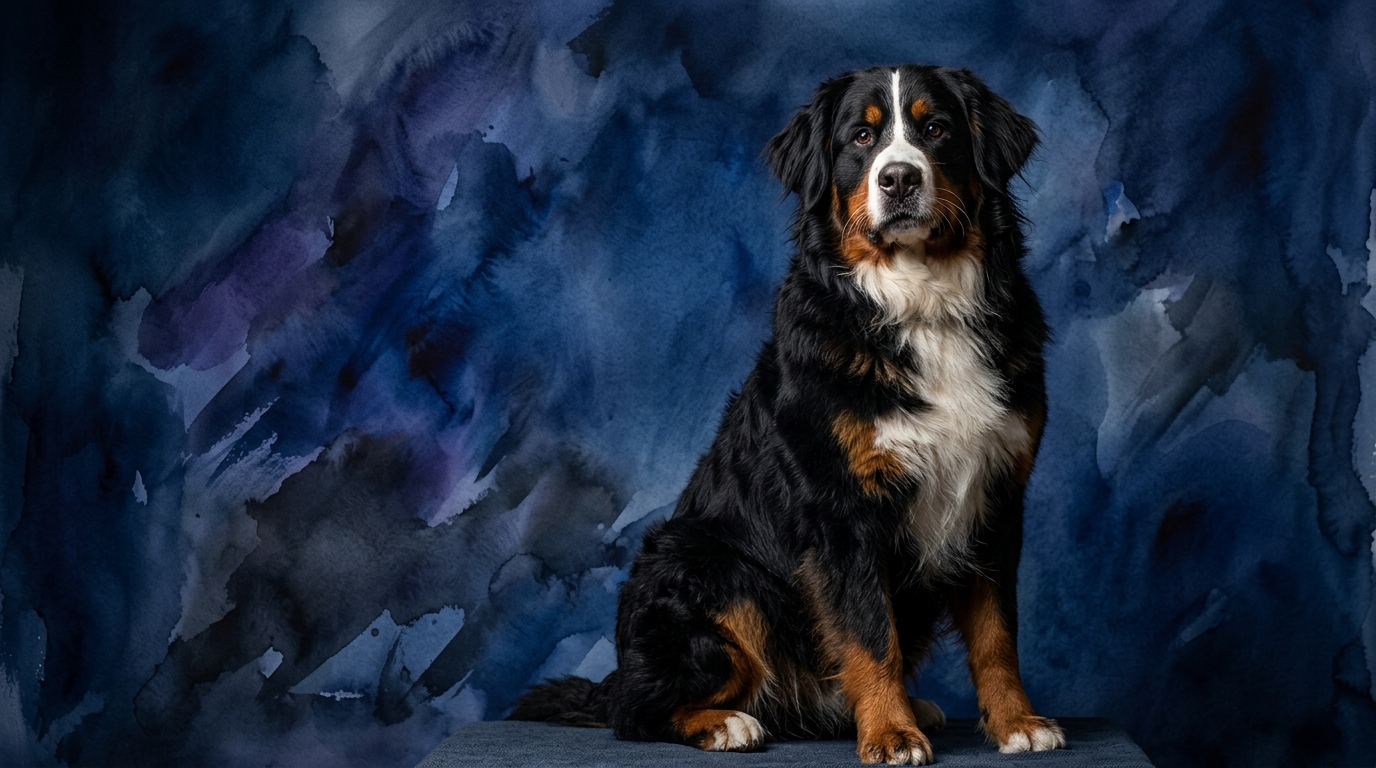
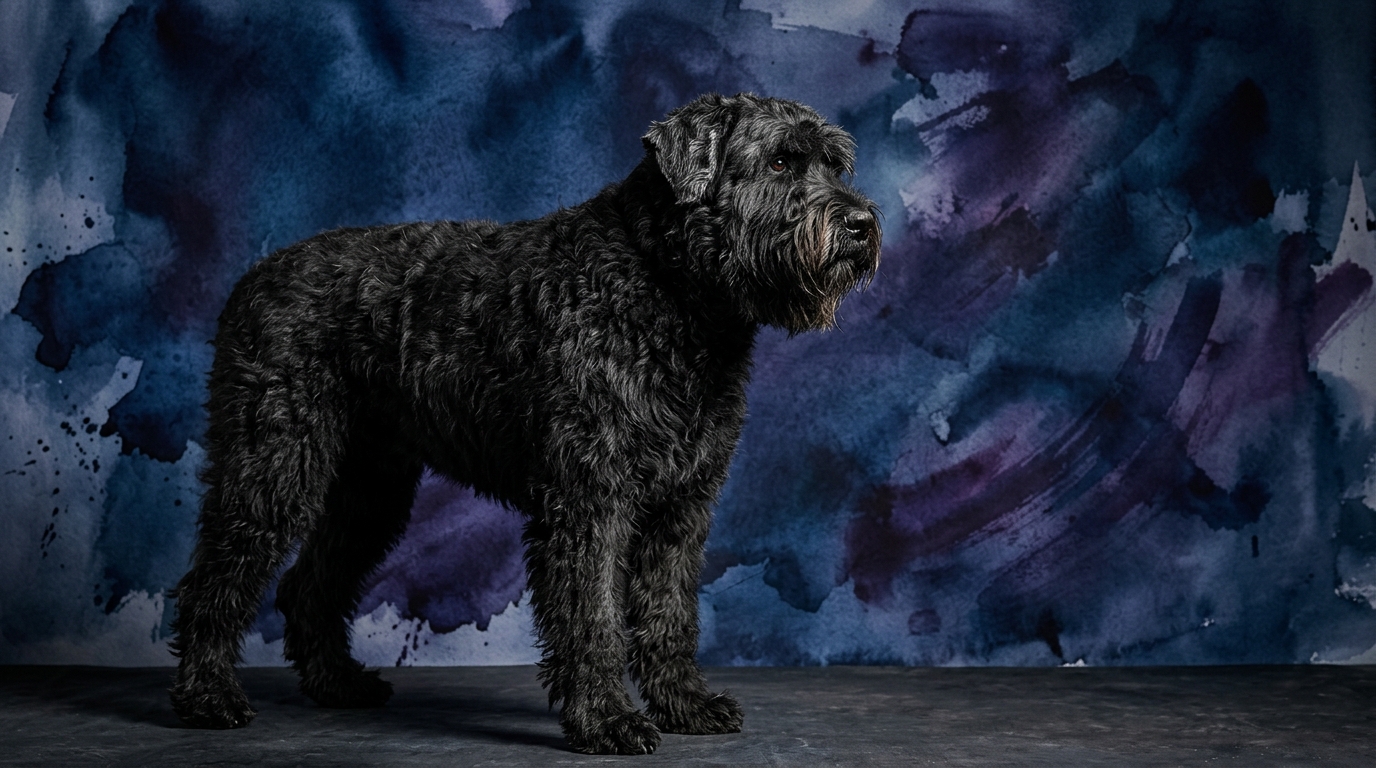
Side-by-Side IQ Profile: Bernese Mountain Dog vs. Bouvier des Flandres
The Cosmic Pet Pet IQ Lab provides a structured framework for understanding canine intelligence across five key dimensions. For the Bernese Mountain Dog, a Working Group breed ranked #27 by Coren, their profile highlights a distinct leaning towards social engagement. They score a respectable 3/5 in Problem Solving, indicating an ability to navigate novel situations without exceptional ingenuity, and a 3/5 in Memory, suggesting they retain information adequately but may not recall complex sequences with perfect precision. Their strength truly shines in Training Speed (4/5), reflecting their readiness to acquire new behaviors, and especially in Social Intelligence (5/5), which speaks to their profound capacity for understanding human cues and forming deep bonds. An Instinctive Drive of 4/5 points to their historical roles requiring purpose and cooperation.
In contrast, the Bouvier des Flandres, a Herding Group breed not specifically Coren-ranked, presents a more uniformly balanced, albeit moderately scored, cognitive profile. Across all five dimensions – Problem Solving, Training Speed, Social Intelligence, Instinctive Drive, and Memory – the Bouvier scores a consistent 3/5. This doesn't suggest a lack of capability, but rather a steady, pragmatic approach to mental tasks. Their 3/5 in Problem Solving means they are capable of working through challenges, though perhaps with less spontaneous flair than some breeds. A Training Speed of 3/5 indicates they learn at a reasonable pace, requiring consistent methodology. Their Social Intelligence at 3/5 suggests loyalty and connection to their family, but perhaps a more reserved or independent demeanor compared to the Bernese. An Instinctive Drive of 3/5 reflects their history of herding and guarding, performed with competence rather than intense, overwhelming zeal. Finally, their 3/5 in Memory implies a solid ability to recall learned behaviors and routines.
Where the Bernese Mountain Dog Excels Cognitively
The Bernese Mountain Dog's cognitive strengths are deeply rooted in their history as versatile farm dogs in the Swiss Alps, where close cooperation with humans was paramount. Their standout Social Intelligence score of 5/5 signifies an exceptional ability to interpret human emotions, body language, and vocal tones. This makes them remarkably attuned companions, often anticipating their owner's needs or moods. A Bernese can often understand a command simply from a gesture or a shift in tone, demonstrating an intuitive grasp of social cues that goes beyond mere obedience. This high social understanding also contributes to their strong desire to please, making them inherently cooperative partners in daily life.
Furthermore, their Training Speed of 4/5 is a significant advantage. This means a Bernese typically picks up new commands and routines with relative swiftness, often requiring fewer repetitions than many other breeds. This quick uptake is not just about rote learning; it's often fueled by their high social intelligence, as they view training as a collaborative activity that strengthens their bond with their human. This combination of social acumen and rapid learning makes them particularly amenable to complex obedience, trick training, or even service dog work where understanding and responsiveness are key.
Where the Bouvier des Flandres Holds Its Own Cognitively
The Bouvier des Flandres, originating from the rugged plains of Flanders as a cattle driver and guard dog, exhibits a different, yet equally valuable, set of cognitive attributes. Their consistent 3/5 across all IQ dimensions speaks to a balanced, self-reliant intelligence rather than a specialized brilliance. This breed excels in situations requiring steady, independent thought and a certain resilience. Their Problem Solving score of 3/5 means they are capable of assessing situations and devising solutions, often in a methodical and unhurried manner. This can manifest as an ability to figure out how to navigate an obstacle in their path or how to manage a herd, relying on their own judgment rather than constant human direction.
Their Instinctive Drive of 3/5, while not as intense as some herding breeds, is perfectly suited for their historical role. It’s a drive that enables them to perform tasks like guarding property or moving livestock with a calm authority and an unwavering focus. This means they are less prone to frantic, over-the-top reactions, instead preferring a measured, deliberate response. This balanced drive, combined with their adequate Memory (3/5), allows them to retain complex routines and boundaries, making them dependable in their duties once properly established. The Bouvier's intelligence is often characterized by a quiet competence and a robust mental fortitude, allowing them to remain composed and effective in challenging environments.
Which is Easier to Train and Why?
When considering ease of training, the Bernese Mountain Dog generally presents a more straightforward experience for the average owner. Their high Social Intelligence (5/5) and Training Speed (4/5) mean they are inherently eager to please and quick to understand what is being asked of them. A Bernese often forms a strong desire to cooperate, viewing training as an opportunity for positive interaction and bonding. They are highly responsive to praise and positive reinforcement, often requiring fewer repetitions to solidify a command. This makes them relatively forgiving of novice trainers and a joy to teach, as their enthusiasm for learning is palpable. Their behavioral differences, such as their strong affiliation with their human family, directly translate into a higher motivation to comply and learn within a structured family environment.
The Bouvier des Flandres, with its 3/5 scores in both Social Intelligence and Training Speed, requires a different approach. While certainly capable of learning, they tend to be more independent thinkers and less overtly eager to please. Their background as a working dog often meant making decisions autonomously, which can translate into a need for clear, consistent, and firm leadership during training. They might test boundaries more frequently than a Bernese, and a lack of consistency from the owner can quickly lead to a Bouvier deciding to follow its own agenda. Training a Bouvier demands patience, repetition, and a deep understanding of canine behavior, focusing on motivation that appeals to their sense of purpose rather than just social approval. Their intelligence is there, but accessing it requires a more deliberate and structured pedagogical style, respecting their inherent self-reliance.
Which Suits Active Owners vs. Relaxed Owners?
The Bernese Mountain Dog, while possessing a working background, often aligns well with a relatively relaxed owner, provided that 'relaxed' still includes consistent social engagement and moderate activity. Their high social intelligence means they thrive on being an integral part of family life and will not do well if left isolated for long periods. They enjoy daily walks, playtime in the yard, and participating in family outings, but they are not typically high-strung athletes requiring intense, multi-hour exercise sessions. A Bernese often appreciates a cozy spot near their humans after a good walk, fulfilling their need for companionship and comfort. Owners who enjoy a dog that is deeply integrated into their social routines and whose primary 'job' is to be a loving family member will find a Bernese an excellent match.
The Bouvier des Flandres, conversely, is better suited for more active owners who appreciate a dog with a robust physical and mental constitution. While their instinctive drive is 3/5, their historical purpose as a cattle drover and guard dog means they possess significant stamina and a need for purpose. They require consistent, vigorous exercise to keep them physically and mentally stimulated, such as long hikes, agility training, or even actual herding work. A Bouvier thrives on having a 'job' to do, whether it's guarding the home, participating in dog sports, or engaging in complex training routines that challenge their problem-solving abilities. Owners who can provide firm leadership, consistent training, and ample opportunities for physical and mental engagement will find the Bouvier to be a rewarding and loyal partner, one that appreciates a challenge and performs with a quiet determination.
The Verdict
Choose the Bernese Mountain Dog if you seek a deeply emotionally connected companion, eager to please and quick to learn, thriving on social interaction and a prominent role within the family.
Opt for the Bouvier des Flandres if you appreciate a resilient, independent, and steady canine partner, capable of methodical problem-solving and requiring consistent, purposeful engagement and strong leadership.
🧠 Find Your Pet's IQ Score
Our Pet IQ Lab assessment covers 25+ tests across 5 cognitive dimensions — personalized to your breed.
Take the Full IQ Test →Frequently Asked Questions
Do Bernese Mountain Dogs get along well with other pets and children?
Yes, due to their high social intelligence, Bernese Mountain Dogs typically integrate well into multi-pet households and are known for their gentle nature with children. Early socialization is always beneficial to foster these positive interactions from a young age.
Are Bouvier des Flandres good watchdogs?
Absolutely. Their instinctive drive (3/5) and balanced nature make them excellent watchdogs; they are naturally protective of their family and territory. They typically have a deep bark and will alert to strangers, but are not usually prone to excessive, unnecessary barking.
Which breed requires more grooming?
The Bouvier des Flandres generally requires more intensive grooming due to their dense, wiry, and often shaggy double coat, which needs regular brushing and stripping to prevent matting. The Bernese Mountain Dog, with its thick but softer double coat, also requires regular brushing, particularly during shedding seasons, but typically less specialized care than the Bouvier.