
Side-by-Side IQ Profile: Bernese Mountain Dog vs. Dachshund
The Cosmic Pet Pet IQ Lab evaluates canine cognition across five crucial dimensions, revealing distinct mental landscapes for each breed.
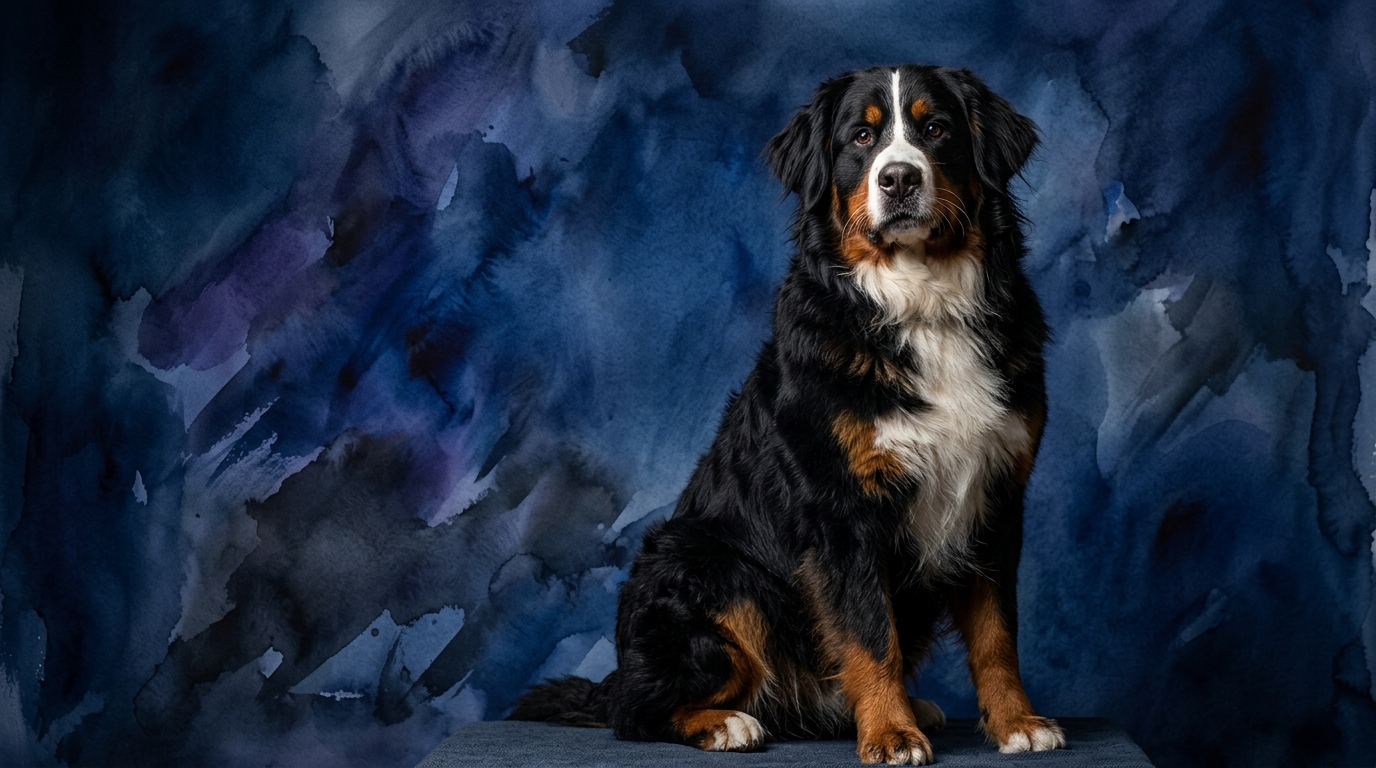
The Bernese Mountain Dog (Working, Coren rank #27) demonstrates a Problem Solving score of 3/5, indicating competence in moderately complex situations, often relying on established routines rather than novel solutions. Their Training Speed is 4/5, suggesting a quick grasp of new commands and a responsiveness to consistent guidance. In Social Intelligence, they achieve a remarkable 5/5, showcasing an exceptional ability to interpret human cues and intentions, fostering deep emotional connections. Their Instinctive Drive is 4/5, reflecting a moderate to strong inclination towards tasks like guarding and companionship. Memory stands at 3/5, meaning they retain learned information adequately but may benefit from occasional refreshers.
The Dachshund (Hound, Coren rank #49), on the other hand, scores 4/5 in Problem Solving, indicating a notable capacity for independent thought and creative solutions, particularly when pursuing self-directed goals. Their Training Speed is 2/5, suggesting a slower adoption of new commands, often influenced by their independent streak. Social Intelligence for the Dachshund is 3/5; while they understand human interactions, they tend to be less overtly people-focused, displaying a more self-reliant social presence. Their Instinctive Drive is a powerful 5/5, deeply rooted in their badger-hunting heritage, manifesting as a strong urge for scent tracking, digging, and pursuit. Memory is 3/5, similar to the Bernese Mountain Dog, retaining information reasonably well, especially regarding their immediate environment.
Where the Bernese Mountain Dog Wins Cognitively
The Bernese Mountain Dog's cognitive architecture truly shines in its exceptional social intelligence, rated 5/5 by The Cosmic Pet Pet IQ Lab. They possess a profound capacity to interpret human moods, intentions, and subtle cues, making them highly attuned companions who often anticipate needs or offer comfort without explicit prompting. This superior social processing allows them to integrate seamlessly into a family unit, fostering harmonious cohabitation. Their 4/5 training speed is directly linked to this, as their eagerness to please and strong desire for connection make them highly receptive to instruction, quickly grasping new concepts beyond mere rote commands. This cognitive strength makes them outstanding as therapy animals or devoted family dogs, where understanding and responding to human emotional states are paramount for effective interaction.
Where the Dachshund Wins Cognitively
Conversely, the Dachshund excels with a 4/5 rating in problem-solving, outperforming the Bernese Mountain Dog in this specific domain. This isn't about solving complex puzzles set by humans, but rather demonstrating cunning and resourcefulness in achieving their own objectives, often related to their deep-seated instinctive drive. Their 5/5 instinctive drive, a powerful legacy from their badger-hunting ancestry, fuels this problem-solving prowess; faced with a scent trail or a perceived burrow, a Dachshund will exhibit remarkable persistence and ingenuity to follow through. This manifests as independent thinking and a determined pursuit of self-directed goals, showcasing a cognitive independence that is both admirable and, at times, challenging for owners. Their problem-solving isn't about compliance, but about effective self-agency in their world, making them adept at navigating their environment on their own terms.
Which is Easier to Train and Why
The Bernese Mountain Dog is generally easier to train due to its higher training speed and exceptional social intelligence. Their innate desire to cooperate and strong bond with their human companions mean they are eager to learn and respond positively to guidance. This breed tends to view training as a collaborative activity, quickly internalizing commands and routines because it strengthens their connection with their owner, making them more inclined to respond to a recall command out of a wish to be near their person.
The Dachshund, with its lower training speed and formidable instinctive drive, presents a more complex training landscape. Their independent problem-solving skills, while impressive, often mean they prioritize their own impulses over human directives, leading to what some might perceive as stubbornness. A Dachshund tracking a compelling scent might exhibit 'selective hearing,' making recall a significant challenge, as their strong drive to explore and investigate can make sustained focus on training exercises difficult. Training a Dachshund often involves more negotiation and finding ways to make desired behaviors align with their inherent motivations, rather than simple compliance, requiring patience and creative motivational strategies from their handler.
Suitability for Active vs. Relaxed Owners
For active owners, both breeds offer engagement but in different capacities. The Bernese Mountain Dog, while not a high-energy endurance athlete, thrives on consistent moderate activity that involves their family, such as long walks, hiking, or even carting. Their desire for companionship means they enjoy being part of family excursions, making them suitable for owners who enjoy shared outdoor experiences. Their moderate instinctive drive means they appreciate purposeful activities but aren't constantly seeking an outlet for intense prey drive, preferring to engage in activities alongside their human.
Dachshunds, despite their small stature, are surprisingly robust and require regular exercise, suiting owners who appreciate focused, shorter bursts of activity. Their strong instinctive drive means they excel in activities like scent work, digging, and exploring, which can be tailored to an active owner's lifestyle through engaging games or supervised outdoor adventures. Their independent nature also means they can be content with self-directed exploration in a secure yard, making them suitable for owners who might enjoy observing their dog's tenacious pursuits.
For relaxed owners, the Bernese Mountain Dog can adapt to a calmer household, provided their social needs are met and they receive daily moderate exercise. They are content to relax alongside their family, valuing comfort and companionship above constant stimulation. Their high social intelligence makes them excellent companions for those seeking a devoted, calm presence in their home. They are more likely to settle down and enjoy quiet moments with their people.
The Dachshund, while capable of cuddling, still possesses a strong internal motor. A relaxed owner must be prepared to manage their persistent instinctive drives, which might manifest as digging in the garden or determinedly tracking scents indoors. While they enjoy downtime, their cognitive needs for exploration and problem-solving, even if just sniffing out crumbs, means a truly 'relaxed' owner must be ready to engage them mentally on their own terms, or risk them finding their own (potentially destructive) entertainment. They are not a dog to simply ignore; their independent mind requires thoughtful engagement.
The Verdict
Choose a Bernese Mountain Dog if you value a highly socially intelligent companion who is eager to please, trains readily, and integrates deeply into family life, offering devoted companionship and a calm, protective presence. They are ideal for those seeking a large, affectionate dog that thrives on shared experiences and moderate, consistent interaction.
Opt for a Dachshund if you appreciate a clever, independent spirit with a strong drive for self-directed exploration and problem-solving, and you are prepared for a dog that requires patient, creative training methods. They suit owners who admire tenacity and resourcefulness, and are ready to engage with a dog whose personality is as robust as its hunting heritage.
🧠 Find Your Pet's IQ Score
Our Pet IQ Lab assessment covers 25+ tests across 5 cognitive dimensions — personalized to your breed.
Take the Full IQ Test →Frequently Asked Questions
Is a Bernese Mountain Dog good at understanding commands?
Yes, Bernese Mountain Dogs generally grasp commands quickly due to their 4/5 training speed and high social intelligence, making them eager to cooperate and respond well to guidance. Their desire to please their human companions significantly aids their learning process.
Do Dachshunds enjoy learning new things?
Dachshunds can learn new things, but their 2/5 training speed and strong instinctive drive mean they often require more patient, consistent, and reward-based training to engage them effectively. They are more motivated when learning aligns with their natural instincts or self-interest.
Which breed is more independent in thought?
The Dachshund displays greater independent thought and problem-solving, often driven by their strong instinctive urges to track or explore. In contrast, the Bernese Mountain Dog is more inclined towards collaboration and human-directed tasks, valuing their connection with their owner.