
Side-by-Side Cognitive Profiles
Originating from the Swiss Alps, the Bernese Mountain Dog (Working Group, Coren Rank #27) was bred for farm work, including herding and cart pulling, roles that demanded both brawn and brains. Their cognitive profile reflects this versatile heritage.
• Problem Solving (3/5): These dogs demonstrate a practical aptitude for solving moderately complex, real-world problems. For instance, they might methodically figure out how to open a simple latch to get to a favorite toy or navigate a new obstacle course after a few demonstrations. Their approach is often thoughtful and persistent, rather than impulsive, reflecting a desire to understand and achieve a goal.
• Training Speed (4/5): The Bernese Mountain Dog generally learns new commands, routines, and boundaries with commendable speed. Their strong desire to please their human companions, coupled with their inherent cooperativeness, means they often grasp concepts in fewer repetitions compared to many breeds. This makes them highly responsive to positive reinforcement and an engaging participant in training sessions.
• Social Intelligence (5/5): This is arguably their most defining cognitive strength. Bernese Mountain Dogs are exceptionally attuned to human emotions, body language, and social dynamics. They often anticipate their owner's moods, offering comfort or companionship precisely when needed. Their deep empathy and ability to form profound, reciprocal bonds are central to their integration into family life, making them superb therapy or emotional support animals.
• Instinctive Drive (4/5): Their instinctive drives are largely centered around companionship, protection of their family "flock," and a natural inclination towards working alongside humans. This manifests as a strong desire to be involved in household activities, a protective watchfulness over their loved ones, and a general contentment when fulfilling a perceived role within the family unit.
• Memory (3/5): Bernese Mountain Dogs possess a reliable memory for learned commands, established routines, and the identity of familiar people and places. They can remember specific training cues for extended periods and recall the layout of their home and yard, contributing to their predictable and stable nature.
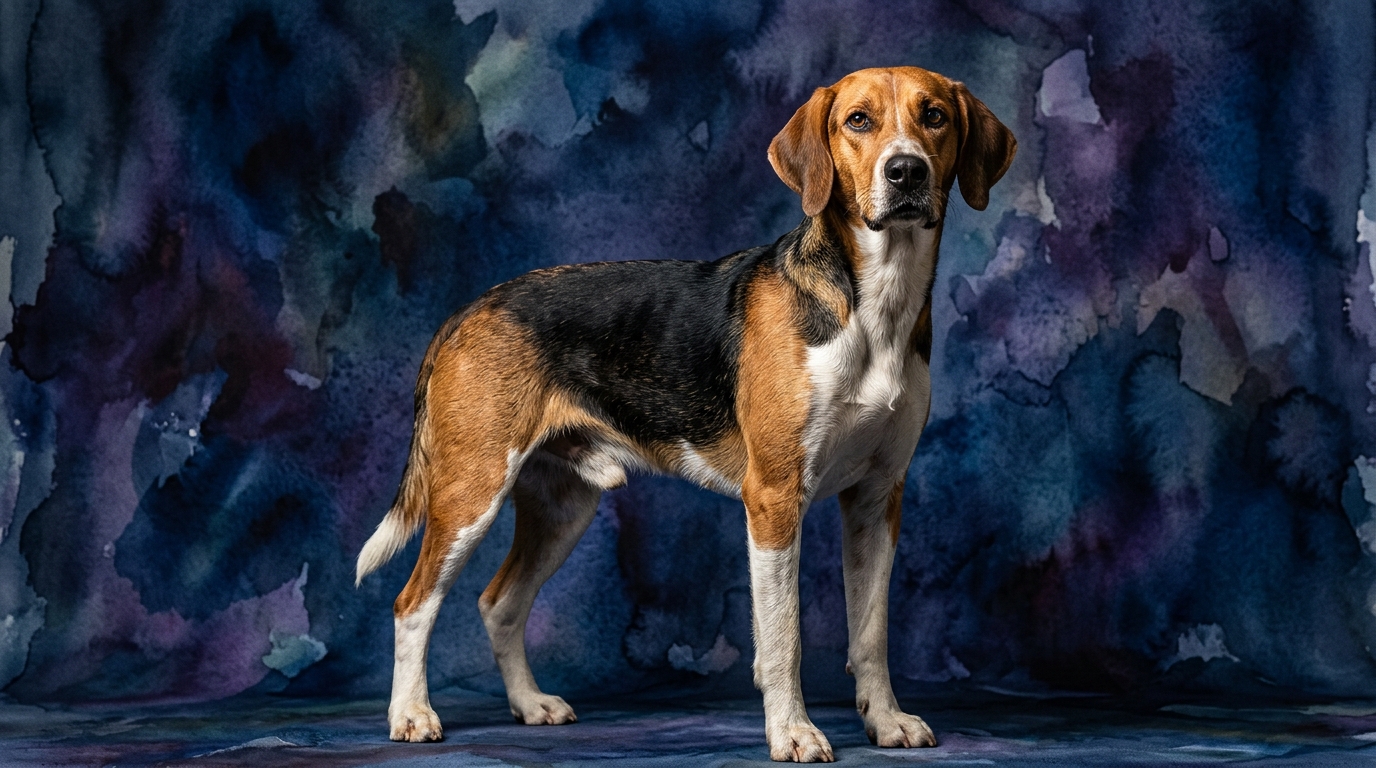
Bred over centuries specifically for stamina and an unparalleled sense of smell in the pursuit of fox, the English Foxhound (Hound Group, Not Coren-Ranked) intelligence is deeply specialized and purpose-driven. Their cognitive traits are finely tuned for their demanding hunting role.
• Problem Solving (3/5): English Foxhounds exhibit a highly focused, practical approach to problem-solving, particularly when it involves their primary instinct. They excel at navigating challenging terrain, overcoming obstacles, or finding the most efficient path to follow a scent. This isn't abstract problem-solving but rather a robust ability to achieve a specific, often scent-related, objective.
• Training Speed (3/5): While certainly capable of learning, English Foxhounds often require more patience and consistency in training. Their independent nature and powerful instinctive drives can mean they are less motivated by human approval alone, especially when a compelling scent or a perceived chase is involved. Training is most effective when it taps into their natural drives and makes learning feel like a rewarding "hunt."
• Social Intelligence (3/5): English Foxhounds are social animals within their pack, whether canine or human, forming strong, loyal bonds. However, their social intelligence is typically more direct and less nuanced than breeds bred for close human partnership. They understand pack hierarchy and cooperation but may not display the same level of empathy or subtle understanding of human emotional states as a Bernese Mountain Dog.
• Instinctive Drive (3/5): The English Foxhound's instinctive drive is overwhelmingly dominated by their scenting and chasing abilities. This powerful, ancient impulse to track and pursue a quarry is deeply ingrained and can become all-consuming, often overriding other learned behaviors or commands when activated. It defines much of their mental landscape and needs.
• Memory (3/5): Their memory is highly effective for tasks relevant to their hunting heritage. They can recall complex scent trails, remember the layout of extensive hunting grounds, and retain specific cues associated with their work. This specialized memory allows them to perform their traditional role with remarkable efficiency and precision.
Where the Bernese Mountain Dog Wins Cognitively
The Bernese Mountain Dog's cognitive strengths truly shine in areas emphasizing connection and cooperation. Their exceptional Social Intelligence (5/5) means they possess a profound capacity for understanding and responding to human emotions and cues. This isn't just about reading a sad face; it's about anticipating needs, offering unsolicited comfort, and seamlessly integrating into complex family dynamics, making them unparalleled emotional anchors. This deep empathy allows them to form incredibly strong, intuitive bonds with their human companions. Furthermore, their superior Training Speed (4/5), combined with a strong desire to please, makes them remarkably receptive to learning new commands and adapting to various routines. They grasp concepts quickly and are eager participants in training, requiring fewer repetitions than the English Foxhound to master new skills, whether in basic obedience, trick training, or even more advanced dog sports like drafting. This cognitive flexibility and eagerness to engage makes them highly adaptable to diverse living situations and owner lifestyles, showing a broad application of their mental faculties beyond a single, dominant pursuit.
Where the English Foxhound Wins Cognitively
The English Foxhound's cognitive prowess is deeply specialized, reflecting centuries of selective breeding for a specific purpose: the hunt. While their general problem-solving is rated 3/5, their unique strength lies in complex, scent-based problem-solving. They possess an extraordinary ability to discriminate between faint scents, follow intricate trails over vast distances and varied terrain, and filter out countless environmental distractions. This requires immense focus, analytical processing of olfactory data, and a robust mental mapping capability – a truly sophisticated form of intelligence. Their Instinctive Drive (3/5), while sometimes challenging for owners, is a testament to an unwavering focus and mental tenacity during pursuit. This isn't merely physical endurance; it's a cognitive persistence to stick to a goal, overriding discomfort, fatigue, or environmental changes, which is a unique and powerful form of intellectual stamina. Their memory (3/5) is also heavily geared towards this specialization, allowing them to recall specific scent profiles, the locations of old trails, and the nuances of their hunting grounds, showcasing a highly refined spatial-olfactory recall.
Which is Easier to Train and Why?
When comparing trainability, the Bernese Mountain Dog generally presents a more straightforward experience. Their 4/5 training speed is complemented by their outstanding 5/5 social intelligence, making them highly receptive to human instruction. They possess a natural eagerness to please their owners and quickly form strong, cooperative bonds. This means they often understand expectations through subtle cues and respond well to positive reinforcement, integrating new commands into their repertoire with relative ease. For example, a Berner might pick up "stay" or "heel" in just a few sessions, driven by the desire for connection and approval. In stark contrast, the English Foxhound, with a 3/5 training speed and 3/5 social intelligence, requires a more dedicated and nuanced approach. Their powerful instinctive drive for scent work is often their primary motivator, making them prone to tuning out human commands when a compelling scent captures their attention. Training a Foxhound demands exceptional patience, consistency, and often involves creatively channeling their natural drives, perhaps through scent games or engaging activities that simulate a hunt, to make learning rewarding and relevant to their innate wiring. A Foxhound might understand "come" but choose to ignore it if a rabbit scent is stronger, highlighting the battle between learned behavior and deep-seated instinct.
Active Owners vs. Relaxed Owners
For owners seeking a companion that can adapt to a varied pace of life, the Bernese Mountain Dog is often a fitting choice. Their strong social intelligence and moderate instinctive drive mean they thrive on companionship and being involved in family activities, whether that's a vigorous hike, a leisurely stroll, or simply lounging nearby. While they require regular exercise to maintain their physical and mental well-being, their adaptable nature allows them to adjust to a more relaxed pace, as long as their need for human connection is met. They are generally content with a predictable routine and enjoy the comforts of home. The English Foxhound, however, is unequivocally a breed for highly active owners. Their powerful instinctive drive and need for extensive physical and mental stimulation, particularly through opportunities for scent work and long runs, are non-negotiable. An owner who cannot provide several hours of vigorous daily exercise and engaging activities that tap into their hunting instincts would likely find a Foxhound challenging to manage. Their pent-up energy, if not properly channeled, can manifest as destructive behaviors, excessive barking, or a relentless pursuit of scents, making them unsuitable for a predominantly relaxed or sedentary lifestyle. They require an owner who understands and embraces their working heritage.
The Verdict
If you seek a deeply empathetic companion who integrates seamlessly into family life, offering comfort and loyalty with a relatively cooperative training disposition, the Bernese Mountain Dog is an excellent choice. They thrive on human connection and adapt well to varied home environments.
Opt for the English Foxhound if you are an active individual or family deeply committed to providing consistent, vigorous exercise and mental stimulation, particularly through scent-based activities or structured training. They offer an independent spirit and a unique partnership for those who appreciate their powerful drives.
🧠 Find Your Pet's IQ Score
Our Pet IQ Lab assessment covers 25+ tests across 5 cognitive dimensions — personalized to your breed.
Take the Full IQ Test →Frequently Asked Questions
Do Bernese Mountain Dogs get bored easily?
While they appreciate a routine, Bernese Mountain Dogs benefit from regular mental engagement, like puzzle toys or new training challenges, to prevent boredom. Their social nature means they are often content just being near their family, but varied activities keep their 3/5 problem-solving skills sharp.
How do English Foxhounds use their memory?
English Foxhounds primarily utilize their 3/5 memory for recalling scent trails and familiar hunting grounds. This specialized memory allows them to efficiently navigate complex environments and re-trace paths, crucial for their historical purpose.
Can an English Foxhound be a good family pet?
Yes, an English Foxhound can be a good family pet, provided their significant exercise and mental stimulation needs are met. Their social intelligence of 3/5 means they form bonds with their pack, but they may not be as overtly affectionate or attuned to human emotions as some other breeds.