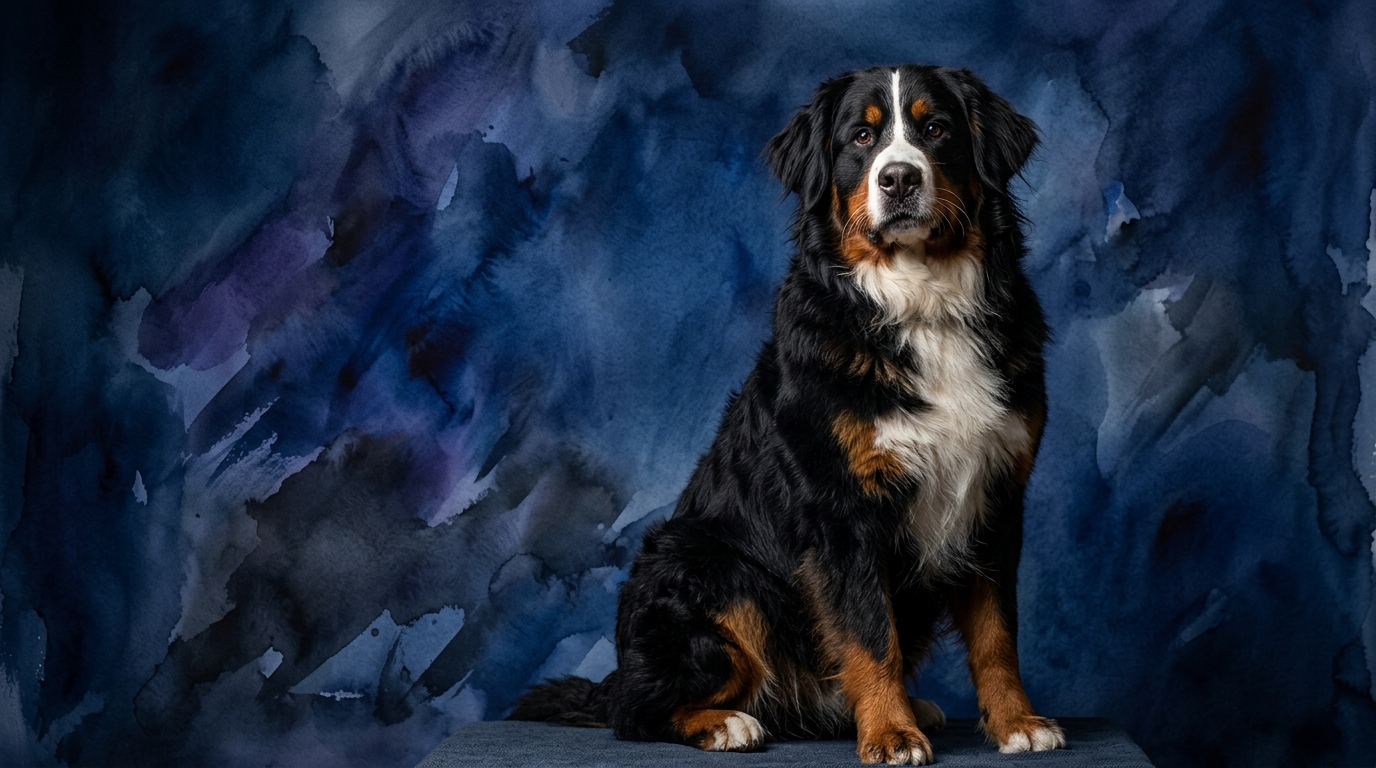
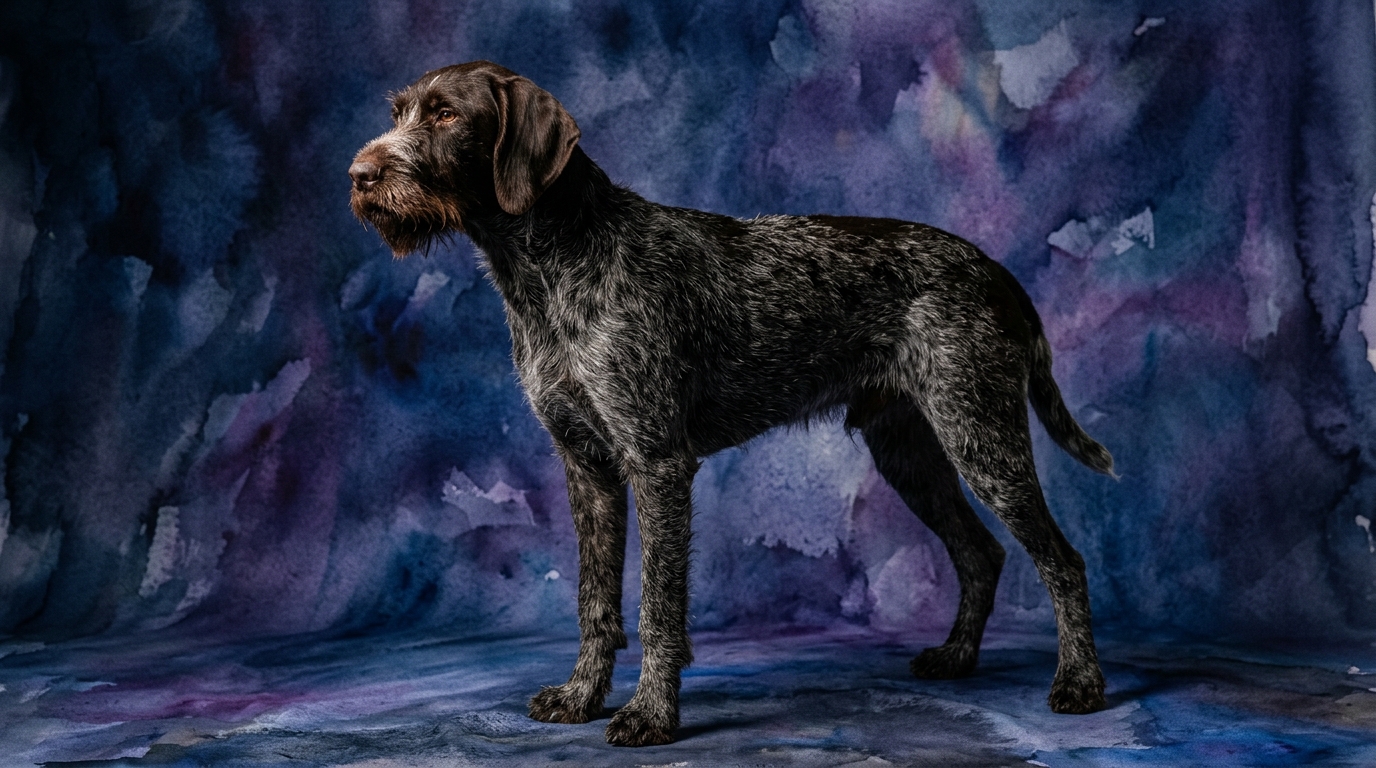
Side-by-Side IQ Profile: Bernese Mountain Dog vs. German Wirehaired Pointer
The Cosmic Pet Pet IQ Lab employs five key dimensions to evaluate canine intelligence, offering a nuanced view beyond simple obedience. For the Bernese Mountain Dog, a Working group breed ranking #27 by Coren, its profile shows problem-solving at 3/5, training speed at 4/5, social intelligence at a remarkable 5/5, instinctive drive at 4/5, and memory at 3/5. This suggests a dog with a profound understanding of social dynamics and a strong inclination towards traditional working roles.
In contrast, the German Wirehaired Pointer, a Sporting group breed ranking #28, exhibits a different set of strengths. Its problem-solving capacity scores 4/5, matching the Bernese's training speed at 4/5. However, its social intelligence is rated 3/5, instinctive drive at 3/5, and memory shines at 4/5. This profile points to a breed adept at independent tasks, with a robust capacity for recall and navigating complex situations in the field.
The Bernese Mountain Dog's problem-solving at 3/5 indicates they can learn routines and solve straightforward tasks, especially when guided by human interaction. Their 4/5 training speed means they grasp new commands and concepts relatively quickly, often motivated by connection. Their exceptional 5/5 social intelligence highlights an innate ability to interpret human emotions and cues, fostering deep bonds. An instinctive drive of 4/5 reflects their historical role in drafting and farm work, showing a natural propensity for purposeful activity. Memory at 3/5 suggests they retain learned behaviors and experiences adequately, but perhaps not with the same detailed recall as other breeds.
The German Wirehaired Pointer's 4/5 problem-solving score signifies a breed capable of figuring out complex situations independently, crucial for hunting scenarios where quick decisions are vital. Their 4/5 training speed indicates they are also quick learners, though their motivation might stem more from the task itself than purely social reinforcement. A social intelligence of 3/5 means they are generally friendly but may not possess the same nuanced understanding of human emotional states as the Bernese. Their instinctive drive at 3/5 reflects a focused hunting drive, less about general working tasks and more about specific prey drive and scent work. A strong 4/5 memory allows them to recall intricate routes, scent patterns, and learned commands over extended periods, essential for effective fieldwork.
Where the Bernese Mountain Dog Excels Cognitively
The Bernese Mountain Dog’s cognitive strengths lie profoundly in the realm of social interaction and understanding. With a social intelligence score of 5/5, they possess an exceptional ability to read human body language, vocal tones, and emotional states. This means a Bernese can often anticipate a family member's needs or mood, offering comfort or companionship precisely when it's most needed. Their perceptive nature allows them to integrate seamlessly into family dynamics, becoming incredibly attuned to the nuances of their human companions.
This high social intelligence also translates into a unique ability to learn through observation of human behavior and subtle cues. While their problem-solving isn't the highest, their capacity to understand what is expected of them in a social context often compensates, making them cooperative partners. Their instinctive drive of 4/5, historically channeled into tasks like drafting and farm guarding, means they thrive on having a purpose that involves collaboration, often finding immense satisfaction in being a helpful, integrated member of the household 'pack.' They are less about independent, complex puzzle-solving and more about communal harmony and contributing to the social unit.
Where the German Wirehaired Pointer Shows Cognitive Prowess
The German Wirehaired Pointer demonstrates its cognitive superiority in areas demanding independent thought, tactical execution, and precise recall. Their problem-solving score of 4/5 highlights a breed that can effectively navigate challenges and make decisions in dynamic environments, a critical trait for a versatile hunting dog. This might manifest as figuring out how to retrieve a bird from a difficult location or adapting to changing scent conditions in the field without constant human direction.
Furthermore, the GWP’s memory score of 4/5 is a significant asset. This allows them to retain complex information, such as intricate hunting routes, specific scent profiles, or a wide array of commands, over long periods and across varied terrains. This robust memory is invaluable for consistent performance in demanding sporting roles. While their instinctive drive is 3/5, it is a highly focused drive towards hunting and working in the field, motivating them to apply their problem-solving and memory skills to achieve specific objectives with impressive persistence and precision.
Training Dynamics: Bernese Mountain Dog vs. German Wirehaired Pointer
Both the Bernese Mountain Dog and the German Wirehaired Pointer share a training speed score of 4/5, indicating they are generally receptive and quick to learn new commands. However, the *nature* of their training experience and what motivates them can differ significantly due to their other cognitive strengths. The Bernese, with its 5/5 social intelligence, often thrives on positive reinforcement that strengthens the human-dog bond. They are often eager to please and respond well to praise, affection, and cooperative learning, making them highly trainable for obedience and family etiquette. Their strong social connection means they are less likely to disregard commands simply because they've found something more interesting; they value the interaction.
The German Wirehaired Pointer, while also a fast learner, may require a different approach. Their 4/5 problem-solving and 4/5 memory, coupled with a more focused instinctive drive, mean they excel when training involves tasks that engage their working intellect and hunting instincts. They might be more motivated by the challenge of the task itself, such as retrieving, tracking, or agility, rather than purely social rewards. Consistency and clear objectives are paramount, as their independent streak means they might choose to 'solve' a situation their own way if the training isn't engaging or consistent. While both learn quickly, the Bernese often seeks to understand *you*, while the GWP seeks to understand *the task*.
Ideal Owners: Active Pursuits vs. Relaxed Companionship
When considering activity levels, the cognitive profiles guide us towards distinct owner types. The Bernese Mountain Dog, with its high social intelligence and moderately lower problem-solving and memory scores, often thrives with owners who prioritize companionship and consistent, calm interaction. While they possess a 4/5 instinctive drive for purposeful work, this often translates into enjoying family activities, structured walks, and being a close, integrated part of daily life rather than needing intense, complex mental challenges every day. Their deep social understanding makes them excellent companions for relaxed family outings and quiet evenings, provided their moderate exercise needs are met. They are adaptable to a more steady, predictable routine, finding comfort in their social bonds.
The German Wirehaired Pointer, conversely, is an ideal match for highly active owners who can provide consistent mental and physical stimulation. Their 4/5 problem-solving and 4/5 memory, combined with a focused instinctive drive, mean they require engaging activities that challenge their intellect and utilize their natural abilities. These dogs excel in roles like hunting, agility, or advanced obedience, where they can apply their cognitive skills to solve problems and remember complex sequences. A GWP left without sufficient mental engagement and physical outlets may become bored or channel their energy into less desirable behaviors. They need an owner who is willing to commit to structured, stimulating activities that tap into their innate drive for purpose and exploration.
The Verdict
Choose the Bernese Mountain Dog if you seek a deeply perceptive, socially attuned companion who thrives on strong family bonds and cooperative activities, preferring consistent companionship over intense, independent mental challenges.
Opt for the German Wirehaired Pointer if you are an active individual or family seeking a versatile, problem-solving partner for outdoor adventures, field sports, or demanding training, valuing independent thought and robust memory in a canine companion.
🧠 Find Your Pet's IQ Score
Our Pet IQ Lab assessment covers 25+ tests across 5 cognitive dimensions — personalized to your breed.
Take the Full IQ Test →Frequently Asked Questions
Do Bernese Mountain Dogs need a lot of mental stimulation?
While Bernese Mountain Dogs benefit from regular engagement, their primary need is often social interaction and companionship. Their mental stimulation comes more from being involved in family activities and cooperative training than from solving complex, independent puzzles. Consistent, gentle training and social time are key.
Are German Wirehaired Pointers good family dogs despite lower social intelligence?
Yes, German Wirehaired Pointers can be excellent family dogs, though their social intelligence is rated lower than a Bernese. They are loyal and affectionate with their families, but their expressions of affection might be more task-oriented or less overtly empathetic. Early socialization and consistent training ensure they integrate well and understand family boundaries.
Which breed is better for first-time dog owners?
The Bernese Mountain Dog, with its higher social intelligence and cooperative nature, may be a more forgiving choice for a first-time owner willing to commit to consistent positive reinforcement. The German Wirehaired Pointer's independent problem-solving and focused drive might require more experience to manage effectively, especially concerning their substantial exercise and mental stimulation needs.