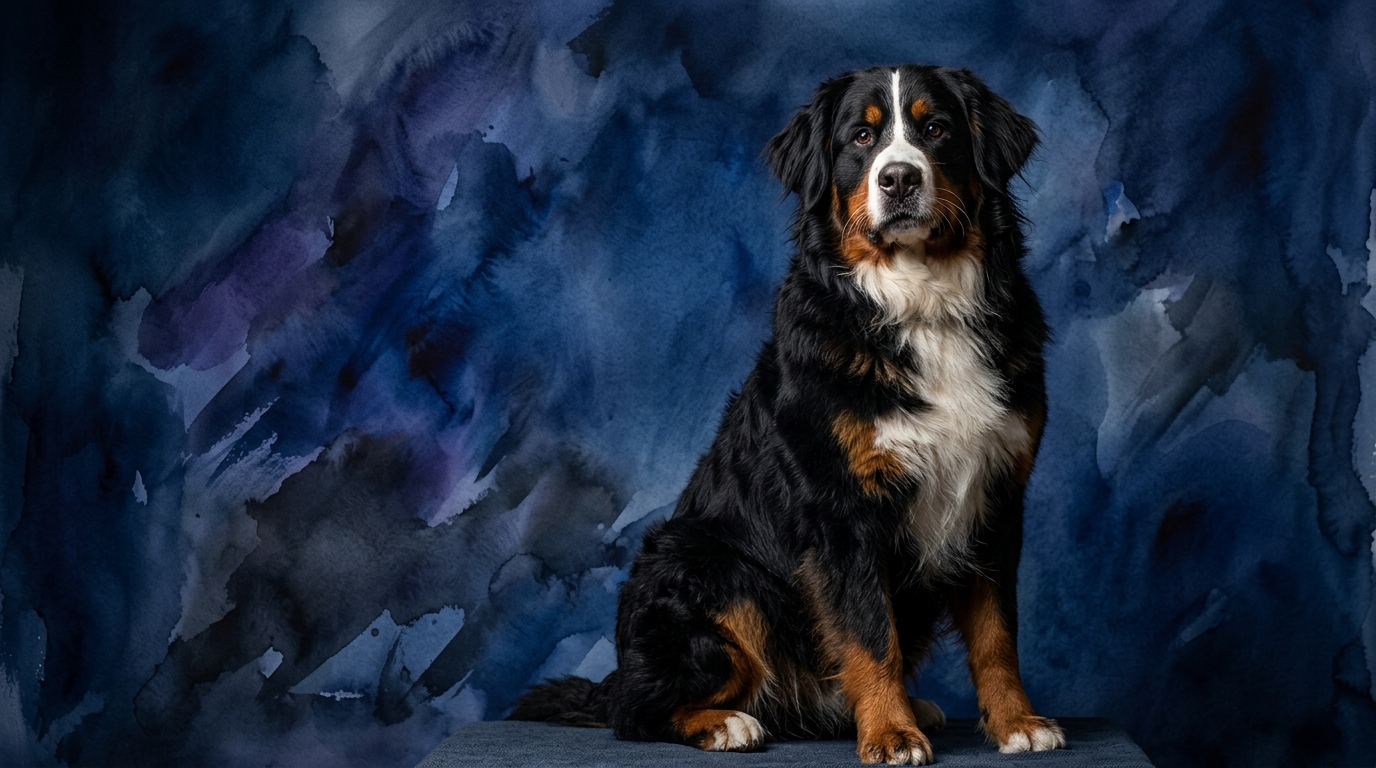
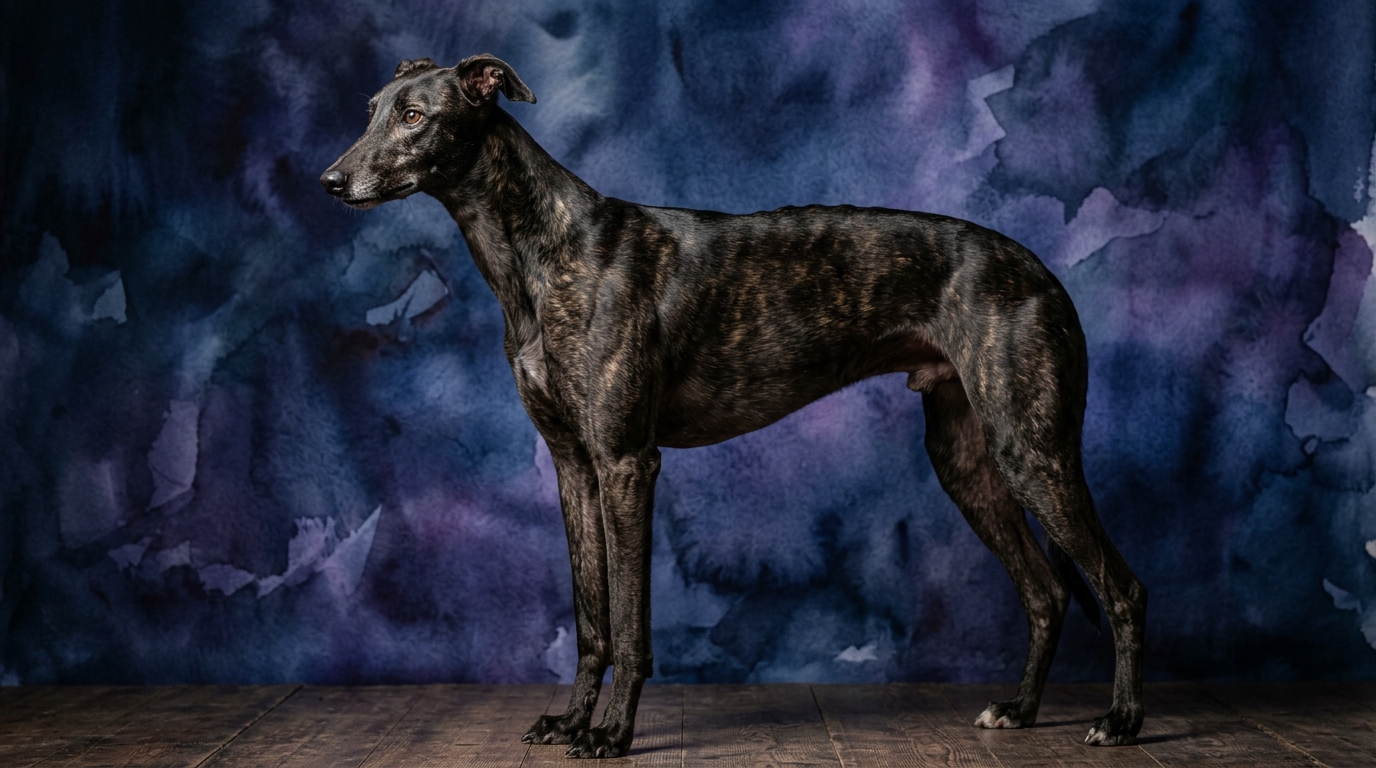
Side-by-Side IQ Profile: Bernese Mountain Dog vs. Greyhound
The Cosmic Pet Pet IQ Lab employs a multi-faceted approach to assess canine intelligence, moving beyond a single score to evaluate five key dimensions. For the Bernese Mountain Dog, ranked #27 by Coren, and the Greyhound, ranked #46, these dimensions paint a detailed picture of their cognitive landscapes.
**Problem Solving (Bernese Mountain Dog: 3/5; Greyhound: 3/5):** Both breeds exhibit a moderate capacity for navigating novel challenges. A Bernese Mountain Dog might figure out how to open a gate to rejoin its family or locate a hidden treat within its familiar environment, often relying on learned associations and persistence. The Greyhound, while equally rated, might demonstrate its problem-solving prowess in a different context, perhaps finding the most efficient path to intercept a moving lure or outmaneuvering a playful companion during a chase, relying on quick spatial reasoning and adaptation.
**Training Speed (Bernese Mountain Dog: 4/5; Greyhound: 2/5):** This is a significant divergence. The Bernese Mountain Dog shows a strong aptitude for rapid learning, often grasping new commands and routines with just a few repetitions. Their eagerness to please and cooperative nature make them highly receptive to instruction. In contrast, the Greyhound, while capable of learning, typically requires more patience and repetition. Their independent nature and focus on instinctual drives mean that while they can learn, their motivation may not always align with human training goals, leading to a slower acquisition of formal commands.
**Social Intelligence (Bernese Mountain Dog: 5/5; Greyhound: 3/5):** The Bernese Mountain Dog excels in social cognition, displaying an exceptional ability to understand human emotions, intentions, and social cues. They form deep bonds, often anticipating their owners' needs and showing a profound capacity for empathy, making them highly attuned family members. The Greyhound, while affectionate with its chosen family, tends to be more reserved and selective in its social interactions. They may not exhibit the same broad spectrum of social understanding or overt responsiveness to human emotional states, often preferring quieter, less demanding companionship.
**Instinctive Drive (Bernese Mountain Dog: 4/5; Greyhound: 5/5):** The Bernese Mountain Dog possesses a robust instinctive drive rooted in its working heritage, including a strong desire to guard, herd, and pull. This drive manifests as a readiness to engage in purposeful activities and a protective instinct towards its family. The Greyhound, however, stands out with an exceptionally high instinctive drive, primarily focused on its sighthound heritage of chase and pursuit. This intense prey drive is a powerful, intrinsic motivation, making them incredibly focused and driven when a moving object catches their eye.
**Memory (Bernese Mountain Dog: 3/5; Greyhound: 3/5):** Both breeds share a moderate memory capacity. A Bernese Mountain Dog will reliably remember daily routines, familiar people, and the location of favored items, contributing to their consistent behavior in a home environment. A Greyhound similarly remembers its environment, training cues, and social interactions, though their memory might be particularly acute for visual cues related to their instinctive drives, such as the appearance of a specific lure or the layout of a secure running space.
Where the Bernese Mountain Dog Excels Cognitively
The Bernese Mountain Dog's cognitive strengths primarily lie in their advanced social intelligence and cooperative disposition. Their 5/5 social intelligence score means they possess an innate ability to read and respond to complex human social cues, making them exceptionally intuitive companions. This translates to an easier integration into family dynamics, as they readily understand household rules and emotional nuances. Their 4/5 training speed is directly linked to this, as their desire to please and work alongside humans makes them highly receptive to learning and following instructions. They excel in tasks requiring collaboration, consistency, and a deep understanding of their human partners' expectations, often anticipating commands before they are even fully given. This breed thrives on interaction and purpose, demonstrating a cognitive framework built for partnership and active participation in family life.
Where the Greyhound Shines Cognitively
The Greyhound's cognitive brilliance is most evident in its specialized instinctive drives and the rapid processing required for its historical role. With an instinctive drive of 5/5, Greyhounds possess an unparalleled ability to detect, track, and react to visual stimuli over long distances, often making split-second decisions at high speeds. This isn't just raw speed; it's a sophisticated visual processing system coupled with an instantaneous physical response that allows them to execute complex maneuvers with precision. While their training speed is lower, their problem-solving, though rated similarly to the Bernese, is often applied in contexts demanding quick, independent action rather than human cooperation. They exhibit a quiet discernment, observing their environment and making choices based on their keen senses and inherent drive to pursue. Their cognitive strengths are tailored for efficiency, focus, and independent action in specific, high-stakes scenarios.
Training Dynamics: Bernese Mountain Dog vs. Greyhound
When considering ease of training, the Bernese Mountain Dog generally presents a more straightforward experience due to their 4/5 training speed and exceptional social intelligence. Berners are eager to engage with their human companions and often find satisfaction in performing tasks and learning new commands. Their cooperative nature means they are typically biddable and responsive to positive reinforcement, making them quicker to pick up obedience cues and integrate into structured routines. They learn quickly because they genuinely enjoy the interaction and the mental stimulation of working with their owners.
The Greyhound, with its 2/5 training speed and strong independent streak, requires a different approach. While they are capable of learning, their motivation is often internal, and they may not always see the immediate benefit in performing human-initiated commands. Their powerful instinctive drive (5/5) means that if a squirrel or another moving object catches their eye, their focus on training can vanish instantly. Owners often describe Greyhounds as having a 'selective hearing' when their sighthound instincts are engaged. Training a Greyhound demands immense patience, consistent positive reinforcement, and a deep understanding of their unique motivations. Success with a Greyhound often involves making training a fun, low-pressure game and understanding that their compliance might not be as immediate or consistent as a breed bred for close cooperation.
Suitability for Active vs. Relaxed Lifestyles
The Bernese Mountain Dog is well-suited for owners who appreciate an active, engaged companion and are prepared for a dog that thrives on participation and structure. Their instinctive drive (4/5) and need for physical and mental engagement mean they require regular activities, whether it's long walks, hiking, or structured training sessions like drafting or obedience. They are not content to be mere couch potatoes; they want to be involved in family life and often seek out opportunities to 'work' alongside their humans. Owners who enjoy outdoor adventures and want a dog deeply integrated into their daily routines will find a Bernese Mountain Dog a fulfilling partner.
The Greyhound, despite its racing heritage, often surprises people with its adaptability to a more relaxed home environment. While they absolutely require bursts of intense exercise in a securely fenced area to satisfy their 5/5 instinctive drive, they are largely calm and quiet indoors, often enjoying long naps on soft surfaces. This makes them surprisingly compatible with owners who lead a more relaxed indoor lifestyle but are committed to providing those essential, safe opportunities for high-speed running. They are not typically demanding of constant interaction or extensive daily walks beyond their necessary 'zoomies,' making them a unique fit for those who appreciate their independent yet affectionate nature and can accommodate their specific exercise needs.
The Verdict: When to Choose Each Breed
The Verdict
Choose a Bernese Mountain Dog if you seek a deeply socially intelligent, cooperative, and highly trainable companion eager to participate actively in family life and structured activities. They thrive with owners who enjoy consistent engagement and outdoor adventures.
Opt for a Greyhound if you appreciate a calm, independent home presence that requires specific, intense bursts of exercise in a secure environment, and you are patient with a less biddable but affectionate training partner. They suit owners who understand and respect their strong instinctive drives.
🧠 Find Your Pet's IQ Score
Our Pet IQ Lab assessment covers 25+ tests across 5 cognitive dimensions — personalized to your breed.
Take the Full IQ Test →Frequently Asked Questions
Are Bernese Mountain Dogs good for first-time dog owners?
Yes, their high social intelligence and training speed make them relatively easier to train and integrate into a family. Their desire to please and cooperative nature can be very rewarding for new owners willing to invest in consistent positive reinforcement and socialization.
Do Greyhounds need a lot of exercise daily?
Greyhounds require intense bursts of exercise, often called 'zoomies,' in a securely fenced area where they can run at full speed. Beyond these short, high-intensity sessions, they are typically quite relaxed and enjoy lounging indoors, making their overall daily exercise needs moderate rather than constant.
Which breed is better with children?
Both breeds can be good with children, but in different ways. Bernese Mountain Dogs often display a gentle, patient, and protective nature due to their high social intelligence, making them naturally empathetic family dogs. Greyhounds are typically calm and tolerant, but their reserved social nature means they may prefer quieter interactions and supervision is always key with any breed around children.