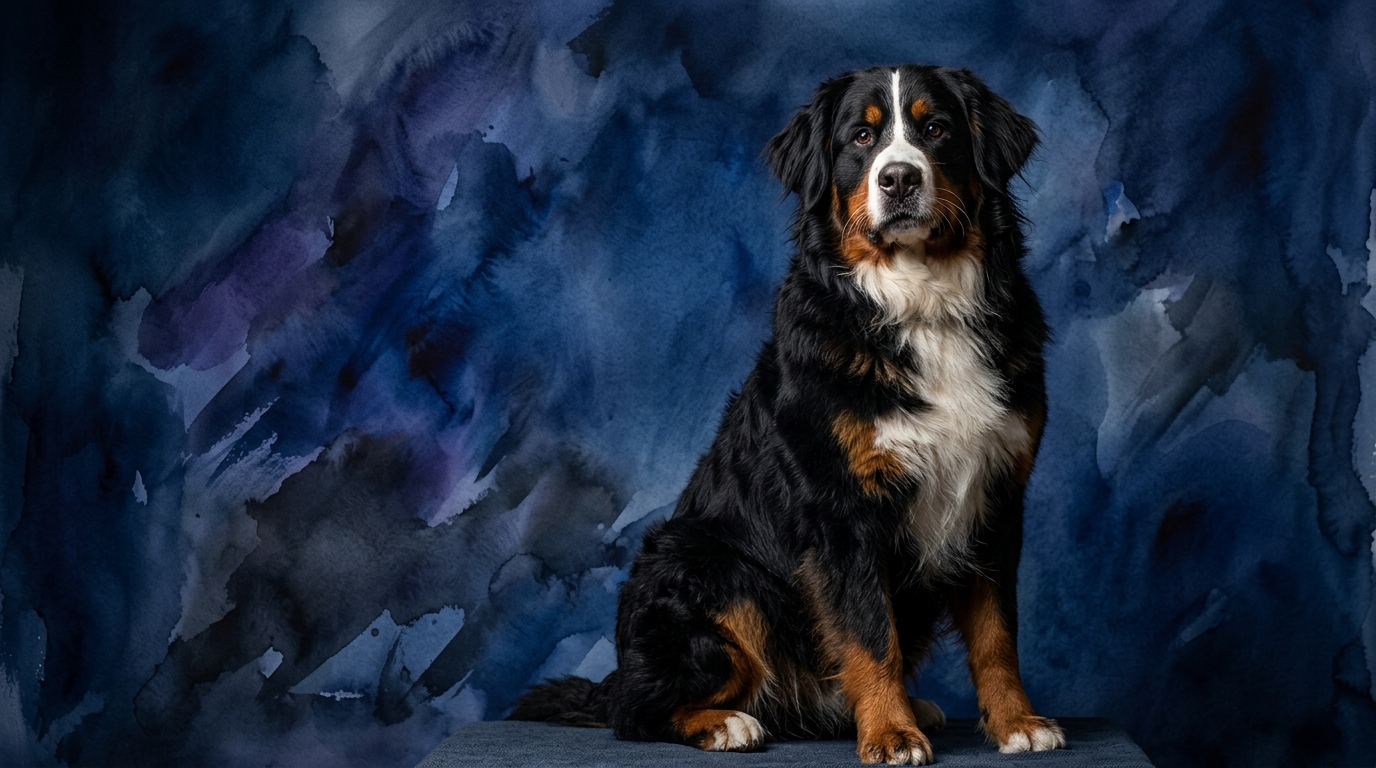
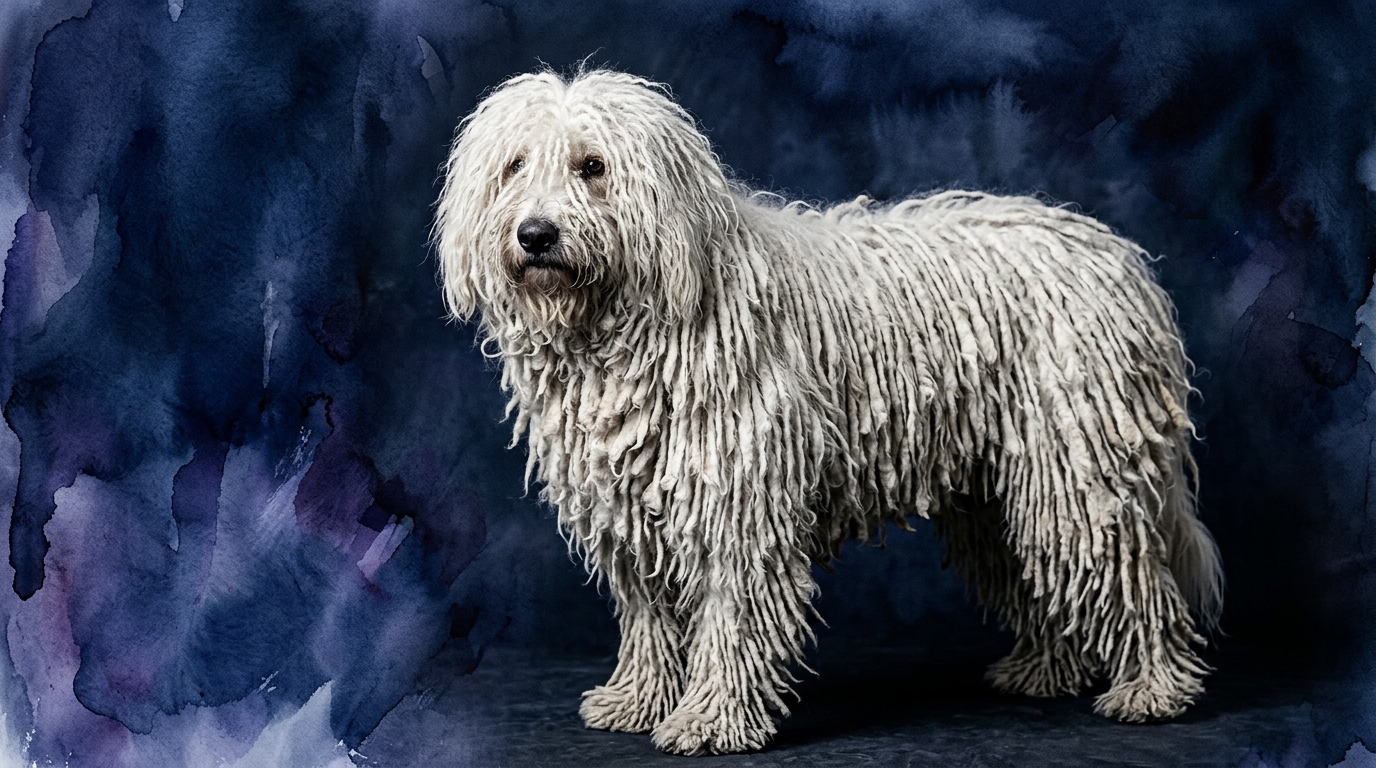
Side-by-side IQ profile
The Cosmic Pet Pet IQ Lab evaluates canine cognition across five distinct dimensions, offering a nuanced view of how breeds like the Bernese Mountain Dog and Komondor approach learning and interaction. For problem-solving, both breeds register a 3 out of 5, indicating they possess a moderate capacity for independent thought and figuring out novel situations, though they aren't typically the most inventive canine strategists. This means they can learn to navigate their environment and solve basic puzzles, but complex, multi-step tasks might require more guidance.
In terms of training speed, the Bernese Mountain Dog earns a respectable 4 out of 5, suggesting they grasp new commands and routines relatively quickly, often showing an eagerness to learn and cooperate. The Komondor, however, scores a 3 out of 5 in this dimension, indicating that while trainable, they may require more repetition and a patient, consistent approach to internalize new behaviors. Their independent nature often means they evaluate commands rather than immediately complying. Social intelligence marks a significant divergence: the Bernese Mountain Dog excels with a 5 out of 5, demonstrating an exceptional ability to read human emotions, respond to subtle cues, and form deep, cooperative bonds. This breed thrives on interaction and partnership. The Komondor, by contrast, scores a 3 out of 5, reflecting its more self-reliant and reserved nature; while capable of bonding with its family, it's less inclined to seek constant social interaction or to interpret complex human social signals with the same finesse. Instinctive drive also varies, with the Bernese Mountain Dog scoring 4 out of 5. This indicates a strong inherent motivation for tasks related to its working heritage, such as drafting, herding, or search and rescue, often coupled with a desire to collaborate. The Komondor scores 3 out of 5, primarily driven by its ancient guarding instincts; its motivation centers on protecting its flock or family, often manifesting as vigilance and territoriality rather than a drive for varied, cooperative tasks. Finally, memory is consistent across both breeds at 3 out of 5, meaning they possess a solid capacity to recall learned commands, routines, and past experiences, sufficient for daily living and training reinforcement without being exceptional.
Where Bernese Mountain Dog wins cognitively
The Bernese Mountain Dog’s cognitive strengths shine particularly bright in areas demanding cooperation and social attunement. Its perfect 5/5 score in social intelligence means it possesses an innate ability to understand human intentions, emotions, and communication nuances, making it exceptionally responsive to its handlers. This profound social understanding facilitates a smoother training process and fosters a strong, reciprocal bond, allowing the Bernese to anticipate needs and adapt its behavior in social settings. Owners often report a feeling of profound connection and mutual understanding with their Bernese, a direct result of this advanced social cognition.
Furthermore, the Bernese Mountain Dog's 4/5 training speed, coupled with its social intelligence, means it not only learns commands quickly but often does so with a desire to please and engage. This cooperative learning style makes them highly adaptable to various training disciplines, from obedience to agility or therapy work. Their moderately strong instinctive drive (4/5) for tasks, often involving pulling or assisting, is channeled effectively through their social intelligence, enabling them to excel in structured working roles where partnership is key, such as carting or search and rescue, where they actively seek to collaborate.
Where Komondor wins cognitively
While the Komondor's cognitive profile emphasizes independence over cooperative social engagement, its strengths are profound within its specialized role as a livestock guardian. Its 3/5 problem-solving score, while moderate, is often applied to independent decision-making in protecting its territory or charges, allowing it to assess threats and react without constant human direction. This self-reliance means a Komondor doesn't wait for commands when it perceives a threat; it acts on its own judgment, a critical trait for a solitary guardian.
The Komondor's instinctive drive, rated at 3/5, is singularly focused on its protective duties, making it exceptionally vigilant and dedicated to its perceived responsibilities. This drive translates into an unwavering commitment to its family or property, and its cognitive processes are geared towards identifying and mitigating potential dangers. While its social intelligence is lower (3/5), this contributes to its ability to operate effectively without constant human reassurance or interaction, allowing it to maintain an alert, watchful presence over extended periods. For specific guarding tasks, this independent, self-sufficient cognitive style is precisely what makes the Komondor uniquely effective.
Which is easier to train and why
Between these two breeds, the Bernese Mountain Dog is demonstrably easier to train, a difference rooted in their fundamental cognitive architectures and evolutionary roles. The Bernese's 4/5 training speed, combined with its exceptional 5/5 social intelligence, means it picks up new commands and behaviors with relative ease and a strong desire to cooperate. They are deeply attuned to human cues, often seeking to understand and respond to their handler's wishes, which makes positive reinforcement highly effective and training sessions a collaborative experience. Their inherent drive to work alongside humans makes them eager learners who find satisfaction in pleasing their people.
The Komondor, with a 3/5 training speed and 3/5 social intelligence, presents a different training challenge. This breed was developed to be an independent guardian, making its own decisions in the field without human oversight. Consequently, they are less inclined to blindly follow commands and more prone to evaluating the necessity or purpose of a request. Training a Komondor requires immense patience, consistency, and a deep understanding of its independent nature. Commands need to be clear, logical, and often reinforced with purpose, as they are not driven by the same innate desire to please or collaborate as the Bernese, but rather by their own sense of duty and self-preservation.
Which suits active owners vs relaxed owners
The Bernese Mountain Dog generally suits owners who appreciate a moderate level of activity and a highly interactive companion. Their 4/5 instinctive drive for tasks, coupled with their high social intelligence, means they thrive on engaging in activities with their family, whether it's hiking, participating in dog sports, or simply being an active part of daily life. While not hyperactive, they require regular exercise and mental stimulation to prevent boredom and channel their cooperative energy constructively. They are best suited for owners who enjoy having their dog deeply involved in their social and physical routines.
The Komondor, while requiring significant space and purpose, paradoxically suits owners who might be described as more "relaxed" in terms of direct, constant interaction, yet deeply committed to providing appropriate guardianship outlets. Their 3/5 instinctive drive is primarily focused on vigilance and protection, meaning they don't typically demand strenuous, interactive physical activities like fetch for hours. Instead, they need a "job" – often patrolling their territory or simply observing – and thrive in environments where they can exercise their independent judgment. Owners must be prepared for a dog that is self-sufficient and less prone to seeking constant attention, but still requires consistent, firm guidance and socialization to prevent overly protective behaviors, making them suitable for owners who understand and respect their independent nature and guarding instincts.
The Verdict
Opt for a Bernese Mountain Dog if you desire a highly cooperative, socially intelligent companion eager to learn and engage in shared activities with a strong bond. They thrive with owners who appreciate an interactive dog and can provide consistent, positive training and moderate exercise.
Select a Komondor if you are looking for an independent, self-reliant guardian with a strong protective instinct, and you are prepared for a dog that makes its own decisions. This breed suits experienced owners who understand its unique cognitive style, can provide ample space, and are committed to patient, consistent training focused on its intrinsic drives.
🧠 Find Your Pet's IQ Score
Our Pet IQ Lab assessment covers 25+ tests across 5 cognitive dimensions — personalized to your breed.
Take the Full IQ Test →Frequently Asked Questions
How does the Komondor's independent problem-solving manifest?
The Komondor's 3/5 problem-solving often involves assessing its environment for threats and deciding on the best course of action without waiting for human input, reflecting its historical role as a self-sufficient guardian. This can mean taking initiative to investigate unusual sounds or positioning itself strategically to oversee its territory.
Can a Bernese Mountain Dog be a good guard dog?
While the Bernese Mountain Dog has some protective instincts due to its 4/5 instinctive drive, its 5/5 social intelligence means it's more inclined to be a friendly greeter than a formidable deterrent. They will alert to strangers but are not typically suited for the independent, territorial guarding roles of a Komondor.
What is the biggest training difference between them?
The biggest training difference lies in their social intelligence and training speed: the Bernese (5/5 social, 4/5 training speed) is highly cooperative and eager to please, making training relatively straightforward, whereas the Komondor (3/5 social, 3/5 training speed) is more independent, requiring greater patience and a profound understanding of its self-directed nature.