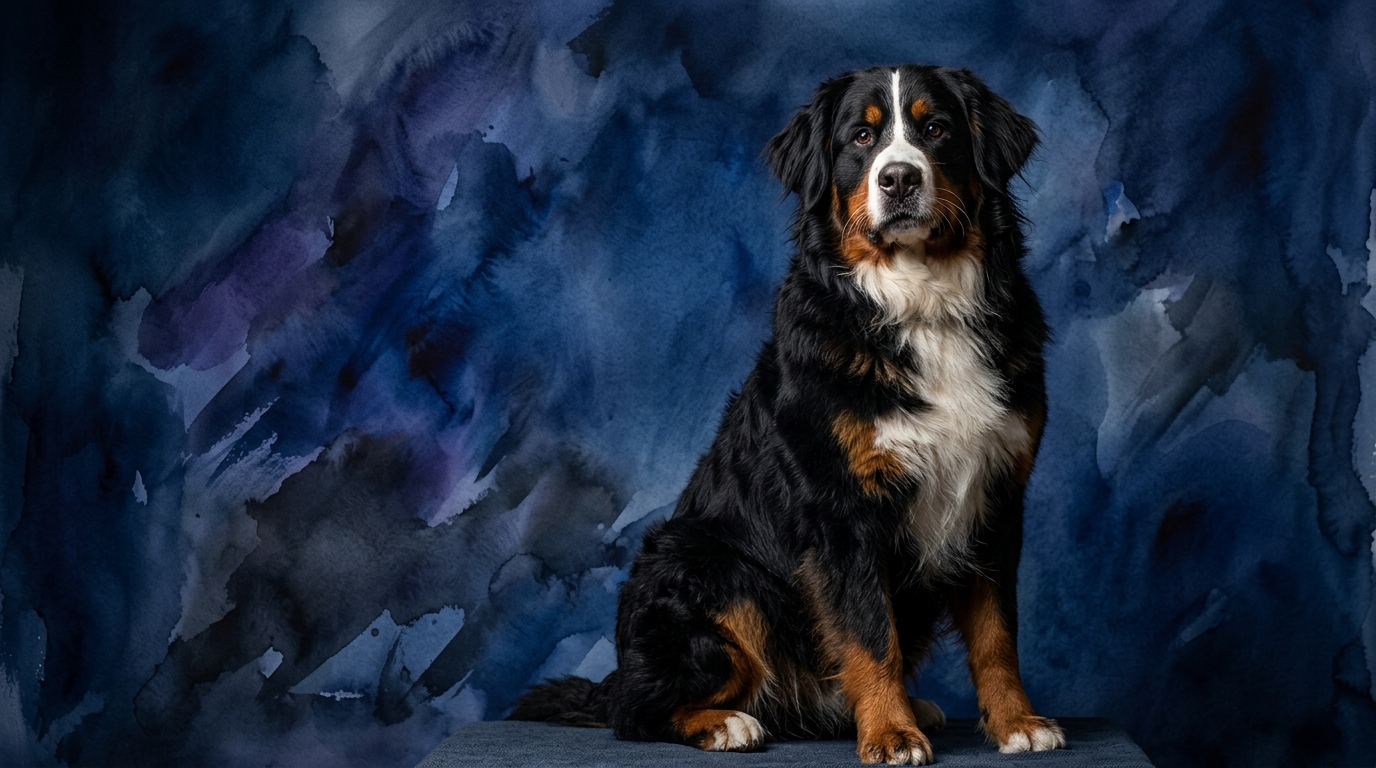
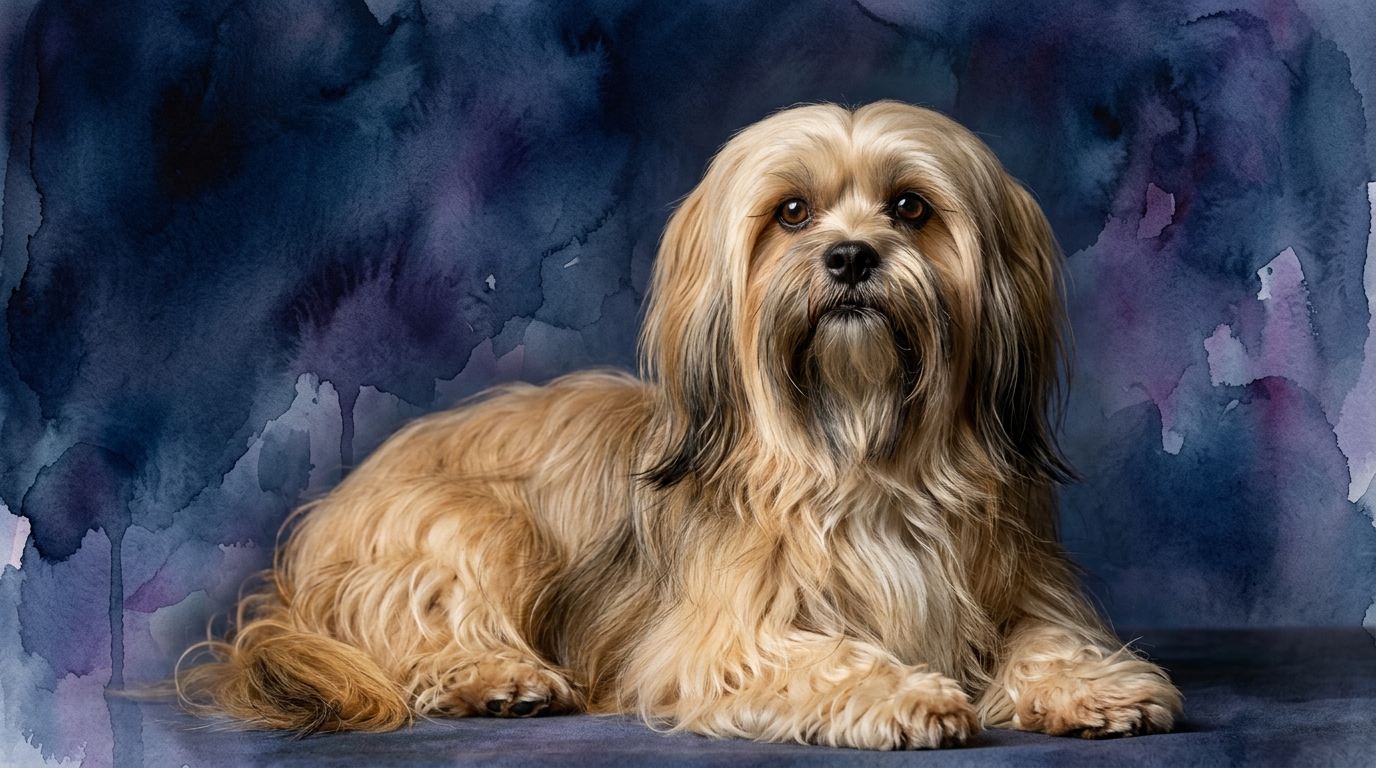
Side-by-Side Cognitive Profiles: Bernese Mountain Dog vs. Lhasa Apso
The Cosmic Pet Pet IQ Lab provides a structured framework to assess canine cognition across five key dimensions, offering a clear lens into each breed's inherent mental aptitudes. Let's examine how the Bernese Mountain Dog, a robust Working Group dog, stacks up against the spirited Lhasa Apso, a member of the Non-Sporting Group.
The Bernese Mountain Dog, with a Coren rank of #27, demonstrates a moderate Problem Solving ability (3/5), capable of navigating routine challenges but not typically seeking out complex puzzles. Their Training Speed is impressive (4/5), reflecting an eagerness to learn and respond to cues quickly. Where they truly shine is in Social Intelligence (5/5), displaying exceptional empathy and attunement to human emotions and social dynamics. Their Instinctive Drive (4/5) is robust, rooted in their history as working farm dogs, encompassing a desire for purposeful activity and companionship. Memory (3/5) is solid for daily routines and learned commands, but not for intricate sequences.
In contrast, the Lhasa Apso, holding a Coren rank of #68, shares the same Problem Solving score (3/5), suggesting they can independently figure out situations to their benefit, often with a clever, self-serving approach. Their Training Speed (3/5) is more moderate, as their independent streak means they require consistent, engaging methods. Social Intelligence (3/5) is discerning; they form deep bonds with their inner circle but can be reserved or aloof with strangers. Their Instinctive Drive (3/5) is primarily geared towards guardianship and territorial awareness, reflecting their historical role as sentinels. Memory (3/5) in Lhasa Apsos is reliable for remembering routines and who belongs in their territory, similar to the Bernese.
Where the Bernese Mountain Dog Excels Cognitively
The Bernese Mountain Dog's primary cognitive advantage lies in its exceptional Social Intelligence (5/5). This breed possesses an innate ability to read and respond to human emotions and intentions with remarkable sensitivity, making them profoundly intuitive companions. This acumen fosters deep, reciprocal bonds, allowing them to anticipate needs and offer comfort, which is a hallmark of their collaborative nature.
Furthermore, their superior Training Speed (4/5) signifies a quicker uptake of new commands and behaviors compared to the Lhasa Apso. This cognitive readiness stems from a genuine desire to cooperate and please their human counterparts, translating into a more fluid and rewarding training experience. This readiness makes them particularly receptive to learning complex routines or participating in dog sports that require precision and responsiveness.
Their Instinctive Drive (4/5), historically tied to draft work and herding, also gives them an edge in tasks requiring sustained engagement and partnership. This drive is not merely about energy but about a cognitive inclination towards working alongside humans, providing a strong foundation for activities like therapy work, obedience, or even simply carrying items, fulfilling their inherent desire for purpose.
Where the Lhasa Apso Demonstrates Unique Cognitive Strengths
While their overall scores may seem lower, the Lhasa Apso possesses distinct cognitive strengths perfectly tailored to their historical role and independent disposition. Their Problem Solving ability (3/5), though numerically equal to the Bernese, often manifests in a more independent and strategic manner. A Lhasa Apso might excel at figuring out how to achieve their own goals, such as escaping a perceived confinement or gaining access to a favored spot, demonstrating a self-reliant form of ingenuity.
The Lhasa Apso's Instinctive Drive (3/5) is strongly oriented towards territorial guardianship, a cognitive strength that makes them highly effective watchdogs. They are adept at discerning who belongs and who doesn't, exhibiting a keen awareness of their environment and a readiness to alert their family. This isn't about physical confrontation, but a cognitive vigilance and vocal communication that serves as a deterrent.
Their Social Intelligence (3/5), while more reserved than the Bernese, allows them to form incredibly strong, devoted bonds with their chosen family members. This selective social acuity means they are not easily swayed by strangers, providing a focused loyalty. Their memory, while rated similarly, tends to be acutely focused on the routines and individuals within their perceived territory, reinforcing their role as watchful companions.
Training Dynamics: Bernese Mountain Dog vs. Lhasa Apso
When it comes to ease of training, the Bernese Mountain Dog generally presents a more straightforward experience due to its higher Training Speed and Social Intelligence. They possess an inherent desire to please and are highly attuned to human feedback, making them quick to grasp new commands and eager to perform. Their collaborative nature means they respond well to positive reinforcement and consistent guidance, often thriving on structured learning and praise.
The Lhasa Apso, conversely, can be more challenging to train, primarily due to its independent streak and discerning social intelligence. They are intelligent enough to learn, but their motivation often needs to be more self-serving, and they can exhibit a stubbornness if they don't see the immediate benefit of a command. Training a Lhasa Apso requires immense patience, consistency, and a creative approach to positive reinforcement, often involving high-value treats or play to maintain their interest and cooperation. Their strong-willed nature means they may question commands rather than immediately comply, necessitating a firm yet gentle hand.
Matching Cognition to Lifestyle: Active vs. Relaxed Owners
The Bernese Mountain Dog's cognitive profile aligns wonderfully with active owners who desire a highly engaged and collaborative companion. Their strong instinctive drive and high social intelligence mean they thrive on being an integral part of family activities, whether it's hiking, participating in dog sports, or simply being by your side during daily chores. They require consistent mental and physical stimulation to prevent boredom and channel their working dog heritage constructively. Owners who can dedicate time to training, outdoor adventures, and social interaction will find a deeply rewarding partnership with a Bernese.
The Lhasa Apso, with its independent problem-solving and guardian instincts, is often a better fit for more relaxed owners, though 'relaxed' does not mean sedentary. While their physical exercise needs are moderate, they appreciate a stable routine and a secure home environment where they can fulfill their sentinel duties. They are content with indoor companionship and shorter, regular walks, but still require mental engagement through interactive toys and consistent, albeit patient, training. Owners who value an independent spirit, are prepared for a dog with a discerning personality, and enjoy a more contained lifestyle will find a loyal and watchful companion in the Lhasa Apso.
The Verdict
Choose the Bernese Mountain Dog if you seek a highly social, collaborative, and trainable companion eager to participate in an active family life and thrive on purposeful engagement.
Opt for the Lhasa Apso if you value an independent, discerning companion with a strong guardian instinct, are prepared for patient and consistent training, and prefer a more contained lifestyle.
🧠 Find Your Pet's IQ Score
Our Pet IQ Lab assessment covers 25+ tests across 5 cognitive dimensions — personalized to your breed.
Take the Full IQ Test →Frequently Asked Questions
Do Bernese Mountain Dogs require a lot of mental stimulation?
Yes, Bernese Mountain Dogs, with their working dog heritage and high social intelligence, thrive on mental engagement. They need consistent training, interactive play, and opportunities to be involved in family activities to prevent boredom and channel their cognitive strengths constructively.
Are Lhasa Apsos good with other pets?
Lhasa Apsos can coexist peacefully with other pets, especially if socialized from a young age. However, their discerning social intelligence and independent nature mean they might prefer to be the sole focus of attention or require careful introductions to new animal companions.
How do their Coren ranks reflect their daily behavior?
The Bernese Mountain Dog's higher Coren rank (#27) generally indicates a greater readiness to learn and obey commands, manifesting in a more compliant and responsive daily demeanor. The Lhasa Apso's lower rank (#68) reflects a more independent and sometimes stubborn disposition, requiring more consistent effort in training to achieve desired behaviors.