Side-by-Side Cognitive Profile
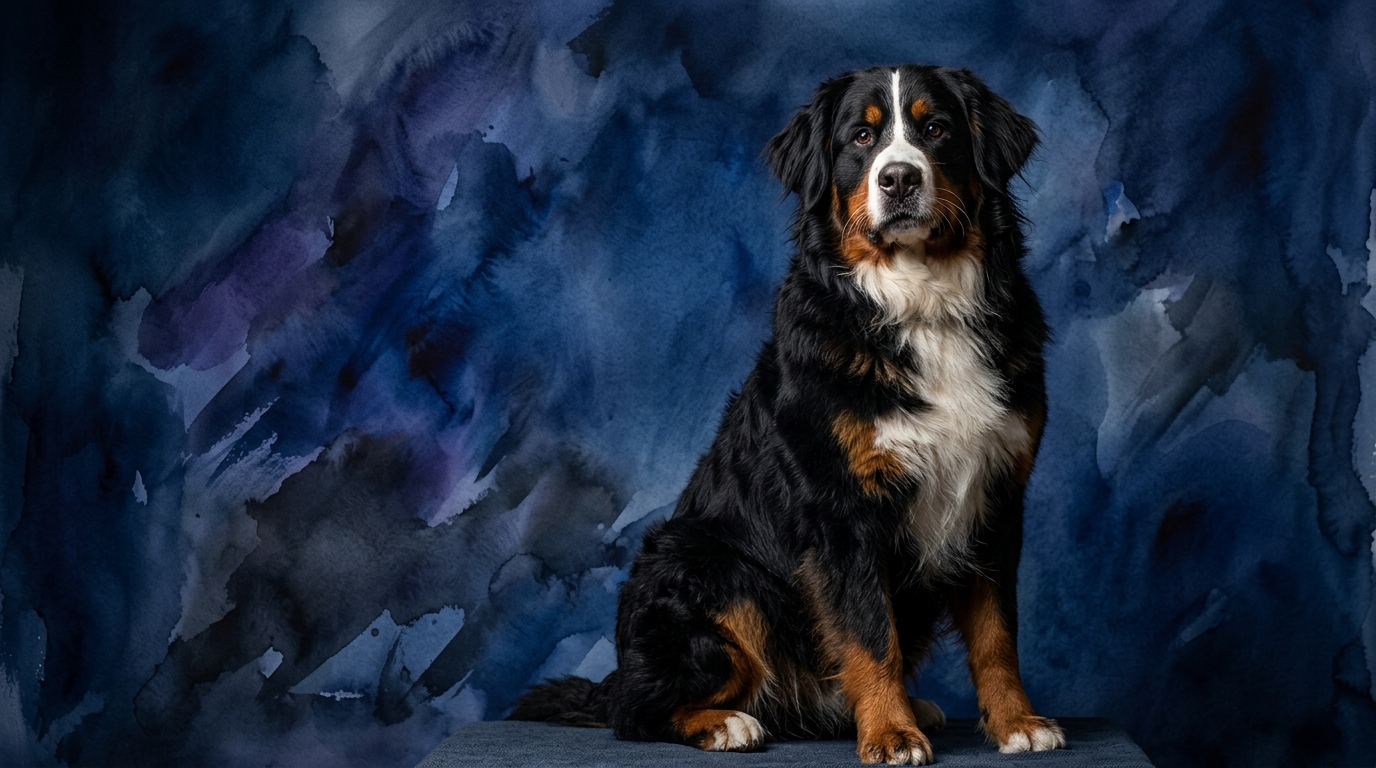
The Cosmic Pet Pet IQ Lab employs a multi-dimensional approach to understanding canine cognition, moving beyond a single intelligence score to evaluate specific mental strengths. For the Bernese Mountain Dog, we observe a Coren rank of #27, placing them favorably among working breeds in terms of trained obedience and adaptive learning. Their Problem Solving ability is rated at 3/5, indicating a solid capacity to navigate novel challenges, while their Training Speed stands at 4/5, suggesting a readiness to grasp new commands efficiently. Social Intelligence is a standout at 5/5, highlighting their exceptional understanding of human cues and emotional states. An Instinctive Drive of 4/5 underscores their natural inclination for specific tasks, and Memory at 3/5 means they retain learned information adequately.
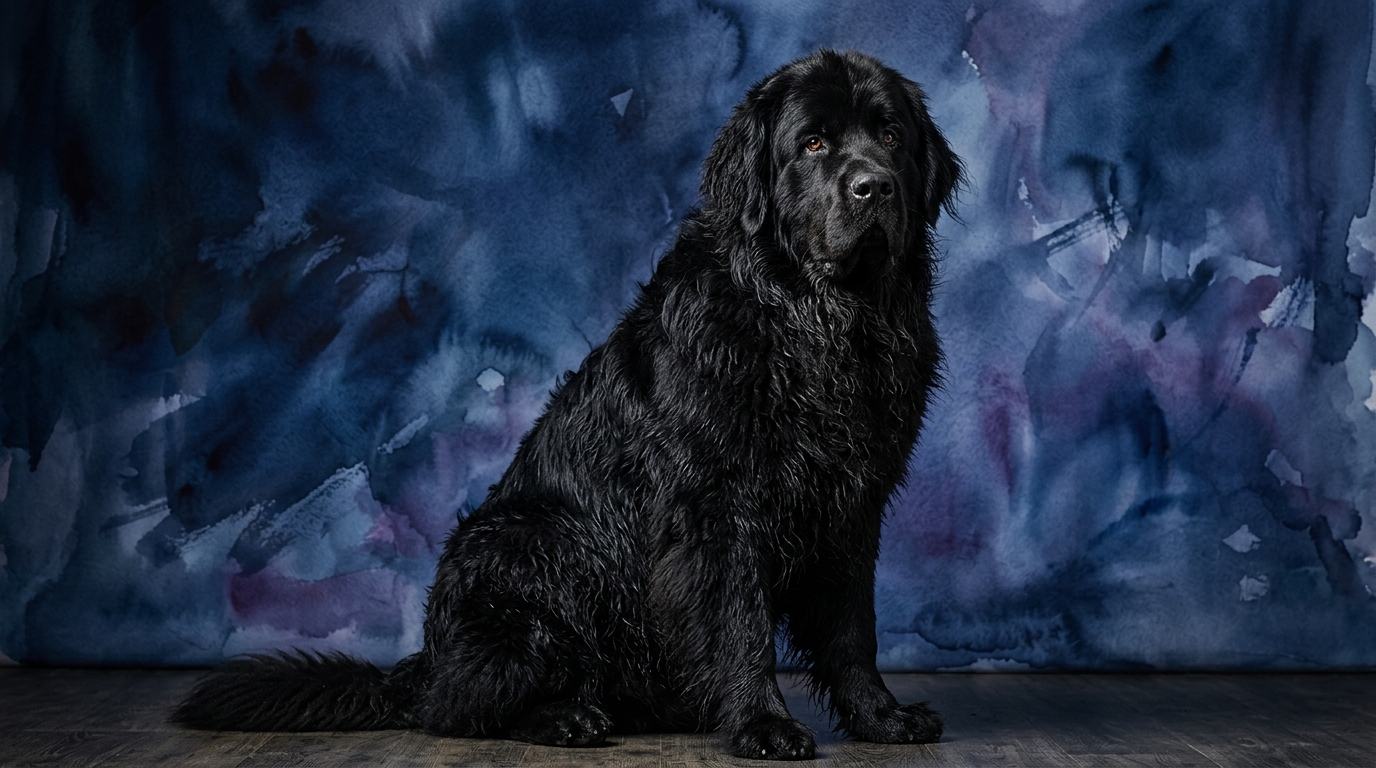
The Newfoundland, with a Coren rank of #34, presents a slightly different cognitive landscape, though still very capable. Their Problem Solving mirrors the Bernese at 3/5, demonstrating comparable abilities in figuring things out. Training Speed is also identical at 4/5, indicating a similar pace in acquiring new behaviors. Like the Bernese, the Newfoundland excels in Social Intelligence, scoring a perfect 5/5, reflecting their deep empathy and connection with their human companions. Where the Newfoundland truly distinguishes itself is in its Instinctive Drive, achieving a maximum 5/5, a testament to their powerful, innate desire for rescue work, particularly in water. Furthermore, their Memory is rated higher at 4/5, suggesting a superior capacity for long-term retention of experiences and training.
Where the Bernese Mountain Dog Excels Cognitively
While both breeds share many cognitive strengths, the Bernese Mountain Dog's slightly higher Coren rank (#27 vs. #34) suggests a marginal edge in what Stanley Coren termed 'working and obedience intelligence.' This indicates that, on average, a Bernese might require fewer repetitions to learn a new command and respond reliably to known commands on the first attempt. This isn't to say they are 'smarter' in a broad sense, but rather that their cognitive wiring makes them particularly adept at absorbing and executing human-directed tasks with a touch more efficiency in formal training scenarios.
Their equally high Social Intelligence (5/5) means they are incredibly attuned to their owners' moods and intentions, which complements their training speed. A Bernese often anticipates what is asked of them, not just through rote learning but through an intuitive grasp of their human's desires. This social acuity, combined with their capacity for problem-solving, allows them to adapt well to various family dynamics and participate harmoniously in diverse household routines, often picking up on unspoken rules and expectations with ease.
Where the Newfoundland Excels Cognitively
The Newfoundland’s unique cognitive strengths shine brightest in their exceptional Instinctive Drive (5/5) and superior Memory (4/5). This profound instinctive drive is not merely a strong desire to work, but a deeply ingrained, almost compulsive urge to help, particularly in water. This isn't a learned behavior; it's a fundamental aspect of their being, allowing them to perform complex rescue actions with little direct command, relying on their internal compass and problem-solving abilities in critical situations.
Their enhanced memory score means Newfoundlands can retain complex sequences of actions and learned behaviors over longer periods. This is crucial for their historical role as water rescue dogs, where remembering intricate swim patterns, the location of struggling individuals, or specific boat maneuvers could be life-saving. This robust memory also benefits their overall training, ensuring that once a behavior is established, it is likely to be recalled accurately, even after periods of inactivity, making them reliable long-term companions for established routines and tasks.
Which is Easier to Train and Why
Both the Bernese Mountain Dog and the Newfoundland share an impressive Training Speed of 4/5, indicating they are generally receptive and capable learners. This means that when it comes to the initial acquisition of basic obedience commands, owners of either breed can expect a similar pace of progress. Their high Social Intelligence (5/5) further facilitates training, as both breeds are highly motivated by human interaction and approval, making them eager participants in positive reinforcement strategies.
However, the nuances of their training experience can differ. The Bernese, with its slightly higher Coren rank, might exhibit a marginally quicker understanding of new, abstract commands in a structured obedience class. They often possess a strong desire to please, making them generally compliant. The Newfoundland, while learning at a similar speed, brings its powerful Instinctive Drive and superior Memory into play. For tasks aligned with their inherent drives, such as water retrieval or 'babysitting' family members, a Newfoundland may display an almost effortless mastery and persistence, retaining these complex behaviors with greater fidelity over time. While both are trainable, the Newfoundland's memory and drive can make specialized, instinct-driven training more deeply ingrained and consistently reliable.
Which Suits Active Owners vs. Relaxed Owners
When considering the activity levels suitable for each breed, it's essential to interpret 'active' and 'relaxed' through the lens of their working dog heritage, rather than purely high-energy demands. The Bernese Mountain Dog, with an Instinctive Drive of 4/5, thrives on companionship and purposeful activity. They enjoy structured walks, carting, and participating in family outings, but are generally content to relax indoors with their people. They suit owners who enjoy regular, moderate engagement and appreciate a dog that is equally happy on a hike or curled up by the fireplace, making them a good fit for moderately active families seeking a versatile companion.
The Newfoundland, possessing a 5/5 Instinctive Drive, has a more profound need for fulfilling its inherent purpose. This doesn't necessarily mean constant running, but rather a consistent outlet for their powerful drive to guard, rescue, and assist. Owners who are truly 'active' in a way that involves water sports, structured training, or regular opportunities for purposeful work will find the Newfoundland a magnificent partner. A more 'relaxed' owner might struggle to provide the necessary mental and physical engagement for a Newfie, whose strong instincts, particularly for water rescue, need channeling. While they are calm indoors, their deep-seated drive requires an owner committed to providing opportunities for them to express their natural predispositions, making them best suited for owners who can integrate purposeful activity into their lifestyle.
The Verdict
Choose the Bernese Mountain Dog if you seek a versatile, adaptable companion who excels in social interaction and structured obedience, thriving on consistent family involvement and moderate, varied activities.
Opt for the Newfoundland if you are prepared to channel a powerful instinctive drive, particularly for water-based activities, and value a dog with exceptional memory for complex tasks and an unwavering desire to protect and serve.
🧠 Find Your Pet's IQ Score
Our Pet IQ Lab assessment covers 25+ tests across 5 cognitive dimensions — personalized to your breed.
Take the Full IQ Test →Frequently Asked Questions
Are Bernese Mountain Dogs good problem solvers?
With a Problem Solving score of 3/5, Bernese Mountain Dogs possess a solid capacity to figure out novel situations and adapt to new challenges. They are not typically stumped by basic environmental puzzles and can learn to navigate their surroundings effectively.
How do Newfoundlands utilize their superior memory?
Newfoundland's 4/5 Memory score means they excel at retaining complex sequences and learned behaviors over long periods, which is vital for their historical water rescue roles. This strong memory ensures they recall training and experiences reliably, making them consistent in their learned tasks.
Which breed is better for a first-time owner?
Both breeds are generally good-natured, but the Bernese Mountain Dog's slightly higher Coren rank and somewhat less intense instinctive drive might make them a marginally more straightforward choice for a first-time owner. Their strong social intelligence and desire to please often simplify the initial training process.