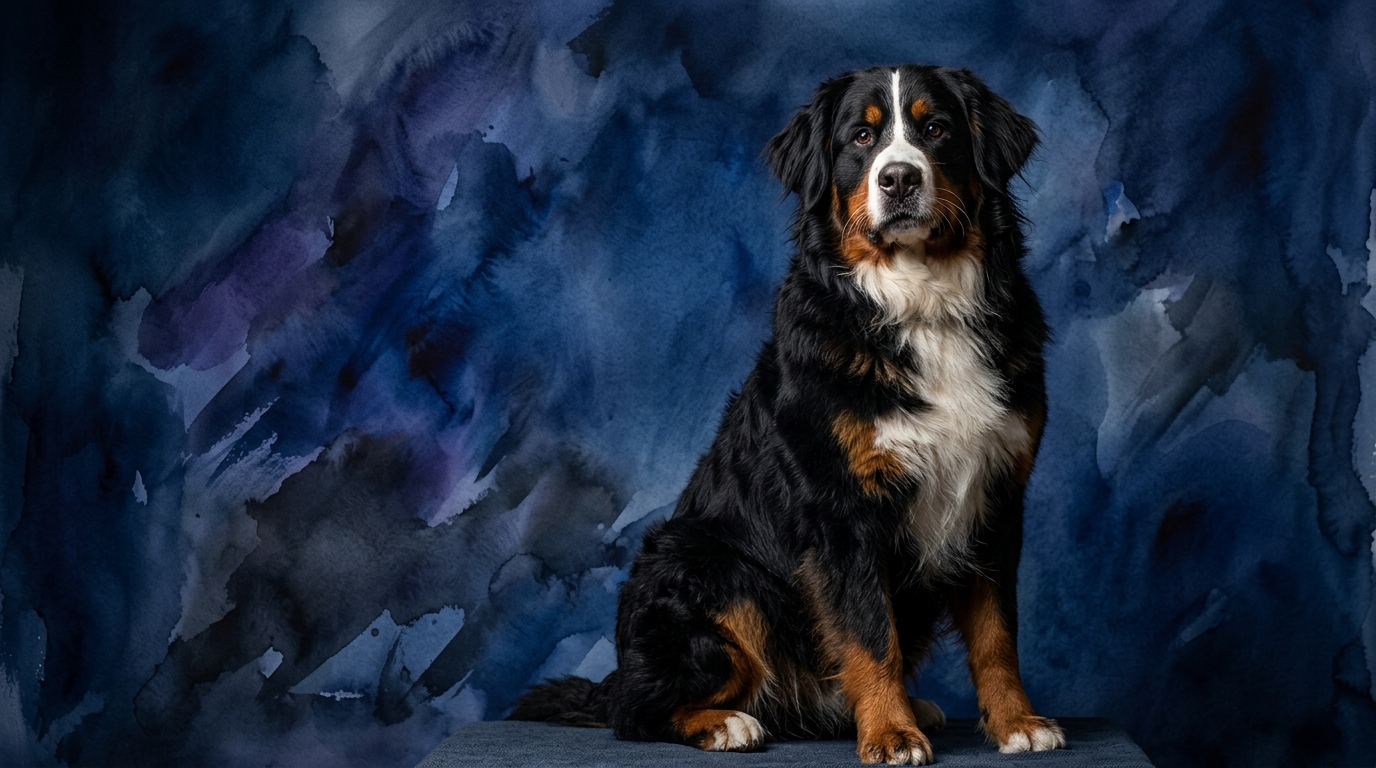
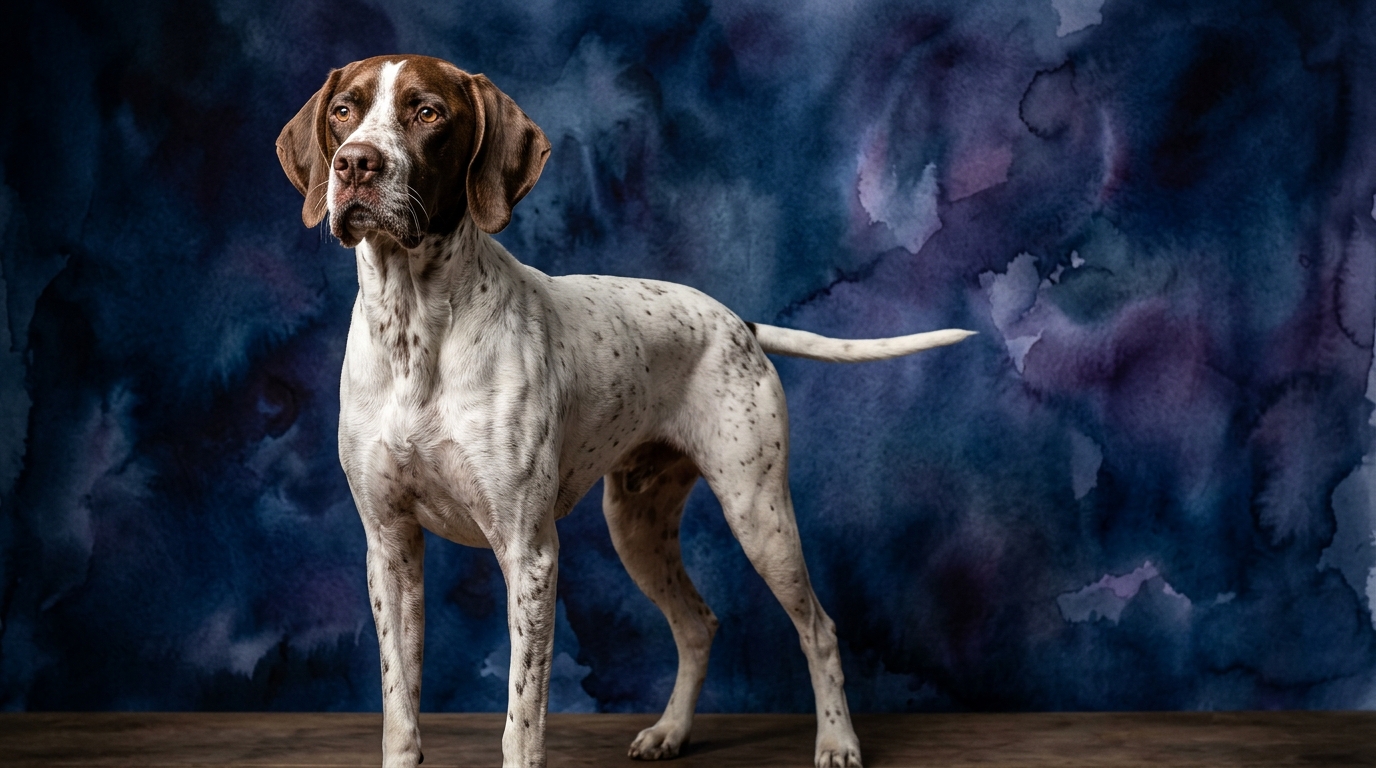
Side-by-Side IQ Profile: Bernese Mountain Dog vs. Pointer
The Cosmic Pet Pet IQ Lab provides a fascinating framework for understanding canine cognition across five key dimensions. For the Bernese Mountain Dog, a robust working breed, its profile reflects a history of farm duties and companionship. Its problem-solving ability scores a respectable 3 out of 5, indicating a capacity for navigating new challenges and finding solutions. Training speed is a strong 4 out of 5, suggesting a quick grasp of commands and routines. Where the Bernese truly shines is in social intelligence, earning a perfect 5 out of 5, highlighting its deep connection to human companions and its ability to interpret social cues. Its instinctive drive, rooted in herding and drafting, is a solid 4 out of 5, while memory stands at 3 out of 5, capable of retaining learned behaviors and experiences.
In contrast, the Pointer, a dedicated sporting breed, exhibits a cognitive profile tailored for its demanding field work. Its problem-solving ability matches the Bernese at 3 out of 5, demonstrating competence in figuring out practical challenges. Training speed is rated 3 out of 5, indicating a steady, if not rapid, learning pace. Social intelligence for the Pointer is 3 out of 5, suggesting a more independent nature compared to the Bernese, though still capable of forming bonds. Its instinctive drive, intensely focused on hunting and scent work, is also 3 out of 5. Memory, like its problem-solving and social intelligence, registers at 3 out of 5, sufficient for recalling training and field experiences. This side-by-side view immediately highlights the Bernese's notable strengths in training speed and social connection, while the Pointer presents a more balanced, albeit slightly lower, overall cognitive score across the board.
Where the Bernese Mountain Dog Wins Cognitively
The Bernese Mountain Dog clearly distinguishes itself in two key cognitive areas: social intelligence and training speed. With a perfect 5 out of 5 in social intelligence, the Bernese exhibits a profound capacity for understanding and responding to human emotions and intentions. This isn't merely about being friendly; it reflects a sophisticated ability to read subtle cues, engage in reciprocal interactions, and integrate seamlessly into a human family structure. This high social acumen makes them exceptionally attuned companions, often anticipating needs and offering comfort, a trait crucial for their historical role as farm dogs living in close proximity to families.
Furthermore, the Bernese's training speed, rated at 4 out of 5, indicates a quicker uptake of new commands and routines compared to many other breeds. This cognitive trait is linked to their desire to please and their strong social connection, making them highly receptive to instruction. Their instinctive drive, at 4 out of 5, while not as specialized as a Pointer's, is versatile, enabling them to excel in various working tasks from drafting carts to basic herding. This combination of high social intelligence and rapid learning makes the Bernese particularly adept at obedience work, service tasks, and becoming well-mannered family members who genuinely enjoy collaborative activities with their human counterparts.
Where the Pointer Wins Cognitively
While the Pointer's general cognitive scores might appear lower than the Bernese in some categories, its specific cognitive profile represents a triumph of specialization, perfectly adapted for its demanding role as a hunting companion. The Pointer's strength lies not in broad versatility but in the intense focus and unwavering dedication of its instinctive drive, rated 3 out of 5. This drive is singularly directed towards scent work and game location, requiring immense mental stamina and the ability to ignore myriad distractions in the field. This specialized drive, while numerically lower than the Bernese's more general drive, is arguably more potent and focused for its intended purpose.
The Pointer's problem-solving ability (3/5) and memory (3/5), while not exceptional, are entirely sufficient and highly functional for its work. In the field, a Pointer needs to independently assess terrain, track subtle scents, and remember the location of game or previous finds. Its moderate social intelligence (3/5) allows for a working partnership with a hunter without becoming overly dependent, fostering the independent decision-making crucial for ranging far and wide. The Pointer's cognitive wins are therefore found in its unparalleled capacity for sustained, independent, and highly specialized scent-driven work, where enduring focus and an almost obsessive pursuit of a goal define its mental prowess.
Which is Easier to Train and Why
Based on the provided IQ dimensions, the Bernese Mountain Dog is generally easier to train than the Pointer. The primary reasons stem from its superior social intelligence (5/5 vs. 3/5) and faster training speed (4/5 vs. 3/5). A Bernese's high social intelligence means it is inherently more attuned to human communication, intentions, and desires. This often translates into a stronger desire to please and a greater willingness to cooperate, making them highly receptive to instruction and praise. They are more likely to seek out human interaction and guidance, which streamlines the learning process.
Conversely, the Pointer's moderate social intelligence and slightly lower training speed suggest a more independent learning style. Pointers are often driven by their powerful hunting instincts, which can sometimes override their focus on human commands, especially in stimulating environments. While Pointers are certainly trainable and can achieve high levels of obedience, particularly in field work, their independence means owners might need more patience and consistent, highly motivating techniques to capture and maintain their attention. Their minds are often more engaged by the pursuit of scent than by direct human interaction during training sessions, requiring a different approach to engagement.
Which Suits Active Owners vs. Relaxed Owners
When considering an owner's lifestyle, the Bernese Mountain Dog and the Pointer present distinct matches based on their cognitive and physical needs. The Bernese, with its background as a working farm dog, thrives with owners who can provide a sense of purpose and consistent companionship. While they enjoy activity, their high social intelligence means they also deeply value being part of family life and often adapt well to a more relaxed indoor rhythm, provided their needs for moderate exercise and mental engagement are met. They suit owners who enjoy daily walks, structured play, and opportunities for their dog to 'work' in ways like carrying a backpack or participating in obedience classes, without necessarily needing intense, sustained physical exertion.
The Pointer, on the other hand, is unequivocally suited for active owners. Its entire cognitive and physical makeup is geared towards high-energy, sustained outdoor activity, particularly those involving scent work and covering vast distances. Owners who are avid hikers, runners, or hunters, or those who are committed to dog sports like field trials, agility, or canicross, would find a fulfilling partnership with a Pointer. A Pointer's lower social intelligence and intense instinctive drive mean it requires substantial physical and mental output to remain content and well-behaved. Without an outlet for their inherent drive to range and hunt, Pointers can become restless and potentially destructive, making them less ideal for genuinely relaxed or sedentary lifestyles.
The Verdict: When to Choose Each Breed
The Verdict
Choose the Bernese Mountain Dog if you seek a highly sociable, trainable companion deeply integrated into family life, offering gentle affection and a willingness to learn for a variety of purposes.
Opt for the Pointer if you lead an active, outdoor-oriented lifestyle and are prepared to engage a dog in extensive physical activity, especially field pursuits, fulfilling its intense, specialized drive for exploration and scent work.
🧠 Find Your Pet's IQ Score
Our Pet IQ Lab assessment covers 25+ tests across 5 cognitive dimensions — personalized to your breed.
Take the Full IQ Test →Frequently Asked Questions
Do Bernese Mountain Dogs need a lot of mental stimulation?
Yes, Bernese Mountain Dogs benefit from consistent mental stimulation. Their moderate problem-solving ability and strong training speed mean they enjoy learning new commands, engaging in puzzle toys, and participating in activities that give them a sense of purpose, such as obedience or drafting.
Are Pointers good family dogs despite their hunting drive?
Pointers can be good family dogs, but their strong hunting drive and need for extensive exercise must be met. Their moderate social intelligence means they form bonds, but they require consistent training and a lifestyle that accommodates their high energy and independent nature to thrive in a home environment.
How does the Bernese Mountain Dog's social intelligence impact its behavior?
The Bernese Mountain Dog's perfect 5/5 social intelligence score results in a highly empathetic and human-oriented companion. This trait makes them excel at understanding human cues, seeking interaction, and often leading to a gentle, patient demeanor, particularly with children and other pets, making them exceptional family members.