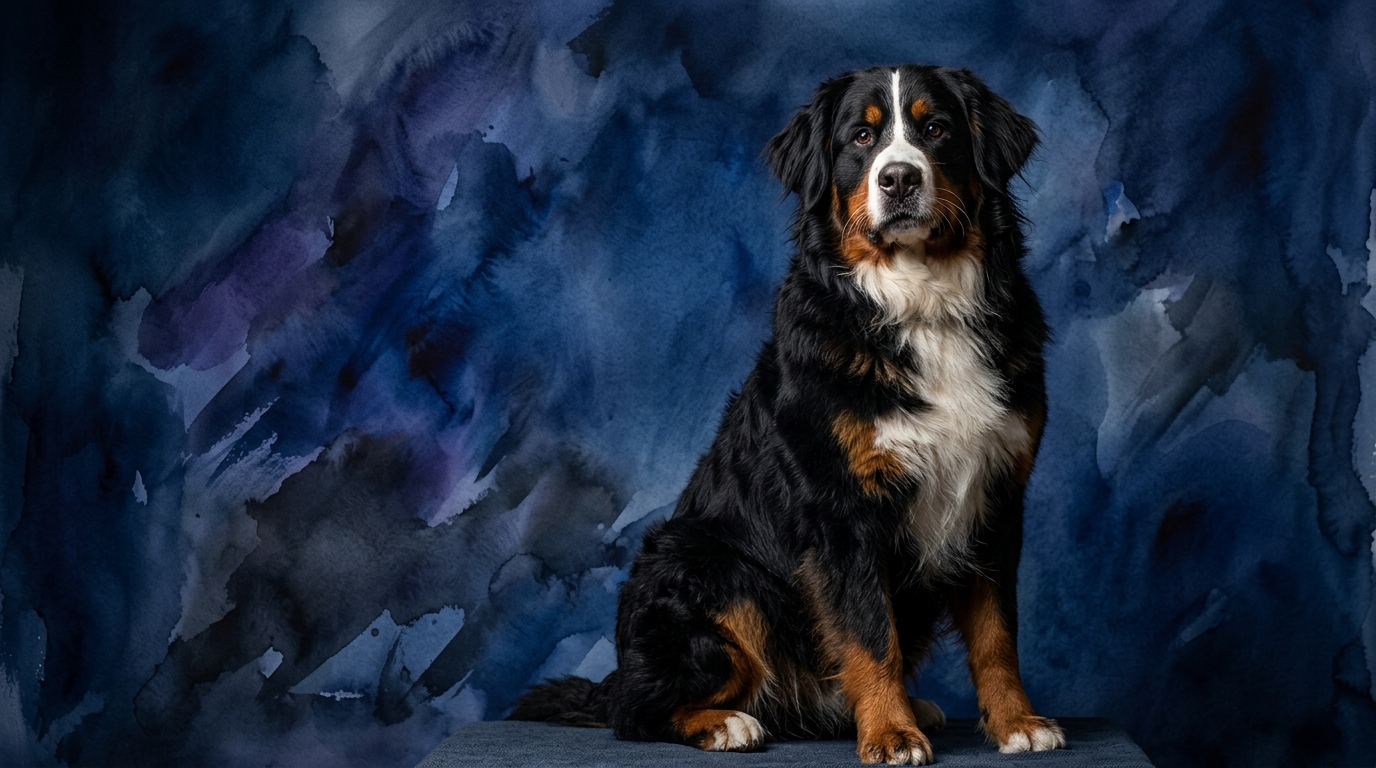
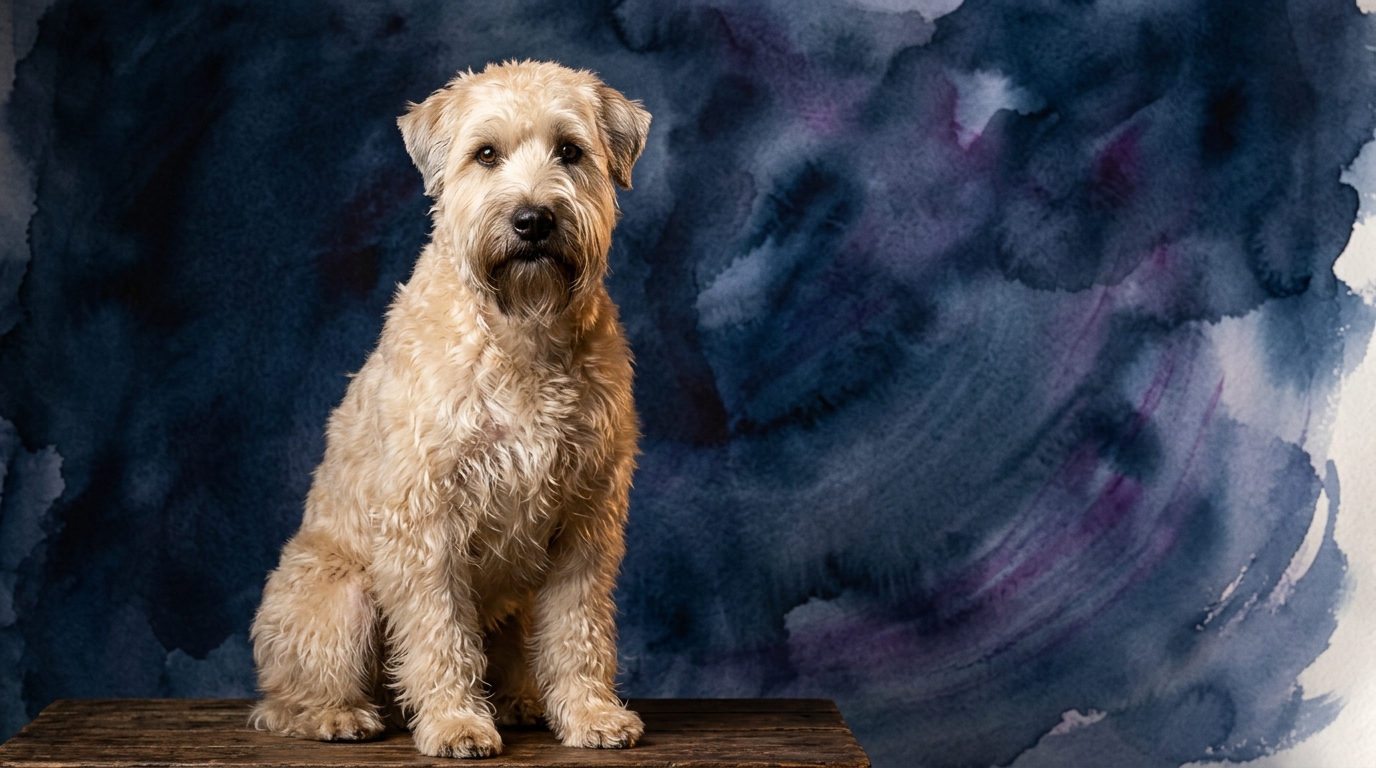
Side-by-Side Cognitive Profiles
At The Cosmic Pet Pet IQ Lab, we evaluate canine intelligence across five key dimensions. For the Bernese Mountain Dog, a Working breed, we observe a Problem Solving score of 3/5, indicating competence in navigating moderately complex tasks, often within a cooperative framework. Their Training Speed stands at an impressive 4/5, reflecting their general eagerness and responsiveness to instruction. Social Intelligence is a standout at 5/5, showcasing an exceptional ability to understand human cues and social dynamics. Instictive Drive is rated 4/5, expressing a strong innate desire for purpose and companionship. Finally, their Memory is solid at 3/5, allowing for reliable retention of routines and associations.
In contrast, the Soft Coated Wheaten Terrier, a Terrier breed, presents a distinct cognitive blueprint. Their Problem Solving ability is rated 3/5, demonstrating a capacity for figuring out challenges, often with a characteristic terrier persistence. Training Speed is 3/5, suggesting a steady learning pace that may require more consistent engagement. Social Intelligence is 3/5, indicating a good understanding of familiar social cues, though perhaps with more discernment towards new interactions. Their Instictive Drive is 3/5, reflecting an inherent bent towards independent exploration and vigilance. Memory for the Wheaten Terrier is also 3/5, meaning they retain information adequately for daily life and learned behaviors.
Where the Bernese Mountain Dog Excels Cognitively
The Bernese Mountain Dog distinctly shines in the realm of Social Intelligence, where its 5/5 rating significantly outpaces the Wheaten Terrier's 3/5. This translates into a profound capacity for reading and responding to human emotions, understanding subtle social cues, and adapting its behavior to foster harmony within a family unit. A Bernese Mountain Dog is often preternaturally attuned to its owner's mood, offering comfort or seeking interaction based on perceived emotional states, which builds a remarkably strong, intuitive bond. This cooperative nature means they excel in environments where nuanced social interaction is valued.
Another clear advantage for the Bernese Mountain Dog lies in its Training Speed, rated at 4/5 compared to the Wheaten Terrier's 3/5. Their inherent desire to please, coupled with their strong social intelligence, means they typically grasp new commands and routines with greater ease and fewer repetitions. This efficiency makes initial training periods smoother and often more rewarding for owners, as the Bernese Mountain Dog actively seeks to comply and understand expectations, making them highly receptive pupils in formal obedience or practical life skills training.
Where the Soft Coated Wheaten Terrier Shows Unique Cognitive Strengths
While both breeds share a 3/5 rating for Problem Solving, the Soft Coated Wheaten Terrier often expresses this capacity with a distinctive independent tenacity rooted in its terrier heritage. Their problem-solving might manifest in resourceful, self-directed efforts to achieve a personal goal, such as figuring out how to access a coveted toy or exploring a perceived weakness in a fence line. This isn't necessarily about speed, but about persistent, often clever, application of trial-and-error, demonstrating a certain ingenuity when motivated by their own curiosities or desires.
The Wheaten Terrier's Instinctive Drive, while rated 3/5 (compared to the Berner's 4/5), is geared towards independent action, vigilance, and exploration, which offers a different cognitive strength. This drive can make them particularly adept at navigating and assessing new or changing environments on their own terms, rather than solely relying on human direction. They may be quicker to investigate novel stimuli or adapt to unfamiliar surroundings through self-initiated exploration, showcasing a robust self-reliance that can be a valuable cognitive asset in diverse situations.
Which is Easier to Train and Why
Based on their cognitive profiles, the Bernese Mountain Dog is generally considered easier to train. Their superior Training Speed (4/5) combined with exceptional Social Intelligence (5/5) means they are highly motivated to cooperate and please their human companions. They quickly understand what is being asked of them and are eager to comply, making positive reinforcement highly effective. Their intrinsic desire to work alongside their family simplifies the learning process for both basic obedience and more complex tasks, as they actively seek to engage and learn.
The Soft Coated Wheaten Terrier, with a Training Speed of 3/5 and a more independent Instinctive Drive (3/5), typically requires a more patient and persistent approach to training. Their terrier spirit means they can be more prone to questioning commands or offering alternative, self-motivated behaviors. While they are certainly capable of learning, owners often need to employ varied training techniques, maintain high levels of engagement, and consistently reinforce desired behaviors to keep their attention and overcome their occasional stubborn streak. Their problem-solving might lead them to find less-than-ideal solutions if not properly guided.
Matching Canine Minds to Owner Lifestyles
The Bernese Mountain Dog is an ideal companion for relaxed owners who value deep companionship and a calm, gentle presence. While they possess an Instinctive Drive of 4/5 for purpose, this is typically fulfilled through moderate daily activity like leashed walks, family outings, and being an integral part of household routines. Their high Social Intelligence makes them excellent family dogs who thrive on consistent interaction and a predictable, loving environment, without demanding intense, high-impact physical exertion.
Conversely, the Soft Coated Wheaten Terrier is best suited for active owners who can match their spirited zest for life. Their terrier energy and Instinctive Drive (3/5) for exploration and vigilance necessitate regular, engaging exercise and mental stimulation. They thrive on vigorous play sessions, long walks or runs, and activities that challenge their agility and cognitive skills, such as puzzle toys or dog sports. Owners who are prepared to consistently channel this energy and independent spirit will find a rewarding and lively companion.
The Verdict
Choose the Bernese Mountain Dog when you seek a deeply bonded, cooperative companion who learns readily and integrates seamlessly into family life, offering gentle social intelligence and a calm demeanor.
Choose the Soft Coated Wheaten Terrier when you appreciate an independent, spirited companion with a playful tenacity, and you are prepared to engage their unique terrier wit with consistent, creative training and ample activity.
🧠 Find Your Pet's IQ Score
Our Pet IQ Lab assessment covers 25+ tests across 5 cognitive dimensions — personalized to your breed.
Take the Full IQ Test →Frequently Asked Questions
How does Coren ranking relate to these breeds?
The Bernese Mountain Dog's Coren rank of #27 places it among breeds with significant 'working and obedience intelligence,' meaning they generally understand new commands in 15-25 repetitions and obey the first command 70% of the time or better. The Soft Coated Wheaten Terrier, not Coren-ranked, falls outside the top tiers, suggesting it requires more repetitions and might show less consistent immediate obedience, aligning with its moderate training speed.
Are Bernese Mountain Dogs truly 'easier' to live with due to their social intelligence?
Their high social intelligence (5/5) means Bernese Mountain Dogs are often more attuned to human emotions and social cues, leading to a more harmonious integration into family life. They tend to be sensitive, eager to please, and less likely to challenge authority, making them generally adaptable and cooperative companions within a consistent household structure.
What kind of 'problem-solving' do these breeds typically engage in?
Both breeds, rated 3/5 in problem-solving, can figure out moderately complex tasks like opening simple latches or navigating obstacle courses. Bernese Mountain Dogs often apply learned solutions in practical, cooperative contexts, while Soft Coated Wheaten Terriers might exhibit more independent, persistent efforts to achieve self-motivated goals, such as finding a hidden toy or exploring a new scent.