
Side-by-Side Cognitive Profiles
**German Shepherd:** Coren Rank #3, indicating rapid command acquisition and high obedience reliability. Their Problem Solving (5/5) means exceptional capacity for complex scenarios, devising strategies, and adapting learned behaviors, excelling in roles requiring independent decision-making like search and rescue. Training Speed (5/5) reflects swift assimilation of new commands, often in few repetitions, driven by an eagerness to engage. Social Intelligence (5/5) allows acute awareness of human cues, forming deep cooperative bonds and anticipating intentions for synchronized teamwork. Instinctive Drive (5/5), a potent blend of prey, protective, and herding instincts, fuels focused determination for tasks like tracking or guarding. Memory (5/5) is robust, retaining vast repertoires of commands and experiences, vital for consistent, reliable performance.
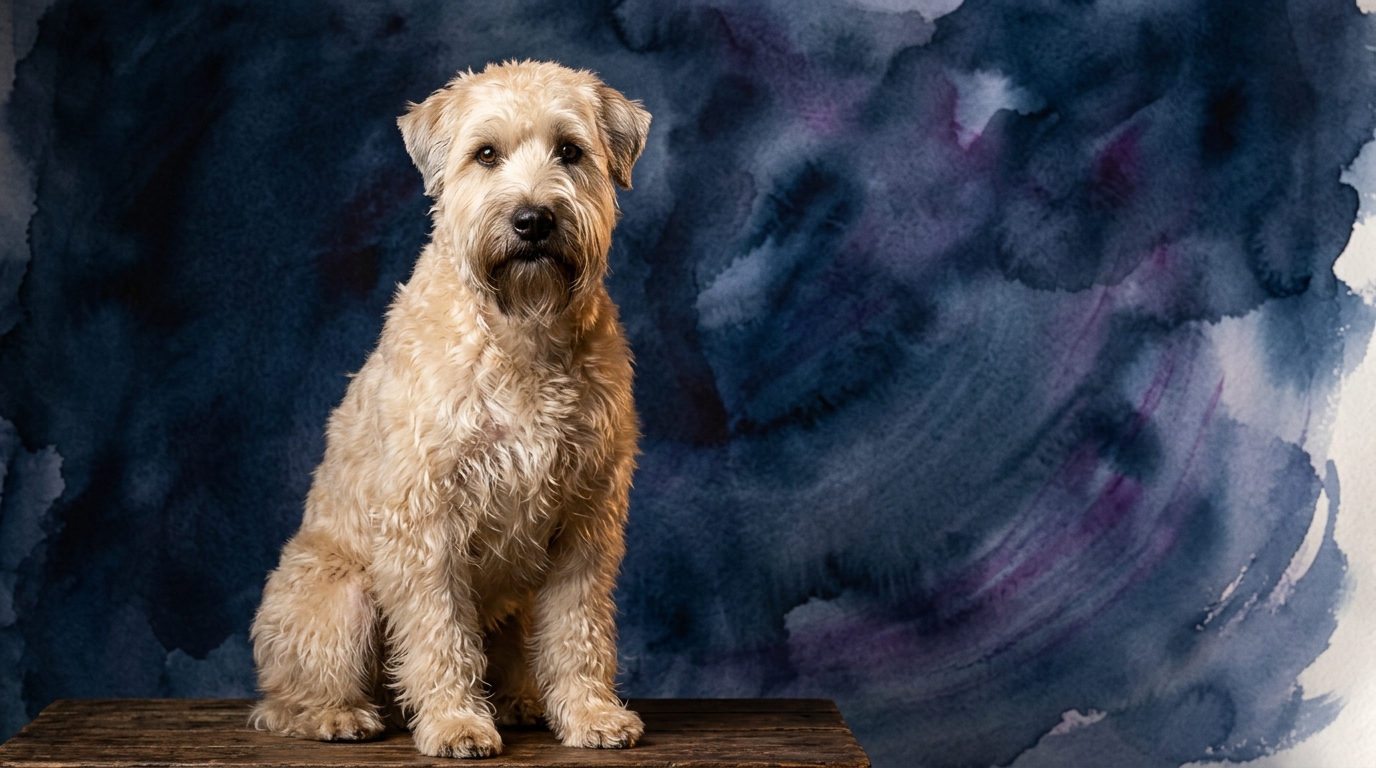
**Soft Coated Wheaten Terrier:** Not Coren-ranked, placing them outside the top tiers of working intelligence. Problem Solving (3/5) is moderate; they learn to navigate challenges, often through trial-and-error or curiosity, but may require more guidance than breeds designed for strategic work. Training Speed (3/5) means more repetition and consistent reinforcement are needed, as their independent spirit can prioritize their own interests over human directives. Social Intelligence (3/5) indicates they are affectionate and responsive to direct communication, but their interpretation of subtle human cues might be less nuanced, sometimes appearing more self-directed in social engagements. Instinctive Drive (3/5), rooted in vermin hunting, manifests as curiosity, digging, and chasing, less intensely focused or broadly applicable than a herding breed's drive. Memory (3/5) is functional for routines and commands, but recall might not be as instantaneous or consistently precise, especially for less practiced sequences.
Where the German Shepherd Excels Cognitively
The German Shepherd's cognitive architecture is fundamentally geared towards precise execution and complex engagement. Their Problem Solving (5/5) allows them to not just follow orders but process scenarios, evaluate options, and make sound judgments in dynamic environments, crucial for roles like tracking or protection work. Training Speed (5/5) reflects an innate desire for partnership and a capacity to generalize learned concepts rapidly, enabling quick progression to advanced, multi-stage tasks. Furthermore, their profound Social Intelligence (5/5) facilitates an almost symbiotic relationship with their handler, anticipating commands and responding to subtle cues, ensuring seamless teamwork in high-stakes situations. Their consistently high scores across all dimensions signify a breed designed for rigorous mental work and unwavering reliability.
Where the Soft Coated Wheaten Terrier Shines Cognitively
While the Wheaten Terrier's IQ profile differs, it harbors distinct strengths. Their Problem Solving (3/5) is often characterized by charming persistence and inventive approaches; they may not strategize complex solutions but will tirelessly experiment with cheerful determination. Their Instinctive Drive (3/5), rooted in terrier heritage, translates into an independent spirit and self-directed curiosity. This allows them to focus on self-selected tasks like scent investigation or digging without constant human motivation, promoting a self-reliance that can be a cognitive asset. Their social intelligence, while rated lower, often manifests as straightforward, joyful affection, providing unburdened companionship without demanding the intense, nuanced bond of a working partnership. This profile suits owners valuing playful interaction over intricate directives.
Which is Easier to Train and Why
Comparing ease of training, the German Shepherd holds a clear advantage due to their stellar Training Speed (5/5) and profound Social Intelligence (5/5). German Shepherds are inherently driven to work with humans, quickly grasping and retaining commands, even under distraction. Their attentiveness to human cues allows for subtle communication, making advanced obedience and specialized task training a fluid process. They thrive on structure and purpose, finding motivation in pleasing their handler. The Soft Coated Wheaten Terrier, with a Training Speed of 3/5, requires a different approach. Their independent terrier nature demands more repetition, patience, and highly engaging, positive reinforcement. Wheatens might understand a command but choose not to execute it if something more interesting captures their attention, reflecting their lower social intelligence in a working context. Training a Wheaten involves making desired behaviors more appealing than their independent inclinations, a delightful challenge but certainly less 'easy' than guiding a German Shepherd.
Which Suits Active Owners vs. Relaxed Owners
The cognitive profiles of these breeds clearly indicate their suitability for different lifestyles. The German Shepherd, with its uniformly high IQ scores, is an ideal match for active owners who desire a highly engaged and purposeful canine partner. Their exceptional Problem Solving (5/5), Instinctive Drive (5/5), and Memory (5/5) necessitate consistent mental and physical stimulation. Owners who enjoy structured activities like advanced obedience, agility, or scent work will find a German Shepherd incredibly rewarding. They require challenges; their minds need outlets for their inherent working drives. A relaxed owner seeking a low-maintenance companion would likely find a German Shepherd's unmet cognitive needs leading to frustration. Conversely, the Soft Coated Wheaten Terrier's cognitive makeup aligns better with owners who appreciate a lively but less intensely demanding companion. Their moderate IQ scores mean they enjoy activity and engagement, but perhaps not with the same rigorous, precision-focused intensity. An active owner enjoying playful interactions, moderate walks, and fun, shorter training sessions will find a Wheaten an enthusiastic partner. While not suited for entirely sedentary homes, their mental engagement can often be through self-directed play or varied games rather than complex, sustained work. They fit owners who are active in a casual, less structured way, valuing joyful companionship over precision performance.
The Verdict
Choose a German Shepherd if you seek a highly trainable, dedicated working partner eager for complex tasks, structured activities, and a profound cooperative bond built on mutual understanding and precision.
Opt for a Soft Coated Wheaten Terrier if you desire a spirited, independent companion who thrives on joyful engagement, moderate activity, and appreciates a more lighthearted approach to training and daily life.
🧠 Find Your Pet's IQ Score
Our Pet IQ Lab assessment covers 25+ tests across 5 cognitive dimensions — personalized to your breed.
Take the Full IQ Test →Frequently Asked Questions
Are German Shepherds difficult for first-time dog owners?
German Shepherds require significant commitment due to their high intelligence and drive. First-time owners should be prepared for extensive training, consistent mental stimulation, and a clear understanding of leadership to manage their capabilities effectively.
Do Soft Coated Wheaten Terriers bark a lot?
Wheaten Terriers can be vocal, often using barks to express excitement, alert to strangers, or demand attention. While not excessive for all, their terrier nature means they are generally more prone to barking than some other breeds, especially if bored or left alone.
How much exercise does a Soft Coated Wheaten Terrier need?
Soft Coated Wheaten Terriers require moderate daily exercise, typically 30-60 minutes of vigorous activity like brisk walks, playtime, or short runs. Mental stimulation through training and puzzle toys is equally important to satisfy their curious minds.