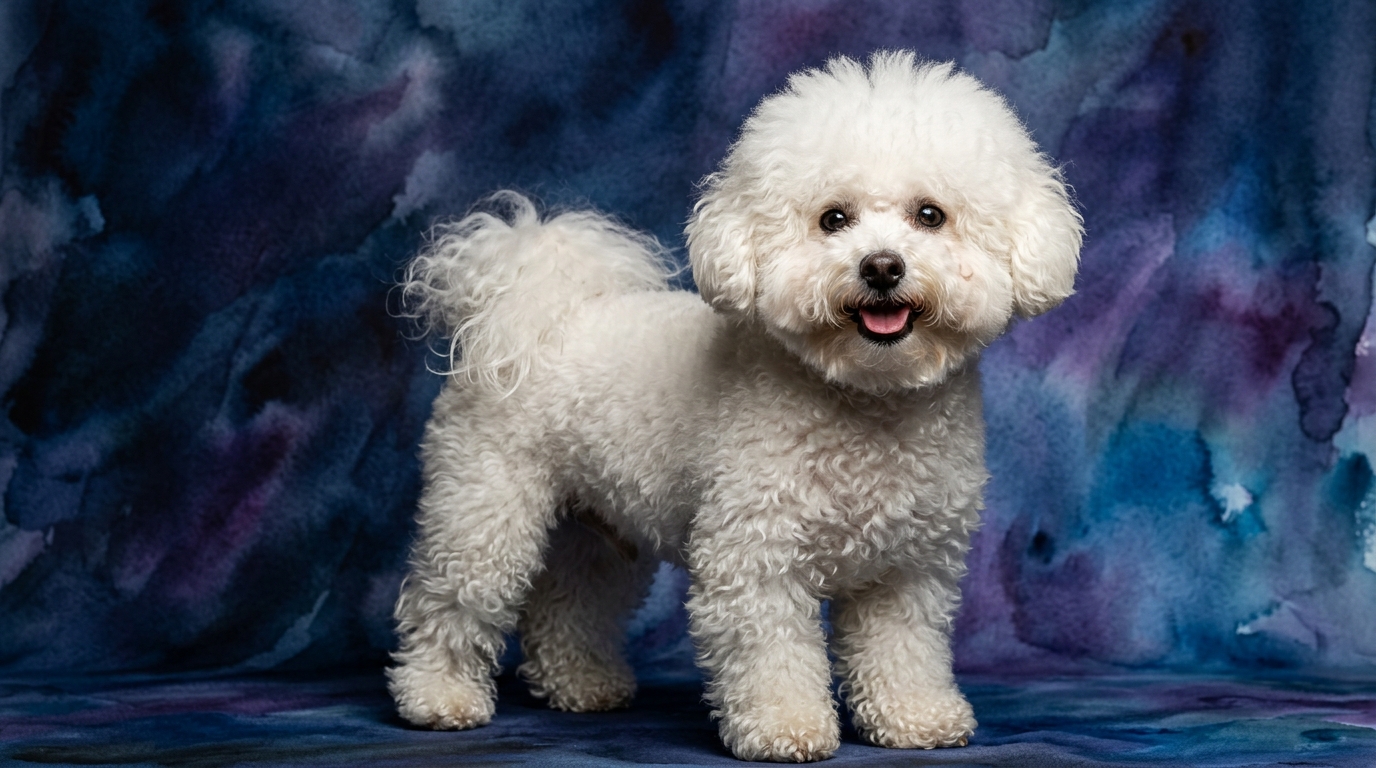
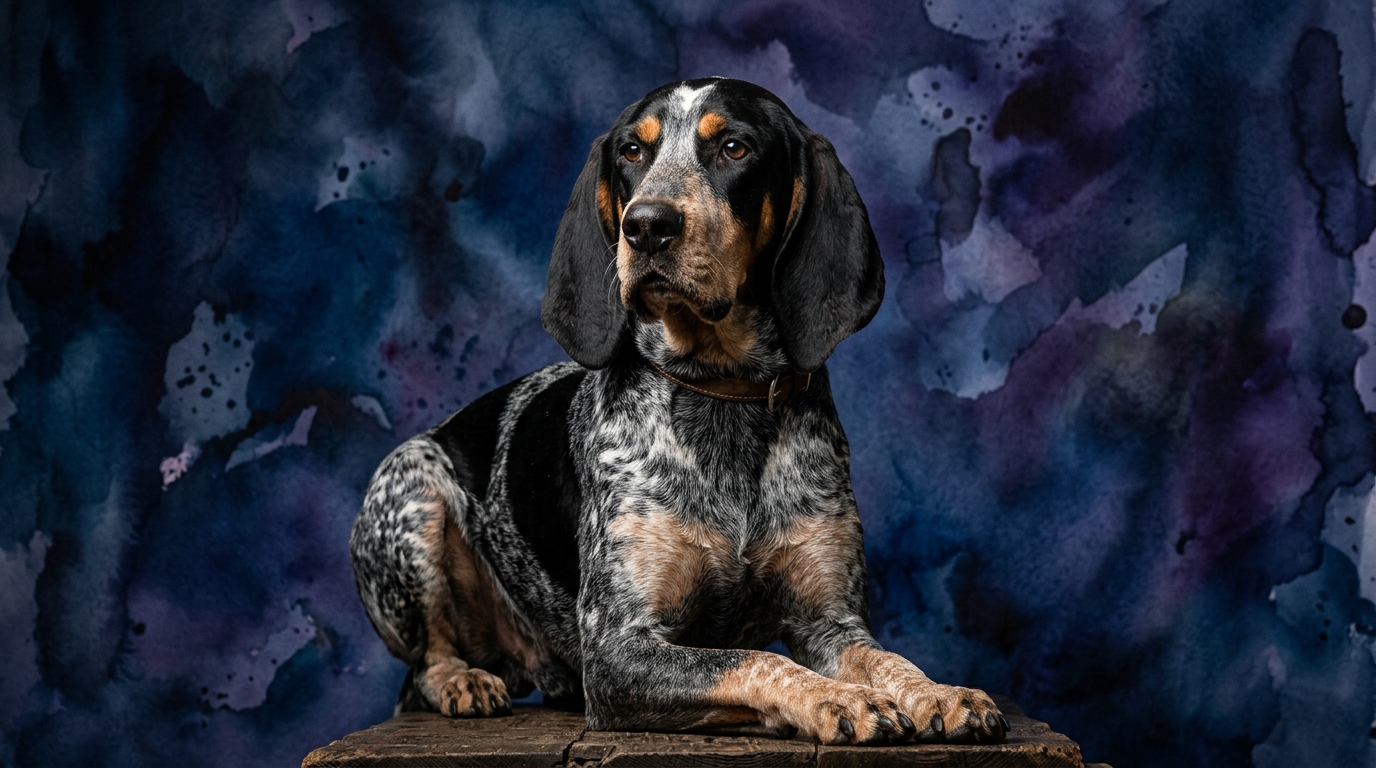
Side-by-Side IQ Profile: Bichon Frisé vs. Bluetick Coonhound
The Cosmic Pet Pet IQ Lab employs a five-dimensional framework to assess canine intelligence, moving beyond simplistic notions of 'smartness' to reveal nuanced cognitive strengths. For the Bichon Frisé, a delightful companion breed, and the Bluetick Coonhound, a dedicated scent hound, these dimensions paint very different pictures.
The Bichon Frisé, ranked #45 by Coren for obedience intelligence, exhibits a balanced cognitive profile with a standout trait. Their Problem Solving is rated 3/5, indicating an ability to navigate typical household challenges and learn routines without excessive difficulty. Training Speed also sits at 3/5; they learn new commands at a moderate pace, often eager to engage. Their Social Intelligence is exceptional at 5/5, reflecting a profound capacity to understand and respond to human cues and emotions. Instinctive Drive is low at 2/5, meaning they possess less inclination for independent hunting or tracking. Memory is solid at 3/5, allowing them to retain learned behaviors and social experiences reliably.
The Bluetick Coonhound, while not included in Coren's rankings, possesses a cognitive architecture optimized for its working heritage. Their Problem Solving is 3/5, often manifesting as persistence in overcoming obstacles related to scent work. Training Speed is also 3/5; they are capable learners, though their focus can be heavily influenced by environmental stimuli. Social Intelligence is rated 3/5; they form bonds but are often more externally focused than the Bichon. Their Instinctive Drive is 3/5, a critical component of their nature, fueling their tracking and baying behaviors. Memory is 3/5, allowing them to recall complex scent patterns and learned tasks relevant to their work.
Where the Bichon Frisé Wins Cognitively
The Bichon Frisé's paramount strength lies in their exceptional Social Intelligence (5/5). This isn't merely about being friendly; it reflects a sophisticated cognitive ability to interpret subtle human expressions, understand emotional shifts, and adapt their behavior to foster deep, reciprocal connections. A Bichon often anticipates an owner's mood or needs, offering comfort or initiating play at just the right moment, demonstrating an intuitive grasp of human interaction that few breeds possess. This makes them incredibly attuned companions, often feeling like they truly 'understand' their people.
Furthermore, their lower Instinctive Drive (2/5) is a significant cognitive advantage in a companion role. Unlike breeds with strong prey or scent drives, a Bichon is less prone to sudden disappearing acts to chase a squirrel or follow a compelling trail into the distance. Their cognitive predisposition leans towards staying close and engaging with humans, requiring less redirection of powerful intrinsic motivations. This makes them more content in a home environment and generally easier to manage in varied social settings, as their primary drive is interaction rather than independent exploration.
Where the Bluetick Coonhound Wins Cognitively
The Bluetick Coonhound's cognitive edge is firmly rooted in their robust Instinctive Drive (3/5), a trait meticulously honed over generations for a specific purpose. This drive translates into an unparalleled ability to focus intensely on and follow a scent trail, demonstrating remarkable persistence and problem-solving within that specialized domain. Their cognitive architecture is built for the hunt, enabling them to process complex olfactory information, differentiate between subtle scent nuances, and navigate varied terrains with singular, unwavering determination. This specialized intelligence, though not always captured in general obedience rankings, is a profound strength for their intended role.
While their general problem-solving and training speed are rated similarly to the Bichon, the context differs dramatically. A Bluetick's problem-solving often manifests as tactical thinking in pursuit, figuring out how to overcome physical obstacles or decipher confusing scent patterns to reach a source. This capacity for focused, task-oriented cognition, driven by instinct, makes them exceptionally effective at their traditional work. Their ability to maintain concentration on a scent for extended periods, despite distractions, speaks volumes about their unique cognitive dedication.
Which is Easier to Train and Why
Both breeds share a 3/5 rating for Training Speed, suggesting they learn new commands at a similar moderate pace. However, the *ease* of training can differ significantly due to their other cognitive traits. A Bichon Frisé, with its superior Social Intelligence (5/5) and low Instinctive Drive (2/5), often presents as easier to train in a typical home setting. Their strong desire to please and focus on human interaction means they are generally more attentive to their owner's cues, less distracted by environmental stimuli, and highly motivated by praise and affection. Their cognitive predisposition to seek connection means they are often eager participants in training sessions, viewing it as a bonding activity.
Conversely, while a Bluetick Coonhound learns at a comparable speed, their prominent Instinctive Drive (3/5) can introduce unique challenges. When a compelling scent is present, their cognitive focus shifts powerfully towards that sensory input, making it difficult to hold their attention on human-directed tasks. Training a Bluetick often requires more patience, consistency, and creative methods to compete with their natural drive, such as incorporating scent work into their training or using high-value rewards to maintain focus. Their independent nature, a byproduct of their working heritage, means they might question commands if they perceive a more interesting 'task' (like a scent trail) at hand, requiring a trainer who understands and respects this intrinsic motivation and finds ways to channel it productively rather than suppress it.
Suitability for Active vs. Relaxed Owners
The distinct cognitive profiles of these two breeds clearly delineate their suitability for different owner lifestyles. The Bichon Frisé, with its low Instinctive Drive (2/5) and exceptional Social Intelligence (5/5), is an ideal companion for more relaxed owners. Their cognitive needs are largely met through consistent social interaction, short play sessions, and mental enrichment involving puzzle toys or learning new tricks that deepen their bond with their human. They thrive on being involved in daily family life, preferring to be near their people rather than embarking on independent adventures, making them well-suited for apartment living or homes with less intense outdoor activity.
The Bluetick Coonhound, however, is unequivocally suited for active owners. Their robust Instinctive Drive (3/5) and background as working hounds mean they possess a deep-seated cognitive need for purposeful activity, particularly involving scent work and significant physical exertion. Owners who can provide ample opportunities for long hikes, supervised off-leash exploration in secure areas, or participation in dog sports like tracking or agility will find a Bluetick to be a fulfilled and content companion. Without outlets for their cognitive and physical drive, a Bluetick may channel their energy into less desirable behaviors, such as excessive baying, destructive chewing, or attempting to follow scents independently. Their minds are wired for work, and ignoring this aspect of their intelligence leads to an unfulfilled dog.
The Verdict
Opt for a Bichon Frisé if your priority is an emotionally attuned companion who thrives on close social interaction and offers intuitive comfort, fitting seamlessly into a more relaxed home environment.
Select a Bluetick Coonhound if you lead an active lifestyle and are prepared to engage a dog with a powerful, purpose-driven mind through consistent physical activity and stimulating scent-based work.
🧠 Find Your Pet's IQ Score
Our Pet IQ Lab assessment covers 25+ tests across 5 cognitive dimensions — personalized to your breed.
Take the Full IQ Test →Frequently Asked Questions
Does a Bichon Frisé's high social intelligence mean they are easily stressed when left alone?
Yes, a Bichon Frisé's exceptional social intelligence means they form very strong bonds and derive much of their cognitive and emotional well-being from interaction. Prolonged periods of isolation can be particularly challenging for them, potentially leading to separation-related behaviors due to their deep need for companionship.
Can a Bluetick Coonhound be a good family dog despite their strong instinctive drive?
Absolutely, a Bluetick Coonhound can be a loyal and affectionate family dog, provided their significant cognitive need for physical activity and mental stimulation is met. When their instinctive drive is appropriately channeled, they are generally calm and friendly indoors, forming strong bonds with their human family.
How does the 'Not Coren-ranked' status for the Bluetick Coonhound affect our understanding of its intelligence?
The 'Not Coren-ranked' status simply means the breed wasn't included in that specific survey of obedience and working intelligence, not that they lack cognitive abilities. Bluetick Coonhounds possess a specialized intelligence centered around scent work and tracking, which is a different measure than the general obedience and problem-solving skills Coren primarily assessed.