
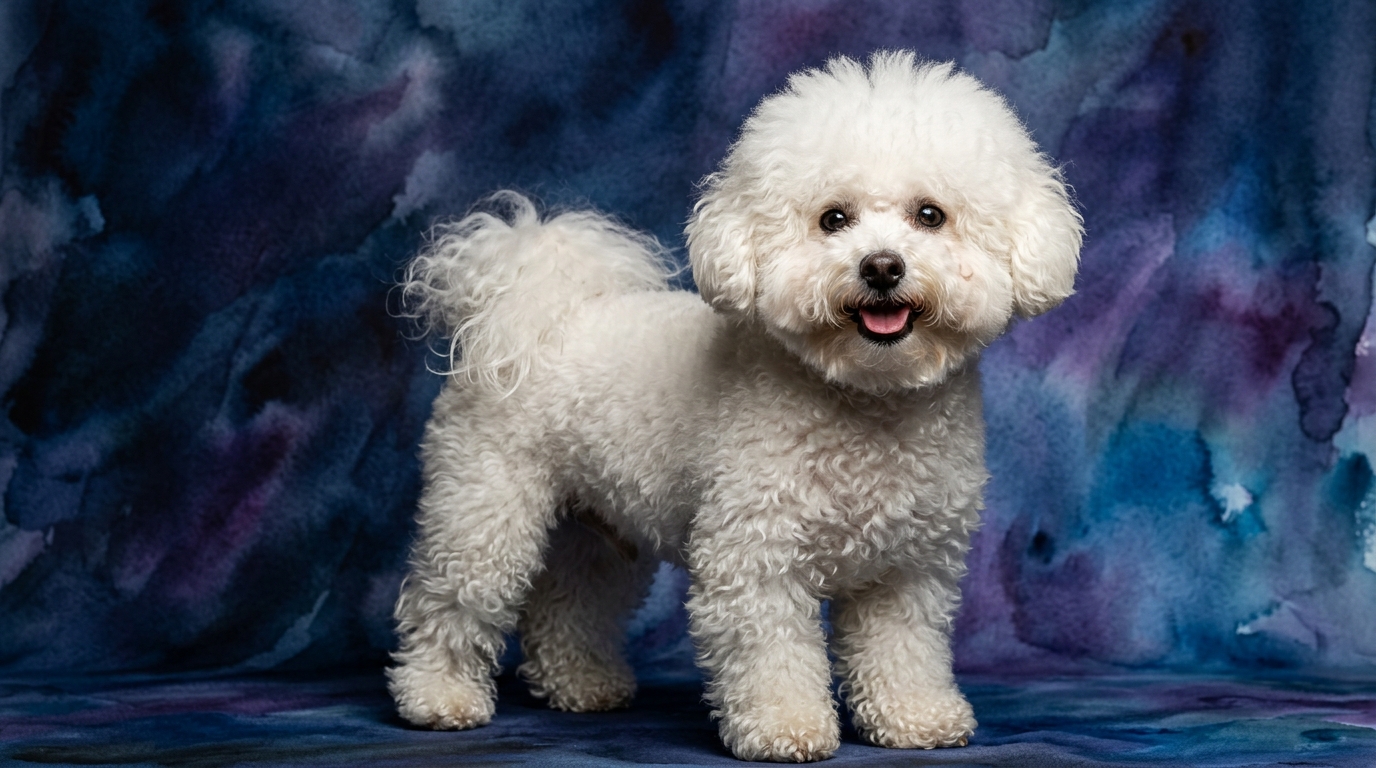
Side-by-Side IQ Profile: Border Collie vs. Bichon Frisé
The Cosmic Pet Pet IQ Lab evaluates five key dimensions to paint a comprehensive picture of canine cognition. For the Border Collie, a breed widely recognized for its working capabilities, its profile is dominated by exceptional scores across most metrics. Problem Solving is rated 5/5, indicating an outstanding capacity to analyze novel situations and devise effective solutions, often independently. Training Speed also sits at 5/5, reflecting their rapid assimilation of new commands and complex sequences. Their Social Intelligence scores 4/5, meaning they are adept at reading human cues and forming strong working bonds, though perhaps not universally people-pleasing in the same way a purely companion breed might be. Instinctive Drive is a perfect 5/5, highlighting their powerful, innate herding behaviors and relentless motivation. Finally, Memory is also a 5/5, enabling them to recall vast numbers of commands, routines, and experiences with precision.
In contrast, the Bichon Frisé, bred primarily for companionship, presents a different set of cognitive strengths. Their Problem Solving ability is rated 3/5, suggesting they can navigate straightforward puzzles and learn basic routines, but complex, multi-step tasks may present a greater challenge. Training Speed is also 3/5, meaning they require more repetition and patience than a Border Collie to master new commands, though they are certainly capable of learning. Where the Bichon Frisé truly shines is in Social Intelligence, earning a 5/5; they possess an exceptional ability to connect with humans, read emotional states, and adapt their behavior to foster positive interaction. Instinctive Drive is a modest 2/5, indicating a low propensity for intense prey drive or demanding work. Their Memory is rated 3/5, allowing them to retain essential information for daily life and basic training, but perhaps not the extensive repertoire of a working breed.
Where the Border Collie Excels Cognitively
The Border Collie's cognitive prowess is most evident in its ability to process information rapidly and apply it strategically. Their 5/5 Problem Solving score means they aren't just following commands; they are often anticipating, adapting, and innovating. For instance, in a herding scenario, a Border Collie doesn't just push sheep; it strategically positions itself, uses eye contact to influence movement, and adjusts its approach based on the flock's response, demonstrating sophisticated spatial reasoning and tactical thinking. This translates into quickly understanding multi-step tasks, like retrieving specific items from a group or navigating complex agility courses with minimal instruction after initial learning.
Their unmatched 5/5 Training Speed means they can master an extensive vocabulary of commands, often linking them into intricate sequences. A Border Collie can learn dozens, even hundreds, of distinct words for objects and actions, demonstrating a capacity for abstract association. This rapid learning curve, coupled with a 5/5 Memory, allows them to retain complex routines over long periods and recall specific behaviors with impressive accuracy, making them unparalleled partners in competitive dog sports or demanding service roles. Their profound instinctive drive, rated 5/5, is a cognitive asset, channeling intense focus and motivation towards goal-oriented tasks, transforming a natural urge into a powerful tool for learning and performance.
Where the Bichon Frisé Excels Cognitively
The Bichon Frisé's cognitive strengths lie predominantly in the realm of social engagement and emotional attunement. Their perfect 5/5 Social Intelligence score indicates an exceptional capacity to understand and respond to human emotions and social cues. A Bichon Frisé is adept at sensing a change in its owner's mood, offering comfort during distress, or initiating playful interaction when spirits are high. This translates into a remarkable ability to integrate seamlessly into family life, adapting their behavior to different individuals and social settings with grace and charm. They excel at forming deep, intuitive bonds, often anticipating their owner's needs for companionship or attention.
Furthermore, their lower 2/5 Instinctive Drive, while not a measure of 'intelligence' in the traditional sense, is a cognitive advantage for their role as a companion. It means they are less preoccupied with primal urges like hunting or territorial guarding, allowing their focus to remain primarily on human interaction and domestic harmony. This makes them remarkably adaptable to various living situations, including urban apartments, where a breed with higher instinctive drives might struggle with unmet needs. Their 3/5 Problem Solving and Memory, while not as high as a Border Collie's, are perfectly adequate for navigating daily routines and learning the social etiquette required of a beloved family pet, demonstrating a practical and socially-focused cognitive architecture.
Which is Easier to Train and Why
When considering ease of training, the Border Collie (Training Speed 5/5) and Bichon Frisé (Training Speed 3/5) present distinct experiences. A Border Collie will acquire new commands with astonishing speed, often understanding a new cue after just a few repetitions. Their intense focus and eagerness to work, driven by their 5/5 Instinctive Drive, mean they are highly motivated to engage in structured learning. However, this rapid learning also means they can just as quickly pick up undesirable behaviors if not consistently guided and mentally stimulated. Training a Border Collie isn't about *if* they can learn, but *what* they learn and how their immense cognitive capacity is channeled. Their precision memory (5/5) means once a command is learned, it's typically retained with great accuracy, but their high drive requires a trainer to be equally dedicated and creative to prevent boredom or destructive outlets for their mental energy.
The Bichon Frisé, with a Training Speed of 3/5, will require more patience and repetition to master commands. They are not slow learners, but they process information at a more moderate pace and may require more consistent reinforcement to solidify new behaviors. Their strength lies in their 5/5 Social Intelligence; they are motivated by positive human interaction, praise, and the desire to please, making them responsive to reward-based training. Real behavioral differences include the Border Collie's intense 'work ethic' and problem-solving approach to training tasks versus the Bichon's more genial, relationship-focused engagement. A Border Collie might try to figure out the *game* of training, while a Bichon is more likely to be motivated by the positive attention and treats associated with the interaction. While a Bichon might take longer to learn a complex trick, their cooperative nature and lower drive make them less prone to 'outsmarting' their owner or finding independent, potentially mischievous, forms of entertainment if left unchallenged.
Which Suits Active Owners vs. Relaxed Owners
The divergence in cognitive profiles between these two breeds directly correlates with their ideal owner lifestyles. The Border Collie is unequivocally suited for active owners, individuals or families who can commit to providing extensive physical exercise and, crucially, demanding mental stimulation. Their 5/5 Problem Solving, 5/5 Instinctive Drive, and 5/5 Memory mean they thrive when given a 'job' to do, whether it's competitive dog sports like agility, flyball, or obedience, participating in herding trials, or engaging in complex puzzle-solving games daily. An owner who understands and can harness their profound work ethic and cognitive capabilities will find an incredibly rewarding partnership. Without sufficient mental and physical outlets, a Border Collie can become easily bored, leading to behavioral issues like excessive barking, destructive chewing, or obsessive behaviors, as their powerful minds seek an outlet.
Conversely, the Bichon Frisé is an excellent match for relaxed owners seeking a devoted companion. Their 5/5 Social Intelligence means they prioritize close human companionship and are content with a moderate exercise routine that includes daily walks and indoor play sessions. They are not driven by an intense need to work or solve complex problems, making them perfectly happy to snuggle on the couch or accompany their owners on leisurely outings. Their lower 2/5 Instinctive Drive means they are less likely to chase after squirrels or exhibit strong territorial behaviors, contributing to their adaptability in various living environments, including apartments. A relaxed owner who values affectionate interaction, a cheerful disposition, and a dog that is less demanding in terms of structured activity will find the Bichon Frisé's cognitive and behavioral profile to be a perfect fit.
The Verdict
Choose the Border Collie if you are an active, dedicated owner eager to engage a dog in demanding mental and physical challenges, thriving on a true working partnership. Their unparalleled cognitive drive and learning speed require an owner equally committed to consistent, stimulating interaction.
Opt for the Bichon Frisé if you seek a cheerful, affectionate companion who excels at social bonding and thrives in a relaxed home environment with moderate activity. Their high social intelligence makes them ideal for owners prioritizing emotional connection and adaptability.
🧠 Find Your Pet's IQ Score
Our Pet IQ Lab assessment covers 25+ tests across 5 cognitive dimensions — personalized to your breed.
Take the Full IQ Test →Frequently Asked Questions
Do Border Collies require professional training due to their cognitive abilities?
While Border Collies are exceptionally quick learners, their intense drive and problem-solving skills mean they benefit greatly from experienced owners or professional guidance to channel their cognitive energy constructively and prevent the development of unwanted behaviors. Their intelligence is a tool that needs skilled direction.
Are Bichon Frisés difficult to train because their training speed is rated 3/5?
A 3/5 training speed for a Bichon Frisé indicates they require more patience and repetition than some working breeds, but they are by no means difficult to train. Their high social intelligence and desire to please make them highly responsive to positive reinforcement and consistency, especially for foundational commands and house manners.
Can a Border Collie and a Bichon Frisé live together harmoniously, given their cognitive differences?
Yes, they can live together, but it requires careful management of their differing needs. The Border Collie will need its extensive mental and physical stimulation met separately, while the Bichon Frisé will appreciate shared companionship. Both breeds can benefit from a balanced social environment, but their individual cognitive requirements must be respected.