
Side-by-Side IQ Profile: A Tale of Two Canines
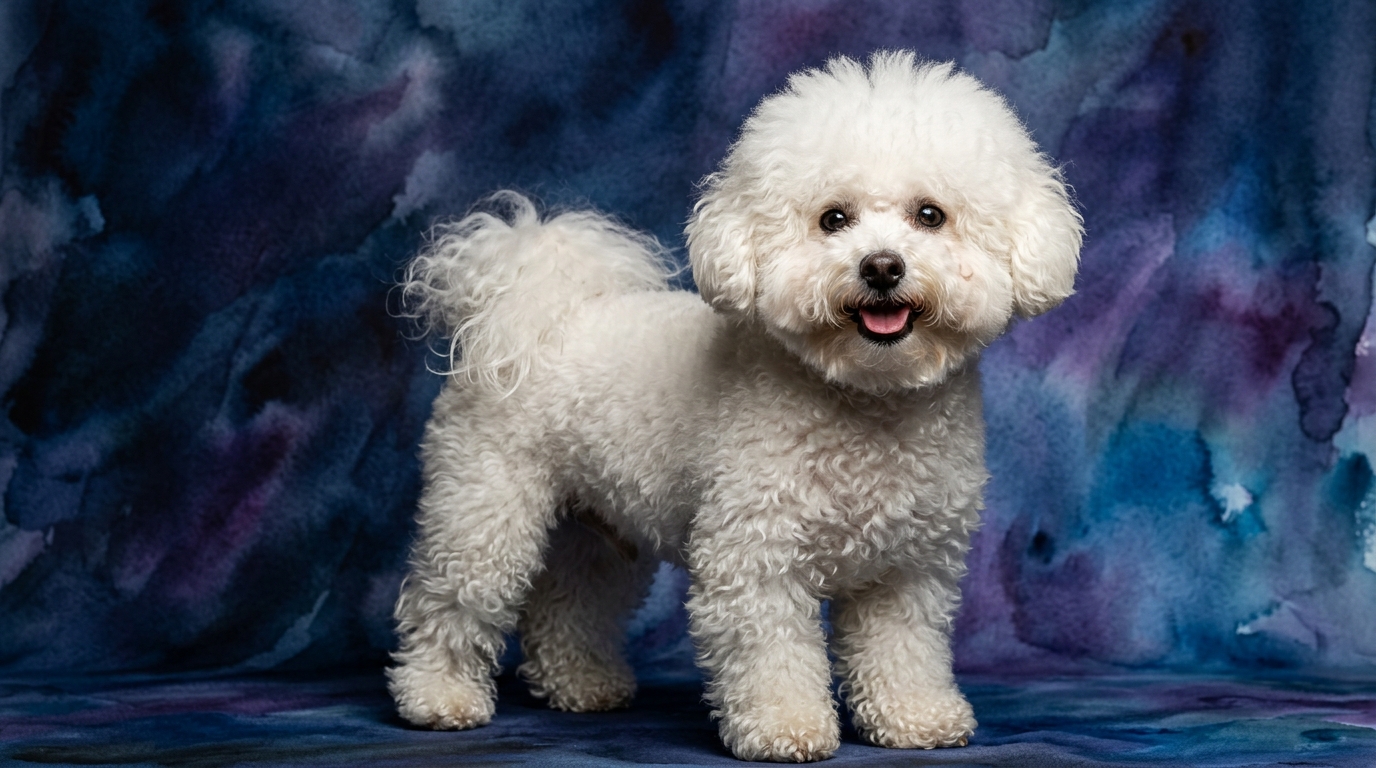
The Cosmic Pet IQ Lab assesses five crucial dimensions of intelligence, painting a detailed picture of each breed's cognitive strengths. For the Bichon Frisé, a Non-Sporting dog with a Coren rank of #45, its profile includes a Problem Solving score of 3/5, indicating a moderate capacity for navigating novel challenges and strategizing solutions. Its Training Speed also stands at 3/5, suggesting a decent pace for learning commands and routines. Where the Bichon truly shines is in Social Intelligence, earning an exceptional 5/5, reflecting a profound understanding of human emotions and social cues. Its Instinctive Drive is lower at 2/5, meaning less intrinsic motivation for tasks like hunting or guarding, while its Memory is a solid 3/5, enabling it to retain learned information effectively.
In contrast, the Boerboel, a robust Working breed not listed in Coren's rankings, presents a more uniformly balanced cognitive profile. It shares the Bichon's Problem Solving score of 3/5, showing an equivalent aptitude for independent thought when faced with new situations. Its Training Speed also matches at 3/5, implying a similar learning curve for obedience and task acquisition. The Boerboel's Social Intelligence is rated 3/5, indicating a good, but not exceptional, ability to interpret human interactions. Its Instinctive Drive is a moderate 3/5, a clear step up from the Bichon, reflecting its inherent guarding and protective inclinations. Finally, its Memory score is 3/5, on par with the Bichon, ensuring it remembers training and experiences effectively.
Where the Bichon Frisé Excels Cognitively
The Bichon Frisé's standout cognitive strength lies unequivocally in its extraordinary Social Intelligence, scoring a perfect 5/5. This isn't merely about being friendly; it signifies an acute sensitivity to human emotional states and an impressive ability to adapt its behavior to foster deep, reciprocal bonds. A Bichon can often discern an owner's mood, offering comfort during sadness or engaging in playful antics to lighten the atmosphere. This high social acumen allows them to seamlessly integrate into family life, often anticipating needs or reacting appropriately to subtle changes in household dynamics. Their cognitive focus is intrinsically linked to their human companions, making them exceptionally attuned to social cues and complex interpersonal relationships within the home environment.
This exceptional social intelligence also contributes to their role as companion animals, enabling them to thrive on interaction and connection. They are adept at learning the unspoken rules of a household and navigating social hierarchies with finesse, often employing charming behaviors to solicit attention or affection. Their ability to read and respond to human intentions is a cornerstone of their cognitive makeup, setting them apart as truly empathetic and communicative partners. This strength suggests a breed that doesn't just coexist with humans but actively participates in the emotional fabric of their lives, making them highly responsive to nuanced human communication.
Where the Boerboel Demonstrates Cognitive Prowess
The Boerboel's cognitive profile, while balanced, reveals distinct strengths suited to its working heritage. Its Instinctive Drive, rated at 3/5, is notably higher than the Bichon's 2/5. This moderate drive is a key cognitive asset, manifesting as a pronounced natural inclination towards vigilance and protection. This isn't about aggression, but rather a deeply ingrained awareness of their surroundings and a predisposition to act as a deterrent or guardian when necessary. Their cognitive processes are geared towards assessing potential threats, evaluating unfamiliar situations, and responding with a calm, confident presence, which is a direct reflection of this inherent drive. This makes them highly effective at their historical role of protecting homesteads and families.
Furthermore, the Boerboel's consistent 3/5 scores across Problem Solving, Training Speed, Social Intelligence, and Memory indicate a remarkably well-rounded and robust cognitive architecture. Unlike the Bichon's specialized social genius, the Boerboel possesses a more generalized cognitive utility. This means they can apply a steady level of intellect to a variety of tasks, from learning complex commands to independently assessing situations. Their cognitive balance allows them to be adaptable and capable in diverse environments, not overly reliant on one specific intellectual dimension. This comprehensive mental toolkit allows them to be both capable protectors and responsive family members, requiring a different kind of cognitive engagement than a purely companion breed.
Training Dynamics: Which Breed Learns with Greater Ease?
When considering ease of training, both the Bichon Frisé and the Boerboel share a Training Speed score of 3/5, suggesting they learn at a comparable pace. However, the *nature* of their training experience can differ significantly due to their other cognitive attributes. The Bichon's exceptional Social Intelligence (5/5) means it is often highly motivated by pleasing its owner and thrives on positive reinforcement and affection. Their strong desire for connection makes them eager participants in training sessions, often picking up cues quickly because they are so attuned to human feedback. While they might learn new commands at a moderate speed, their compliance and willingness to engage can make them feel 'easier' to train for basic obedience and house manners, as they are intrinsically motivated by social reward.
The Boerboel, with its 3/5 Training Speed, also learns efficiently, but its moderate Instinctive Drive (3/5) and Social Intelligence (3/5) mean training requires a different approach. They respond well to clear, consistent, and confident leadership, understanding their role within a structured environment. Their training may need to incorporate purpose-driven exercises that appeal to their natural protective instincts, channeling these drives productively. While they are capable learners, their motivation might stem more from understanding boundaries and fulfilling a 'job' rather than solely from social appeasement. Early socialization and consistent training are crucial to ensure their protective instincts are well-managed and directed, preventing them from making independent decisions that are not aligned with owner expectations.
Matching Cognition to Lifestyle: Active vs. Relaxed Owners
The cognitive profiles of the Bichon Frisé and Boerboel suggest suitability for very different owner lifestyles. The Bichon, with its paramount Social Intelligence (5/5) and lower Instinctive Drive (2/5), is an ideal match for relaxed owners seeking a devoted, emotionally responsive companion. Their cognitive needs are primarily met through consistent human interaction, affection, and engaging in light play. They thrive in environments where they are central to family life, participating in daily routines and receiving ample social stimulation. Their lower drive means they are generally content with moderate exercise, making them suitable for apartment living or less physically demanding households, as long as their need for companionship is met.
Conversely, the Boerboel’s balanced cognitive scores, particularly its moderate Instinctive Drive (3/5) and robust Problem Solving (3/5), make it better suited for active, hands-on owners. These are individuals who can provide consistent training, clear structure, and opportunities for mental engagement that align with the breed's natural capabilities. Their cognitive makeup benefits from regular challenges, whether through advanced obedience, protection sports, or simply having a 'job' to do, even if it's just patrolling their yard. Owners who appreciate a dog with a strong presence and are prepared to actively manage and channel their cognitive strengths will find a rewarding partnership with a Boerboel, ensuring their mental and physical needs are met effectively.
The Verdict
Choose the Bichon Frisé if you seek an emotionally intuitive, highly social companion whose greatest joy comes from close human connection and moderate engagement. Their exceptional social intelligence makes them ideal for owners prioritizing companionship and emotional responsiveness.
Opt for the Boerboel if you are an experienced, active owner prepared to provide consistent leadership, structured training, and channel a dog's inherent protective instincts. Their balanced cognitive profile and moderate drive suit those seeking a capable guardian and devoted family member.
🧠 Find Your Pet's IQ Score
Our Pet IQ Lab assessment covers 25+ tests across 5 cognitive dimensions — personalized to your breed.
Take the Full IQ Test →Frequently Asked Questions
Does the Bichon Frisé's Coren rank of #45 mean it's 'smarter' than a Boerboel?
While the Bichon's Coren rank indicates a good working/obedience intelligence, the Cosmic Pet IQ Lab's five-dimensional profile offers a more nuanced view. The Boerboel, though not Coren-ranked, shows equivalent problem-solving and training speed, with a higher instinctive drive. 'Smarter' depends on what cognitive traits an owner values most for their lifestyle.
How does social intelligence impact the daily life of these breeds?
For the Bichon Frisé (5/5 social intelligence), it means heightened emotional attunement, making them highly responsive and interactive companions who thrive on human connection. For the Boerboel (3/5 social intelligence), it signifies a good, but more reserved, understanding of human cues, allowing them to be attentive family members without the same level of emotional effusiveness, often preferring a calm, respectful bond.
What kind of mental stimulation does each breed need?
The Bichon Frisé thrives on social interaction, gentle puzzles, and learning new tricks through positive reinforcement, fulfilling their high social intelligence needs. The Boerboel requires more structured mental work, such as advanced obedience, scent work, or tasks that engage their problem-solving and moderate instinctive drive, alongside consistent training to channel their protective nature effectively.