A Side-by-Side Look at Cognitive Profiles
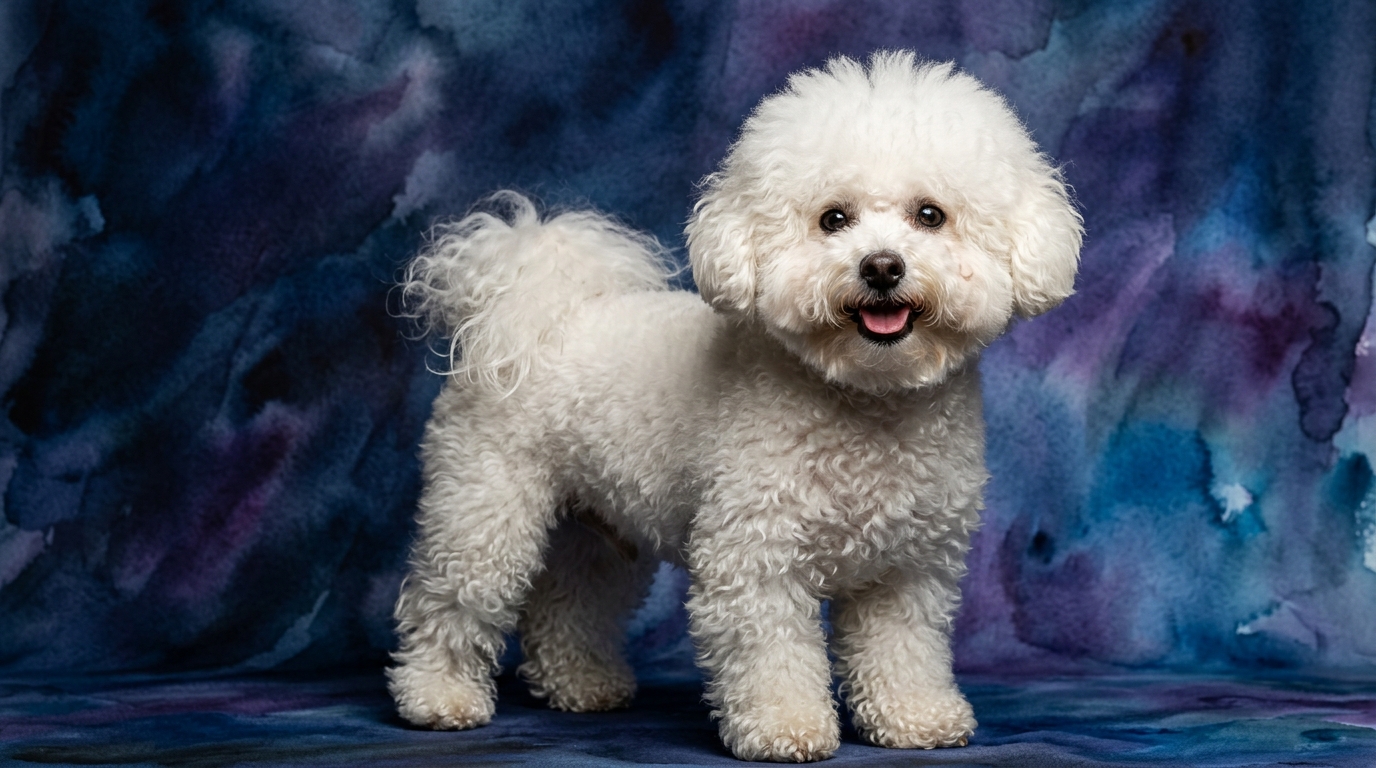
The Bichon Frisé, a delightful member of the Non-Sporting group, holds a respectable Coren rank of #45, indicating a solid foundation for learning and obedience. Our Cosmic Pet Pet IQ Lab assessment reveals a balanced cognitive makeup: Problem Solving at 3/5, suggesting moderate aptitude for navigating novel situations; Training Speed also at 3/5, meaning they grasp new commands at a steady pace. Where the Bichon truly distinguishes itself is in Social Intelligence, scoring a perfect 5/5, reflecting an exceptional capacity for understanding human cues and forming deep bonds. Their Instinctive Drive is lower at 2/5, indicating less inherent motivation for traditional working tasks, while Memory is a steady 3/5, allowing them to retain learned behaviors reliably.
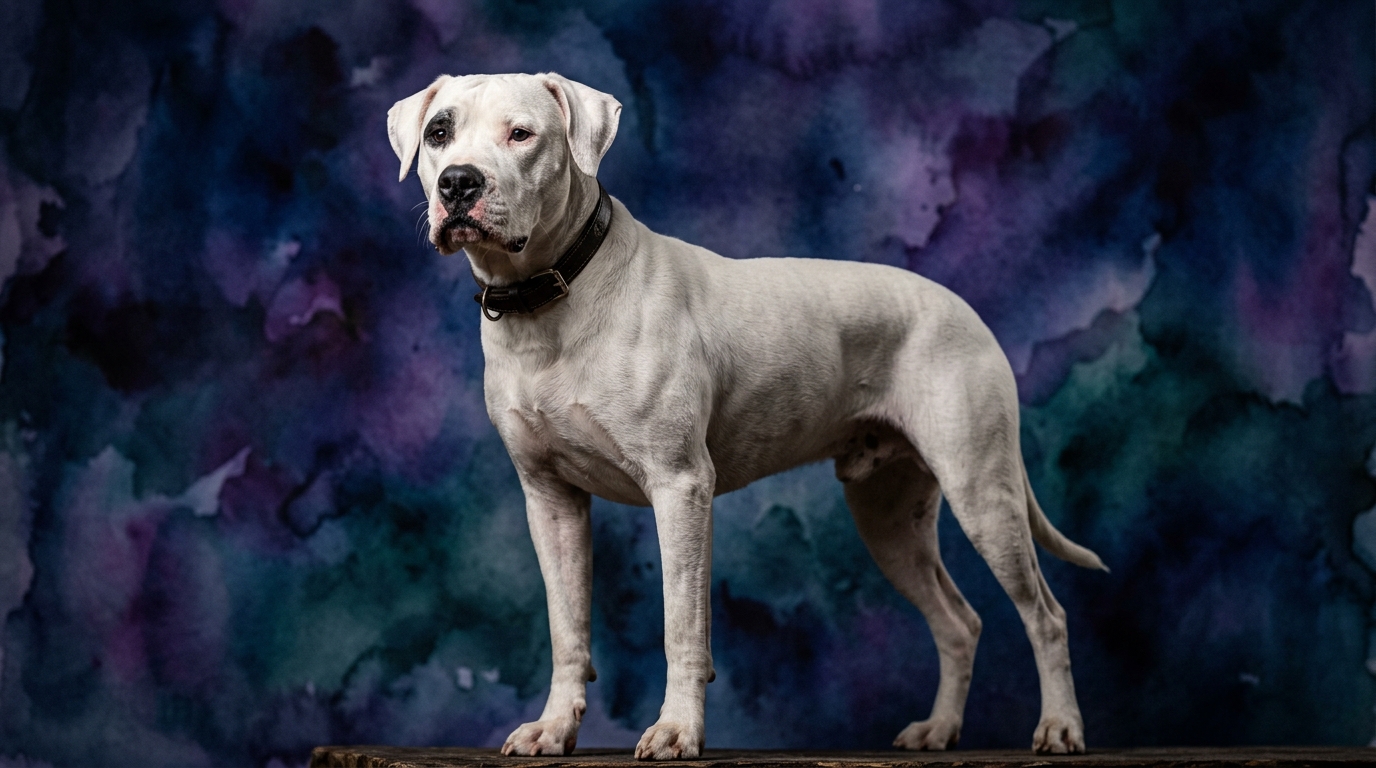
Conversely, the Dogo Argentino, a powerful Working breed, currently lacks a specific Coren ranking, yet our IQ Lab data provides a clear picture of its cognitive strengths. This breed shares several cognitive scores with the Bichon: Problem Solving at 3/5, indicating a similar moderate ability to figure things out independently; Training Speed also at 3/5, suggesting they learn new tasks at an equivalent pace. Memory too, mirrors the Bichon at 3/5, allowing for consistent recall. However, the Dogo's Social Intelligence sits at 3/5, a competent but less effusive score than the Bichon, reflecting a more reserved initial approach to social interactions. Its Instinctive Drive, at 3/5, is notably higher, aligning with its heritage as a hunter and guardian, suggesting a greater inherent motivation for purposeful activity.
When viewed together, both breeds demonstrate comparable baseline intellectual capacities in areas such as problem-solving, training acquisition speed, and memory retention. The primary divergence lies in their intrinsic motivations and social engagement. The Bichon Frisé's cognitive strength leans heavily into its social acumen, making it an intuitive companion, while the Dogo Argentino's slightly elevated instinctive drive points towards a more task-oriented mental framework, even with similar core intelligence scores.
Bichon Frisé: The Social Maestro
The Bichon Frisé's standout cognitive strength is undeniably its Social Intelligence, rated at an impressive 5/5. This isn't merely about being friendly; it signifies a profound ability to read and respond to human emotions, intentions, and subtle cues. A Bichon can often anticipate its owner's mood, offering comfort or initiating play at just the right moment, demonstrating an almost intuitive grasp of social dynamics within the household. This high social intelligence translates into a dog that thrives on interaction and seeks to integrate deeply into the family unit, often becoming the emotional barometer of the home.
This exceptional social acumen means Bichons are typically eager to please and highly motivated by positive human interaction. They are quick to understand what elicits praise or disapproval, using this understanding to guide their behavior. Their cognitive framework is geared towards harmonious cohabitation, making them adept at navigating complex family structures and adapting to various social settings, provided they receive sufficient human connection. This isn't just about affection; it's about a sophisticated understanding of their place within a social hierarchy and a strong desire to maintain positive relationships.
Dogo Argentino: Purpose-Driven Cognition
While the Dogo Argentino's Problem Solving, Training Speed, and Memory scores align with the Bichon, its cognitive edge lies in its higher Instinctive Drive, rated at 3/5 compared to the Bichon's 2/5. This isn't about raw intellect but about an inherent motivation towards action and purpose, deeply rooted in its working heritage. This drive means a Dogo is often more content when given a job or a clear objective, whether it's tracking, guarding, or participating in physically demanding activities. Their cognitive processes are often geared towards achieving a tangible outcome, making them less prone to aimless wandering or purely recreational pursuits without direction.
This elevated instinctive drive, combined with its moderate problem-solving abilities, means the Dogo Argentino excels when presented with structured challenges that tap into its natural predispositions. While their social intelligence is competent at 3/5, they may not seek constant human validation in the same way a Bichon does; instead, they find fulfillment in executing tasks with precision and focus. Their cognitive strength is in their ability to concentrate on a goal and apply their mental and physical resources effectively, making them formidable partners in activities requiring determination and a clear objective.
Training Aptitude: Speed vs. Motivation
Both the Bichon Frisé and the Dogo Argentino share a Training Speed score of 3/5, indicating that, on average, they learn new commands and routines at a similar, steady pace. This score suggests neither breed is a particularly quick study nor unusually slow; they both require consistent, clear instruction and repetition to embed new behaviors effectively. Therefore, an owner approaching either breed with the expectation of instant mastery would likely be disappointed, as both require patience and a structured learning environment to reach their full potential in obedience.
However, the *ease* of training can diverge significantly due to their other cognitive attributes. The Bichon's superior Social Intelligence (5/5) means it often possesses a stronger desire to please its human companions, making it highly responsive to positive reinforcement and eager to cooperate. Its lower Instinctive Drive (2/5) means fewer strong innate urges to override during training, allowing it to focus more readily on human directives. Conversely, the Dogo Argentino's higher Instinctive Drive (3/5) means it might be more independently motivated, sometimes requiring stronger leadership and more compelling reasons beyond mere social approval to comply. Its 3/5 Social Intelligence is sufficient for communication but doesn't provide the same innate 'people-pleasing' boost as seen in the Bichon.
In practice, this means a Bichon might excel in casual obedience and trick training, motivated by a simple cheerful 'good dog!' and a pat, quickly integrating commands into its daily routine as a way to maintain social harmony. A Dogo, while equally capable of learning, might require training that taps into its drive for purpose, perhaps excelling in activities like protection work, advanced scent tracking, or agility where its physical prowess and mental focus are challenged. For the Dogo, training often needs to feel like a meaningful task rather than just a social game, requiring a trainer who understands how to channel its inherent drive effectively.
Lifestyle Fit: Energy and Engagement
Given its cognitive profile, particularly its high Social Intelligence and moderate Instinctive Drive, the Bichon Frisé is an ideal companion for owners seeking a deeply connected and emotionally responsive pet. Its cognitive needs are largely met through consistent human interaction, companionship, and gentle mental stimulation like puzzle toys or learning new tricks within a domestic setting. They thrive in environments where they are integral to family life, making them suitable for individuals or families who can dedicate significant time to companionship and appreciate a dog whose primary cognitive output is social engagement rather than strenuous activity.
The Dogo Argentino, with its higher Instinctive Drive and working breed background, requires an owner who can provide consistent structure, physical activity, and mental challenges that go beyond simple companionship. Its cognitive fulfillment comes from having a purpose, whether it's rigorous exercise, advanced training, or participation in dog sports that engage its problem-solving and drive. This breed is best suited for active individuals or experienced dog owners who can provide clear leadership, consistent training, and ample opportunities for their Dogo to expend its mental and physical energy in constructive ways, preventing boredom and channeling its inherent focus.
Ultimately, the choice hinges on how an owner's lifestyle aligns with each breed's predominant cognitive requirements. A Bichon's cognitive strengths make it a superb choice for a more relaxed, companionship-driven household that values emotional connection and social harmony. A Dogo Argentino, conversely, demands an owner who understands and can consistently meet the needs of a dog whose cognitive framework is built around purpose, activity, and a more independent, albeit loyal, partnership. Neither is 'better,' but rather better suited to different human expectations and environments.
The Verdict
Choose the Bichon Frisé if you prioritize a deeply social, emotionally attuned companion who thrives on human interaction and fits seamlessly into a more relaxed, family-centric lifestyle. Its cognitive strengths are geared towards harmonious cohabitation and emotional responsiveness.
Opt for the Dogo Argentino if you are an experienced, active owner seeking a powerful, purpose-driven partner who excels with structured training, physical challenges, and clear leadership. Its cognitive fulfillment comes from engaging in meaningful tasks and activities.
🧠 Find Your Pet's IQ Score
Our Pet IQ Lab assessment covers 25+ tests across 5 cognitive dimensions — personalized to your breed.
Take the Full IQ Test →Frequently Asked Questions
Is the Bichon Frisé truly more social than the Dogo Argentino?
Based on our IQ Lab data, yes. The Bichon Frisé scores 5/5 in Social Intelligence compared to the Dogo Argentino's 3/5. This indicates a higher innate capacity and drive for understanding and engaging in complex social interactions with humans, making them more overtly expressive and responsive in social contexts.
Does 'training speed' mean one breed is inherently smarter?
Not directly. A Training Speed score of 3/5 for both breeds suggests they learn new commands at a similar pace. 'Smarter' is a complex term encompassing many cognitive dimensions. While training speed is a component, other factors like problem-solving, social intelligence, and memory contribute to a breed's overall cognitive profile, and these vary between the two breeds.
How does Coren ranking relate to these IQ scores, especially since the Dogo Argentino isn't ranked?
The Coren ranking primarily measures a breed's working and obedience intelligence, often correlating with training speed and a desire to please. The Bichon Frisé's #45 rank reflects its moderate training speed and high social intelligence, which aids obedience. The Dogo Argentino's lack of a Coren rank doesn't mean it lacks intelligence; it simply hasn't been evaluated in the same way, but our IQ Lab scores offer a direct insight into its specific cognitive strengths and weaknesses, independent of that particular ranking system.