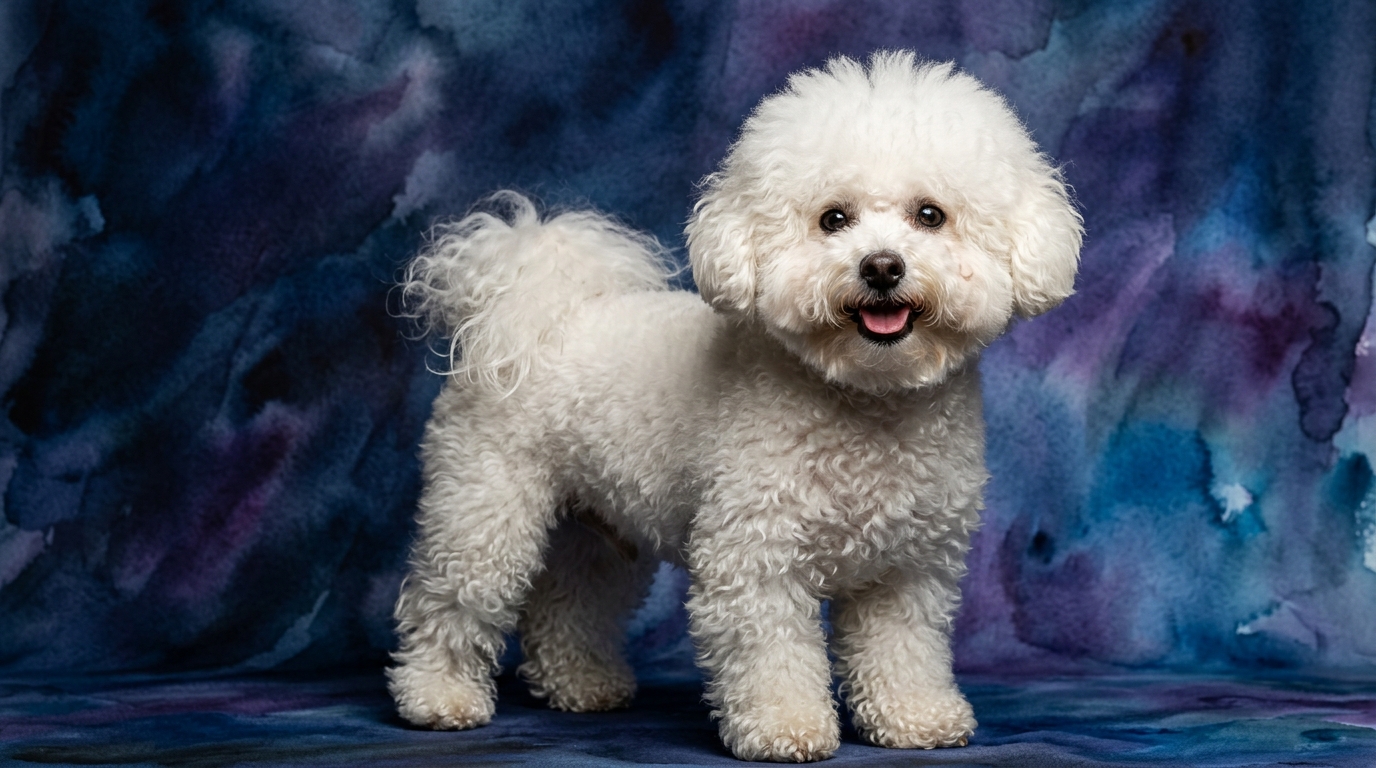
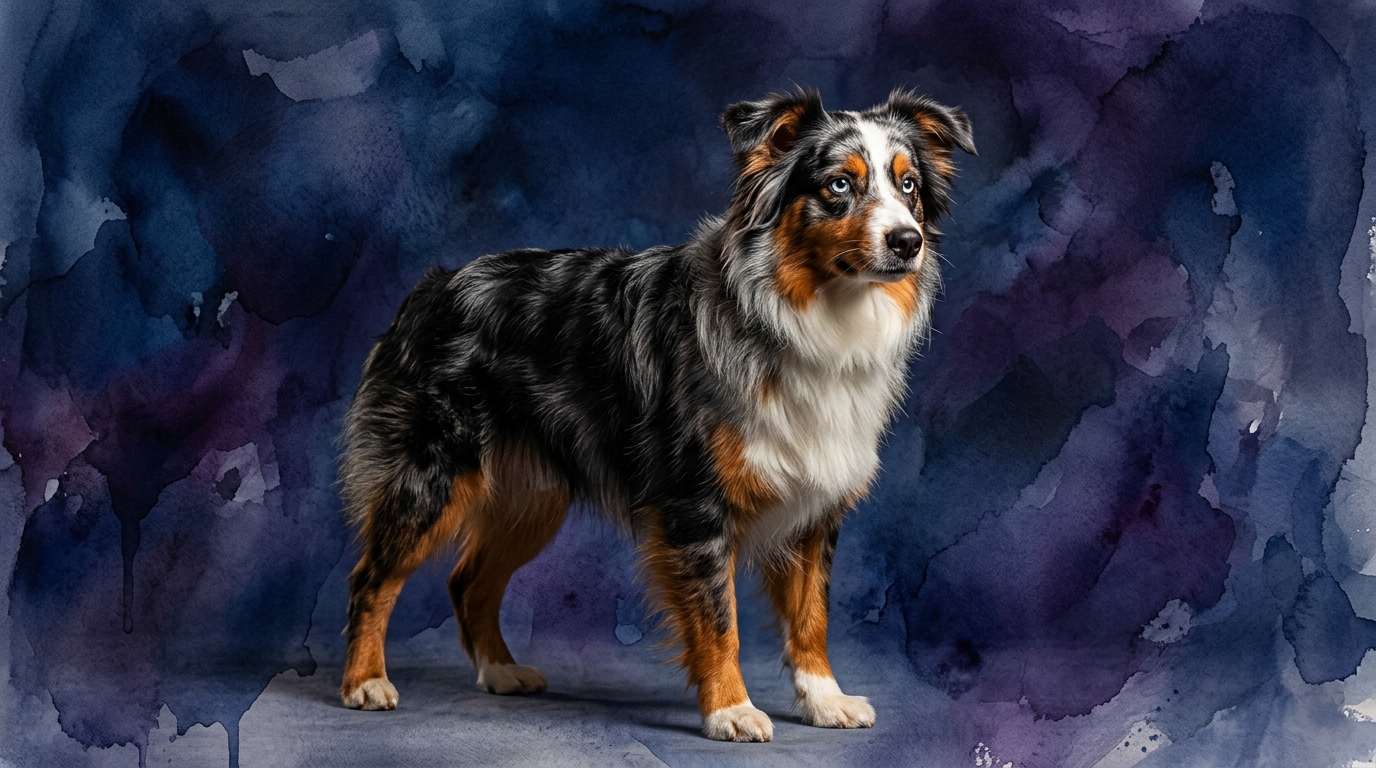
Side-by-Side Cognitive Profiles: Bichon Frisé vs. Miniature American Shepherd
The Cosmic Pet Pet IQ Lab provides a granular view into canine cognition, moving beyond generalizations to specific intellectual dimensions. For the Bichon Frisé, a Non-Sporting breed, its profile shows a balanced aptitude for Problem Solving (3/5) and Training Speed (3/5), indicating an average capacity to navigate novel situations and acquire new commands. Its Social Intelligence, however, stands out at an impressive 5/5, reflecting a profound ability to understand and interact with human emotions and cues. The Instinctive Drive score is relatively low at 2/5, suggesting a reduced inclination towards inherent working behaviors like hunting or herding, while Memory registers at a solid 3/5, ensuring retention of learned experiences and routines.
In contrast, the Miniature American Shepherd, hailing from the Herding group, presents a consistent, well-rounded cognitive blueprint across most dimensions. It shares the same scores as the Bichon Frisé for Problem Solving (3/5), Training Speed (3/5), and Memory (3/5), indicating similar foundational learning and recall capabilities. Where it diverges is in its Social Intelligence, rated at 3/5, suggesting a competent but less universally empathetic understanding of human social dynamics compared to the Bichon. Crucially, its Instinctive Drive is a moderate 3/5, reflecting its heritage and a natural inclination towards task engagement and environmental interaction, a notable difference from the Bichon's lower score. This balanced profile suggests adaptability and a capacity for various roles.
Where the Bichon Frisé Excels Cognitively
The Bichon Frisé undeniably excels in social intelligence, scoring a perfect 5/5. This isn't merely about being friendly; it signifies a profound capacity for emotional attunement. A Bichon is exceptionally skilled at reading subtle human cues—a shift in tone, a worried glance, or a sigh—and often responds with comforting presence or playful distraction. This allows them to forge incredibly deep, empathetic bonds, making them intuitive companions who seem to understand their human's inner world. Their high social IQ means they thrive on interaction, making them superb candidates for therapy work where sensitivity to human emotional states is paramount. They don't just coexist; they actively participate in the emotional landscape of their family, often anticipating needs or offering comfort without explicit prompts.
Where the Miniature American Shepherd Shows Cognitive Strengths
While both breeds share similar scores in problem-solving and training speed, the Miniature American Shepherd's cognitive edge lies in its moderately higher instinctive drive (3/5 compared to the Bichon's 2/5) and its application. This isn't just about energy; it's about a foundational motivation to engage with and influence its environment, a remnant of its herding heritage. This drive translates into a focused work ethic and a desire for purpose. A Miniature American Shepherd is often more persistent in tasks and can sustain engagement in structured activities for longer periods, even when the immediate reward is less about social praise and more about the satisfaction of completing a job. This intrinsic motivation, when channeled, can make them more robust and self-directed in complex training scenarios or dog sports, demonstrating a practical application of their cognitive scores.
Training Dynamics: Which Breed is 'Easier' and Why?
Both the Bichon Frisé and the Miniature American Shepherd share a Training Speed score of 3/5, suggesting they learn new commands at an average pace. However, the 'ease' of training can differ significantly based on owner approach and the dog's intrinsic motivators. The Bichon's exceptional Social Intelligence (5/5) means it is highly motivated by human approval and connection. Training often feels like a shared, bonding activity, and they are eager to please their handler, making them generally compliant and responsive in a family setting. Their low instinctive drive means fewer competing urges to override during training, which can simplify the process for an owner seeking a cooperative companion for basic obedience and house manners.
In contrast, the Miniature American Shepherd's Training Speed of 3/5 is augmented by its Instinctive Drive (3/5). While responsive to positive reinforcement, this breed often thrives when training is framed as a task or a 'job' that taps into their natural herding inclinations. They might learn complex sequences readily, but an owner needs to provide clear structure and engaging challenges to maintain their focus. Their moderate social intelligence means they might be less solely driven by human praise and more by the inherent satisfaction of completing a task. For a casual owner, the Bichon might feel 'easier' due to its inherent desire for companionship-driven compliance, while the Mini American Shepherd, though equally capable of learning, requires an owner who can consistently provide stimulating, purpose-driven training that caters to its working brain.
Matching Breeds to Lifestyles: Active vs. Relaxed Owners
The cognitive profiles clearly delineate suitability for varying lifestyles. The Bichon Frisé, with its low Instinctive Drive (2/5) and supreme Social Intelligence (5/5), is an ideal match for relaxed owners seeking a devoted, interactive companion. Their activity needs are moderate; daily walks and indoor play are usually sufficient. Their primary fulfillment comes from close human companionship and gentle interaction, not from intense physical or mental exertion. They are content to be a loving presence, making them suitable for individuals or families who prioritize comfort and connection over demanding activities. Their cognitive makeup supports a life of affectionate companionship.
Conversely, the Miniature American Shepherd, possessing a moderate Instinctive Drive (3/5) rooted in its herding background, thrives with active owners. This breed requires consistent mental engagement and physical outlets beyond simple walks. Owners who enjoy dog sports like agility, obedience, or herding trials, or who can provide structured daily activities and training challenges, will find the Miniature American Shepherd a rewarding and engaged partner. Their cognitive strengths, particularly their drive, demand an outlet. Without sufficient mental and physical stimulation, their drives can lead to boredom and potentially redirected behaviors, making them less suitable for purely sedentary households.
The Verdict
Opt for a Bichon Frisé if your priority is an exceptionally empathetic, socially attuned companion who thrives on close interaction and requires moderate physical activity.
Select a Miniature American Shepherd if you are an active owner prepared to channel a moderate instinctive drive into structured activities, training, and mental challenges.
🧠 Find Your Pet's IQ Score
Our Pet IQ Lab assessment covers 25+ tests across 5 cognitive dimensions — personalized to your breed.
Take the Full IQ Test →Frequently Asked Questions
Is the Bichon Frisé suitable for first-time dog owners?
Yes, the Bichon Frisé is often a good choice for first-time dog owners due to its high social intelligence, eagerness to please, and moderate exercise requirements, making them relatively adaptable to various household dynamics. Their strong bond-forming ability helps new owners connect effectively.
Do Miniature American Shepherds need a 'job' to be content?
While not strictly needing a traditional 'job,' Miniature American Shepherds definitely benefit from structured activities that engage their moderate instinctive drive and problem-solving abilities. This could be dog sports, advanced obedience, or even consistent, stimulating training sessions, preventing boredom and potential behavioral issues.
How does a Coren rank of #45 for Bichon Frisé compare to the unranked Miniature American Shepherd?
Coren's ranking primarily assesses 'working and obedience intelligence,' focusing on how quickly a dog learns and obeys commands. The Bichon's #45 rank indicates a respectable capacity in this area. The Miniature American Shepherd, while not specifically Coren-ranked, shows similar problem-solving and training speed, but its herding background suggests a different application of its cognitive skills, often excelling in task-oriented roles not fully captured by Coren's specific criteria.