Side-by-side IQ profile
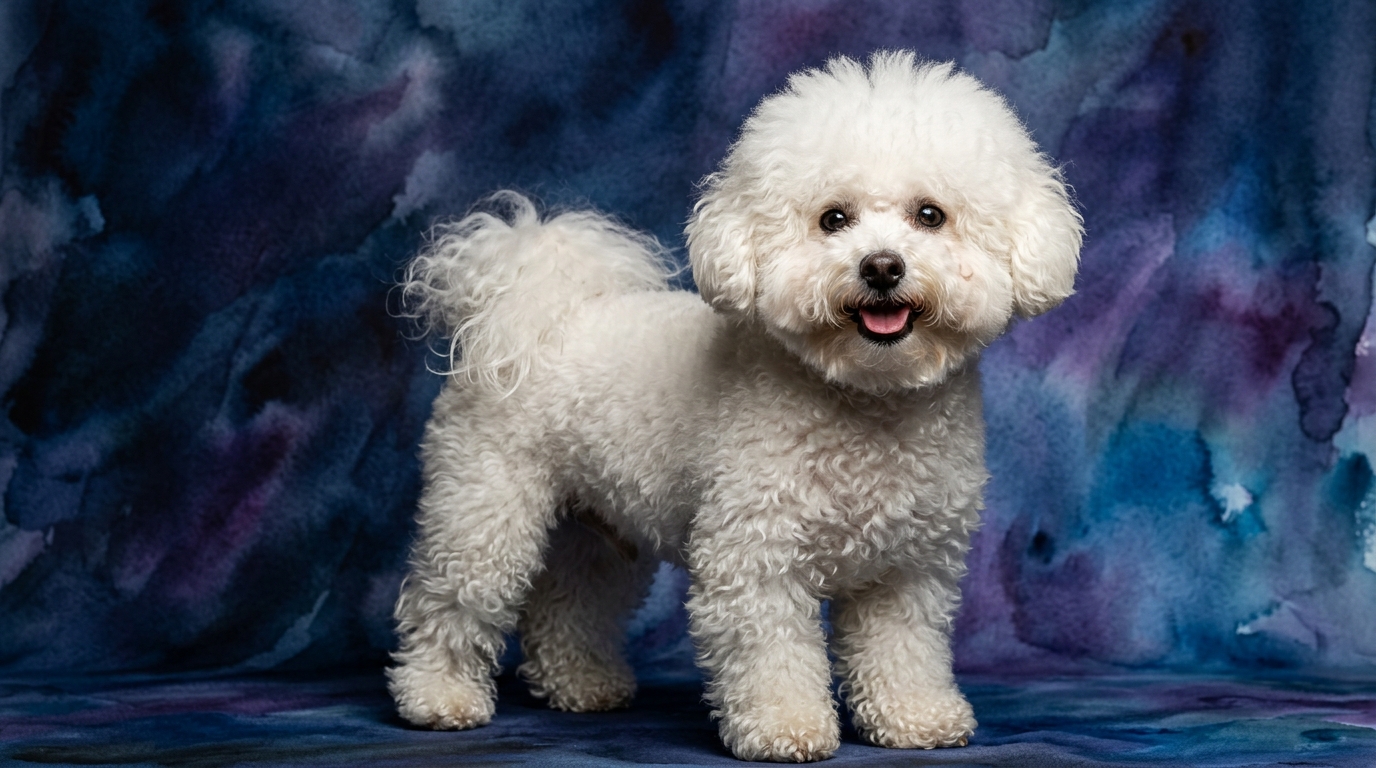
The Bichon Frisé, ranked 45th by Coren, presents a balanced cognitive profile suited to its companion role. Its problem-solving ability scores 3 out of 5, indicating a capacity for navigating common household challenges. Training speed also sits at 3 out of 5, suggesting they grasp new commands at an average pace, responsive to consistent positive reinforcement.
Where the Bichon truly shines is in social intelligence, scoring a perfect 5 out of 5. This reflects an exceptional ability to interpret human emotions and integrate seamlessly into family dynamics. Their instinctive drive is a modest 2 out of 5, meaning fewer strong, inherent urges for tasks like hunting or guarding. Memory for the Bichon is rated 3 out of 5, allowing them to retain learned behaviors and routines effectively.
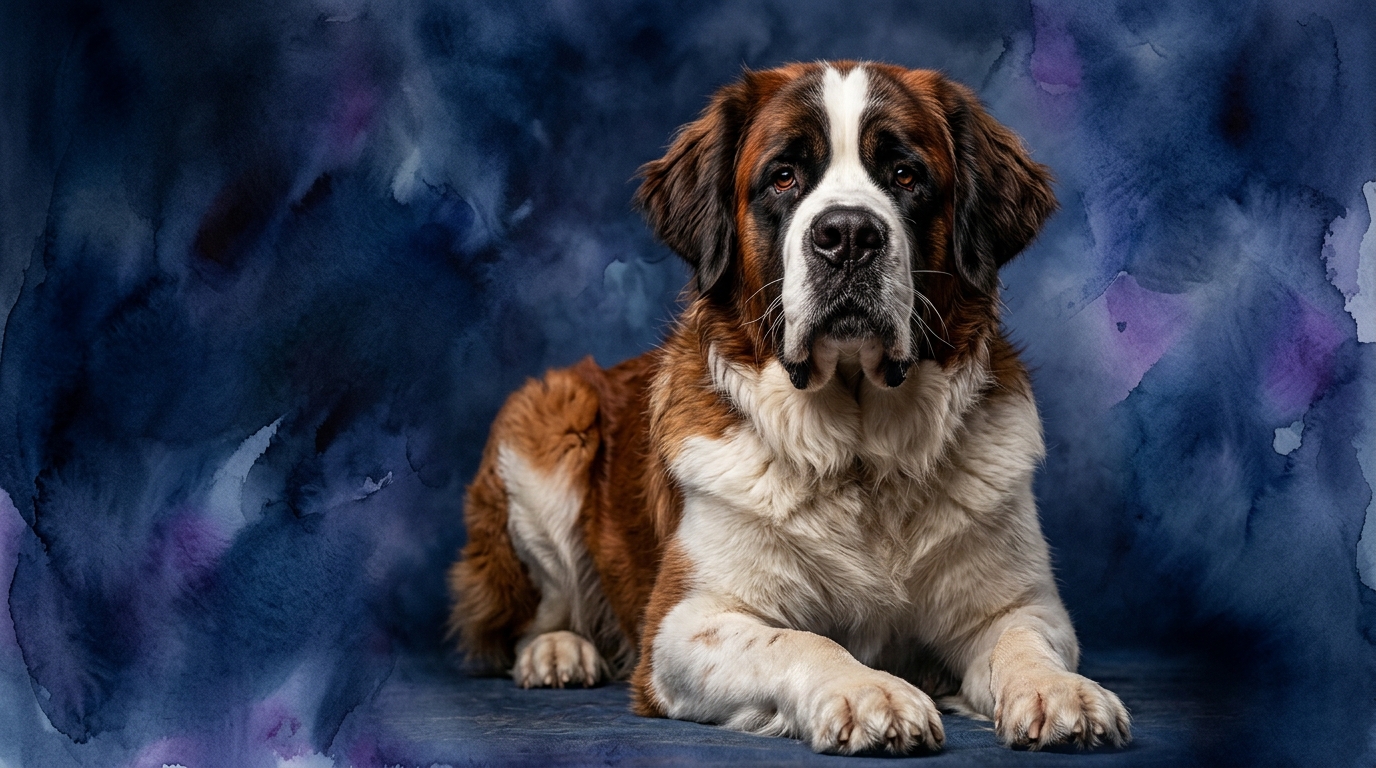
In contrast, the Saint Bernard, holding the 65th spot on Coren's ranking, showcases a distinct set of cognitive strengths aligned with its historical working purpose. Its problem-solving score mirrors the Bichon at 3 out of 5, demonstrating an aptitude for practical challenges. However, its training speed is a slower 2 out of 5, suggesting a more deliberate learning pace that requires patience and clear communication.
The Saint Bernard's social intelligence rates 4 out of 5, indicating a strong connection to its human family, though with more independence than the Bichon. Its most prominent cognitive trait is an impressive 5 out of 5 in instinctive drive, reflecting powerful inherent urges for tasks like search and rescue or protection. Memory for the Saint Bernard is also 3 out of 5, allowing them to recall complex routes and past experiences relevant to their duties.
Where Bichon Frisé wins cognitively
The Bichon Frisé's cognitive advantages are most evident in its unparalleled social intelligence. A perfect 5 out of 5 signifies an exceptional capacity to read and respond to human emotions, making them incredibly intuitive companions. This trait allows them to form deep, empathetic bonds, often anticipating their owner's moods and adapting harmoniously to diverse social settings.
Furthermore, the Bichon's lower instinctive drive, at 2 out of 5, contributes to a more adaptable and less demanding cognitive profile for a typical household. They are less prone to strong predatory or guarding instincts, meaning their cognitive energy is more readily directed towards human interaction and learning, rather than being diverted by powerful internal urges.
Where Saint Bernard wins cognitively
The Saint Bernard's primary cognitive triumph lies in its formidable instinctive drive, scoring a maximum 5 out of 5. This deep-seated trait is a complex cognitive blueprint for action, manifesting as an inherent desire to assist, protect, and navigate challenging terrains. This powerful drive underpins their historical role as mountain rescue dogs, enabling perseverance through difficult conditions and profound loyalty.
While their problem-solving score is numerically the same as the Bichon's, the application of this ability often differs. A Saint Bernard's problem-solving is typically geared towards practical, real-world scenarios, such as finding the path of least resistance through snow or understanding complex spatial relationships in a rescue context. Their 3/5 memory supports recalling intricate routes and learned procedures vital for their working heritage.
Which is easier to train and why
When considering ease of general training, the Bichon Frisé often presents a more straightforward experience. Their training speed of 3 out of 5, combined with their exceptional 5 out of 5 social intelligence, means they are often eager to please and highly attuned to their trainer's cues. This responsiveness, coupled with a modest instinctive drive, results in fewer strong internal distractions, allowing them to focus readily on learning.
The Saint Bernard, with a training speed of 2 out of 5, typically requires more patience and a different approach. Their powerful instinctive drive of 5 out of 5, while valuable in working roles, can translate into a strong-willed independence during training. While their social intelligence rates 4 out of 5, their sheer size and inherent purpose-driven nature can make them less inclined to perform repetitive tasks without clear motivation.
Which suits active owners vs relaxed owners
For owners who appreciate a more relaxed, yet engaging, companionship, the Bichon Frisé often proves ideal. Their moderate instinctive drive and balanced energy mean they are typically content with daily walks, interactive play, and ample cuddle time. Their high social intelligence makes them eager participants in family activities, thriving on close human interaction rather than extensive outdoor adventures, suiting urban living well.
The Saint Bernard, while not requiring constant high-intensity activity, suits owners prepared for a dog with significant physical presence and a strong, inherent purpose. Their 5 out of 5 instinctive drive means they benefit from having their minds engaged, whether through scent work or structured walks where they can 'explore.' They need space to move and owners who can manage their strength, appreciating a loyal, watchful companion in a structured environment.
The Verdict
Choose the Bichon Frisé if you seek an exceptionally socially attuned, adaptable companion for a less intense lifestyle, valuing ease of general training and a dog with fewer strong independent drives.
Opt for the Saint Bernard if you are drawn to a deeply loyal, purpose-driven companion with powerful protective instincts, prepared to accommodate their deliberate training pace and grand physical presence.
🧠 Find Your Pet's IQ Score
Our Pet IQ Lab assessment covers 25+ tests across 5 cognitive dimensions — personalized to your breed.
Take the Full IQ Test →Frequently Asked Questions
Does the Bichon Frisé's high social intelligence make it prone to separation anxiety?
Yes, a Bichon's 5/5 social intelligence means they thrive on human companionship and can develop separation anxiety if left alone for extended periods. Early training for independence and providing enrichment can help mitigate this.
How does the Saint Bernard's strong instinctive drive manifest in daily life?
A Saint Bernard's 5/5 instinctive drive often translates into a natural protectiveness of its family, a desire to be near them, and a potential for tracking or exploring scents. This drive can also mean they are determined when pursuing something they want.
Despite their different sizes, both breeds have a problem-solving score of 3/5. What does this mean?
A 3/5 problem-solving score for both indicates an average capacity to figure out new situations or overcome obstacles. For the Bichon, this might be learning how to open a treat puzzle; for the Saint Bernard, it could involve navigating a complex environment or understanding a sequence of tasks. The type of problem often differs based on their breed purpose.