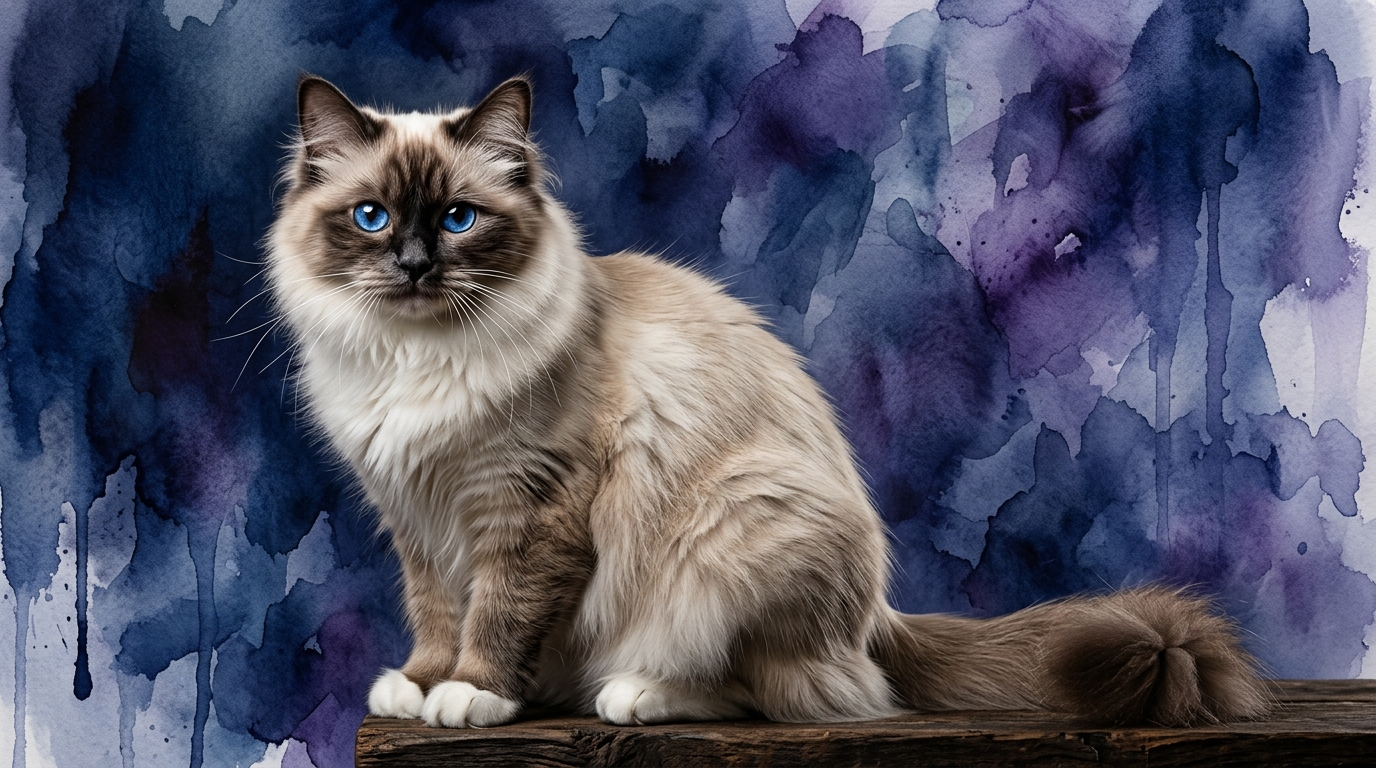
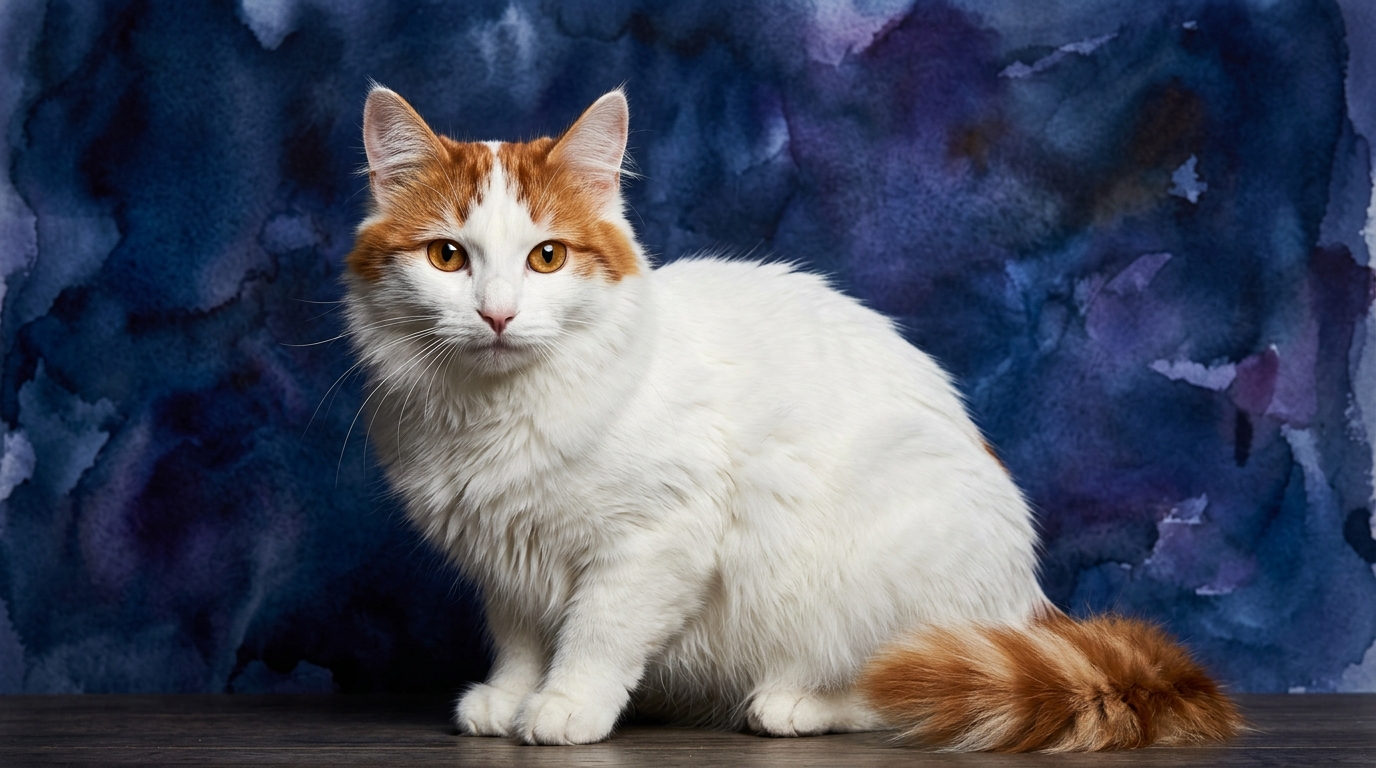
Side-by-side IQ profile
For both the Birman and Turkish Van, a 3/5 in problem-solving indicates a moderate capacity to navigate new situations and figure out solutions. This means they can learn to open simple latches or understand cause-and-effect relationships, but complex, multi-step puzzles might prove challenging. The Birman, with its calm demeanor, might approach a puzzle box with thoughtful persistence, while the Turkish Van, with its energetic curiosity, might tackle it with more enthusiastic trial-and-error, perhaps even resorting to physical force if initial attempts fail.
A 3/5 in training speed suggests both breeds can learn new commands and routines at an average pace. They are receptive to positive reinforcement and can grasp basic cues, but don't expect instant mastery of intricate tricks. A Birman's desire for human companionship might make it a more willing participant in training sessions, motivated by praise and affection. The Turkish Van, while capable, might require more engaging, game-like training to maintain its interest due to its independent and playful nature.
Both breeds exhibit a moderate level of social intelligence, meaning they can form bonds, understand basic social cues from humans and other pets, and adapt to household dynamics. They are not overly aloof nor excessively needy. The Birman's gentle and affectionate disposition means its social intelligence often manifests as a desire for close, calm interaction, reading its owner's mood with subtle cues. The Turkish Van's social intelligence, while present, might be expressed through more active engagement, participating in family activities rather than simply observing, and sometimes asserting its independence within social structures.
A 3/5 in instinctive drive indicates a moderate level of natural behaviors like hunting, exploring, and territorial marking. This suggests they possess their inherent feline instincts but are not overwhelmingly driven by them. The Birman's moderate drive might translate into gentle play with toys, occasional "hunting" of dust bunnies, and a generally content disposition within its territory. The Turkish Van, known for its active nature, might channel its 3/5 instinctive drive into more pronounced exploration, climbing, and a noticeable curiosity about its surroundings, including a unique affinity for water.
Both the Birman and Turkish Van score 3/5 in memory, indicating an average ability to recall experiences, learned behaviors, and the location of objects or people. They will remember routines, where their food bowl is, and who their primary caregivers are. A Birman's memory might be evident in its consistent adherence to established household rhythms and its recognition of familiar faces. The Turkish Van's memory might be observed in its ability to recall where it hid a favorite toy or the sequence of events leading to a preferred activity, such as playtime or a water encounter.
Where Birman wins cognitively
While their raw cognitive scores are identical, the Birman's gentle and placid temperament allows its moderate cognitive abilities to shine in ways that foster harmonious cohabitation. Its 3/5 social intelligence, for instance, often manifests as a refined ability to integrate smoothly into family life, making it seem particularly perceptive of human moods and routines. This isn't about superior intellect, but rather how its innate calm allows for a more consistent and agreeable application of its social understanding. A Birman might not actively "solve" a complex problem like opening a child-proof cabinet, but its 3/5 problem-solving might be directed towards subtle, consistent cues to solicit attention or food, which can be interpreted as a clever form of manipulation. Its moderate training speed, combined with its desire for companionship, means it often seems more amenable to learning household rules and polite interactions, making its cognitive efforts appear more directed towards pleasing its human companions. The Birman’s memory (3/5) contributes to its consistent behavior, recalling where its favorite napping spots are and the routines that lead to comfortable outcomes, making it a predictably pleasant companion.
Where Turkish Van wins cognitively
The Turkish Van's spirited and independent personality provides a distinct stage for its identical cognitive scores to play out, often in more dynamic and adventurous ways. Its 3/5 problem-solving ability, coupled with its zest for exploration, frequently manifests as a determined effort to overcome physical barriers, like figuring out how to open doors, access high shelves, or investigate running water. This isn't a higher score, but a more physically active and persistent application of that moderate problem-solving capacity. The Turkish Van's 3/5 instinctive drive, combined with its energetic nature, means it might display a more pronounced curiosity and engagement with its environment, actively seeking out new experiences and challenges. This drive often fuels its perceived cleverness in finding novel ways to play or interact with water, a breed hallmark. Its moderate training speed, while numerically the same as the Birman's, might require more stimulating and interactive methods, but once engaged, the Turkish Van applies its memory (3/5) to recall these active lessons, demonstrating a focused retention for activities it finds rewarding. The Turkish Van's independence, while sometimes challenging, also means its moderate social intelligence allows it to thrive in environments where it has agency, making its cognitive contributions more self-directed and less reliant on constant human guidance.
Which is easier to train and why
Both the Birman and Turkish Van possess a 3/5 training speed, indicating an average capacity for learning. However, the *experience* of training them can differ significantly due to their inherent temperaments. The Birman is generally considered easier to train for typical household manners and basic commands. This isn't because it's inherently "smarter" in terms of raw learning speed, but because its gentle, affectionate, and cooperative nature makes it more eager to please its human companions. Birmans often enjoy interaction and positive reinforcement, responding well to calm, consistent methods. Their moderate social intelligence (3/5) makes them receptive to human cues and a desire to maintain harmony, translating into a more amenable training partner. Conversely, the Turkish Van, despite having the same 3/5 training speed, can present more of a challenge. Its independent, energetic, and often mischievous personality means it requires training that is highly engaging, stimulating, and consistent. A Turkish Van might quickly grasp a command but choose not to perform it if it doesn't align with its current interest or if it perceives a more interesting "problem" to solve. Their moderate instinctive drive (3/5) often means they are more driven by exploration and play than by a desire to simply comply, requiring owners to make training feel like a game or an adventure to truly capture their attention and leverage their cognitive abilities effectively.
Which suits active owners vs relaxed owners
The Birman, with its calm, gentle, and affectionate disposition, is an ideal match for relaxed owners seeking a devoted and relatively low-key companion. Its moderate instinctive drive (3/5) means it's content with indoor life, enjoying quiet play sessions and plenty of lap time without needing constant stimulation. Its 3/5 social intelligence makes it an agreeable presence, fitting seamlessly into a serene household rhythm. Owners who appreciate a cat that is present, loving, and generally predictable in its application of moderate cognitive abilities will find the Birman a comforting presence. The Turkish Van, on the other hand, is perfectly suited for active owners who can provide ample mental and physical engagement. Its energetic nature and affinity for play, coupled with its 3/5 problem-solving and instinctive drive, mean it thrives in environments where it can explore, climb, and interact. Owners who enjoy interactive play, puzzle toys, and perhaps even supervised water activities will find the Turkish Van a stimulating and rewarding companion. Its independent streak means it appreciates having its own space and activities, making it a good fit for those who want an engaging pet without constant demanding attention, yet still requiring active participation in its enrichment.
The Verdict
When seeking a calm, affectionate, and easily integrated feline companion whose moderate cognitive abilities manifest as gentle companionship, choose the Birman.
For owners desiring an active, curious, and independent cat whose moderate cognitive skills are expressed through playful exploration and engaging interaction, the Turkish Van is the ideal choice.
🧠 Find Your Pet's IQ Score
Our Pet IQ Lab assessment covers 25+ tests across 5 cognitive dimensions — personalized to your breed.
Take the Full IQ Test →Frequently Asked Questions
Do Birman and Turkish Van cats get along with other pets?
Both breeds exhibit moderate social intelligence (3/5), suggesting they can generally coexist with other pets, though individual personalities vary. Birmans typically adapt more readily due to their placid nature, while Turkish Vans might require more careful introductions given their independent streak.
Are either of these breeds prone to destructive behaviors due to their cognitive abilities?
With a 3/5 in problem-solving and instinctive drive, neither breed is inherently prone to excessive destructive behavior, but boredom can lead to mischief. Turkish Vans, being more energetic and curious, might be more inclined to open cabinets or explore forbidden areas if not adequately stimulated, applying their moderate cognitive skills to these challenges.
How do their memory scores (3/5) influence their daily lives?
A 3/5 memory means both breeds will remember routines, favored spots, and who provides their care, contributing to a stable home life. They'll recall where their food is kept and the schedule for playtime, making them predictable and adaptable to consistent household rhythms.