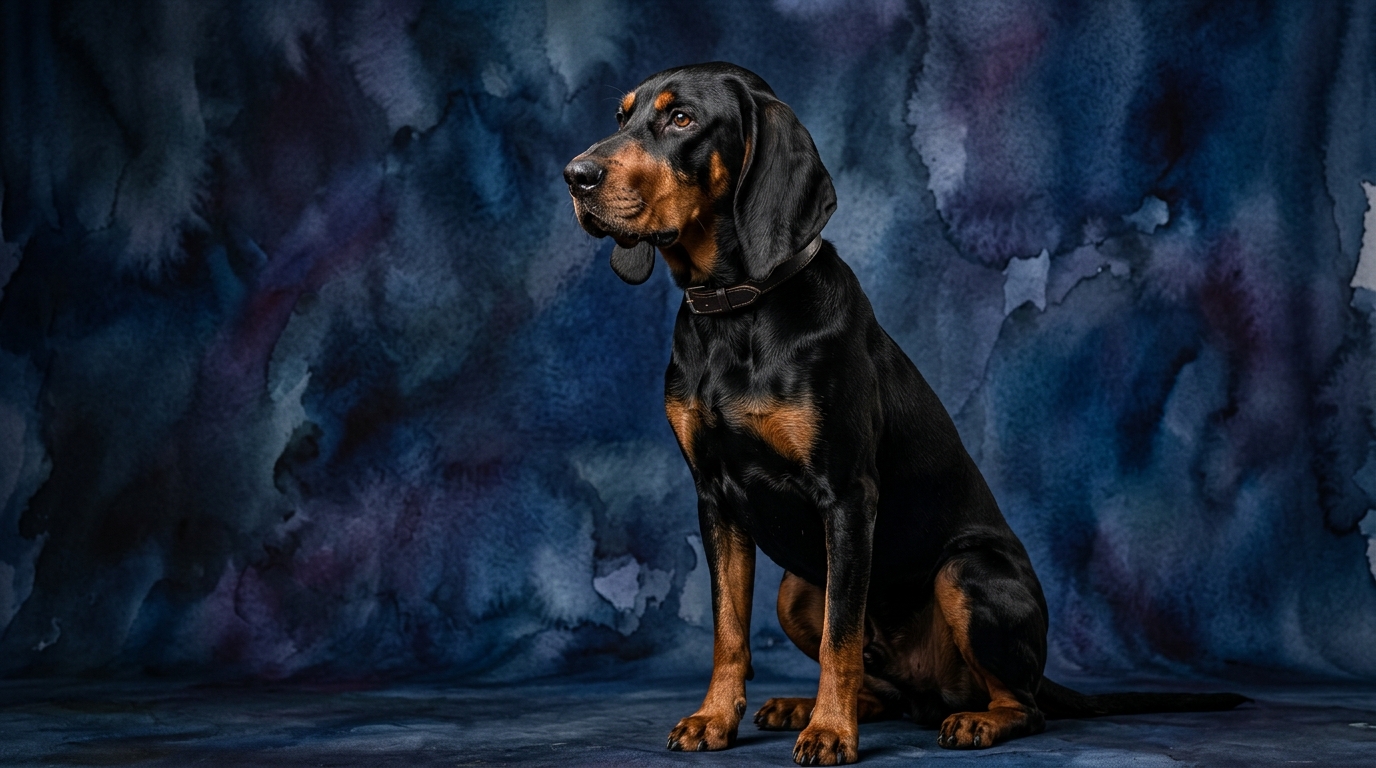
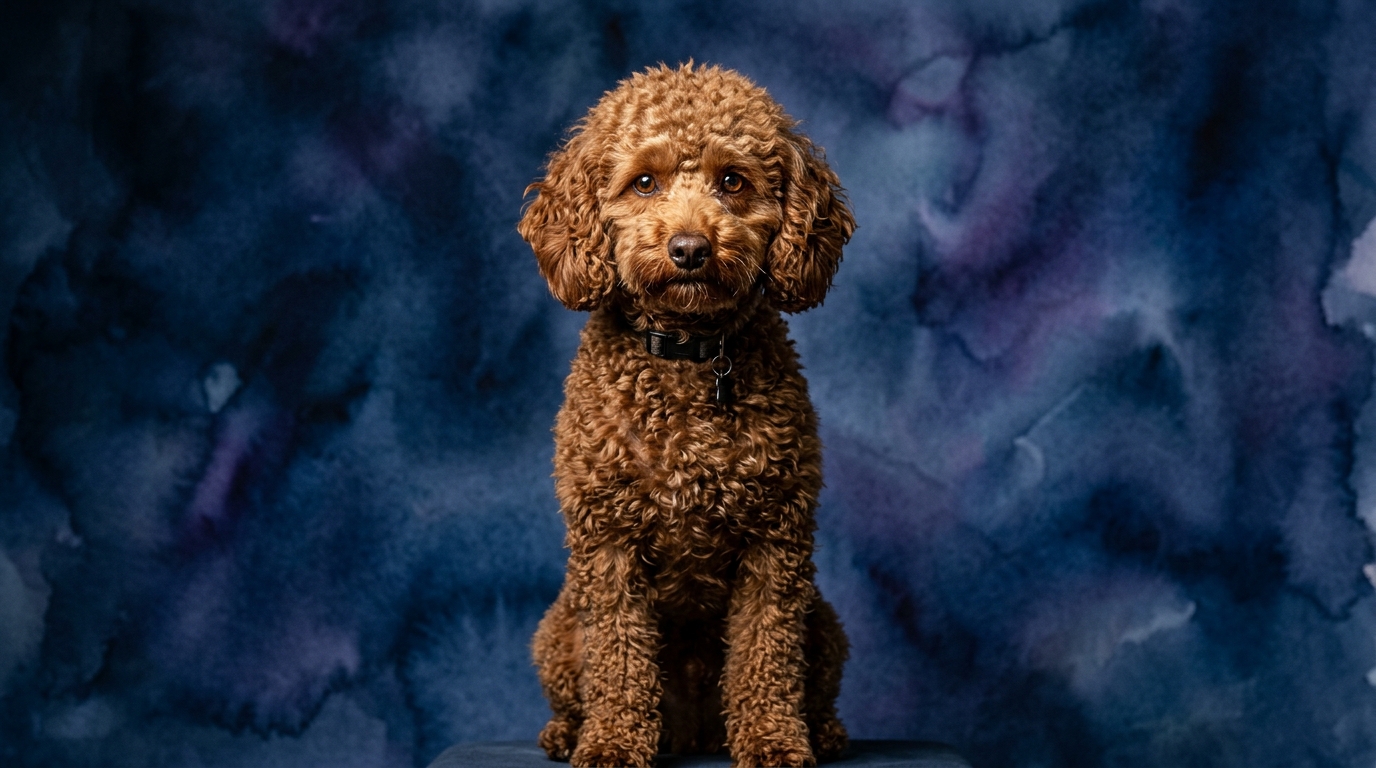
Side-by-Side IQ Profile: Black and Tan Coonhound vs. Miniature Poodle
The Cosmic Pet Pet IQ Lab employs a five-dimensional framework to assess canine intelligence, offering a nuanced view beyond simple rankings. For the Black and Tan Coonhound, a member of the Hound group, we observe a balanced set of scores reflecting its specialized working heritage. Its Problem Solving ability stands at 3/5, indicating competence in practical, environment-based challenges rather than abstract puzzles. Training Speed is also 3/5, suggesting a steady but not lightning-fast learning curve. Social Intelligence is rated 3/5, meaning they are generally amenable to interaction but might prioritize external stimuli. A 3/5 for Instinctive Drive underscores their powerful, inherent urge to track, while Memory at 3/5 reflects a good recall for scent trails and routines rather than arbitrary commands.
In contrast, the Miniature Poodle, from the Non-Sporting group and holding a Coren rank of #2, presents a different cognitive blueprint. Its Problem Solving ability is a remarkable 5/5, showcasing a capacity for complex logical thought and adaptability. Training Speed also reaches 5/5, indicating an exceptional aptitude for quickly grasping and executing new behaviors. Social Intelligence is 3/5, reflecting a strong bond with humans but not necessarily a primary drive for social service. Instinctive Drive is 3/5, manifesting as an eagerness for engagement and retrieving, a remnant of their water dog ancestry. Finally, Memory scores 5/5, highlighting an impressive ability to retain a vast repertoire of learned information and experiences.
Where the Black and Tan Coonhound Wins Cognitively
The Black and Tan Coonhound's cognitive strengths are profoundly rooted in its olfactory prowess. Its superior scent discrimination and tracking capabilities are unparalleled by the Miniature Poodle. A Coonhound's problem-solving is highly specialized for navigating intricate odor landscapes, allowing it to follow a 'cold' trail for miles, meticulously distinguishing a target scent from countless others in a complex environment. This cognitive specialization is not about abstract reasoning but about an incredibly sophisticated sensory processing system.
Furthermore, the Coonhound exhibits an exceptional persistence in the pursuit of a sensory goal. Once it locks onto a scent, its focus and determination are immense. This unwavering drive enables it to overcome significant environmental challenges, such as dense undergrowth or difficult terrain, that would deter many other breeds. This 'stick-to-it-ness' is a distinct cognitive advantage when the task at hand requires sustained, self-directed effort in a focused sensory domain.
Where the Miniature Poodle Wins Cognitively
The Miniature Poodle's cognitive advantages lie primarily in its capacity for abstract problem-solving and remarkable adaptability to novel tasks. These dogs excel at understanding human-defined rules and applying them to new situations, whether it's figuring out a complex puzzle toy or mastering the intricate sequences required in advanced dog sports. Their mental flexibility allows them to quickly grasp the 'why' behind an action and generalize that understanding.
Another significant win for the Miniature Poodle is its rapid acquisition of new behaviors and a strong capacity for generalizing learned commands across different contexts. Their ability to quickly form associations between actions and consequences, coupled with a desire to engage with their human companions, makes them exceptionally receptive to training for a diverse range of roles, from obedience to agility. This fast learning curve is a hallmark of their cognitive profile.
Finally, the Poodle's exceptional memory for complex learned information sets it apart. Their 5/5 memory score means they can build and retain a vast repertoire of commands, tricks, and skills, performing them reliably even after extended breaks in training. This robust long-term memory allows for advanced training and a consistent understanding of household routines and expectations.
Which is Easier to Train and Why
Based on their IQ profiles, the Miniature Poodle is generally easier to train. Their 5/5 scores in both Problem Solving and Training Speed mean they quickly grasp concepts, remember commands, and are highly motivated by human interaction and positive reinforcement. Poodles historically performed in circuses and retrieving roles, demonstrating a genetic predisposition for cooperative work and a keenness to learn diverse tasks. They thrive on mental engagement and find the process of learning rewarding in itself, often showing a natural desire to please their human companions.
The Black and Tan Coonhound, while capable of learning, can present more training challenges. Their 3/5 scores in Problem Solving and Training Speed, combined with a 3/5 Instinctive Drive heavily focused on scent, means their attention can be easily diverted. A compelling scent in the environment often overrides other motivations, making traditional obedience more demanding. Training a Coonhound requires significant patience, consistency, and a deep understanding of their natural inclinations. Leveraging their scent drive through activities like nose work, rather than attempting to suppress it, often yields the best training results, but it means their learning path is often less direct than a Poodle's.
Which Suits Active Owners vs. Relaxed Owners
The Black and Tan Coonhound typically suits active owners who appreciate and are prepared to channel their strong, innate scent drive. These dogs require regular opportunities for engaging in scent work, long walks where they can explore with their nose, or safe off-leash exploration in securely fenced areas. Their energy isn't often for high-impact, short bursts but rather for sustained, purposeful activity that engages their primary sense. Owners who enjoy hiking or rural living are often a good match, as they can provide the expansive, sensory-rich environment a Coonhound craves.
The Miniature Poodle, while adaptable, generally suits owners who enjoy providing mental stimulation and varied activities. While they can adapt to a more relaxed lifestyle with adequate daily walks, they truly thrive when their minds are engaged through learning new tricks, participating in dog sports like agility or obedience, or simply engaging in interactive play. Their energy is versatile, adaptable to both vigorous play sessions and calm companionship, but neglecting their need for mental activity can lead to boredom and undesirable behaviors. Owners who enjoy training, puzzle toys, and consistent engagement will find a Poodle a highly rewarding companion.
FAQs
Q: Do Black and Tan Coonhounds make good family pets?
A: Yes, Black and Tan Coonhounds are generally affectionate and good-natured with their families, often forming strong bonds. Their sometimes independent nature, however, requires patient and consistent training, and their characteristic vocalizations (baying) can be a consideration for close neighbors.
Q: Are Miniature Poodles high-maintenance dogs?
A: While their grooming needs are significant, requiring regular brushing and professional clipping to prevent matting, their mental engagement and exercise needs are moderate but consistent. They thrive with owners who provide regular mental stimulation and training, making them rewarding companions despite the grooming commitment.
Q: Can a Black and Tan Coonhound live in an apartment?
A: It's challenging due to their significant need for extensive exercise and their vocal nature. With dedicated owners who provide daily long walks, scent work, and consistent mental engagement, it might be possible, but a home with a securely fenced yard is generally more suitable for their well-being.
The Verdict
Choose the Black and Tan Coonhound if you are fascinated by the world of canine scent and are prepared to engage with a dog whose primary cognitive strength lies in tracking and persistent environmental exploration.
Choose the Miniature Poodle if you seek a companion that excels at learning a wide array of tasks, thrives on mental challenges, and can adapt to various activities and training disciplines with enthusiasm.
🧠 Find Your Pet's IQ Score
Our Pet IQ Lab assessment covers 25+ tests across 5 cognitive dimensions — personalized to your breed.
Take the Full IQ Test →