Side-by-Side IQ Profile: Deconstructing Identical Scores
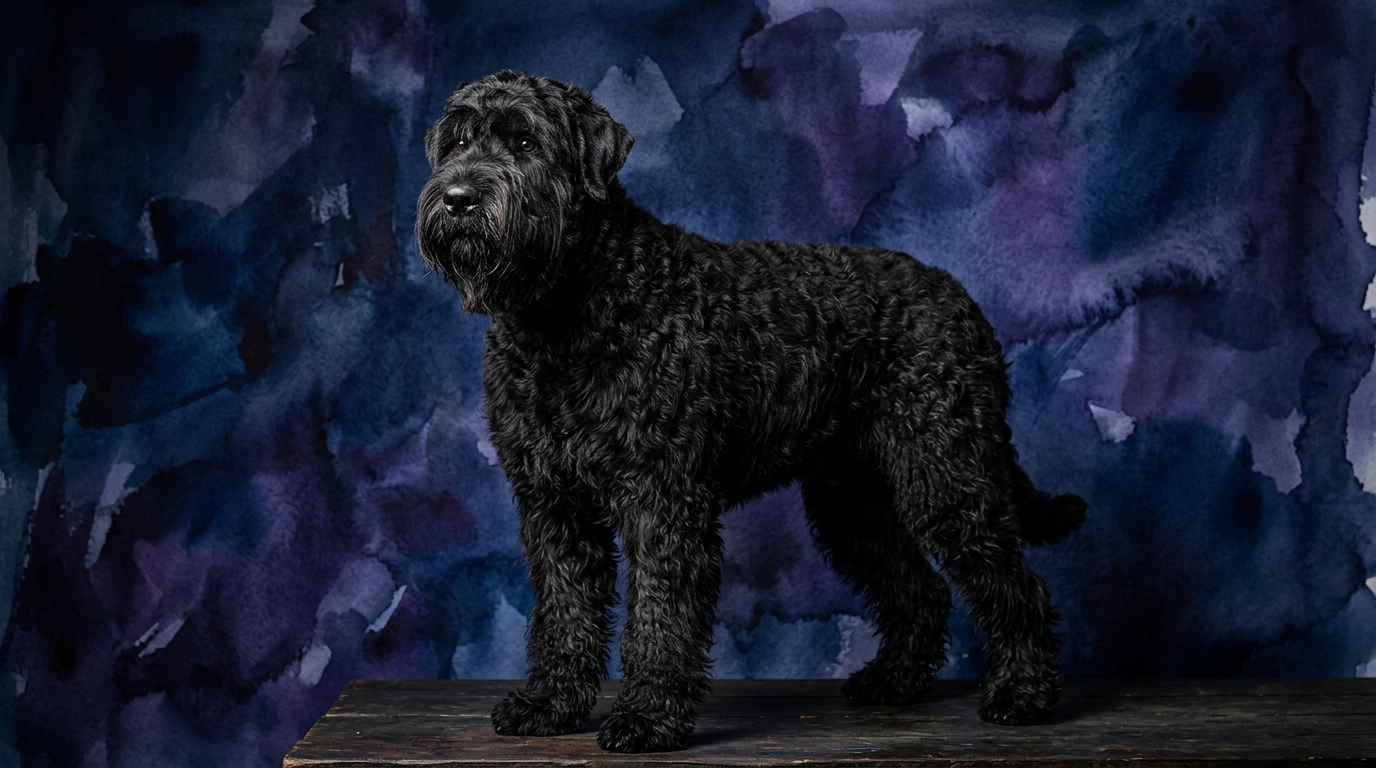
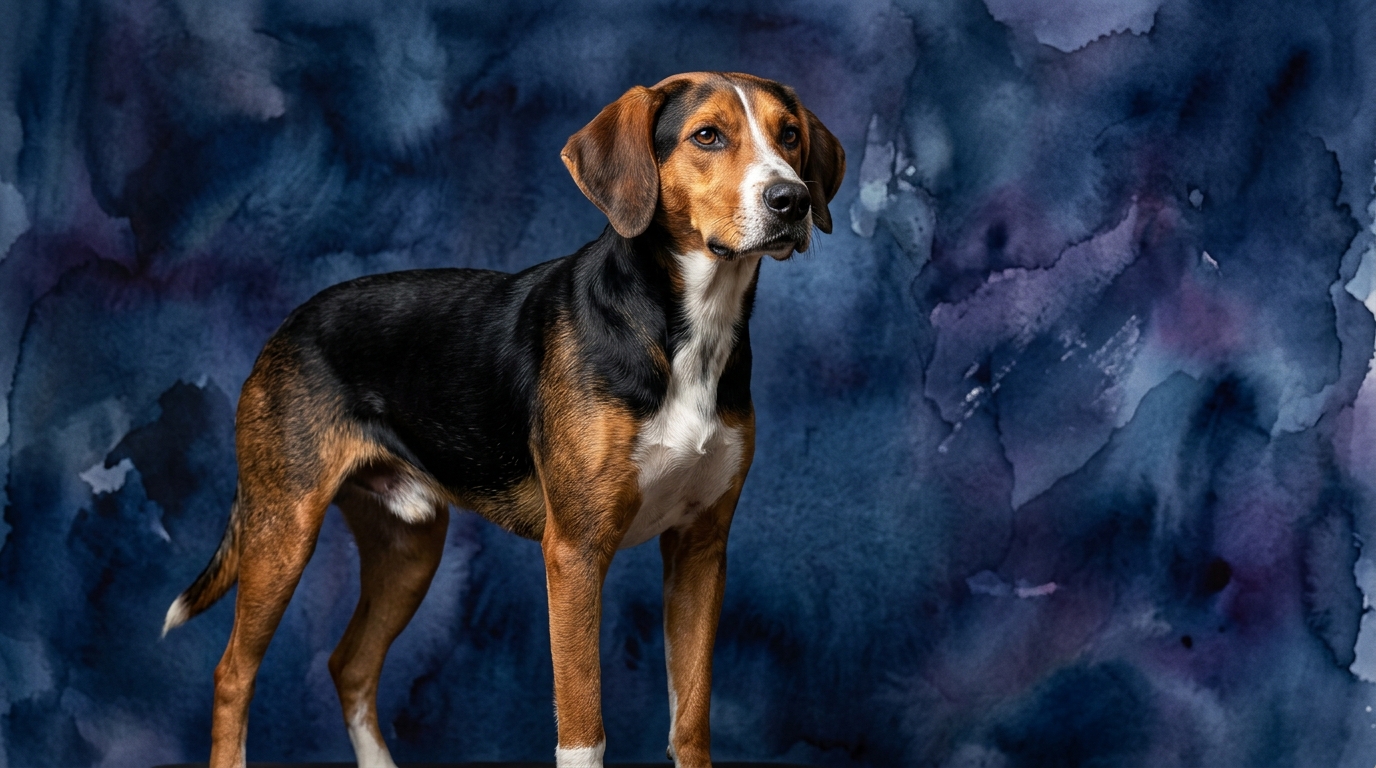
At first glance, the Black Russian Terrier (BRT) and the American Foxhound (AFH) present an intriguing cognitive paradox: both breeds register a consistent 3/5 across all five dimensions of our Pet IQ Lab assessment. This parity doesn't suggest a lack of cognitive depth, but rather indicates a moderate capacity for learning, adaptation, and instinctual behavior that, for each breed, manifests uniquely through the lens of their historical purpose and genetic blueprint.
A 3/5 in Problem Solving implies both breeds can learn complex tasks with moderate repetition and adapt to new situations, but their focus for this ingenuity diverges. For the BRT, a working breed, this often translates to practical solutions in a human-centric environment, such as understanding complex routines or navigating household challenges. The AFH, a hound, directs its problem-solving prowess towards environmental navigation, interpreting scent trails, and overcoming obstacles in pursuit, showcasing a different kind of strategic thinking.
Regarding Training Speed, a 3/5 suggests a moderate pace for acquiring new commands, requiring consistent and patient instruction. The BRT, with its cooperative working heritage, typically responds well to clear guidance and often thrives on having a 'job,' which can make the training process feel more collaborative. The AFH, conversely, possesses a powerful independent hunting drive that frequently prioritizes external stimuli—especially scents—over human commands, potentially making training feel more challenging in stimulating environments, despite their underlying capacity to learn.
Social Intelligence at 3/5 means both breeds can read social cues and interact appropriately within their social structures. The BRT's social acumen is often discerning, focused on loyalty within its immediate family unit and wary of strangers, aligning with its protective role. The AFH's social intelligence is typically pack-oriented, adept at harmonious interaction with other dogs during hunts and forming bonds within a larger group, rather than intense human-centric focus.
Finally, an Instinctive Drive score of 3/5 highlights inherent behavioral patterns requiring management or outlets. For the BRT, this drive manifests as strong protective instincts, territoriality, and a desire to guard its family and property. For the AFH, this drive is overwhelmingly centered on scent work, pursuit, and endurance, an unwavering determination to follow a trail that profoundly shapes their behavior and needs. Their Memory, also 3/5, aids the BRT in recalling who belongs and established routines, while for the AFH, it's crucial for remembering scent trails and hunting strategies.
Where the Black Russian Terrier Wins Cognitively
Despite identical scores, the Black Russian Terrier's cognitive strengths lean towards a more purpose-driven, human-aligned application of its abilities, honed by its working breed lineage. Its 3/5 problem-solving often manifests as a nuanced ability to assess and respond to security-related scenarios, such as discerning appropriate boundaries or interpreting subtle environmental changes that might indicate a threat to their family unit. This practical, context-specific application of their cognitive capacity is a hallmark of their working heritage.
Furthermore, the BRT's 3/5 social intelligence is often tied to a profound discernment. They possess a notable ability to recognize who belongs, who is a stranger, and to interpret subtle cues of intent from people. This makes them highly effective in their protective roles, understanding the nuances of social interaction within their family unit and responding appropriately to perceived anomalies. Their memory, also 3/5, robustly supports this, allowing them to retain knowledge of past interactions and established routines, contributing to their consistent guardianship.
Where the American Foxhound Wins Cognitively
The American Foxhound, while sharing the same 3/5 cognitive scores, demonstrates its unique intellectual prowess in areas directly linked to its heritage as a scent hound. Its 3/5 problem-solving shines in its dedication to environmental navigation and scent work. Their cognitive strength lies in their remarkable ability to interpret complex olfactory information, strategically navigate diverse terrains to follow a trail, and make independent decisions in dynamic outdoor environments, driven by an unwavering focus on their primary instinct.
The AFH's 3/5 instinctive drive, coupled with its memory score, fosters an enduring focus and an exceptional recall for scent trails. They possess a powerful capacity to differentiate between various scent patterns, remember the layout of familiar territories, and maintain an unwavering concentration on a trail for extended periods, even when faced with myriad distractions. This specialized memory and singular focus on their primary drive are powerful cognitive assets that underscore their effectiveness in the field, showcasing a distinct form of intelligence centered on sensory interpretation and persistent pursuit.
Which is Easier to Train and Why
When considering ease of training, the Black Russian Terrier generally presents a more straightforward experience for most owners, despite both breeds having a 3/5 training speed. The BRT's working breed heritage imbues them with a fundamental desire to cooperate and work alongside their human partners. They respond well to structure, consistency, and positive reinforcement, often viewing training as a shared activity or a 'job' to be accomplished. Their strong bond with their primary caregivers and an inherent desire to please can make the training process feel more intuitive and rewarding, leading to more reliable obedience in typical household settings.
Conversely, the American Foxhound, despite its capacity to learn, often presents greater training challenges due to its powerful and independent instinctive drive for scenting. Once an American Foxhound catches a compelling scent, their focus becomes almost singular, frequently overriding learned commands and handler cues. Achieving reliable recall or maintaining focus in a stimulating outdoor environment is a significant, ongoing endeavor, as their innate wiring is to follow the trail, not necessarily their handler's voice. This makes the AFH feel considerably harder to train for general obedience and off-leash reliability compared to the BRT, requiring immense patience, creative motivation, and a deep understanding of hound behavior.
Which Suits Active Owners vs. Relaxed Owners
Both the Black Russian Terrier and the American Foxhound are best suited for active owners, though their activity needs differ in nature. The BRT thrives with owners who can provide consistent structure, mental engagement, and robust physical exercise. They require more than just a short walk; activities like advanced obedience, protection training, or long, structured excursions help fulfill their 3/5 instinctive drive and maintain their robust physique and alert mind. Owners who can offer a 'job' and consistent mental challenges will find the BRT a highly rewarding companion.
The American Foxhound also demands highly active owners, but with a predominant focus on endurance and scent exploration. They need vast amounts of physical exercise, ideally running and exploring scent trails in expansive, securely fenced areas. Their endurance is remarkable, and their mental stimulation primarily comes from engaging their powerful sense of smell. Relaxed owners would struggle immensely with an American Foxhound's profound need to run and follow their nose, which, if unfulfilled, can lead to destructive behaviors, persistent vocalization, or escape attempts as they seek to satisfy their innate drives.
The Verdict
Opt for the Black Russian Terrier if you seek a discerning, protective companion who thrives on purpose-driven activities and cooperative training within a family structure.
Select the American Foxhound if you are an endurance enthusiast eager to engage with a dog whose world revolves around scent exploration and tireless pursuit in expansive, secure environments.
🧠 Find Your Pet's IQ Score
Our Pet IQ Lab assessment covers 25+ tests across 5 cognitive dimensions — personalized to your breed.
Take the Full IQ Test →Frequently Asked Questions
Are Black Russian Terriers good family dogs?
Yes, Black Russian Terriers can be excellent family dogs. Their 3/5 social intelligence is often directed towards forming deep bonds with their immediate family, making them loyal and protective companions for those they consider their own, though they can be reserved with strangers.
Do American Foxhounds bark a lot?
American Foxhounds are known for their characteristic 'baying' bark, which they use to communicate during a hunt. While not constant, their instinctive drive to vocalize can be pronounced, especially when excited by scents or left alone, requiring thoughtful management in a residential setting.
How much exercise does a Black Russian Terrier need?
Black Russian Terriers require significant daily exercise and mental engagement. Their working background means they need more than just a short walk; activities like long structured walks, training sessions, or guarding duties help fulfill their 3/5 instinctive drive and maintain their robust physique.