Side-by-Side IQ Profile: Interpreting Identical Scores
On paper, both the Black Russian Terrier (BRT) and the Borzoi share a uniform '3/5' across all five cognitive dimensions measured by The Cosmic Pet Pet IQ Lab. This doesn't suggest a lack of distinctiveness, but rather that their cognitive capacities, while similar in raw potential, are channeled and expressed through very different breed-specific lenses. Understanding this requires moving beyond the numbers to their behavioral manifestations.
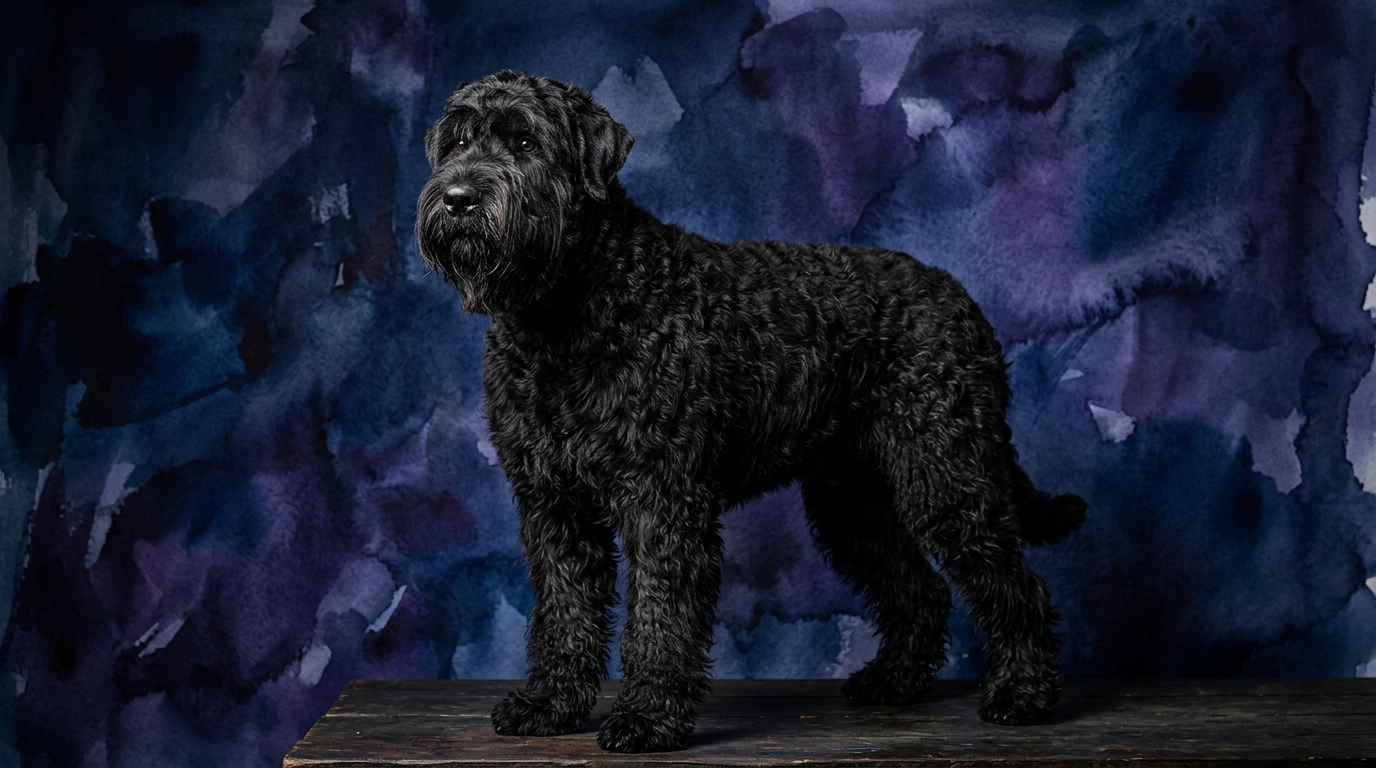
For the Black Russian Terrier, a Working Group dog, a Problem Solving score of 3/5 often translates to an aptitude for discerning threats and strategizing protective actions within their environment. Their Training Speed at 3/5 indicates a steady capacity for learning complex command sequences vital for their guarding roles, and they typically retain this information well, supported by a Memory score of 3/5. Social Intelligence at 3/5 reflects their deep bond with their family unit, often coupled with a reserved, discerning approach to strangers. Their Instinctive Drive, also 3/5, is strongly geared towards vigilance, protection, and a desire to perform a 'job' alongside their human companions, manifesting as a diligent and watchful nature rather than a singular prey focus.
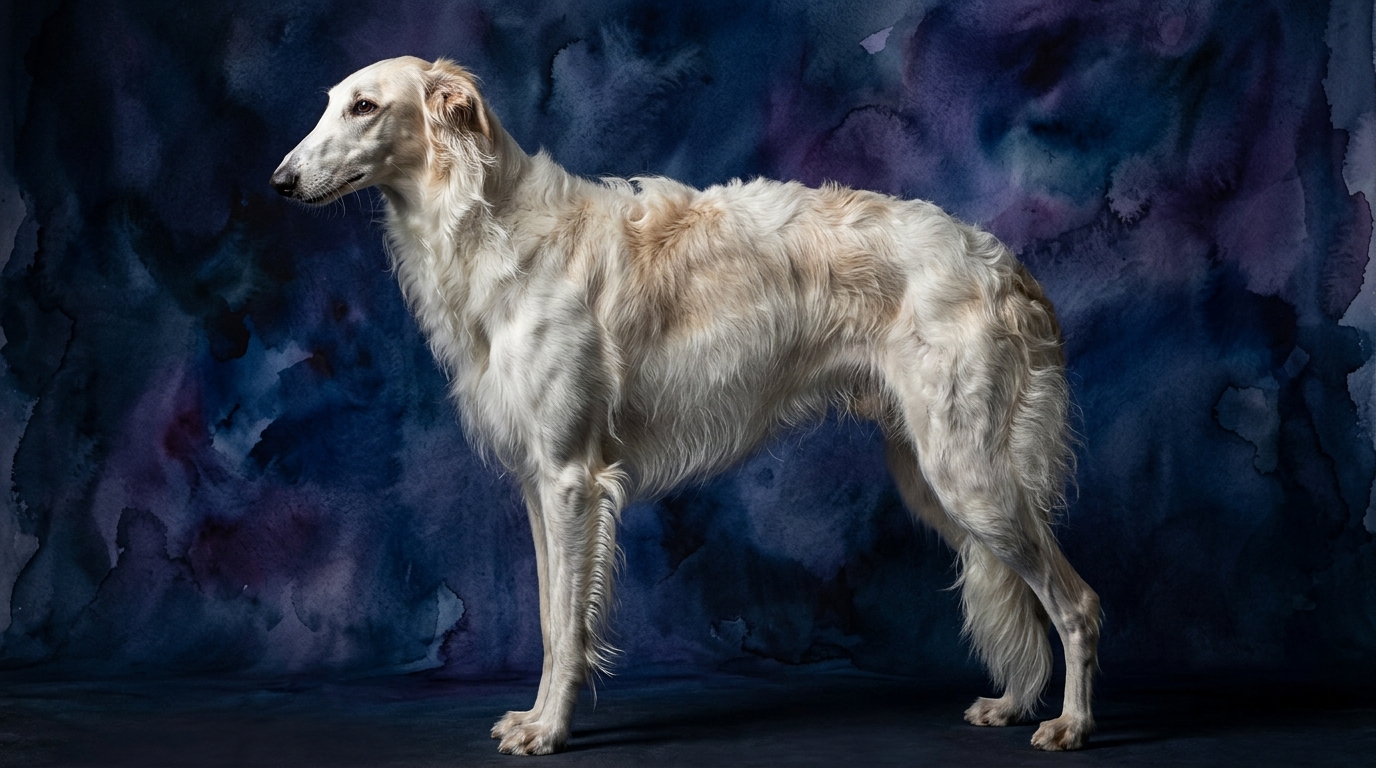
In contrast, the Borzoi, a quintessential Hound, applies its identical 3/5 scores to an entirely different suite of tasks. Their Problem Solving at 3/5 is often expressed in rapid, independent decision-making during a chase, navigating complex terrain, or outmaneuvering prey. A Training Speed of 3/5 means they can learn quickly, but their sighthound independence might make traditional obedience a more nuanced journey, requiring compelling motivation. Their Memory at 3/5 is particularly strong for recalling routes, landmarks, and past successful pursuits. Social Intelligence at 3/5 typically means a profound sensitivity to their owner's moods and a gentle demeanor within their family, often accompanied by an elegant aloofness towards unfamiliar individuals. The Borzoi's Instinctive Drive at 3/5 is overwhelmingly dominated by an intense, visually triggered prey drive, a defining characteristic of their sighthound heritage.
Where the Black Russian Terrier Excels Cognitively
The Black Russian Terrier’s cognitive strengths are deeply rooted in their history as a military-developed working dog. Their Problem Solving (3/5) shines in scenarios requiring strategic thinking within a structured environment, such as evaluating approaching individuals or determining optimal patrol patterns for their territory. They possess an inherent desire to work collaboratively, making them adept at understanding and executing multi-step commands. This collaborative spirit, combined with their steady Training Speed (3/5) and reliable Memory (3/5), allows them to excel in complex obedience, protection sports, and tasks that require consistent adherence to learned protocols. Their Social Intelligence (3/5) allows for nuanced interpretation of their family's needs and a discerning approach to new people, which is crucial for their protective duties, making them highly attuned to their human handlers' intentions and subtle cues.
Where the Borzoi Demonstrates Cognitive Prowess
The Borzoi’s cognitive advantages are inextricably linked to their role as a sighthound, necessitating independent thought and unparalleled focus during pursuit. Their Problem Solving (3/5) is exceptional in dynamic, fast-paced situations, where they must instantly assess changing environmental factors, predict prey movement, and make split-second decisions without human intervention. This translates to superior spatial reasoning and an ability to navigate open fields at high speeds. Their Instinctive Drive (3/5), specifically their intense prey drive, is a cognitive asset in its own right, allowing for singular focus and relentless determination once a visual trigger is engaged. While their Training Speed (3/5) is comparable, the Borzoi’s memory (3/5) for specific locations and past chase successes is remarkable, allowing them to recall prime hunting spots or escape routes, demonstrating a unique form of environmental recall.
Training Dynamics: BRT's Willingness vs. Borzoi's Independence
Despite both breeds scoring 3/5 in Training Speed, the practical experience of training a Black Russian Terrier versus a Borzoi differs significantly due to their behavioral predispositions. The BRT, bred for cooperative work and protection, generally exhibits a strong desire to please its handler and thrives on having a 'job.' This inherent willingness makes them highly receptive to consistent, positive reinforcement training, often eager to learn and execute new commands. Their steady temperament and focus on their human companions contribute to a more straightforward training journey, particularly in traditional obedience and advanced tasks.
The Borzoi, on the other hand, while capable of learning at the same rate, possesses a profound independent streak characteristic of sighthounds. Their primary motivation often lies in pursuing visual stimuli rather than strictly adhering to human commands if a compelling alternative (like a squirrel) presents itself. Training a Borzoi requires immense patience, creativity, and an understanding of their deep-seated prey drive. While they can master commands, their execution might be less enthusiastic or reliable in distracting environments, as their mind can be quickly diverted by the sight of movement, making consistent recall a lifelong endeavor that demands high-value rewards and unwavering consistency.
Lifestyle Match: Active Engagement vs. Bursts of Energy
The Black Russian Terrier is best suited for owners who are prepared for consistent, structured engagement. Their Working Group heritage means they require regular physical exercise, but equally important is mental stimulation through training, problem-solving games, and a clear sense of purpose. An owner who enjoys daily walks, advanced obedience, or canine sports will find the BRT a willing and capable partner. Their strong protective instincts also necessitate early and ongoing socialization and training to channel their vigilance appropriately, making them ideal for an owner who is committed to a structured and active lifestyle that includes their dog as a working companion.
The Borzoi, while appearing regal and calm indoors, also requires specific considerations for activity. They are not endurance runners in the same vein as some working breeds but need regular opportunities for intense, short bursts of speed in a securely fenced area. Their sighthound nature means they will chase anything that moves, making off-leash exercise in unfenced areas risky. For the rest of the day, Borzoi are typically quite relaxed and serene indoors, often preferring to lounge elegantly. They are an excellent match for owners who appreciate their calm indoor presence but can provide dedicated, safe spaces for them to stretch their legs and satisfy their instinctual need for a good run, without necessarily demanding constant, structured mental tasks.
The Verdict
Choose the Black Russian Terrier if you seek a dedicated, cooperative working companion ready for consistent training, mental challenges, and a structured, engaged lifestyle.
Opt for the Borzoi if you appreciate an independent, elegant companion who needs intense bursts of exercise in secure areas but is otherwise a calm, sensitive presence in a relaxed home.
🧠 Find Your Pet's IQ Score
Our Pet IQ Lab assessment covers 25+ tests across 5 cognitive dimensions — personalized to your breed.
Take the Full IQ Test →Frequently Asked Questions
Do Black Russian Terriers make good family pets?
Yes, Black Russian Terriers can be excellent family pets for experienced owners who understand their need for early socialization and consistent training. They form strong bonds with their family and are naturally protective, making them devoted guardians.
Are Borzoi difficult to train due to their independence?
Borzoi are not inherently difficult to train, as they are capable of learning, but their sighthound independence and strong prey drive require patient, consistent, and reward-based methods. Owners must be prepared to work around their selective hearing when visual stimuli are present.
Which breed requires more grooming, the BRT or the Borzoi?
The Black Russian Terrier typically requires more intensive grooming due to their dense, coarse double coat which needs regular brushing, stripping, or clipping to prevent matting. The Borzoi's silky coat, while long, generally requires less frequent but still regular brushing to prevent tangles and maintain its elegance.