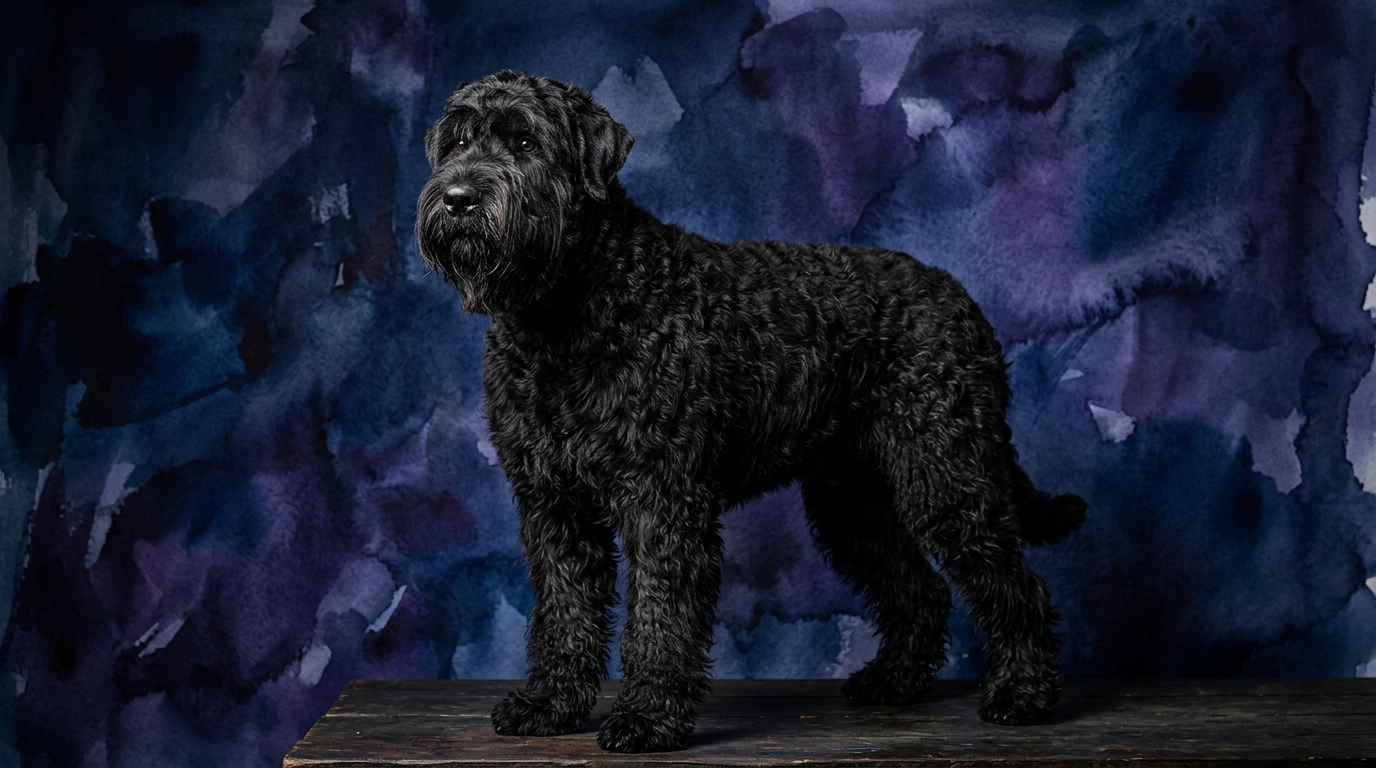

Side-by-Side Cognitive Profiles
The Cosmic Pet Pet IQ Lab assesses five key dimensions of canine intelligence, providing a nuanced view beyond simple rankings. For both the Black Russian Terrier (BRT) and the Cesky Terrier (CT), all five dimensions are rated at 3 out of 5, indicating a moderate, capable level of cognitive function that manifests uniquely in each breed.
**Black Russian Terrier (BRT):** As a robust working breed, the BRT's intelligence is deeply rooted in its protective origins. Its Problem Solving at 3/5 suggests an ability to assess complex environmental cues, particularly concerning territorial security or potential threats, rather than intricate puzzle-solving. Training Speed, also 3/5, reflects that while they are certainly capable of learning, their independent nature and strong will necessitate consistent and firm guidance to channel their focus effectively. Social Intelligence at 3/5 indicates a deep loyalty and ability to read family dynamics, though they typically remain reserved or wary with strangers. Their Instinctive Drive, rated 3/5, is predominantly expressed as a powerful guarding and protective inclination, making them vigilant sentinels. Memory at 3/5 means they retain commands, routines, and experiences, especially those related to their perceived duties and boundaries.
**Cesky Terrier (CT):** The Cesky Terrier, bred for hunting vermin, exhibits a different flavor of cognitive aptitude. Its Problem Solving at 3/5 typically manifests as determined persistence in tasks, such as navigating tight spaces or strategizing to flush out prey, showcasing practical, task-specific intelligence. Training Speed at 3/5 acknowledges their capacity to learn, but their characteristic terrier independence and strong prey drive can make training sessions require engaging methods to maintain their attention. Social Intelligence, also 3/5, points to their ability to form strong bonds with their immediate family and cooperate in tasks, though they can be discerning or reserved with unfamiliar individuals. Their Instinctive Drive, rated 3/5, is strongly geared towards hunting, digging, and tracking, a natural inclination that requires appropriate outlets. Memory at 3/5 ensures they recall successful hunting strategies, familiar routes, and consistent training cues, contributing to their effectiveness in their historical role.
Where the Black Russian Terrier Excels Cognitively
The Black Russian Terrier’s cognitive strengths lie in its ability to process environmental information for protective purposes. With a Problem Solving score of 3/5, the BRT often demonstrates superior judgment in assessing potential threats, discerning between genuine danger and innocent passersby, a critical skill for a guardian. Their memory, also 3/5, particularly shines in recalling specific individuals who are deemed 'safe' versus those who are 'outsiders,' allowing them to maintain consistent vigilance over their territory and family. This breed's social intelligence, while reserved, contributes to a deep understanding of its family unit's emotional states, enabling it to act as a responsive and steadfast protector.
Where the Cesky Terrier Excels Cognitively
The Cesky Terrier, with its 3/5 Problem Solving, truly shines in tasks requiring focused, persistent effort and agile thinking in confined or challenging environments. Their cognitive edge is evident in their capacity to methodically work through obstacles, such as navigating complex underground tunnels or devising strategies to corner small game, showcasing a tenacious and goal-oriented form of intelligence. Their instinctive drive, also 3/5, is a powerful cognitive asset, enabling them to maintain intense focus on a target, driven by an innate desire to hunt and track. This focused determination allows them to excel in activities like earthdog trials or scent work, where their tenacity and sharp senses are put to the test.
Training Dynamics: A Tale of Two Terriers
Despite both breeds scoring 3/5 in Training Speed, the experience of training a Black Russian Terrier versus a Cesky Terrier presents distinct challenges rooted in their behavioral predispositions. The BRT's training requires a confident, consistent leader who can manage its significant physical presence and inherent protective instincts. They can be willful if not properly socialized from a young age and need training that channels their guarding drive into appropriate behaviors, making early obedience and boundary setting crucial. Their learning is often tied to understanding their role within the family structure.
The Cesky Terrier, while equally capable of learning, brings a different set of challenges due to its independent terrier nature and strong prey drive. Training a Cesky demands creativity, patience, and engaging methods to overcome its tendency to follow its nose or pursue perceived quarry. Sessions need to be fun and stimulating to maintain their interest, as repetitive drills can lead to boredom and disengagement. Both breeds require dedicated effort, but the BRT's training focuses on authority and channeling power, while the CT's centers on engagement and redirecting instinctual drives.
Matching Breeds to Lifestyles: Active vs. Relaxed Owners
Neither the Black Russian Terrier nor the Cesky Terrier are suited for truly 'relaxed' owners in the sense of minimal engagement. Both require significant mental and physical stimulation, but the *type* of activity differs substantially. The Black Russian Terrier is a powerful working dog that thrives with structured routines, long walks, and a clear sense of purpose. Its protective instincts mean it needs consistent leadership and ample socialization to ensure it is a well-adjusted member of society. Owners must be prepared for a dog that requires robust physical exercise and mental challenges to prevent boredom and destructive behaviors.
The Cesky Terrier, while smaller, is still an active breed with a persistent terrier drive. It needs regular exercise, including opportunities to explore and engage its strong scenting and digging instincts through activities like scent work, earthdog trials, or agility. While it may not require the sheer physical exertion of a BRT, a Cesky needs consistent mental engagement to satisfy its curious and tenacious nature. Owners who enjoy interactive play and can provide outlets for its natural drives will find the Cesky a rewarding companion, making it suitable for active individuals who appreciate a smaller but equally engaged partner.
The Verdict: When to Choose Each Companion
The Verdict
Choose the Black Russian Terrier if you are an experienced dog owner seeking a formidable guardian, committed to extensive socialization and consistent training, and capable of providing a structured, purposeful environment for a powerful working dog.
Opt for the Cesky Terrier if you appreciate terrier tenacity and independence, are prepared to engage in consistent, positive training, and enjoy activities like scent work or earthdog trials that satisfy a keen hunting drive.
🧠 Find Your Pet's IQ Score
Our Pet IQ Lab assessment covers 25+ tests across 5 cognitive dimensions — personalized to your breed.
Take the Full IQ Test →Frequently Asked Questions
Are Black Russian Terriers suitable for first-time dog owners?
Generally, Black Russian Terriers are not recommended for first-time dog owners due to their formidable size, strength, and strong protective instincts. They require an owner with experience in large working breeds who can provide consistent training and extensive socialization.
Do Cesky Terriers get along well with children and other pets?
Cesky Terriers can be good with respectful children and other pets, especially if raised with them from a young age. However, their strong prey drive means careful introductions are needed with smaller pets, and supervision is always advisable with young children.
What kind of mental stimulation do these breeds need?
Black Russian Terriers need mental challenges related to their protective role, such as advanced obedience, boundary training, and 'watchdog' tasks. Cesky Terriers thrive on mental stimulation that engages their hunting instincts, like scent work, puzzle toys, and agility, to keep their tenacious minds occupied.