Side-by-Side Cognitive Profiles
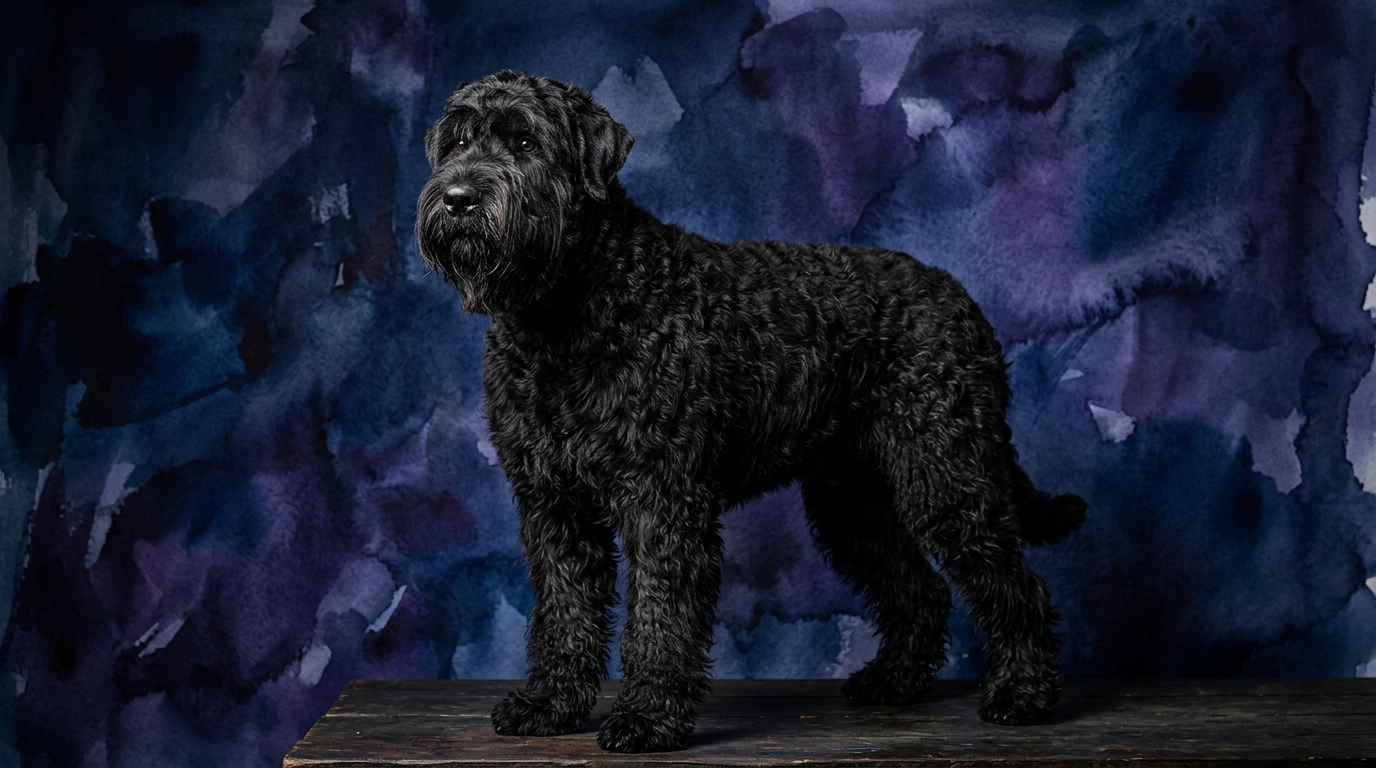
The Cosmic Pet Pet IQ Lab employs a five-dimensional framework to assess canine intelligence, offering a nuanced view of each breed's cognitive strengths. For the Black Russian Terrier, a formidable Working Group dog, we observe a consistently balanced profile: problem Solving 3/5, training Speed 3/5, social Intelligence 3/5, instinctive Drive 3/5, and memory 3/5. This breed is not Coren-ranked, suggesting their intelligence manifests in a steady, pragmatic manner rather than through rapid obedience or complex task learning typical of top-ranked breeds. Their scores indicate a capable, self-reliant learner who processes information and adapts at a moderate, deliberate pace, excelling in consistency rather than quick flashes of brilliance. This balanced scoring across all dimensions implies a robust, all-around functional intellect, well-suited to their original role as a versatile military dog.
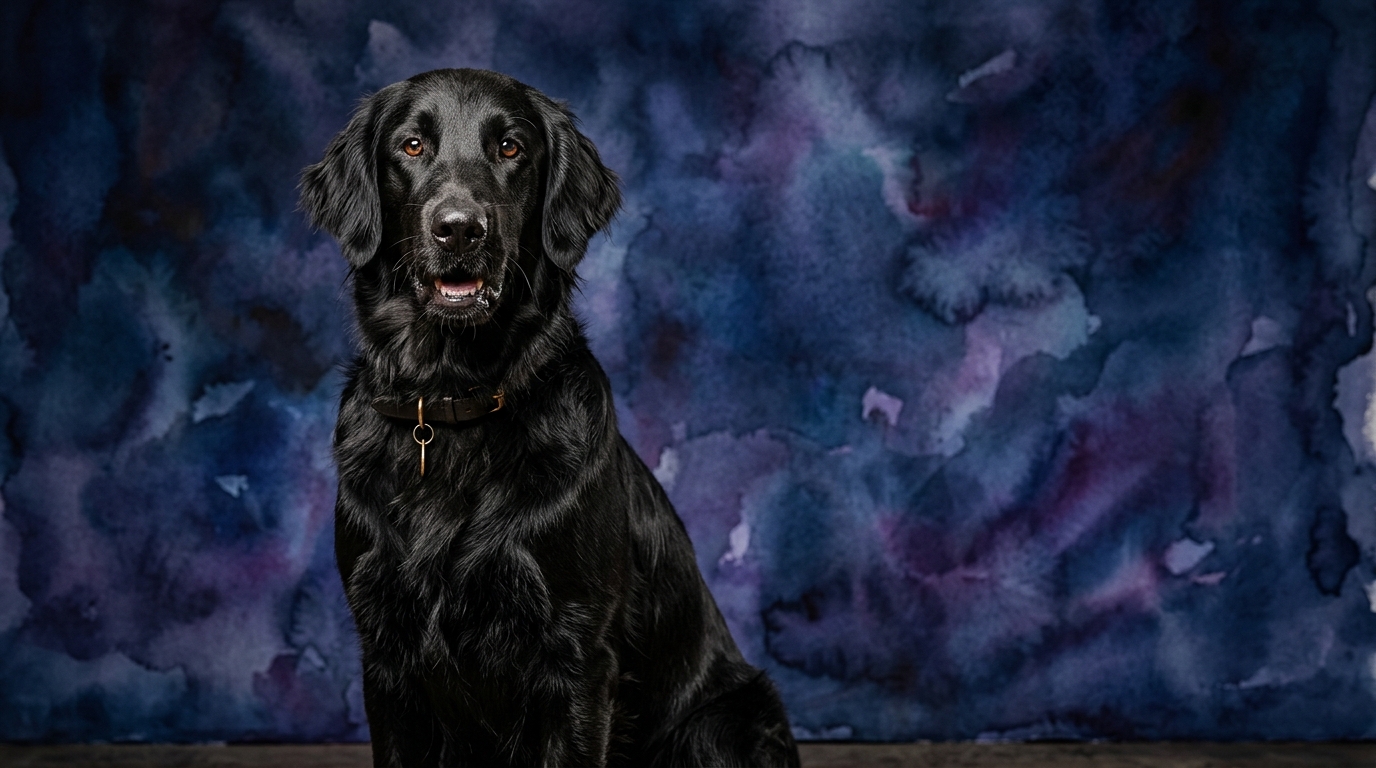
In contrast, the Flat-Coated Retriever, a vibrant Sporting Group dog, presents a cognitive profile with distinct peaks. Coren-ranked #17, this breed scores problem Solving 4/5, training Speed 4/5, social Intelligence 3/5, instinctive Drive 3/5, and an exceptional memory 5/5. These scores paint a picture of a dog that is quick to grasp new concepts and commands, with a remarkable ability to retain information over time. Their higher problem-solving aptitude suggests an eagerness to engage with challenges and devise solutions, while their training speed indicates a responsive and enthusiastic student. The outstanding memory is a hallmark of their retrieving heritage, essential for remembering fall locations and complex sequences in the field, making them adept at tasks requiring sustained mental engagement and recall.
Where the Black Russian Terrier Excels Cognitively
The Black Russian Terrier’s strength lies in its profound cognitive consistency and self-contained capability. With every dimension of intelligence scoring a solid 3 out of 5, this breed demonstrates a robust, reliable, and independent intellect. Unlike breeds with high peaks in specific areas, the Black Russian Terrier does not rely on a single dominant cognitive trait; instead, their balanced profile contributes to a steadfast approach to their environment and tasks. This means they are less prone to being overwhelmed by novel situations or requiring constant human direction to navigate complexities. Their problem-solving, while not the fastest, is often methodical and thorough, ensuring solutions are well-considered and durable. For instance, when tasked with guarding, their social intelligence and instinctive drive, both rated 3/5, combine to produce a discerning and protective companion who assesses threats with a calm, steady resolve, rather than reacting impulsively. This uniform capability across the board allows them to be dependably functional in a variety of roles without specialized cognitive demands or weaknesses, making them exceptionally resilient and adaptable in a practical sense, particularly in situations requiring self-reliance.
Where the Flat-Coated Retriever Excels Cognitively
The Flat-Coated Retriever truly shines in its exceptional capacity for learning, retention, and adaptive problem-solving. Their standout memory, rated 5/5, is a significant cognitive advantage, allowing them to recall an extensive repertoire of commands, routines, and experiences with remarkable precision. This superior memory is directly linked to their high training speed (4/5), as they can quickly consolidate new information and integrate it into their behavioral patterns, making complex training sequences much more accessible. For example, in competitive obedience or field trials, a Flat-Coat can remember a series of intricate directions, retrieve multiple items in a specific order, or recall the precise location of a fallen bird even after a delay. Their elevated problem-solving score (4/5) further enhances this, enabling them to creatively navigate obstacles to achieve a goal, such as finding the most efficient path to retrieve an object or figuring out how to manipulate a puzzle toy. This combination of quick learning, effective problem-solving, and unparalleled recall makes them incredibly versatile for activities requiring mental agility and sustained focus, from advanced dog sports to assistance work.
Training Dynamics: Black Russian Terrier vs. Flat-Coated Retriever
When considering ease of training, the cognitive profiles of these two breeds point to distinct approaches and outcomes. The Flat-Coated Retriever, with its training speed of 4/5 and memory of 5/5, is generally quicker to pick up new commands and retain them over the long term. Their enthusiastic and cooperative nature, combined with their cognitive strengths, means they often respond well to positive reinforcement and can master a broad range of behaviors relatively swiftly. Owners might find that a Flat-Coat requires fewer repetitions to solidify a command and is more eager to participate in extended training sessions, making them a joy for those who enjoy structured dog sports or advanced obedience work. Their higher problem-solving aptitude also means they can often generalize learned behaviors to new situations more readily, adapting their understanding rather than requiring entirely new instruction.
The Black Russian Terrier, with a training speed and memory both rated 3/5, requires a more patient, consistent, and perhaps more nuanced training strategy. While certainly capable of learning, they may take longer to fully grasp and internalize new commands, and their retention might necessitate more frequent refreshers. Their balanced cognitive profile suggests they are not inherently resistant but rather deliberate learners who process information at their own steady pace. Behavioral differences might manifest as a Black Russian Terrier needing more consistent motivation or clearer, more concise instructions to connect actions with rewards. They are less likely to be driven by the sheer joy of performing a trick and more by understanding the purpose or routine. Training a Black Russian Terrier often benefits from an owner who understands the value of repetition, structured environments, and a calm, authoritative presence, ensuring that once a behavior is learned, it is deeply ingrained and reliably executed.
Owner Suitability: Active Engagement vs. Steadfast Companionship
The distinct cognitive profiles and inherent drives of these breeds dictate different ideal ownership scenarios. The Flat-Coated Retriever, with its higher problem-solving and training speed, combined with its Sporting Group heritage, thrives with active owners who can channel its boundless enthusiasm and mental acuity. These dogs excel in environments where they are regularly engaged in activities that challenge both their bodies and minds, such as retrieving games, agility, flyball, or extended hikes. An owner who enjoys teaching new tricks, participating in dog sports, or simply spending significant time outdoors will find the Flat-Coat to be an incredibly rewarding and responsive companion. Their social intelligence (3/5) ensures they are amiable, but their need for consistent mental stimulation and physical exercise is paramount to prevent boredom and potential destructive behaviors. They are best suited for individuals or families who can dedicate substantial time to their training and daily engagement, valuing a dog that is always ready for the next adventure.
The Black Russian Terrier, while certainly capable of activity, suits owners who appreciate a more deliberate and steadfast companion. Their balanced cognitive scores across all dimensions (3/5) suggest a dog that is robust and reliable, rather than constantly seeking high-octane engagement. Owners who value a strong, protective presence and are prepared to provide consistent, structured training will find a loyal partner. Their instinctive drive (3/5) is less about frantic retrieving and more about observation and guardianship, making them suitable for owners who appreciate a dog that is watchful and purposeful. They are not necessarily for "relaxed" owners in the sense of minimal interaction, but rather for those who prefer quality, structured interaction over constant, high-intensity play. They thrive in environments where they have a clear role, a stable routine, and an owner who understands their need for boundaries and consistent leadership. This breed is an excellent match for owners seeking a substantial companion for walks, structured exercise, and a protective presence around the home, rather than a dog for competitive dog sports requiring rapid-fire instruction.
The Verdict
Choose the Black Russian Terrier if you seek a robust, self-reliant, and consistently capable companion who excels with a deliberate, structured approach to training and a stable home environment, valuing steadfast guardianship over competitive agility.
Opt for the Flat-Coated Retriever if you desire an enthusiastic, quick-learning, and highly trainable partner for active sports, extensive outdoor adventures, and advanced obedience, thriving on constant engagement and mental stimulation.
🧠 Find Your Pet's IQ Score
Our Pet IQ Lab assessment covers 25+ tests across 5 cognitive dimensions — personalized to your breed.
Take the Full IQ Test →Frequently Asked Questions
Which breed is generally easier for a first-time dog owner?
Neither breed is typically recommended for novice owners without significant commitment, but the Flat-Coated Retriever's eagerness to please and quicker training speed might make it marginally more forgiving. The Black Russian Terrier's independence and protective instincts require a confident, experienced hand.
Do these breeds require a lot of exercise?
Both breeds require substantial exercise, but the nature differs. Flat-Coats need vigorous, varied physical and mental activity to prevent boredom. Black Russian Terriers need consistent, structured exercise and mental engagement, often in the form of purposeful work or long walks, to maintain their balanced disposition.
How do their social intelligence scores impact their interaction with families?
Both breeds score 3/5 in social intelligence, indicating they are capable of forming strong bonds and understanding social cues within their established family unit. The Flat-Coat might be more overtly effusive, while the Black Russian Terrier's social interactions tend to be more reserved and discerning, particularly with strangers.