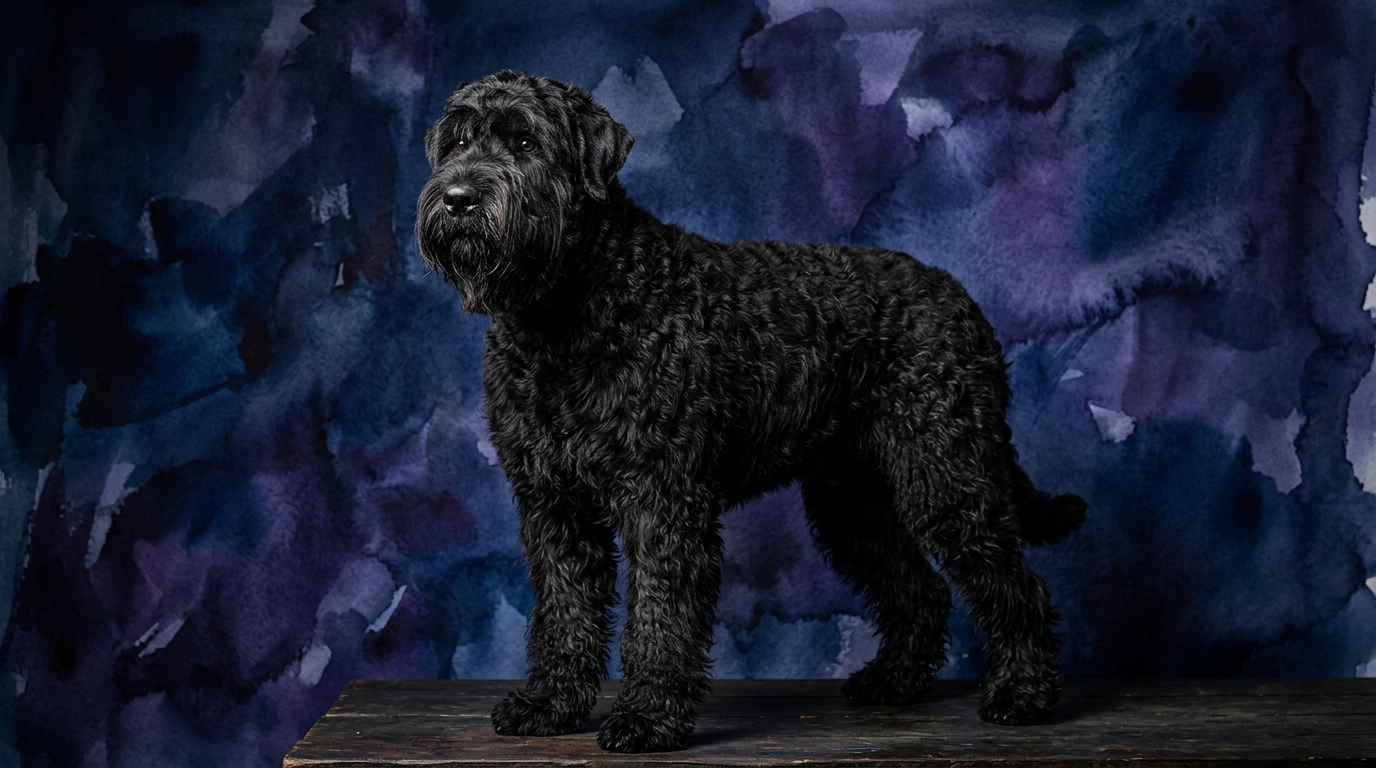

Side-by-Side IQ Profile: Unpacking Identical Scores
At first glance, The Cosmic Pet Pet IQ Lab data presents a curious parity: both the Black Russian Terrier and the Leonberger score 3/5 across all five measured intelligence dimensions. This suggests neither breed possesses a dramatic cognitive advantage over the other in fundamental capacity, but rather that their intellectual strengths manifest differently based on their historical roles and inherent temperaments. A score of 3/5 for 'problem-solving' indicates an average ability to navigate new situations and figure out solutions independently. For the Black Russian Terrier, this often translates into tactical thinking related to guarding and defense. They might excel at assessing environmental changes that pose a perceived threat, determining the most effective way to secure a perimeter, or strategically positioning themselves to monitor activity. Their problem-solving is often rooted in vigilance and protection.
The Leonberger, also scoring 3/5 in 'problem-solving,' applies this capacity in a more adaptable, often cooperative manner. Their historical roles as farm dogs, water rescuers, and family companions required them to solve a diverse range of practical problems, from herding livestock to retrieving items from water, or navigating complex social dynamics within a household. Their problem-solving leans towards versatility and responsiveness to human direction or environmental cues, rather than purely defensive strategies. This means they are equally capable of figuring out how to open a gate or retrieve a dropped toy, demonstrating a pragmatic and context-aware approach.
In 'training speed,' both breeds again score 3/5, suggesting they learn new commands and routines at an average pace. For the Black Russian Terrier, this means they are receptive to consistent, firm training, but their independent nature might require more repetition or varied motivational techniques to solidify commands. They are capable of absorbing complex sequences but may choose to execute them based on their own assessment of the situation, rather than immediate compliance. The Leonberger's 3/5 in 'training speed' reflects their eagerness to please their human companions, which can make them appear more amenable to training, even if the raw speed of acquisition is similar. They often respond well to positive reinforcement and consistency, finding motivation in praise and interaction, which can smooth the training process.
Both breeds achieve 3/5 in 'social intelligence,' but their expressions differ significantly. The Black Russian Terrier's social intelligence is primarily directed inward, focused on their immediate family unit. They are adept at reading their owners' moods and intentions, forming deep bonds, and understanding the subtleties of their household's social structure. However, this intelligence often comes with a reserved or wary approach to strangers, requiring careful socialization to ensure appropriate responses. Their perception of social cues from outsiders is often filtered through a lens of potential threat assessment. The Leonberger's social intelligence, also 3/5, is more outwardly focused and generally more expansive. They are highly attuned to the emotional states of all family members, including children and other pets, and possess a gentle, empathetic nature. They excel at integrating into diverse social environments and are often tolerant and welcoming, reading cues for interaction and play as readily as those for caution or comfort. Their social understanding underpins their role as compassionate companions.
Finally, 'instinctive drive' for both stands at 3/5. For the Black Russian Terrier, this drive is predominantly rooted in their protective and guarding instincts. Their drive manifests as a strong territorial imperative, a readiness to defend their family, and an inherent vigilance. This isn't an overwhelming, uncontrolled drive, but a consistent underlying motivation that informs their behavior and requires appropriate outlets and guidance. The Leonberger's 3/5 in 'instinctive drive' expresses itself through their heritage as working dogs involved in water rescue, carting, and companionship. Their drive leans towards helpfulness, a desire to be involved in family activities, and a natural affinity for tasks that involve cooperation and service. This can also include a strong retrieving instinct, particularly in water, and a general desire to be a contributing member of their human 'pack.'
Memory, at 3/5 for both, indicates an average capacity to recall past experiences, learned commands, and established routines. For the Black Russian Terrier, this means they will remember training cues and past interactions with individuals, both positive and negative, contributing to their consistent behavior and wariness. The Leonberger's average memory allows them to retain a vast repertoire of commands, remember their family's daily schedule, and recall specific people or places, supporting their adaptability and reliability in various social contexts.
Where the Black Russian Terrier Wins Cognitively
Despite identical scores, the Black Russian Terrier's cognitive strengths shine in specific domains. Their problem-solving, while rated 3/5, is particularly effective in scenarios demanding strategic defense and independent decision-making under perceived pressure. Bred for military and protection roles, their cognitive wiring allows them to quickly assess potential threats, identify weak points in defenses, and respond with calculated assertiveness without constant human intervention. This isn't about raw intellectual superiority, but a specialized application of their average problem-solving capacity towards vigilance and security.
Their social intelligence, also 3/5, is exquisitely tuned to their primary caregivers, creating an almost telepathic bond within their immediate family. This allows for a deep understanding of their owner's subtle cues and expectations, fostering a unique partnership in protective tasks. Their memory, at 3/5, combined with this focused social intelligence, means they rarely forget a face or a past interaction, making them incredibly consistent in their loyalties and their assessment of familiar versus unfamiliar individuals. This specific cognitive profile makes them exceptionally reliable in roles requiring a dedicated, discerning guardian.
Where the Leonberger Wins Cognitively
The Leonberger, with its matching 3/5 scores, demonstrates cognitive advantages in areas emphasizing adaptability, empathy, and collaborative problem-solving. Their 'problem-solving' capacity, while average, is highly versatile, enabling them to navigate complex social situations within a family, adapt to new environments effortlessly, and excel in diverse working tasks like water rescue or therapy work. They are adept at reading environmental cues and adjusting their behavior accordingly, showcasing a flexible intelligence that serves a multi-faceted family role.
Their social intelligence (3/5) is remarkable for its breadth, extending beyond immediate family to encompass a wider circle of human and animal interactions. This allows them to integrate smoothly into busy households, interact gently with children, and often coexist peacefully with other pets. This expansive social awareness makes them superior at diffusing tension and promoting harmony within a diverse social group. Their instinctive drive (3/5) is geared towards being a helpful, engaged participant in family life, making them intrinsically motivated to learn tasks that involve cooperation and service, a distinct cognitive advantage for owners seeking a responsive, companionable working dog.
Which is Easier to Train and Why?
Despite identical 3/5 scores for 'training speed,' the Leonberger generally presents as an 'easier' dog to train for most owners due to key behavioral differences rooted in their social intelligence and instinctive drive. Leonbergers possess a strong desire to please their human companions, a trait that significantly enhances their responsiveness to positive reinforcement. They are often eager to engage in training sessions, motivated by praise, affection, and the opportunity to work alongside their people. Their social intelligence allows them to quickly understand and comply with human expectations, making them highly receptive to consistent, gentle guidance. This eagerness to cooperate makes the training process feel more fluid and rewarding for the average owner.
The Black Russian Terrier, conversely, while equally capable of learning at an average pace (3/5 'training speed'), often exhibits a more independent and discerning nature. Their problem-solving (3/5) and instinctive drive (3/5) are geared towards making their own judgments, particularly concerning their protective duties. This can translate into a need for more assertive, consistent, and creative training methods to maintain their engagement and ensure compliance. They require an owner who understands how to channel their strong protective instincts and independent streak without stifling their spirit. While they are trainable, their training demands a more experienced handler who can establish clear leadership and provide strong motivation beyond mere 'pleasing the owner.'
Which Suits Active Owners vs. Relaxed Owners
The choice between these two breeds depends significantly on an owner's lifestyle and their capacity to meet specific cognitive and physical needs. The Black Russian Terrier, despite average scores, is better suited for active owners who are prepared to provide consistent mental stimulation and structured physical activity that taps into their working heritage. Their instinctive drive (3/5) for protection and their focused social intelligence (3/5) mean they thrive with a 'job' – whether it's advanced obedience, protection sports, or extensive training that challenges their problem-solving abilities. A relaxed owner might find their independent nature and strong protective instincts overwhelming if not properly managed and channeled. They require an owner who actively engages their mind and body, providing purpose and direction.
The Leonberger, on the other hand, while still a large working breed requiring exercise, can be a better fit for owners who appreciate a more relaxed yet engaged companion. Their versatile problem-solving (3/5) and broad social intelligence (3/5) allow them to adapt well to varying levels of activity, from long walks and hikes to quiet evenings at home. They enjoy being involved in family activities, regardless of intensity, and their drive (3/5) is satisfied by companionship and gentle interaction. While they need regular exercise to stay healthy and happy, their cognitive profile makes them more amenable to adapting to a family's rhythm, making them suitable for active families who also enjoy downtime, or even moderately active owners seeking a large, gentle presence.
The Verdict
Choose the Black Russian Terrier if you are an experienced, active owner seeking a dedicated protector and enjoy the challenge of working with an independent, discerning mind.
Choose the Leonberger if you are looking for a versatile, empathetic family companion who thrives on social interaction and cooperative activities, fitting well into a moderately active household.
🧠 Find Your Pet's IQ Score
Our Pet IQ Lab assessment covers 25+ tests across 5 cognitive dimensions — personalized to your breed.
Take the Full IQ Test →Frequently Asked Questions
Do identical IQ scores mean these breeds are equally 'smart'?
Identical IQ scores (3/5) indicate similar raw cognitive capacities, but not identical cognitive styles. The nuance lies in how each breed applies these capacities based on their specific breed history and temperament, leading to different strengths in real-world scenarios.
Is one breed more prone to independent thinking than the other?
Yes, the Black Russian Terrier tends to exhibit more independent thinking, rooted in its protective instincts and problem-solving geared towards vigilance. The Leonberger, while capable, often prefers to collaborate and seeks human direction, driven by its desire to please.
How do their social intelligence differences impact household dynamics?
The Black Russian Terrier's social intelligence is deeply loyal but reserved with strangers, requiring careful management in diverse social settings. The Leonberger's broader social intelligence promotes easier integration into varied family structures and makes them generally more welcoming to new people and pets.