Side-by-Side IQ Profile: Black Russian Terrier
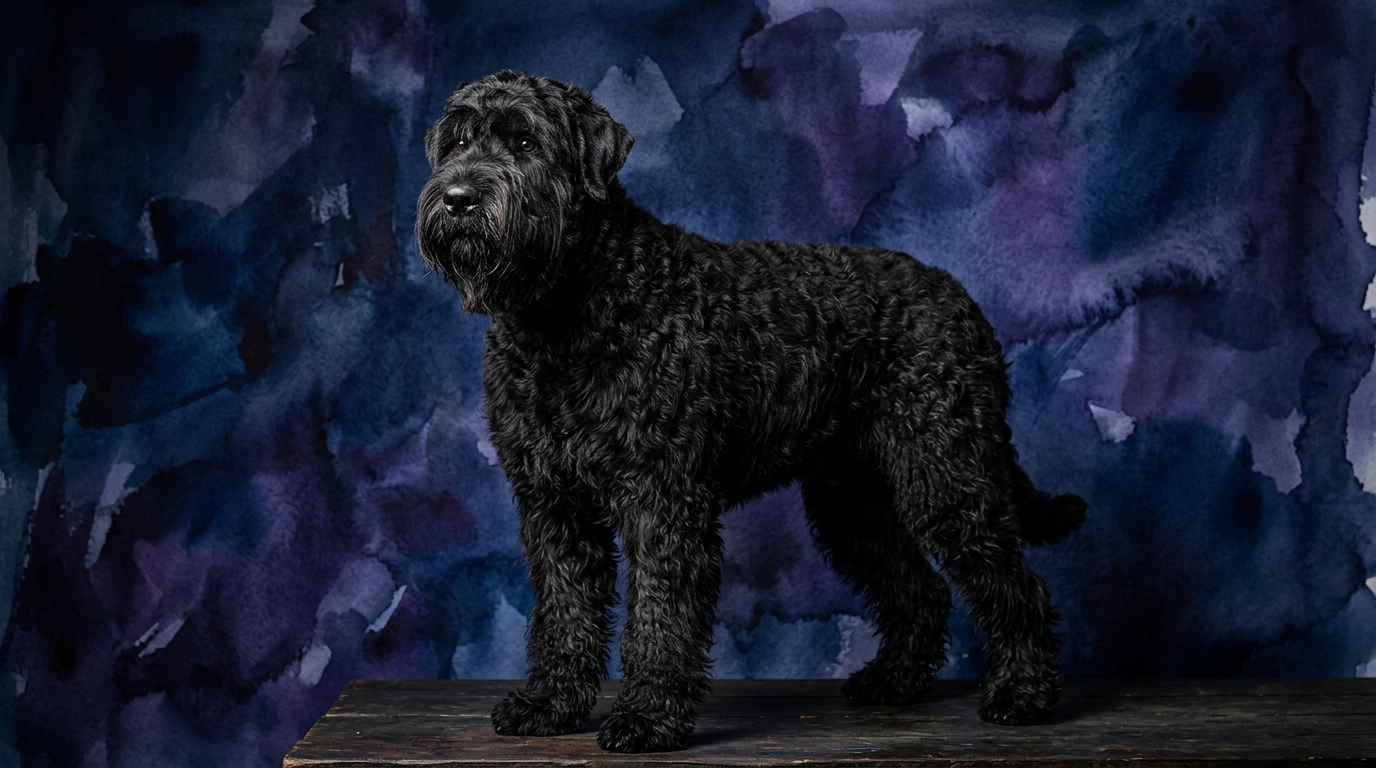
The Black Russian Terrier (BRT), a powerful Working group dog, exhibits a moderate capacity for problem-solving (3/5), capable of navigating complex tasks and learning multi-step commands when provided with clear, consistent instruction. Their military heritage means they are adept at following established protocols, excelling at applying learned strategies to new, similar situations rather than spontaneously inventing novel solutions.
Their training speed is rated at 3/5, indicating they learn new commands and routines at a moderate pace, benefiting significantly from patient, structured training sessions. A BRT's inherent desire to please its handler and fulfill a purposeful role drives its engagement, making it responsive to positive reinforcement and clear expectations, ensuring steady progress over time.
In social intelligence, the BRT scores a 3/5, allowing them to form deep bonds with their immediate family and understand subtle cues within their established social circle. Outside this trusted group, they maintain a reserved and watchful demeanor, carefully assessing strangers and new situations before acceptance, which underpins their strong protective instinct and loyalty.
Their instinctive drive, also 3/5, is moderately pronounced and rooted deeply in their guardian and protection roles, including a strong territorial instinct and a drive to protect their family. This requires careful channeling through early socialization and consistent training to ensure appropriate responses, while their moderate prey drive is generally manageable with proper guidance.
Finally, the BRT's memory is rated 3/5, meaning they are capable of retaining learned commands, routines, and experiences over time. They remember both positive and negative interactions, which significantly influences their future behavior and trust levels with individuals, contributing to their consistent performance once a task is mastered and their long-term loyalty.
Side-by-Side IQ Profile: Neapolitan Mastiff
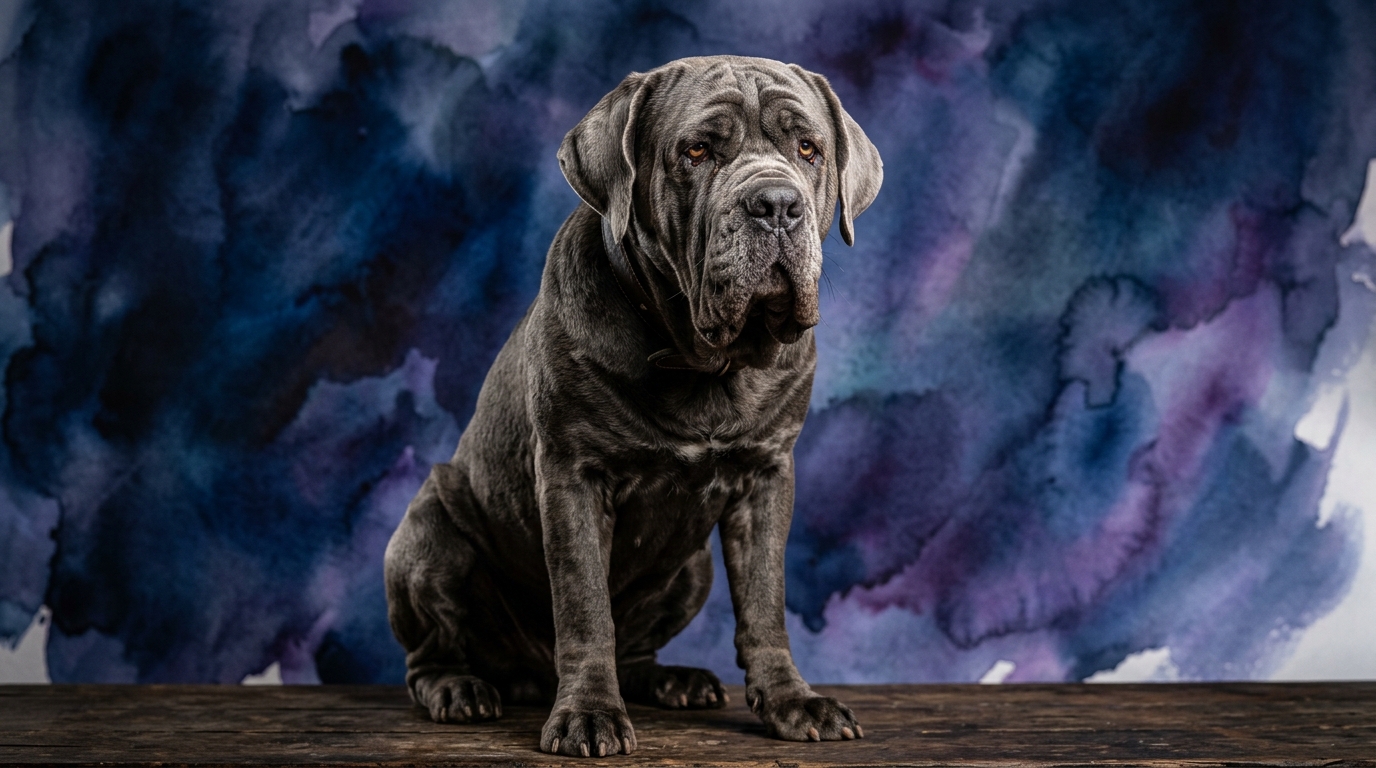
The Neapolitan Mastiff, another imposing Working group dog, demonstrates a moderate approach to problem-solving (3/5), often preferring to observe and deliberate rather than impulsively act. They are capable of understanding intricate situations, especially those involving their household or perceived threats, and can devise solutions based on past experiences, though they are not typically driven to solve puzzles for the sake of it.
Their training speed is also 3/5, meaning Neos learn at a moderate pace, necessitating calm, consistent, and patient training. Their independent and often stoic nature means they might not always be eager to comply, demanding a trainer who understands their motivations and can make training feel worthwhile. Repetition and positive reinforcement are key to solidifying commands.
Regarding social intelligence, the Neapolitan Mastiff scores 3/5, indicating they are deeply attuned to their family's emotional states and the dynamics within their home. They are discerning with strangers, possessing an innate ability to gauge intentions, which underpins their formidable guarding capabilities. Their social circle is typically small, but their bonds with family are profound.
Their instinctive drive, at 3/5, is moderate yet powerful, centered primarily around protection and guardianship. Their inherent desire to defend their territory and family is a defining trait, manifesting as a watchful, imposing presence. Their prey drive is generally low, often superseded by their strong protective instincts.
The Neapolitan Mastiff's memory is rated 3/5, demonstrating a moderate ability to recall people, places, and experiences, particularly those related to their home environment and family. They remember both kindness and perceived slights, which informs their interactions and trust development, reinforcing their consistent guardian behavior.
Where the Black Russian Terrier Wins Cognitively
Despite both breeds scoring a 3/5 across all cognitive dimensions, the Black Russian Terrier often demonstrates a subtle advantage in its *application* of problem-solving and training speed within a structured, task-oriented environment. Their history as military working dogs instilled a drive for purpose and a willingness to engage actively with a handler to achieve a goal. This means while a Neo might ponder a problem, a BRT is more inclined to actively experiment with solutions under direction, making them potentially quicker to adapt to new, complex commands in a working context. Their instinctive drive, while rated 3/5, often manifests as a more directed energy towards fulfilling a job, which can translate into greater focus during training and problem-solving exercises designed by a human.
Where the Neapolitan Mastiff Wins Cognitively
Conversely, the Neapolitan Mastiff's 3/5 social intelligence and memory often present a distinct cognitive strength, particularly in nuanced guardian roles. While the BRT is protective, the Neo's deep understanding of its family's emotional landscape and its discerning memory for individuals allows it to make highly sophisticated judgments about who poses a threat and who does not, often without overt instruction. Their problem-solving, though rated similarly, is often applied to assessing and managing social situations within their domain, requiring a subtle cognitive processing of cues that might not be immediately apparent to a more task-focused breed. Their instinctive drive, while also 3/5, is profoundly rooted in an almost passive, yet highly effective, deterrence based on presence and discerning observation, rather than active engagement.
Which is Easier to Train and Why
When considering ease of training, the Black Russian Terrier generally holds an edge, largely due to its breed history and temperament, even with identical 3/5 training speed scores. BRTs were specifically developed to work closely with handlers, fostering a natural inclination towards cooperation and a desire for structured activity. Their problem-solving (3/5) is often geared towards understanding and executing tasks presented by a human, making them more receptive to consistent command and routine.
In contrast, the Neapolitan Mastiff, while certainly trainable (3/5 training speed), possesses a more independent and self-reliant nature, characteristic of a guardian breed. Their decisions are often filtered through their own assessment of a situation, meaning they might require more convincing or a deeper understanding of 'why' a command is necessary. Training a Neo demands immense patience, a calm demeanor, and a clear establishment of leadership, as their social intelligence (3/5) allows them to quickly identify inconsistencies or a lack of confidence in their trainer, potentially leading to stubbornness. The BRT's drive to work and its focus on its handler make it generally more eager to engage in the repetitive, structured training required for mastery.
Which Suits Active Owners vs. Relaxed Owners
The choice between these two powerful breeds often hinges on an owner's lifestyle. The Black Russian Terrier, despite its moderate instinctive drives (3/5), thrives with active owners who can provide consistent mental and physical engagement. Their problem-solving capabilities (3/5) and training speed (3/5) are best honed through regular, challenging training sessions, long walks, and opportunities to 'work' alongside their human. They are not content to be couch potatoes and require an owner dedicated to channeling their energy and purpose; a relaxed owner might find themselves overwhelmed by a BRT's need for activity and structure.
The Neapolitan Mastiff, on the other hand, is generally better suited for more relaxed owners, provided those owners are firm and consistent leaders. While still needing daily exercise and socialization, the Neo's more stoic and deliberate temperament means they are typically less demanding of intense physical activity. Their primary 'work' is often maintaining a watchful presence, making them excellent companions for those who appreciate a formidable, calm guardian. However, their moderate social intelligence (3/5) and strong instinctive drives (3/5) mean a relaxed owner must still be highly attentive to their socialization and leadership needs, ensuring the Neo understands its place in the family hierarchy and how to appropriately interact with the world.
The Verdict
Choose the Black Russian Terrier if you are an active, experienced owner seeking a dedicated working companion eager for structured training and consistent mental challenges. Their cooperative nature and drive to engage with a handler make them rewarding partners for those who can provide purpose and clear direction.
Opt for the Neapolitan Mastiff if you are a calm, confident leader who appreciates a stoic, independent guardian and can provide patient, consistent training and socialization without demanding intense physical activity. They thrive in a stable home where their protective instincts are understood and managed maturely.
🧠 Find Your Pet's IQ Score
Our Pet IQ Lab assessment covers 25+ tests across 5 cognitive dimensions — personalized to your breed.
Take the Full IQ Test →Frequently Asked Questions
Do Black Russian Terriers or Neapolitan Mastiffs require extensive grooming due to their coat types?
The Black Russian Terrier, with its dense double coat, requires significant grooming, including regular brushing to prevent matting and professional stripping or clipping every few months. The Neapolitan Mastiff, having a short, dense coat, has much lower grooming needs, primarily requiring occasional brushing to remove loose hair and maintain skin health.
Are these breeds good with children and other pets, given their guardian instincts?
Both breeds can be good with children and other pets if raised and socialized properly from a young age, integrating them into the family structure. The Black Russian Terrier's protective nature means supervision is crucial, while the Neapolitan Mastiff's discerning social intelligence will make it tolerant of its own family's children and pets, but wary of outsiders.
What are the typical health concerns for Black Russian Terriers and Neapolitan Mastiffs?
Black Russian Terriers are generally robust but can be prone to hip and elbow dysplasia, progressive retinal atrophy, and certain cancers. Neapolitan Mastiffs, being a giant breed, are also susceptible to hip and elbow dysplasia, as well as bloat, cherry eye, and various heart conditions, requiring careful health screening and veterinary care.