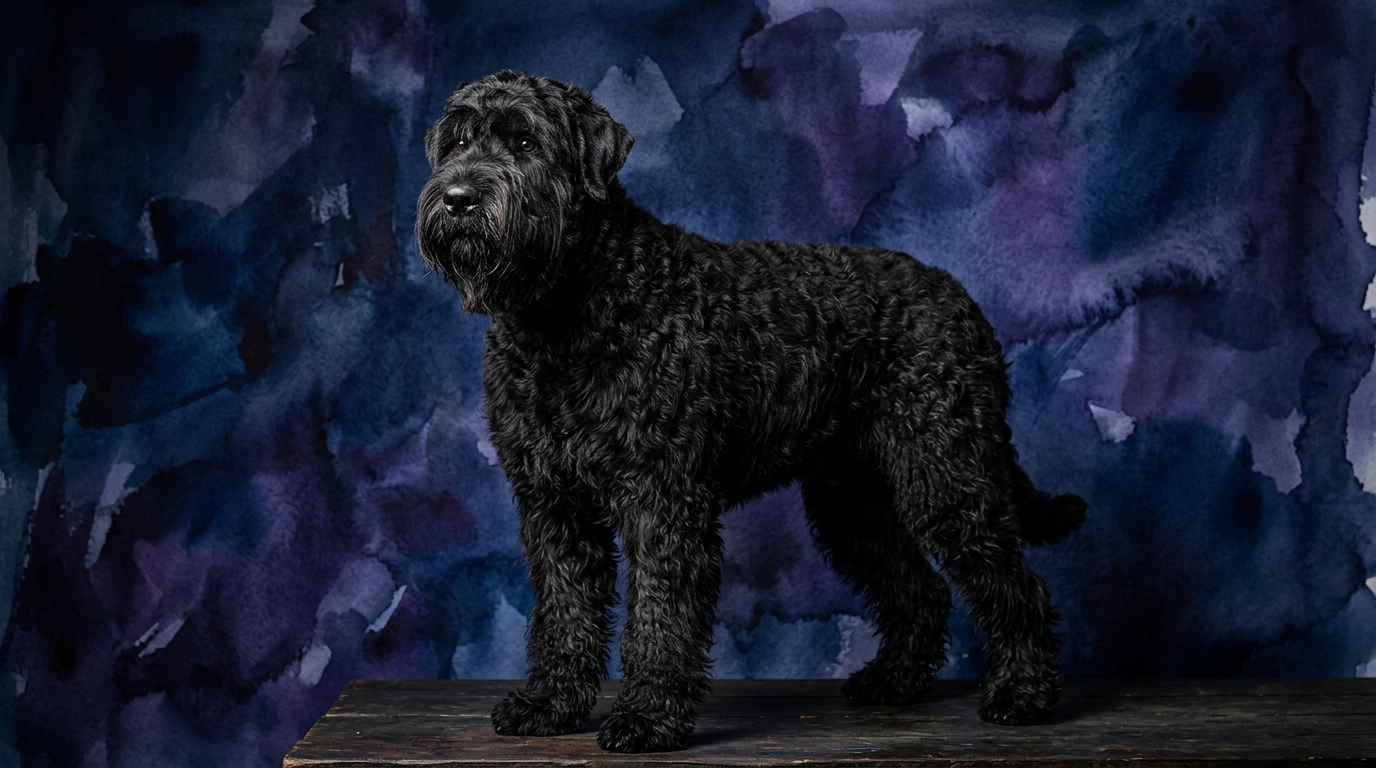
Side-by-Side IQ Profile: Black Russian Terrier
The Black Russian Terrier, a powerful working dog, demonstrates a Problem Solving score of 3/5, suggesting a moderate capacity for navigating complex situations or figuring out solutions to environmental challenges. This isn't about raw speed, but a methodical approach, often tied to their protective instincts and ability to assess potential threats.
Their Training Speed also sits at 3/5, indicating they grasp new commands and routines at a steady pace, capable of learning extensive repertoires when consistently engaged. This moderate speed means they benefit significantly from structured, positive reinforcement training methods that build on their desire to please.
Social Intelligence for the Black Russian Terrier is likewise 3/5, reflecting an ability to understand and respond to human emotions and social cues within their established family unit. They are adept at discerning friend from stranger, often displaying reserved caution towards outsiders while being deeply attuned to their inner circle.
An Instinctive Drive of 3/5 highlights their strong inherent predispositions, primarily rooted in their protective and guarding lineage. This drive manifests as a natural inclination to survey their environment, monitor their family, and react appropriately to perceived dangers, requiring careful channeling through training.
Their Memory score of 3/5 suggests a reliable capacity to retain learned behaviors, commands, and routines over time, making them dependable once a skill is mastered. This solid memory aids in reinforcing their protective duties and maintaining consistent household expectations.
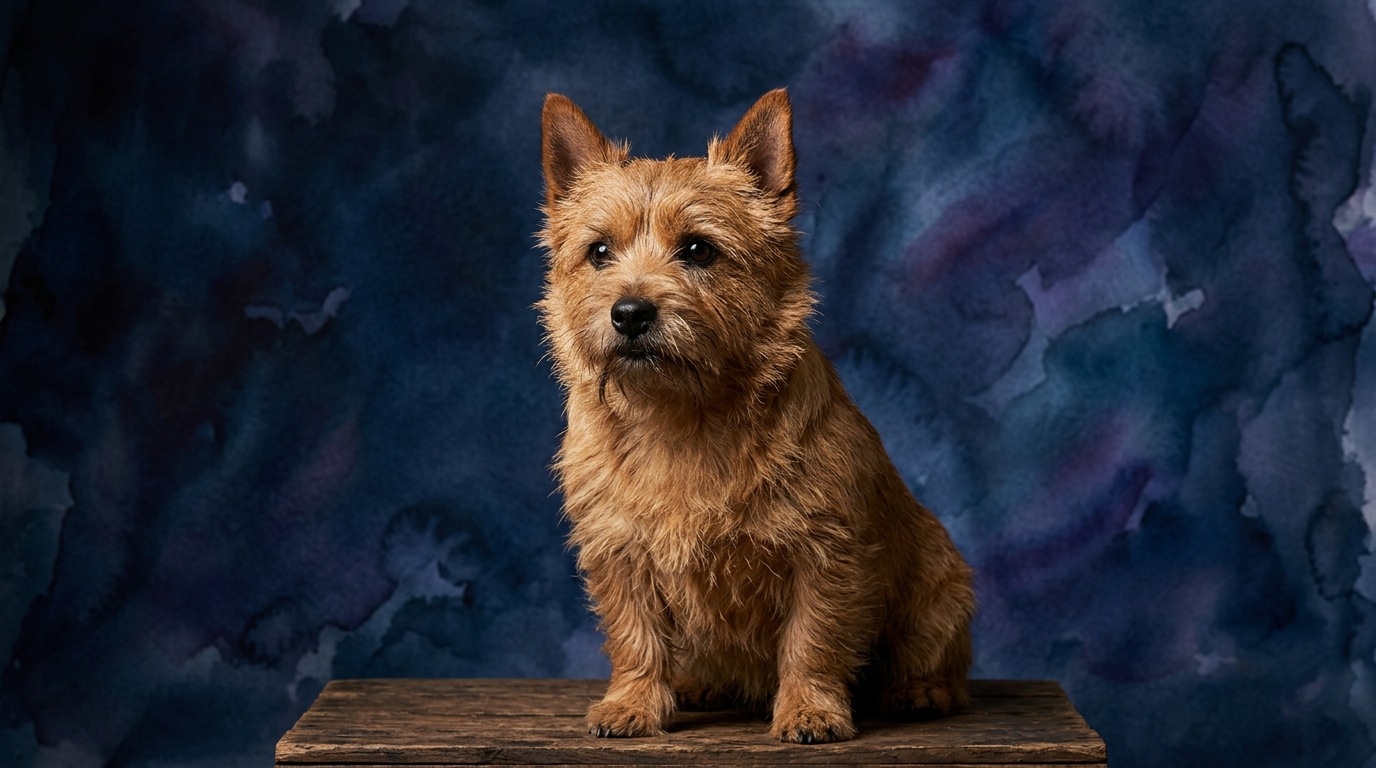
Side-by-Side IQ Profile: Norwich Terrier
The Norwich Terrier, a plucky member of the Terrier group, also scores 3/5 in Problem Solving, showcasing a quick-witted approach to figuring things out, particularly when it involves exploring, hunting, or accessing interesting spots. Their solutions often stem from curiosity and persistence, sometimes involving creative digging or maneuvering.
With a Training Speed of 3/5, Norwich Terriers are capable learners, picking up new tasks and tricks efficiently, especially when motivated by engaging rewards. While not the fastest, their eagerness to participate and energetic nature make training sessions lively and productive.
Their Social Intelligence, rated at 3/5, indicates a good ability to interact with both humans and other animals, often displaying a cheerful and adaptable demeanor. They typically read social situations well, making them charming companions who can adjust to various environments and social gatherings.
The Instinctive Drive for the Norwich Terrier is also 3/5, prominently featuring their strong prey drive and natural inclination to explore and hunt small vermin. This manifests as a keen interest in scents, digging, and chasing, which are deeply ingrained behaviors from their working heritage.
A Memory score of 3/5 means Norwich Terriers reliably remember commands, routines, and specific locations where interesting things (like treats or toys) might be found. This consistent recall supports both their training and their ability to navigate familiar territories with confidence.
Where Black Russian Terrier Wins Cognitively
While both breeds share identical scores across the board, the Black Russian Terrier's cognitive strengths often manifest in areas demanding sustained focus and a methodical approach to complex, multi-stage tasks. Their working dog heritage equips them to process information related to security and guardianship, allowing them to assess environments for potential threats and respond with calculated precision rather than impulsive reaction.
Their problem-solving, even at 3/5, often involves a deeper analytical layer when it comes to understanding hierarchical structures and performing tasks that require a sequence of actions, such as navigating an obstacle course designed for protection work or learning intricate routines. This breed often excels in scenarios where a calm, deliberate cognitive process is more beneficial than rapid, instinct-driven responses, making them particularly adept at tasks requiring consistent vigilance and a strong sense of duty.
Where Norwich Terrier Wins Cognitively
The Norwich Terrier, despite matching scores, typically shines in cognitive domains requiring quick adaptation, resourcefulness, and independent thought, characteristic of its terrier nature. Their problem-solving at 3/5 often involves innovative methods to overcome immediate physical obstacles or to satisfy their innate curiosity, such as figuring out how to reach a hidden toy or navigating a complex scent trail with agile mental shifts.
Their strength lies in their ability to make rapid decisions in unpredictable environments, often relying on their sharp senses and tenacious spirit to achieve their goals. This breed's cognitive edge is evident in situations demanding a blend of boldness and cleverness, where a smaller, more agile mind can quickly assess and exploit opportunities, making them particularly adept at independent exploration and tasks requiring a certain degree of self-reliance.
Which is Easier to Train and Why
Both breeds have a Training Speed of 3/5, meaning neither is inherently faster or slower at grasping new concepts. However, the *experience* of training can differ significantly due to their distinct behavioral predispositions. The Black Russian Terrier, originating as a working and protective breed, often possesses a strong desire to please its handler and thrives on having a job, which can make them highly receptive to consistent, structured training. Their inherent drive to work alongside their human partner can translate into a perception of greater ease in training, as they are often eager collaborators in learning complex commands and routines, especially when these tasks align with their protective instincts and desire for purpose.
Conversely, the Norwich Terrier, while equally capable of learning quickly, often brings a more independent and spirited terrier temperament to the training arena. Their strong instinctive drive for exploration and prey can make them more easily distracted by environmental stimuli, requiring a handler to maintain higher levels of engagement and creative motivation. While they learn commands efficiently, their independent streak means they may require more consistent proofing against distractions and a more playful, varied approach to keep them invested, potentially making the training process feel more challenging despite their comparable learning speed.
Which Suits Active Owners vs. Relaxed Owners
For active owners seeking a canine partner for structured activities and robust engagement, the Black Russian Terrier often presents an excellent match. Their working dog background means they thrive on purpose-driven activities, whether it's advanced obedience, protection sports, or extensive, challenging hikes that engage both their body and mind. They require consistent mental stimulation and physical exercise to channel their considerable energy and intellectual capacity, making them best suited for owners who are committed to providing a significant daily routine of training, exercise, and companionship.
The Norwich Terrier, while certainly energetic, might appeal to active owners who enjoy a different kind of engagement, perhaps more focused on exploratory walks, interactive games, and agility activities. Their terrier tenacity means they enjoy being involved in family adventures and are always up for a romp, but their exercise needs might be met with consistent shorter bursts of activity rather than prolonged, highly structured work. For owners who are active but prefer less formal, more spontaneous play and exploration, the Norwich offers a vibrant and adaptable companion, though they still require daily mental and physical outlets to prevent boredom.
The Verdict: When to Choose Each Breed
The Verdict
Choose the Black Russian Terrier if you are an experienced owner seeking a dedicated, protective companion for structured training and a purposeful lifestyle, valuing their methodical intelligence and strong working drive.
Opt for the Norwich Terrier if you desire a spirited, independent companion who thrives on playful interaction, quick problem-solving in dynamic environments, and a lively, adaptable approach to family life.
🧠 Find Your Pet's IQ Score
Our Pet IQ Lab assessment covers 25+ tests across 5 cognitive dimensions — personalized to your breed.
Take the Full IQ Test →Frequently Asked Questions
Do Black Russian Terriers require extensive grooming due to their coat?
Yes, Black Russian Terriers possess a dense, coarse double coat that necessitates regular and thorough grooming to prevent matting and maintain skin health. This includes frequent brushing, stripping or clipping, and occasional professional grooming sessions to keep their coat in optimal condition.
Are Norwich Terriers good with children and other pets?
Norwich Terriers generally have a cheerful and adaptable temperament, often making them good companions for respectful children and other pets when properly socialized from a young age. Their sturdy build and playful nature allow them to tolerate active play, but supervision is always recommended to ensure positive interactions.
What kind of mental stimulation do Black Russian Terriers need?
Black Russian Terriers thrive on consistent mental stimulation that challenges their problem-solving abilities and utilizes their working drive. This can include advanced obedience training, puzzle toys, scent work, and learning complex multi-step tasks, all of which help prevent boredom and destructive behaviors.