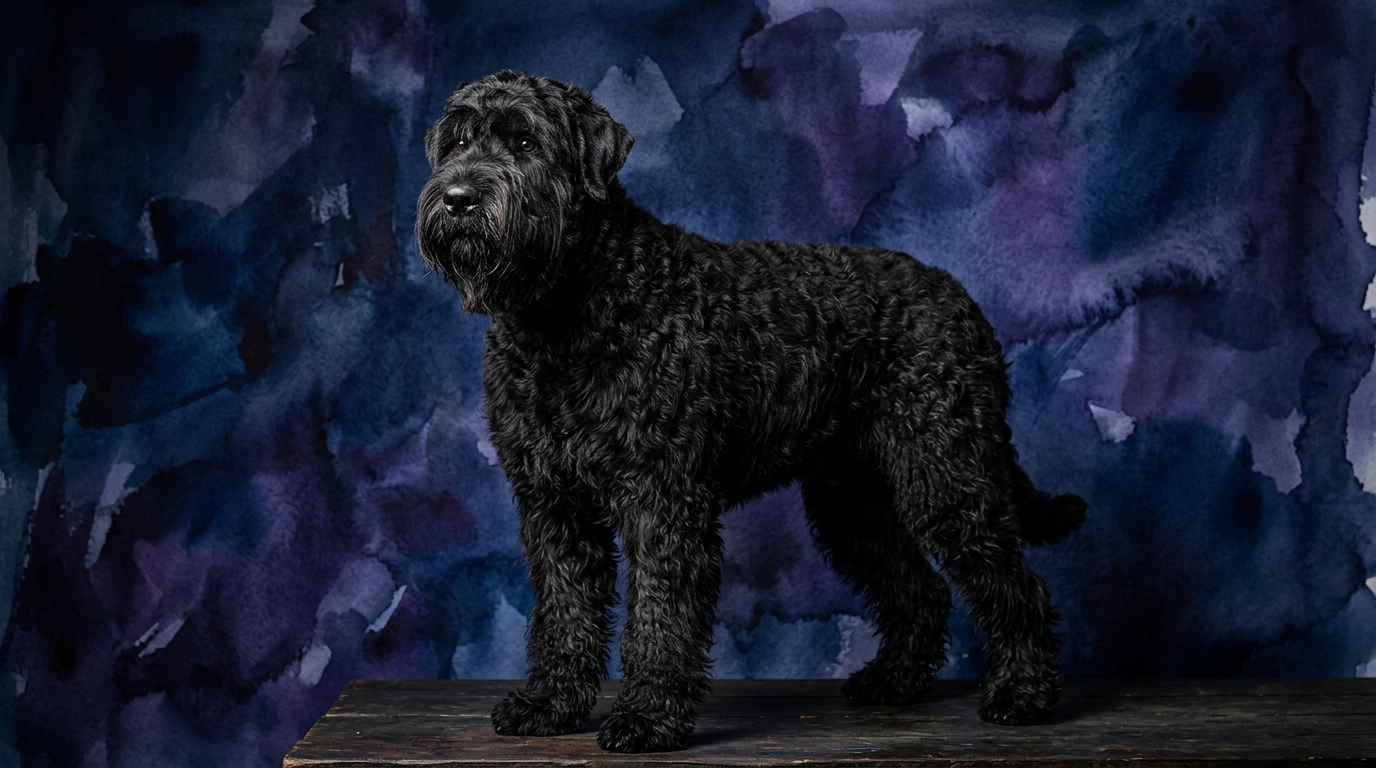

Side-by-Side IQ Profile: Black Russian Terrier
The Black Russian Terrier (BRT), a product of selective breeding for military service, exhibits a practical, situation-aware type of intelligence, even with a 3/5 problem-solving score. They excel at assessing complex environmental scenarios, such as discerning potential threats in varied terrains or navigating intricate paths during patrol. Their problem-solving isn't typically geared towards frivolous games but rather towards real-world, often dynamic, security-related challenges, requiring them to make sound judgments in protective roles. They can analyze a situation quickly and respond appropriately based on their training and instincts.
A 3/5 in training speed for the BRT indicates they are capable learners, though not necessarily instant responders. Their large size and strong will mean training requires consistent, firm, and fair handling. They can master complex command sequences and multi-stage tasks, but they thrive on purpose and challenge, rather than rote repetition. Motivation often stems from a desire to work alongside their handler and achieve a clear objective. Their social intelligence, also 3/5, is characterized by a discerning nature. They are deeply loyal and protective of their family unit, expertly understanding pack dynamics within their household. With strangers, their social acumen manifests as cautious observation and a keen ability to differentiate between welcomed guests and potential threats, making them excellent guardians who read social cues with a serious intent.
A 3/5 instinctive drive in the BRT highlights strong protective instincts and territoriality, a legacy of their creation as military working dogs. While their prey drive is present, it is often channeled and refined through training for specific tasks. This drive is a powerful motivator for their work, focusing on vigilance, deterrence, and a deep-seated desire to safeguard their human companions and property. The BRT's 3/5 memory score ensures they retain complex training, remember routines, and recall perceived threats or specific individuals with remarkable accuracy. This robust memory is crucial for their long-term effectiveness in protective roles, allowing them to build comprehensive mental maps of their environment and social interactions, making them reliable and consistent companions.
Side-by-Side IQ Profile: Russian Toy
For the Russian Toy, a delicate companion breed, a 3/5 in problem-solving often translates to ingenious ways of navigating household obstacles to reach a favorite sunbeam, figuring out how to get attention from their human, or even manipulating toys to their advantage. Their small stature means their 'problems' are often about comfort, access, and social interaction within a domestic setting, requiring cleverness rather than brute force. They are adept at finding solutions within their immediate environment, making them surprisingly resourceful for their size.
A 3/5 training speed for the Russian Toy suggests they are receptive to learning, particularly when motivation involves companionship, praise, or small treats. They can pick up house manners, tricks, and basic obedience commands with relative ease. Their smaller size and eagerness to please often make them quicker to respond to positive reinforcement, though they may lack the stamina or desire for extensive, repetitive formal obedience drills. Their social intelligence, also 3/5, is deeply attuned to human emotions and subtle cues. They are excellent communicators within their family unit, often anticipating their owner's moods and reacting accordingly. Their social acumen allows them to form strong, intimate bonds, and they often excel at charming their way into desired situations, using their expressive nature to convey needs and desires.
A 3/5 instinctive drive in the Russian Toy is primarily focused on companionship and alert barking. While they possess a natural curiosity and some prey drive towards small scurrying things, their strongest drive is to be close to their human. This drive fuels their desire for interaction and makes them excellent watchdogs, quick to alert their owners to anything unusual, even if they aren't built for confrontation. The Russian Toy's 3/5 memory score ensures they consistently remember routines, people, and the locations of their cherished toys. They quickly form positive and negative associations with experiences, learning rapidly from past interactions. This memory contributes to their predictability within the home environment and strengthens their bond with family members through shared histories.
Where the Black Russian Terrier Wins Cognitively
While both breeds share identical 3/5 scores across the board, the Black Russian Terrier's cognitive strengths manifest in areas demanding robust physical and mental fortitude. Their problem-solving, for instance, is inherently tied to larger-scale environmental assessment; they excel at understanding complex spatial relationships in a yard or park, identifying the most efficient route for patrol, or discerning the safest approach to a perceived threat. This isn't abstract puzzle-solving but practical application in real-world scenarios. Their social intelligence, while rated the same, operates with a discerning authority; they are adept at reading complex social dynamics, not just within a family but also in judging the intentions of outsiders, making them unparalleled in their role as guardians. Their memory shines in recalling intricate training sequences and long-term associations with individuals or specific situations that have required their protective instincts. The sheer physical presence and working heritage of the BRT mean that their 3/5 cognitive abilities are often leveraged for tasks requiring sustained focus, physical endurance, and a serious, purposeful application of intellect.
Where the Russian Toy Wins Cognitively
Conversely, the Russian Toy's cognitive prowess, though numerically identical, excels in the nuances of domestic life and intimate companionship. Their problem-solving is often a marvel of small-scale ingenuity, such as figuring out how to open a specific cupboard for treats or navigating a cluttered room to reach a preferred lap. This demonstrates a keen adaptability to their immediate human-centric environment. Their social intelligence, while also a 3/5, is exquisitely tuned to human emotional states; they are masters at reading subtle changes in tone, body language, and mood, often responding with comforting gestures or playful antics tailored to their owner's needs. This nuanced understanding fosters incredibly strong, empathetic bonds. Their memory is particularly sharp for routines, preferred human interactions, and the location of comfort items, contributing to their consistent and predictable presence within the home. The Russian Toy's cognitive strengths lie in their ability to seamlessly integrate into human family life, providing intuitive companionship and demonstrating a cleverness that enriches daily interactions without demanding grand, complex tasks.
Which Is Easier to Train and Why
Determining which breed is 'easier' to train is less about raw cognitive capacity and more about the practical realities of their size, temperament, and inherent drives. The Russian Toy, with its smaller stature and generally eager-to-please disposition, often presents as more straightforward for basic house training and companion manners. Their motivation often stems from a strong desire for human attention and treats, and their responses are typically quick and light. While they can be prone to 'small dog syndrome' if owners neglect proper socialization and boundaries, their management is inherently simpler due to their size. Correcting an undesirable behavior in a Russian Toy is physically less demanding and often requires less force or intimidation.
The Black Russian Terrier, on the other hand, while capable of mastering advanced commands, demands a highly experienced, consistent, and confident handler. Their significant size, powerful build, and strong instinctive drive mean that training errors or inconsistencies can lead to more serious behavioral challenges. They require extensive socialization from a young age and a training regimen that provides mental stimulation alongside physical exercise, focusing on channeling their protective instincts constructively. Their motivation is often tied to a sense of purpose and partnership, rather than just simple rewards, making their training a more involved and committed process that demands unwavering commitment and understanding from their human.
Which Suits Active Owners vs. Relaxed Owners
The suitability of these breeds for active versus relaxed owners starkly highlights their fundamental differences, despite their shared IQ scores. The Black Russian Terrier is unequivocally a breed for active, highly committed owners. Their working heritage dictates a profound need for consistent physical exercise, mental stimulation, and a clear job or purpose. Owners must be prepared for daily vigorous walks, training sessions, and opportunities for them to engage their guarding instincts appropriately, perhaps through scent work or advanced obedience. A relaxed owner will quickly find themselves overwhelmed by a BRT's unmet needs, potentially leading to destructive behaviors or an unmanageable temperament.
Conversely, the Russian Toy offers much more flexibility for both moderately active and more relaxed owners. While they enjoy short walks and playtime, their exercise needs are easily met within a typical home environment or a small yard. They are equally content to curl up on a lap for hours, making them an excellent choice for individuals or families seeking a devoted companion who doesn't demand extensive outdoor adventures. Their adaptability allows them to thrive in various living situations, from apartments to larger homes, as long as they receive consistent human interaction and affection and have their basic needs met.
The Verdict
Choose the Black Russian Terrier if you are an experienced, active owner seeking a powerful, discerning guardian and partner for complex tasks, prepared to commit to extensive training and socialization. This breed thrives with a clear purpose and a handler who understands their working dog heritage.
Opt for the Russian Toy if you desire an affectionate, clever, and adaptable companion who excels in close human interaction, fitting seamlessly into a domestic lifestyle with moderate activity needs. They are perfect for owners who appreciate subtle intelligence and devoted companionship in a small package.
🧠 Find Your Pet's IQ Score
Our Pet IQ Lab assessment covers 25+ tests across 5 cognitive dimensions — personalized to your breed.
Take the Full IQ Test →Frequently Asked Questions
Do identical IQ scores mean both breeds perform the same tasks equally well?
No, identical scores indicate a similar cognitive capacity, but the *application* of that intelligence differs significantly based on breed purpose and physical attributes. A Black Russian Terrier applies problem-solving to guarding, while a Russian Toy uses it for domestic navigation and social interaction.
How does a breed's 'instinctive drive' affect its daily life?
Instinctive drive shapes a breed's natural tendencies and motivations. For a Black Russian Terrier, it means a strong protective nature, influencing their vigilance. For a Russian Toy, it translates to a deep need for companionship and alert barking, driving their desire for close human interaction.
Can a Russian Toy be trained for protection, given its 3/5 social intelligence and drive?
While a Russian Toy has social intelligence and drive, their small size and primary role as companions mean they are not suited for protection work. Their instincts manifest as alert barking and loyalty, not physical deterrence, unlike the Black Russian Terrier.