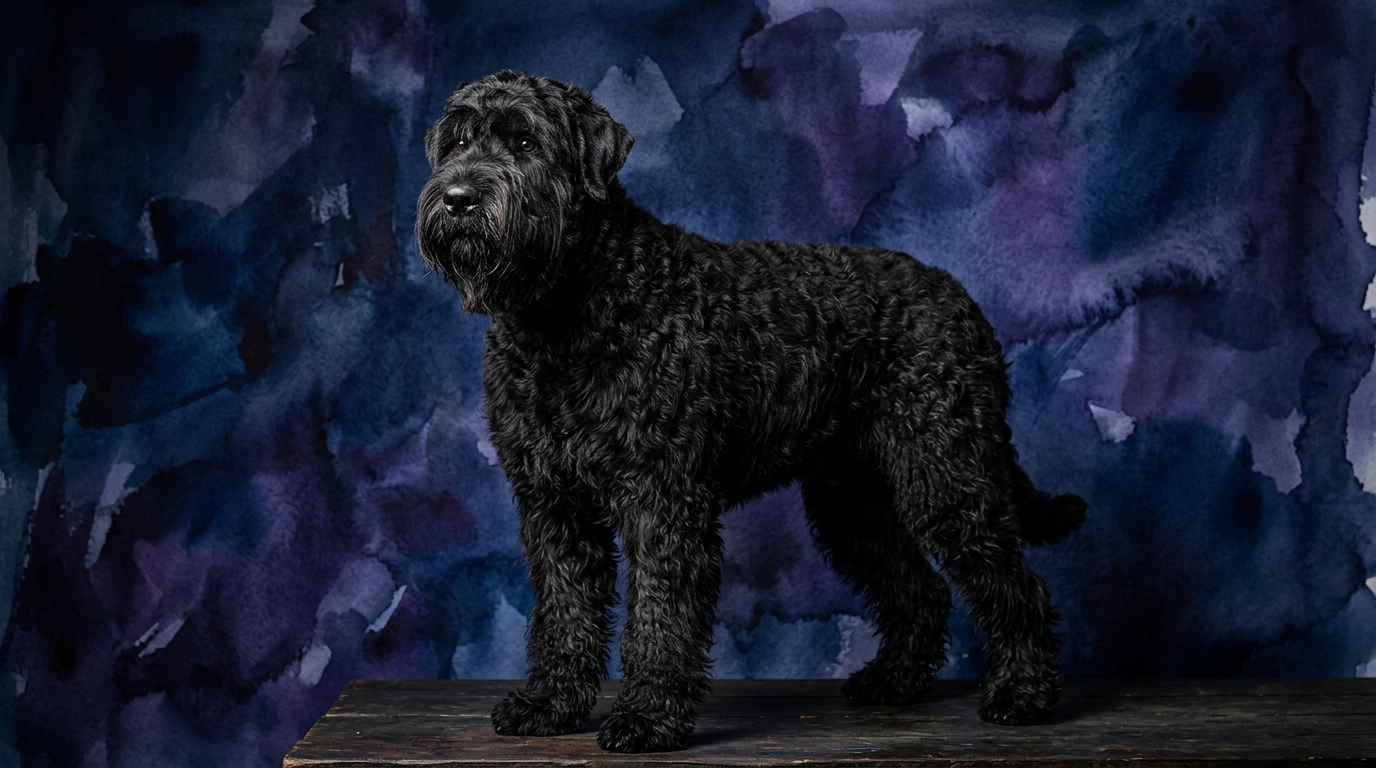
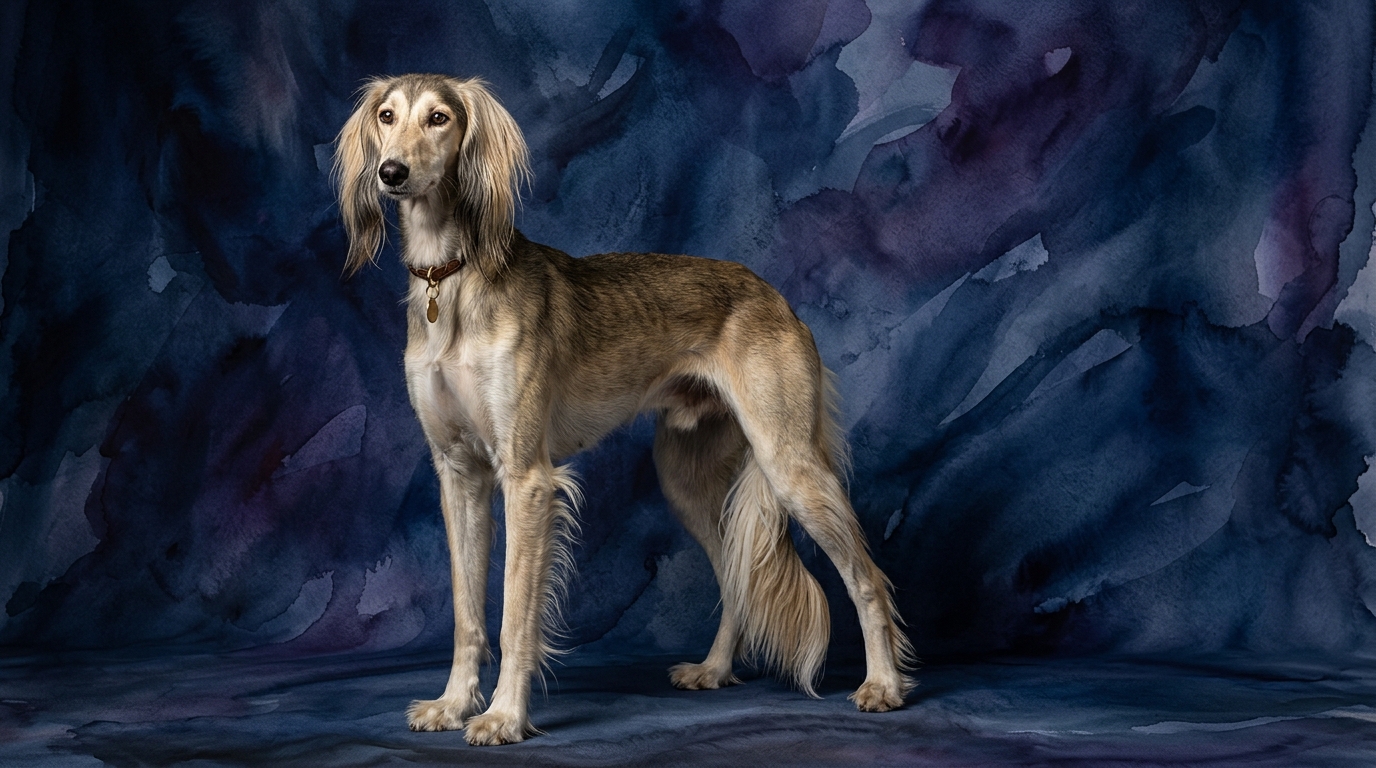
Side-by-Side IQ Profile: Black Russian Terrier vs. Saluki
**Problem Solving (3/5)**: A 3/5 suggests the Black Russian Terrier capably navigates novel situations with practical, often physical, solutions. Their problem-solving typically involves understanding tasks and finding direct paths to completion within a structured environment, applying learned strategies to similar challenges.
**Problem Solving (3/5)**: For the Saluki, 3/5 indicates capable but not overly complex problem-solving, often manifesting as efficient movement, spatial awareness, and exploiting immediate environmental opportunities. Their solutions are rapid adaptations to cues, less about intricate planning and more about quick, instinctive responses.
**Training Speed (3/5)**: A 3/5 in training speed means the Black Russian Terrier learns at a moderate pace, receptive to instruction with consistency and clear communication. They are generally agreeable students, progressing steadily with positive reinforcement and building upon successes in structured, reward-based training.
**Training Speed (3/5)**: The Saluki's 3/5 reflects a moderate learning pace, but their independent nature requires a tailored approach. They grasp concepts but need patience, creativity, and high-value rewards, as their motivation is often self-driven rather than handler-focused, especially against their strong prey drive.
**Social Intelligence (3/5)**: A 3/5 suggests nuanced social understanding for the Black Russian Terrier, particularly within their family. They are attuned to their caregivers' moods, responding appropriately, but are reserved or discerning with strangers, accurately assessing intentions. Their social circle is typically close-knit and curated.
**Social Intelligence (3/5)**: The Saluki's 3/5 indicates a sensitive understanding of humans, expressed through subtle body language and a preference for quiet interaction. They read emotions with empathy, often forming strong bonds with a few individuals and reacting to environmental changes with quiet withdrawal or gentle reassurance.
**Instinctive Drive (3/5)**: The Black Russian Terrier's 3/5 highlights a moderate, purposeful drive rooted in protection and guarding. This manifests as consistent vigilance, a readiness to respond to perceived threats to their territory or family, and a strong desire for companionship within a working partnership.
**Instinctive Drive (3/5)**: For the Saluki, 3/5 in instinctive drive is predominantly their powerful sighthound impulse: chasing and tracking by sight. This core motivation leads them to pursue anything that moves quickly, coupled with a strong need for physical exertion in open spaces.
**Memory (3/5)**: A 3/5 means the Black Russian Terrier has good recall for commands, routines, and past experiences. This solid memory contributes to their reliability and consistency, allowing them to build complex skill sets and remember both positive and negative encounters.
**Memory (3/5)**: The Saluki's 3/5 indicates good retention of information, especially regarding locations, routines, and specific individuals. They remember territories and routes well, a vital trait for their heritage, and recall experiences that influence their preferences and interactions.
Where Black Russian Terrier Wins Cognitively
While both breeds share identical IQ scores, the Black Russian Terrier often demonstrates a cognitive edge in areas related to structured work and protective duties. Their ability to integrate complex commands into a coherent sequence, coupled with their inherent vigilance, allows them to excel in roles requiring consistent application of learned behaviors within a defined framework. For instance, their problem-solving, while rated 3/5, is often geared towards practical, task-oriented solutions, such as understanding the nuances of a security patrol route or discerning the intent of an approaching stranger. This cognitive inclination towards purposeful engagement and a desire to fulfill a 'job' means they are often more adept at understanding and adhering to human-imposed rules and expectations, showcasing a distinct advantage in environments requiring disciplined adherence and focused attention to detail over extended periods. Their memory (3/5) strongly supports this, allowing them to reliably recall intricate routines and responsibilities, making them incredibly dependable in their designated roles.
Where Saluki Wins Cognitively
Conversely, the Saluki often shines cognitively in domains demanding independent thought, rapid sensory processing, and swift, agile responses, particularly when their intrinsic drives are engaged. Their 3/5 problem-solving manifests as quick, situation-specific adjustments, such as navigating complex terrain at high speeds or finding the most efficient path to intercept a moving target. This isn't about methodical planning but rather instantaneous assessment and execution. Their social intelligence, also 3/5, is marked by a subtle sensitivity to environmental shifts and human emotional states, allowing them to adapt gracefully to nuanced social dynamics without needing explicit direction. The Saluki's memory (3/5) is particularly strong for spatial layouts and experiential learning, enabling them to recall specific locations and the most effective strategies for navigating them, a critical asset for a breed whose historical role relied on independent hunting and traversing vast distances. They possess an innate ability to process visual information at speed, making them exceptionally astute observers of their surroundings.
Which is Easier to Train and Why
When comparing training ease, the Black Russian Terrier generally presents a more straightforward path for the average owner. Their 3/5 training speed is complemented by a strong desire to collaborate and a natural inclination towards forming a close working partnership with their handler. They respond well to clear, consistent instruction and positive reinforcement, often eager to please and understand what is expected of them. Their social intelligence fosters a connection where they actively seek guidance. In contrast, while the Saluki also scores 3/5 in training speed, their independent sighthound nature means 'easier' is relative. They learn quickly when motivated, but their motivation often stems from self-interest or the pursuit of their instinctive drives rather than a strong desire for handler approval. Training a Saluki requires more creativity, patience, and the ability to make tasks engaging and rewarding from their perspective, often competing with their powerful prey drive. Therefore, while both learn, the BRT typically offers a more compliant and predictable training experience due to their inherent willingness to engage in cooperative tasks.
Which Suits Active Owners vs. Relaxed Owners
The Black Russian Terrier, with its origins as a working breed, generally thrives with active owners who can provide structured activities and engage their cognitive abilities. Their instinctive drive (3/5) leans towards purpose-driven tasks and requires outlets for physical and mental exertion, such as obedience training, protection work, or long, exploratory walks. They appreciate a consistent routine and a role within the family structure. A relaxed owner might find the BRT's need for engagement challenging, potentially leading to boredom or destructive behaviors if their moderate drives are not adequately met. The Saluki, on the other hand, can suit both active and surprisingly relaxed owners, though in different ways. Active owners will appreciate their need for intense bursts of speed and the opportunity to gallop in secure, open spaces, fulfilling their 3/5 instinctive drive. However, once their physical needs are met, Salukis are often content to be quiet, elegant companions indoors, often seeking out soft spots for lounging. A relaxed owner who understands their need for short, intense exercise sessions followed by ample rest might find a Saluki a suitable, low-key indoor companion. They are not typically demanding of constant interaction or intricate mental games once their physical requirements are satisfied.
The Verdict
Choose the Black Russian Terrier if you are an experienced owner seeking a dedicated working partner who thrives on structure, consistent training, and takes their protective role seriously, valuing their steadfast loyalty and dependability.
Opt for a Saluki if you appreciate an independent, graceful companion who enjoys intense bursts of speed balanced with serene indoor lounging, and you are prepared to engage their unique sighthound instincts with patience and understanding.
🧠 Find Your Pet's IQ Score
Our Pet IQ Lab assessment covers 25+ tests across 5 cognitive dimensions — personalized to your breed.
Take the Full IQ Test →Frequently Asked Questions
Do Black Russian Terriers and Salukis learn at the same pace?
While both breeds score 3/5 in training speed, their learning styles differ. Black Russian Terriers typically learn through cooperation and a desire to please, responding well to consistent, structured training. Salukis learn quickly when motivated, but their independence means training often requires more creativity and high-value rewards to capture their attention and overcome their inherent sighthound drives.
Which breed is more social with strangers?
Both breeds score 3/5 in social intelligence, indicating discerning social preferences. Black Russian Terriers are generally reserved and wary of strangers, forming deep bonds with their family but being selective outside that circle. Salukis are often aloof and sensitive, preferring quiet interactions with familiar individuals and can be quite reserved with unfamiliar people or in new environments.
How do their problem-solving skills differ despite identical scores?
Despite both scoring 3/5, their problem-solving approaches vary. Black Russian Terriers tend towards practical, task-oriented solutions, often physical, to achieve a goal within a structured context. Salukis, conversely, exhibit problem-solving through rapid assessment, spatial awareness, and exploiting opportunities, typically driven by their instincts for speed and pursuit, rather than methodical planning.