Side-by-Side IQ Profile: Unpacking Canine Cognition
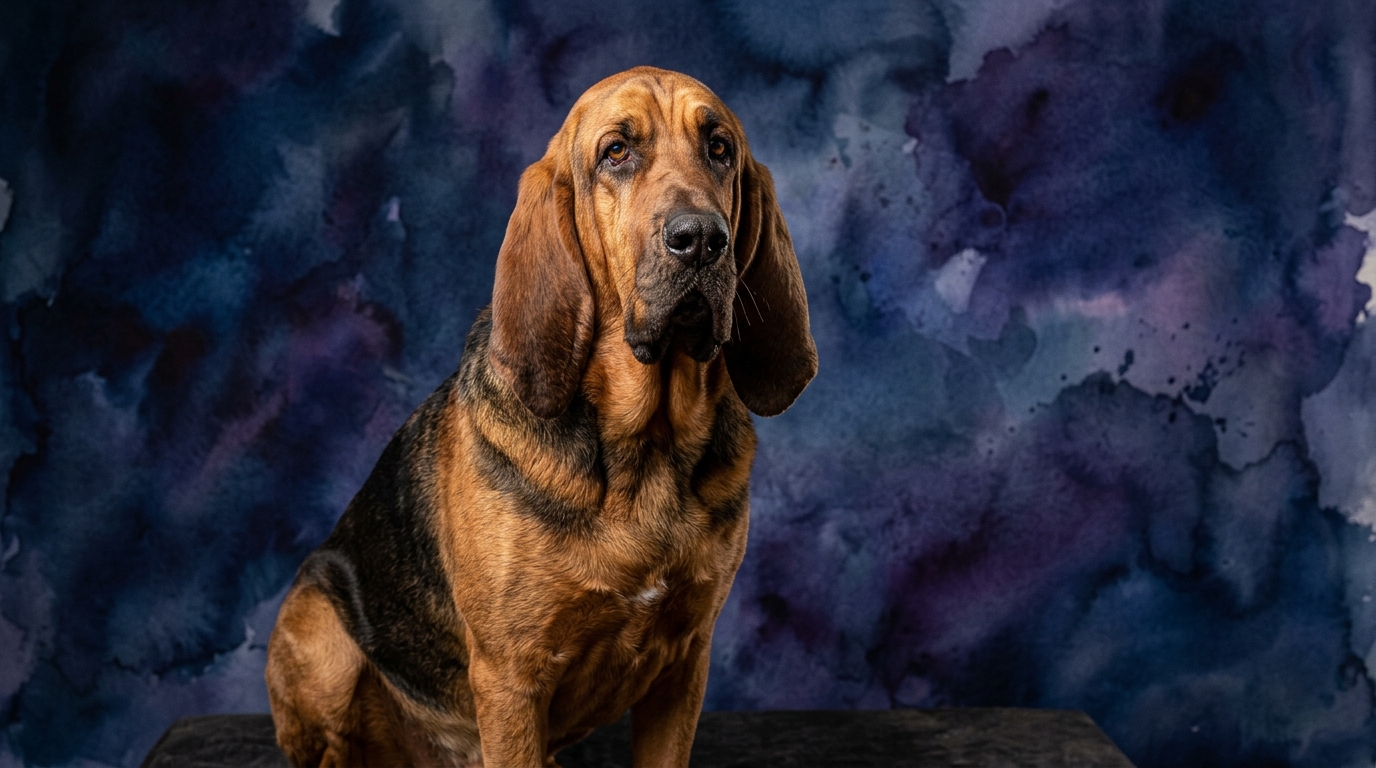
The Cosmic Pet Pet IQ Lab employs five key dimensions to evaluate canine intelligence, offering a nuanced view beyond simplistic 'smartness' rankings. For the Bloodhound, a breed celebrated for its olfactory prowess, we observe a Problem Solving score of 5/5, indicating exceptional ability to navigate complex scent trails and resolve tracking puzzles. Their Training Speed, however, registers at a challenging 1/5, suggesting a deep-seated independence and focus on their primary drive that can make conventional obedience slow to instill. Social Intelligence is rated 2/5, reflecting a dog often more absorbed in its sensory world than human social cues, while their Instinctive Drive is a perfect 5/5, underscoring their relentless, single-minded dedication to scent work. Finally, their Memory at 5/5 highlights an extraordinary capacity to recall scent patterns and locations over extended periods.
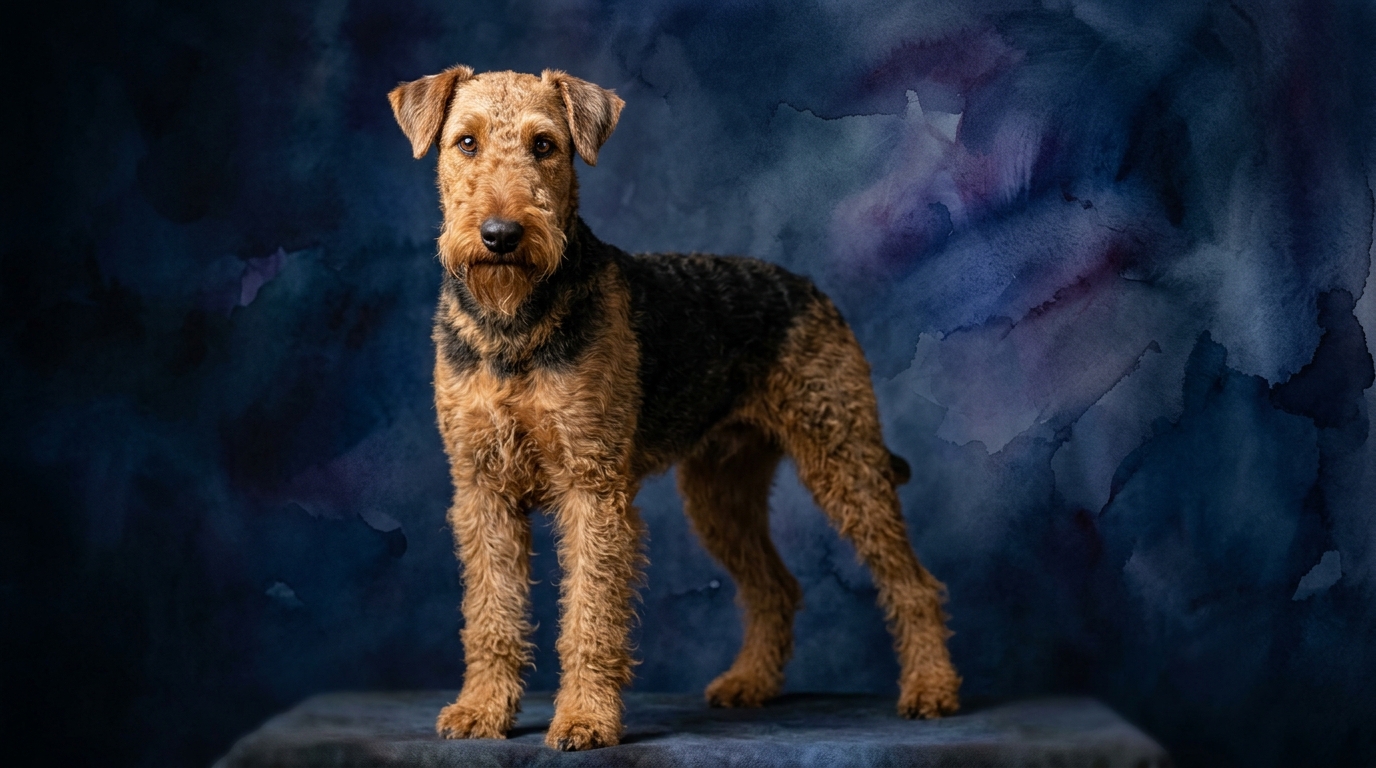
In contrast, the Airedale Terrier presents a more balanced, multi-faceted cognitive profile. Their Problem Solving is rated 4/5, demonstrating a robust capacity for situational awareness and figuring out novel challenges, though perhaps not with the singular, specialized focus of a Bloodhound. Training Speed for the Airedale is a strong 4/5, indicating a willingness and aptitude for learning commands and routines efficiently. Social Intelligence scores 3/5, positioning them as generally more attuned to human interaction and social dynamics than their scent hound counterpart. Their Instinctive Drive, at 3/5, is present and can manifest as a strong prey drive or guarding instinct, but it's more manageable and less overwhelming than the Bloodhound's tracking obsession. Airedale Memory stands at 4/5, showing a solid ability to retain learned behaviors and environmental information.
Where the Bloodhound Excels Cognitively
The Bloodhound's cognitive superiority lies almost entirely within the realm of olfaction and sustained focus. Their 5/5 Problem Solving score isn't about solving abstract puzzles, but rather about the intricate, multi-layered cognitive process required to discriminate, follow, and interpret scent trails. This involves complex pattern recognition, memory recall of specific odors, and an unwavering ability to filter out environmental distractions while locked onto a target scent. This specialized problem-solving is unparalleled, making them the gold standard for tracking and search-and-rescue.
Furthermore, their 5/5 Memory score is intrinsically linked to their scenting capabilities. A Bloodhound can retain the 'signature' of a scent for days, weeks, or even months, and accurately recall the nuances of a trail, differentiating it from countless other environmental odors. This memory isn't just about remembering commands; it's about an internal scent-database that allows them to perform feats of detection that other breeds simply cannot replicate, demonstrating a unique form of cognitive mastery.
Where the Airedale Terrier Shows Cognitive Strengths
The Airedale Terrier's cognitive strengths are found in their adaptability and balanced application of intelligence across various domains. Their 4/5 Problem Solving score reflects a practical, versatile approach to challenges, whether it's figuring out how to open a gate or understanding the steps in a complex agility course. This isn't a specialized, singular focus, but rather a broader capacity to assess situations and devise solutions in varied contexts, making them capable partners in many activities.
The Airedale's 4/5 Training Speed and 3/5 Social Intelligence work in tandem to create a dog that is generally more receptive to human direction and eager to engage in cooperative tasks. They process new commands and routines relatively quickly, and their moderate social intelligence means they are often more inclined to pay attention to their handler's cues and intentions. This makes them more amenable to diverse training regimens, from obedience to dog sports, and allows for a quicker integration into human family structures compared to the more independent Bloodhound.
Training Dynamics: Bloodhound vs. Airedale Terrier
When it comes to trainability, the differences between these two breeds are stark and rooted in their core cognitive profiles. The Bloodhound's 1/5 Training Speed and overwhelming 5/5 Instinctive Drive mean that traditional obedience training can be a protracted and often frustrating endeavor. Their focus is almost exclusively on scent; once a Bloodhound's nose is to the ground, disengaging them requires immense patience, creativity, and a deep understanding of their drive. They aren't being disobedient out of malice, but rather because their brain is wired to prioritize olfactory information above all else. Training a Bloodhound often involves channeling their scent drive rather than suppressing it, requiring specialized approaches like scent work games to build engagement.
In contrast, the Airedale Terrier's 4/5 Training Speed and more moderate 3/5 Instinctive Drive make them significantly more responsive to conventional training methods. They grasp new concepts relatively quickly and are generally more motivated by human praise, treats, or toys that aren't solely scent-based. While they possess a terrier's characteristic independent streak and can be strong-willed, their social intelligence and quicker learning mean they are more inclined to form a cooperative working relationship. Owners typically find Airedales more engaged in general obedience classes and capable of excelling in various dog sports that require a broader range of learned behaviors.
Matching Breeds to Lifestyles: Active vs. Relaxed Owners
The Bloodhound is unequivocally suited for active owners, but with a very specific type of activity in mind. Their profound instinctive drive and exceptional memory for scent demand an outlet that channels these capabilities. This means owners must be prepared for extensive, consistent scent work, whether it's formal tracking, search and rescue, or engaging scent games in a secure outdoor environment. A 'relaxed' owner who cannot provide this specialized mental and physical stimulation will likely find a Bloodhound challenging to manage, as their unfulfilled drive can lead to destructive behaviors or relentless vocalization. They require an owner who understands and respects their singular purpose, providing ample opportunities for their nose to lead.
The Airedale Terrier, while also requiring an active owner, offers more versatility in the type of activity. Their balanced cognitive profile makes them excellent companions for hiking, jogging, agility, flyball, or even just long, engaging walks. Their moderate instinctive drive means they can enjoy varied physical and mental challenges without the singular obsession of the Bloodhound. A 'relaxed' owner might struggle with an Airedale as well, as their energy and problem-solving need engagement, but an active owner who enjoys diverse outdoor pursuits and wants a companion for a range of activities will find the Airedale a fulfilling partner. They thrive on interaction and varied stimulation, making them suitable for owners who enjoy an all-around active lifestyle rather than a highly specialized one.
The Verdict
Choose a Bloodhound if you are a dedicated, patient individual passionate about scent work, prepared to channel their unparalleled tracking drive into a specific, demanding purpose. They are for those who admire specialized genius and are ready for a long-term commitment to their unique cognitive needs.
Opt for an Airedale Terrier if you seek a versatile, quick-learning companion for a broad range of activities and enjoy a dog that engages readily in diverse training and social settings. They suit active families or individuals who appreciate a balanced intellect and a cooperative, spirited partner.
🧠 Find Your Pet's IQ Score
Our Pet IQ Lab assessment covers 25+ tests across 5 cognitive dimensions — personalized to your breed.
Take the Full IQ Test →Frequently Asked Questions
Are Bloodhounds truly difficult to train for basic obedience?
Yes, Bloodhounds are often considered challenging for basic obedience due to their extremely low training speed and overwhelming instinctive drive towards scent. Their cognitive focus is so profoundly on olfactory information that disengaging them from a scent trail for a command requires immense patience and specialized training techniques.
Can Airedale Terriers excel in scent work like Bloodhounds?
While Airedale Terriers have a respectable instinctive drive and problem-solving ability, they cannot match the Bloodhound's specialized olfactory capabilities. Airedales can enjoy and be proficient in some forms of scent work or tracking, but their nose is not the primary cognitive tool or drive to the same extent as a Bloodhound's.
Which breed is generally better suited for families with children?
The Airedale Terrier is generally better suited for families with children due to their higher social intelligence and more balanced instinctive drive. They tend to be more adaptable to family dynamics and are quicker to learn appropriate social behaviors, whereas a Bloodhound's single-minded focus on scent and lower social intelligence might make them less naturally attuned to the unpredictable nature of children.