Side-by-Side IQ Profile: Bloodhound vs. American Staffordshire Terrier
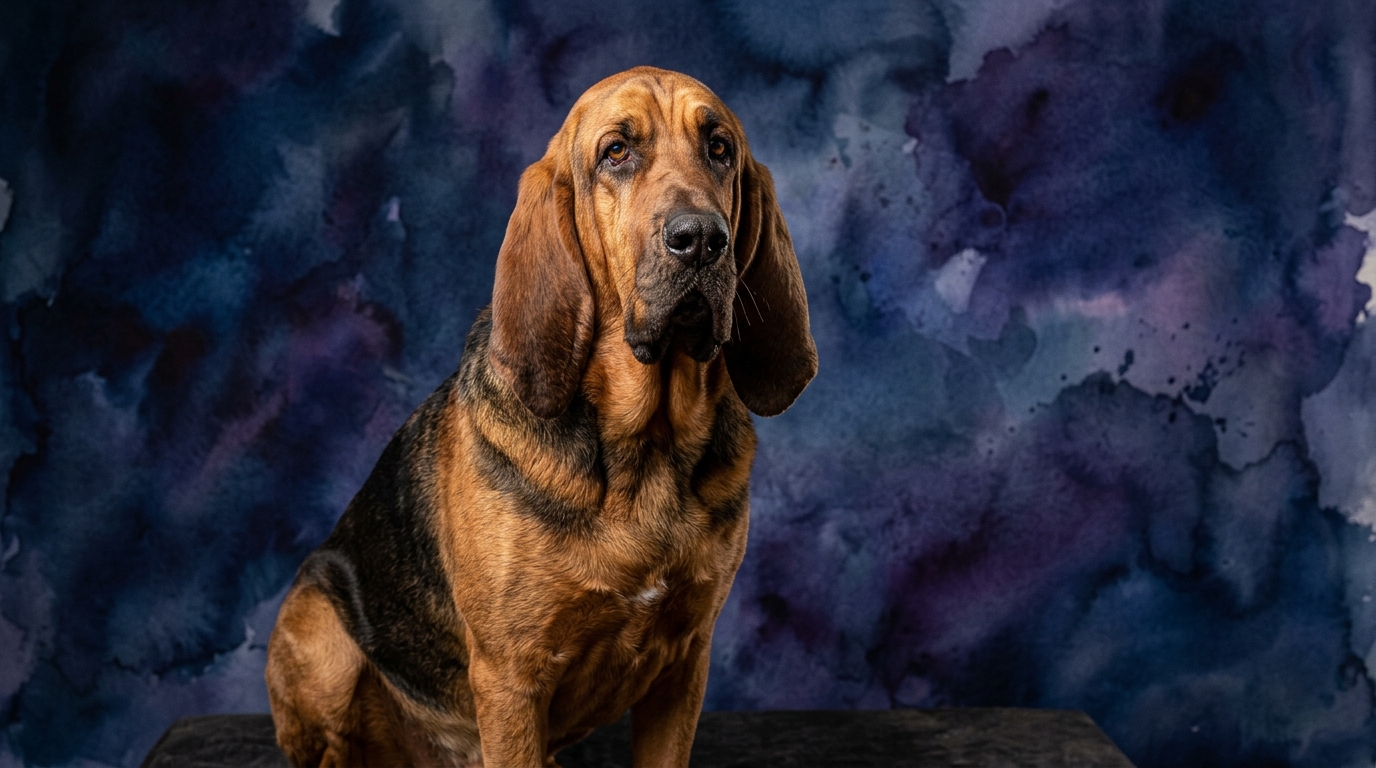
The Cosmic Pet Pet IQ Lab employs a five-dimensional framework to assess canine intelligence, moving beyond simple obedience to capture a breed's true cognitive essence. For the Bloodhound, a breed ranked #74 by Coren, its profile paints a picture of specialized genius: Problem Solving 5/5, Training Speed 1/5, Social Intelligence 2/5, Instinctive Drive 5/5, and Memory 5/5. This suggests a dog with exceptional abilities in specific domains, particularly those related to its ancestral purpose, yet with distinct challenges in others.
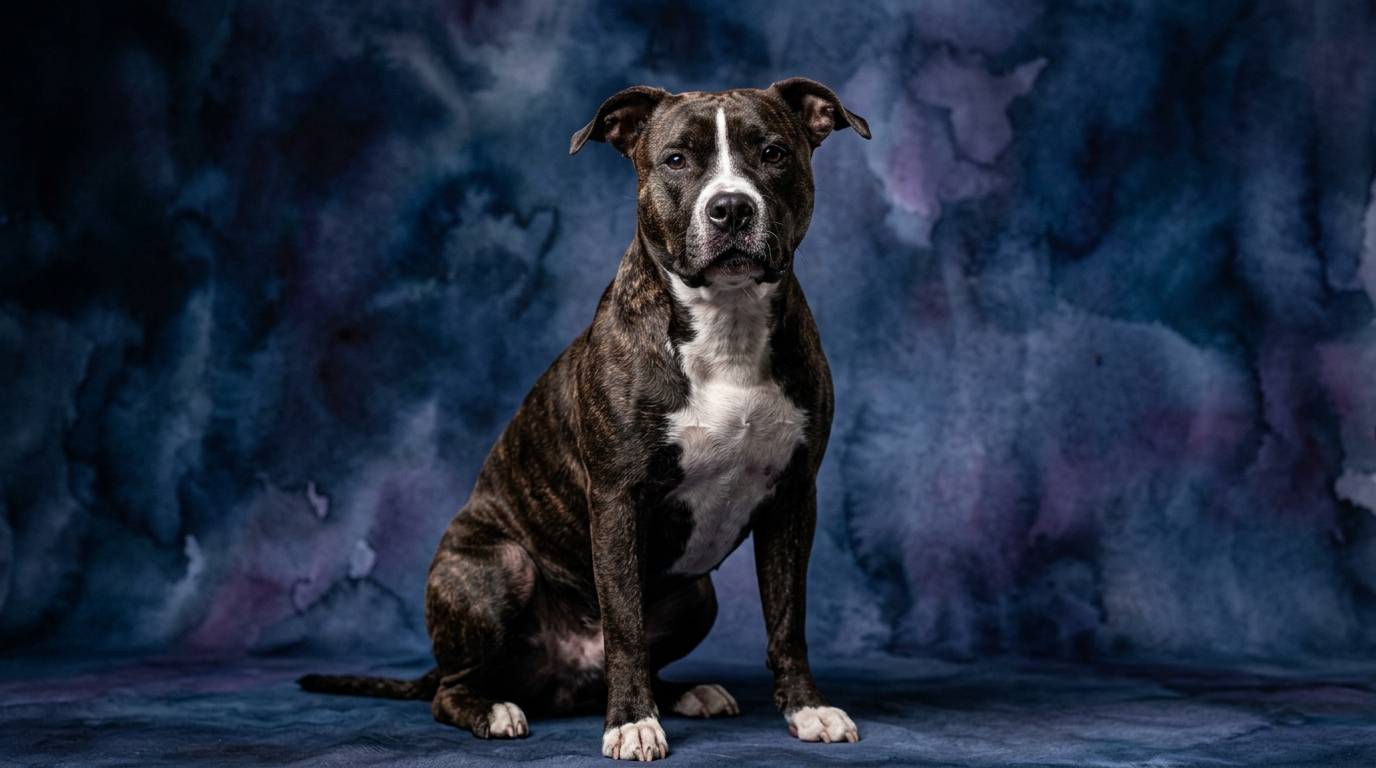
In stark contrast, the American Staffordshire Terrier, with a higher Coren rank of #48, presents a more balanced, versatile cognitive profile: Problem Solving 3/5, Training Speed 3/5, Social Intelligence 3/5, Instinctive Drive 3/5, and Memory 4/5. This spread of scores indicates a breed that is generally capable across various cognitive tasks, without the extreme highs or lows seen in the Bloodhound's specialized intellect. Understanding these differences is key to appreciating each breed's unique capabilities.
The Bloodhound's Problem Solving score of 5/5 is a direct reflection of its unparalleled ability to follow complex scent trails over vast distances and varied terrain. This isn't just sniffing; it involves intricate deduction, filtering out irrelevant smells, and maintaining focus on a specific target. Its 5/5 Instinctive Drive fuels this pursuit, an almost unshakeable compulsion to complete a scent task, often overriding other stimuli. Complementing this is a 5/5 Memory, allowing them to recall specific scent patterns or even the nuances of a particular trail, making them formidable tracking dogs.
However, the Bloodhound's specialized genius comes with trade-offs. Its 1/5 Training Speed highlights an independent nature; once on a scent, human directives often become secondary. Similarly, a 2/5 Social Intelligence suggests they are not primarily driven by a desire to please or interpret subtle human social cues, preferring to engage with their environment through their nose. This blend of attributes defines a breed singularly adept at its primary function but less inclined towards general obedience or highly interactive social learning.
The American Staffordshire Terrier's cognitive profile, while not reaching the Bloodhound's peak in specific areas, offers a different kind of strength: adaptability. A 3/5 Problem Solving score means they are capable of learning routines, navigating new environments, and figuring out how to achieve desired outcomes, though perhaps not with the same intricate deduction as a Bloodhound on a trail. Their 3/5 Training Speed indicates a willingness and ability to learn commands and tricks at a moderate pace, making them responsive to consistent training efforts.
Crucially, the AmStaff's 3/5 Social Intelligence signifies a greater inclination to engage with and understand human communication. They are generally attentive to their owners, capable of interpreting body language and vocal tones, which facilitates cooperative learning. Their 3/5 Instinctive Drive is present but more manageable, allowing for redirection and a broader range of activities beyond a single-minded pursuit. A 4/5 Memory means they retain learned behaviors and experiences effectively, building a strong foundation for ongoing training and companionship.
Where the Bloodhound Excels Cognitively
The Bloodhound's cognitive superiority lies unequivocally in its olfactory processing and persistent dedication to a task. Its 5/5 Problem Solving isn't about solving abstract puzzles, but about navigating a three-dimensional world of scent, making complex decisions about direction, age of scent, and environmental interference. This involves an incredible capacity for data processing, interpreting millions of scent particles to reconstruct a narrative of movement, a feat unmatched by almost any other breed.
Furthermore, the Bloodhound's 5/5 Instinctive Drive and 5/5 Memory synergize to create an animal of unparalleled dedication. Once committed to a scent, their cognitive focus narrows intensely, demonstrating an unwavering persistence. This isn't stubbornness in a human sense, but a profound internal compulsion to complete the task their brain is wired for. Their memory allows them to catalog and recall specific scent signatures, making their tracking abilities not just powerful, but also highly accurate and retentive over time.
Where the American Staffordshire Terrier Holds the Cognitive Edge
The American Staffordshire Terrier's cognitive advantages stem from its balanced profile, particularly its higher scores in Training Speed (3/5) and Social Intelligence (3/5). Unlike the Bloodhound, whose cognitive strengths are hyper-focused, the AmStaff demonstrates a greater general receptiveness to human instruction and social cues. This allows for more versatile learning in a domestic environment, making them more adaptable to various household rules and training regimes.
Their moderate Problem Solving (3/5) and Instinctive Drive (3/5) also contribute to their cognitive edge in a companion role. While they possess drive, it's typically more controllable and less singularly overriding than a Bloodhound's. This allows them to engage with a wider array of mental challenges and activities that require cooperation and adaptability, rather than just an intense focus on one specific, instinctual task.
Trainability: A Tale of Two Cognitive Styles
When considering ease of training, the American Staffordshire Terrier clearly holds an advantage due to its 3/5 Training Speed and 3/5 Social Intelligence, compared to the Bloodhound's 1/5 and 2/5 respectively. An AmStaff generally enjoys interaction and actively seeks to understand what is expected of them, responding well to positive reinforcement and consistent methods. They are typically motivated by praise, play, and food, making the training process a cooperative endeavor. While they can exhibit a strong will, their inherent desire to bond and engage with their human companions facilitates learning and compliance.
The Bloodhound's training experience is fundamentally different. Their 1/5 Training Speed isn't due to a lack of capacity for learning, but rather a profound independent streak and a primary cognitive focus on scent. Once their nose is engaged, their world shrinks to that scent trail, making it incredibly difficult to redirect their attention to human commands. Their lower Social Intelligence means they are less inclined to interpret or prioritize human social cues over their powerful instinctive drive, requiring immense patience, specialized motivation, and a deep understanding of their unique cognitive wiring to achieve reliable obedience.
Active vs. Relaxed Owners: Matching Cognitive Profiles to Lifestyles
For owners seeking a highly active, purpose-driven canine partner, particularly one engaged in scent work or tracking, the Bloodhound's cognitive profile aligns perfectly. Their 5/5 Instinctive Drive and Problem Solving demand an owner who can provide consistent outlets for their specialized talents, whether it's formal tracking, search and rescue, or extensive scent games. A 'relaxed' owner who cannot meet these profound cognitive and physical needs would find themselves with a frustrated dog whose immense drive could manifest in challenging behaviors, as their powerful brain seeks its intended engagement.
The American Staffordshire Terrier, while also requiring an active and engaged owner, offers more flexibility. Their balanced cognitive scores (3/5 across several dimensions) mean they thrive with consistent exercise, mental stimulation, and structured training, but their activities can be more varied. They are well-suited for owners who enjoy a range of activities from brisk walks and hikes to dog sports like agility or obedience, and who appreciate a dog that is both physically robust and socially interactive. A truly 'relaxed' owner who offers minimal engagement would still find an AmStaff unfulfilled, but their needs are generally more adaptable to a typical active family lifestyle than the Bloodhound's specialized demands.
The Verdict: When to Choose Each Breed
Choosing between these two breeds comes down to a fundamental understanding of their core cognitive strengths and how they align with an owner's lifestyle and expectations. The Bloodhound is for the dedicated individual or family deeply committed to channeling an extraordinary, specialized intellect. This means embracing their unparalleled scenting ability, understanding their independent nature, and providing consistent, purpose-driven engagement that honors their profound instinctive drive and memory.
The American Staffordshire Terrier is an excellent choice for owners who appreciate a robust, versatile, and companionable dog with a balanced cognitive profile. They thrive with consistent training, social interaction, and a variety of physical and mental activities, making them well-suited for active families seeking a loyal, adaptable, and engaging canine partner who enjoys being an integrated part of daily life.
The Verdict
Choose a Bloodhound if you are a dedicated, active owner passionate about scent work, prepared to manage a highly independent dog with extraordinary tracking abilities and profound instinctive drive.
Opt for an American Staffordshire Terrier if you seek a versatile, trainable, and socially engaged companion for an active family life, appreciating a dog with balanced intelligence and a desire for cooperative interaction.
🧠 Find Your Pet's IQ Score
Our Pet IQ Lab assessment covers 25+ tests across 5 cognitive dimensions — personalized to your breed.
Take the Full IQ Test →Frequently Asked Questions
Is the Bloodhound truly 'less intelligent' because of its lower Coren rank?
No, the Coren rank primarily measures a dog's ability to learn and obey human commands quickly. The Bloodhound's lower rank reflects its independent nature and singular focus, not a lack of cognitive power; its 5/5 Problem Solving and Memory in its specialized domain are truly exceptional.
How does the American Staffordshire Terrier's social intelligence impact its family life?
The AmStaff's 3/5 Social Intelligence means they are generally receptive to human interaction and cues, making them capable of forming strong bonds and integrating well into family dynamics. They typically enjoy being involved in family activities and are attentive to their owners, which fosters harmonious living.
Can a Bloodhound be a good family pet despite its low Social Intelligence and Training Speed?
Yes, but it requires an understanding owner. While not primarily driven by a desire to please, Bloodhounds can be affectionate and gentle. Their independent nature and powerful drive mean consistent management, ample opportunities for scent work, and patience are crucial for a successful family integration, especially given their 1/5 Training Speed.