
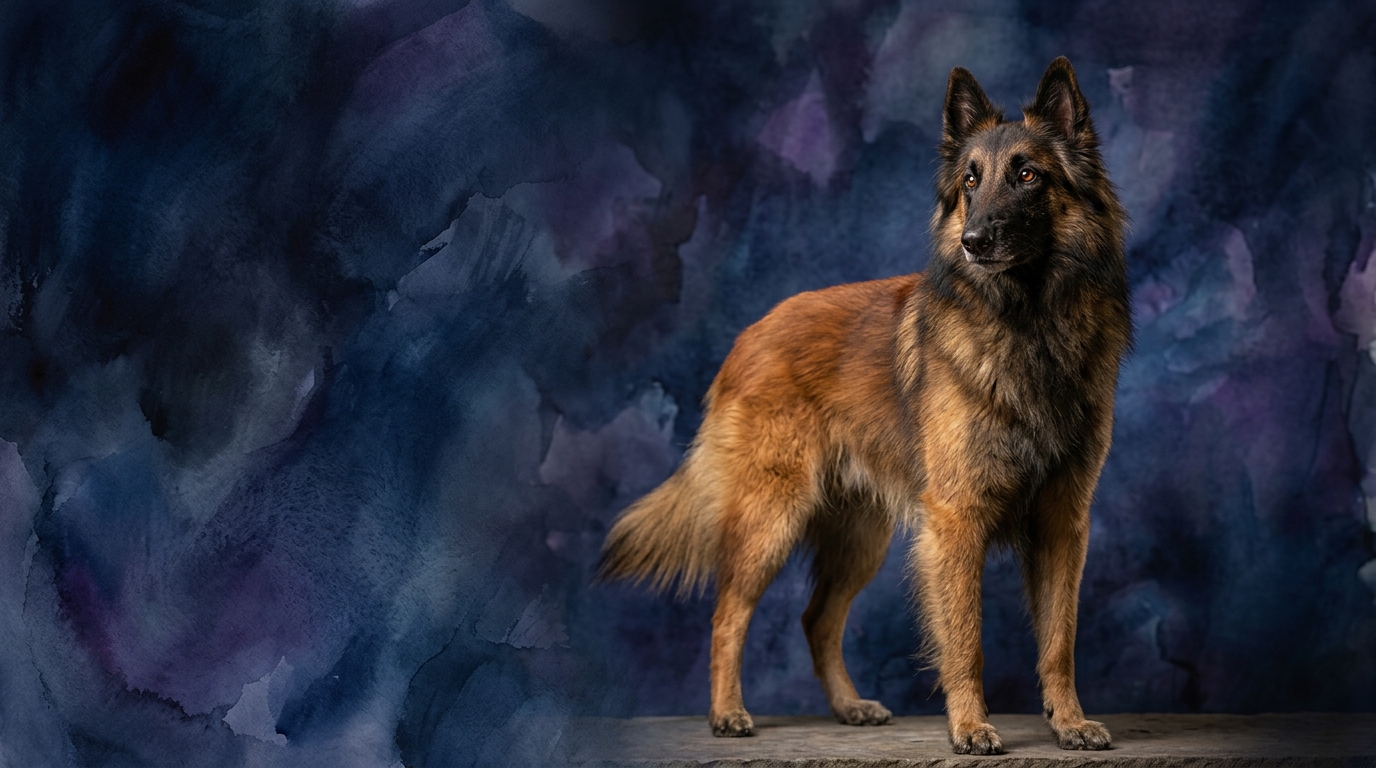
Side-by-Side Pet IQ Profile: Bloodhound vs. Belgian Tervuren
The Pet IQ Lab framework provides a detailed look at canine cognition, moving beyond simple notions of "smartness" to dissect specific mental strengths. The Bloodhound, ranking #74 on Coren's scale, presents a fascinating cognitive profile: Problem Solving 5/5, Training Speed 1/5, Social Intelligence 2/5, Instinctive Drive 5/5, and Memory 5/5. This suggests a dog with exceptional capacity for complex tasks within its specialized domain, but a more independent approach to learning and social interaction.
In contrast, the Belgian Tervuren, a much higher-ranking breed at #14 on Coren's scale, showcases a different set of mental aptitudes: Problem Solving 5/5, Training Speed 5/5, Social Intelligence 3/5, Instinctive Drive 3/5, and Memory 5/5. This profile indicates a dog that excels at rapid learning, adapts quickly to new challenges, and possesses a balanced drive that makes them highly responsive and versatile. Both breeds share a top score in Problem Solving and Memory, yet the context and application of these scores diverge significantly due to their other cognitive dimensions.
Where the Bloodhound's Cognition Shines Brightest
The Bloodhound's cognitive superiority lies unequivocally in its unparalleled olfactory prowess and the relentless problem-solving required to utilize it. Their 5/5 Problem Solving isn't about manipulating levers for food, but about deciphering intricate scent puzzles across varied terrains and conditions, a task demanding immense mental focus and analytical capability. They excel at identifying, isolating, and following a specific scent trail, filtering out countless environmental distractions, which is a highly sophisticated form of cognitive processing.
Coupled with this is their 5/5 Memory, which for a Bloodhound, translates to an astonishing recall of scent profiles and the minute details of a trail. They can remember a specific human scent for days, even weeks, and recall the environmental context in which they last encountered it. Their 5/5 Instinctive Drive fuels this entire process, providing the singular, unwavering motivation to persist in a scenting task long after most other breeds would have given up. This makes them exceptional at tasks requiring deep, sustained, and independent sensory processing.
The Belgian Tervuren's Cognitive Edge
The Belgian Tervuren’s cognitive strengths are rooted in its adaptability, rapid assimilation of information, and its capacity for intricate cooperation. Their 5/5 Training Speed is a standout feature, indicating a dog that quickly grasps new commands, behaviors, and sequences, making them highly trainable for a vast array of disciplines. This rapid learning is supported by their 5/5 Problem Solving, which allows them to effectively strategize within structured tasks, whether it's navigating an agility course or performing complex obedience routines.
The Tervuren’s 3/5 Social Intelligence, while not as high as some dedicated companion breeds, is significantly higher than the Bloodhound's, enabling them to read and respond to human cues with greater nuance. This facilitates a more fluid and responsive working partnership. Their 5/5 Memory ensures they retain vast repertoires of commands and learned behaviors, allowing for consistent performance and the building of complex skill sets over time. They thrive on mental challenge and excel at tasks requiring quick thinking and precise execution under direction.
Ease of Training: A Tale of Two Speeds
When it comes to ease of training, the difference between these two breeds is stark and directly reflected in their Pet IQ Lab scores. The Belgian Tervuren, with its 5/5 Training Speed, is remarkably biddable and eager to learn, often picking up new commands in just a few repetitions. They are highly motivated by praise, toys, and food, and thrive on the structure and mental engagement that training provides. Their higher Social Intelligence means they are more attuned to their handler's intentions and desire to please, making the training process a collaborative and often swift experience.
Conversely, the Bloodhound’s 1/5 Training Speed highlights a significant challenge for the novice trainer. Their singular 5/5 Instinctive Drive to track means that once a compelling scent is present, their focus becomes almost exclusively dedicated to that stimulus. They are not intentionally disobedient but are profoundly hardwired to prioritize their nose over human directives. Training a Bloodhound requires immense patience, creative motivation, and an understanding that their problem-solving is directed towards scent, not necessarily towards performing arbitrary commands. Consistency and making training incredibly rewarding are crucial, as their motivation is often internal and task-specific rather than handler-oriented.
Matching Canine Cognition to Owner Lifestyle
The distinct cognitive profiles of the Bloodhound and Belgian Tervuren dictate vastly different ideal owner lifestyles. For the Bloodhound, the ideal owner is patient, understanding of their independent nature, and deeply committed to engaging their primary cognitive strength: scent work. A relaxed owner for a Bloodhound means someone who can provide consistent, engaging scent-based activities, like tracking or nose work, rather than expecting high-intensity physical activity or constant obedience. These owners appreciate a dog whose "active" engagement is predominantly mental, focused on intricate sensory processing, and are prepared for a dog that follows its nose first.
The Belgian Tervuren, on the other hand, demands a highly active and engaged owner. Their 5/5 Training Speed and 5/5 Problem Solving mean they thrive on continuous mental stimulation, making them excellent candidates for dog sports like agility, obedience, protection work, or advanced trick training. Their balanced 3/5 Instinctive Drive, while present, is manageable and can be channeled effectively into structured activities. An owner for a Tervuren needs to be prepared for daily physical exercise, consistent training, and a companion who thrives on being a working partner, making them unsuitable for truly relaxed or sedentary households.
The Verdict: When to Choose Each Canine Mind
Choosing between a Bloodhound and a Belgian Tervuren hinges entirely on an owner's lifestyle, training philosophy, and what they seek in a canine companion's cognitive engagement. Both offer remarkable intellect, but applied in fundamentally different ways.
If you are fascinated by the world of scent, value profound independence, and possess the patience and specific motivation to channel an unparalleled tracking drive, the Bloodhound will be an incredibly rewarding, albeit uniquely challenging, partner. If you desire a highly trainable, versatile, and eager companion for advanced sports, complex tasks, and a dynamic, engaged lifestyle, the Belgian Tervuren's balanced yet powerful cognitive abilities will make them an exceptional, devoted working partner.
The Verdict
Choose a Bloodhound if you are captivated by scent work, prepared for a patient, independent companion, and appreciate a dog with an unparalleled, single-minded drive for specific sensory tasks.
Choose a Belgian Tervuren if you seek a highly trainable, versatile partner for dog sports, advanced obedience, and a dog that thrives on constant mental engagement and physical activity.
🧠 Find Your Pet's IQ Score
Our Pet IQ Lab assessment covers 25+ tests across 5 cognitive dimensions — personalized to your breed.
Take the Full IQ Test →Frequently Asked Questions
Are Bloodhounds truly 'stubborn' during training?
Bloodhounds aren't inherently stubborn, but their 1/5 Training Speed and 5/5 Instinctive Drive mean their focus is overwhelmingly on scent. They prioritize following their nose over human commands, requiring immense patience and highly rewarding, scent-based motivation to engage them in traditional training.
How does a Tervuren's herding drive impact daily life?
A Tervuren's 3/5 Instinctive Drive means they possess a natural inclination to herd, which can manifest as nipping at heels or attempting to 'gather' family members or other pets. This drive needs to be managed through consistent training, providing outlets like herding games or dog sports, and teaching appropriate boundaries from a young age.
Can a Bloodhound learn complex tricks or agility?
While Bloodhounds have 5/5 Problem Solving, it's primarily applied to scent work. Their 1/5 Training Speed makes learning complex tricks or agility challenging and slow, as their motivation for these tasks is often low compared to their drive to track. They can learn, but it requires exceptional dedication and creative, high-value rewards from the trainer.