
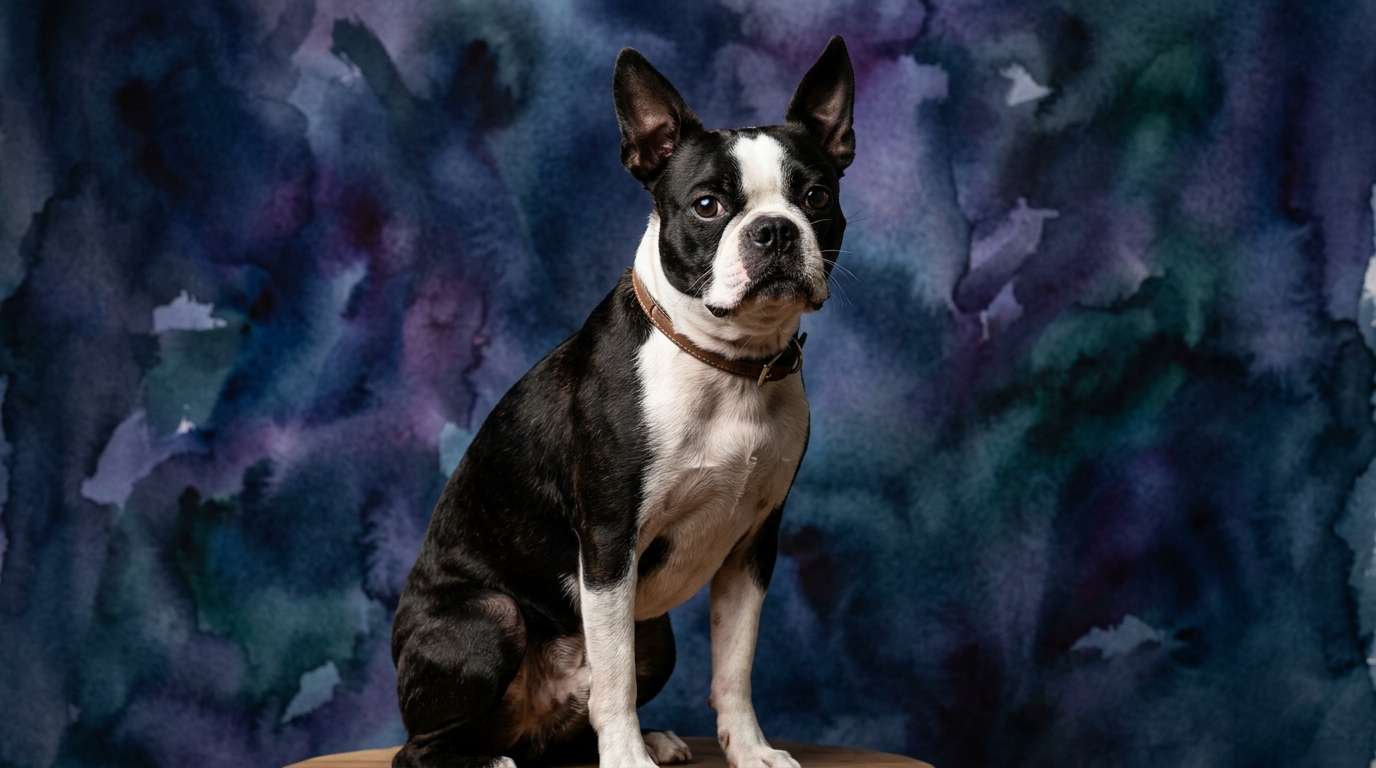
Side-by-Side IQ Profile: Bloodhound vs. Boston Terrier
The Bloodhound, ranking #74 on the Coren scale, exhibits a cognitive profile deeply specialized for its historical role. Its Problem Solving ability is exceptional (5/5), demonstrating a profound capacity for intricate, sequential problem-solving when tracking a scent trail, processing complex olfactory data, filtering distractions, and maintaining focus over long durations. However, its Training Speed is low (1/5), as their strong independent drive and singular focus often override human directives, making traditional obedience training a patient endeavor. Social Intelligence is moderate-low (2/5); while amiable, their primary focus isn't on reading complex human social cues in the same way some other breeds are. Instinctive Drive is extremely high (5/5), defining their core being with an overwhelming urge to follow a scent, dictating much of their behavior. Memory is exceptional (5/5), possessing an astonishing capacity to recall complex scent trails and associated environmental details, even days later.
In contrast, the Boston Terrier, at Coren rank #54, showcases a cognitive design centered on companionship. Its Problem Solving ability is moderate (3/5); they can navigate common household challenges and figure out how to access desired items, but they don't exhibit the complex, multi-step reasoning seen in specialist working breeds. Training Speed is moderate (3/5), as they are reasonably receptive to learning new commands and routines, aided by their eagerness to please. Social Intelligence is high (4/5), excelling at understanding human emotions and social cues, thriving on interaction and adapting behavior to elicit positive responses. Instinctive Drive is low (2/5); while possessing typical dog instincts, their drives are generally not overwhelming, lacking the intense prey or specialized working instincts of many breeds. Memory is moderate (3/5); Boston Terriers remember routines, specific people, and past experiences adequately, recalling where treats are kept or who is most likely to share food, but their memory isn't specialized for intricate, long-term data recall like a scent hound's.
Where the Bloodhound Wins Cognitively
The Bloodhound's cognitive superiority shines in tasks demanding sustained focus, intricate sensory processing, and robust memory. Their problem-solving abilities are unparalleled when it comes to disentangling a complex scent puzzle, demonstrating a deep capacity for analytical thought within their specialized domain. This isn't about solving abstract riddles, but rather about processing an overwhelming array of olfactory data to isolate and follow a specific trail, filtering out countless environmental distractions. Their instinctive drive, while sometimes challenging for owners, is a cognitive powerhouse, providing the relentless motivation to pursue a goal against all odds. Furthermore, their memory isn't just about recalling a specific event; it's about reconstructing an entire historical narrative from faint chemical traces, a testament to their exceptional long-term sensory recall and spatial mapping capabilities tied to scent.
Where the Boston Terrier Wins Cognitively
The Boston Terrier's cognitive strengths lie firmly in the social and adaptive spheres, particularly within a human family unit. Their high social intelligence allows them to interpret subtle human cues, emotional states, and intentions with remarkable accuracy, fostering a deep bond and harmonious coexistence. This translates into a natural aptitude for communication and a desire to engage meaningfully with their human companions. Coupled with a moderate training speed, this social acumen means they are often quicker to grasp and comply with household rules and commands that promote social harmony. Their lower instinctive drive, in contrast to the Bloodhound, frees up cognitive resources for focusing on human interaction and domestic routines, making them highly adaptable to varied social settings and less prone to being overwhelmed by external, primal urges.
Which is Easier to Train and Why
Without question, the Boston Terrier presents a much easier training experience for the average owner. Their moderate training speed (3/5) combined with a high social intelligence (4/5) means they are generally eager to please and receptive to learning. They grasp new commands with reasonable consistency and are motivated by positive reinforcement and the desire for social approval from their owners. Their relatively low instinctive drive (2/5) also means fewer competing internal urges pulling them away from the training task. In stark contrast, the Bloodhound's training speed is a challenging 1/5. Their formidable instinctive drive (5/5) to track often overshadows any desire to comply with human directives, making them notoriously difficult to train in traditional obedience. While they are capable of learning, their priority is almost always the scent, requiring immense patience, specialized techniques, and an understanding that their intelligence is channeled differently, not absent.
Which Suits Active Owners vs. Relaxed Owners
The choice between these two breeds heavily depends on an owner's lifestyle. The Bloodhound, with its intense instinctive drive (5/5) and exceptional problem-solving (5/5) tied to tracking, is unequivocally suited for highly active, dedicated owners. These dogs require not just physical exercise, but significant mental engagement that taps into their tracking abilities. Owners must be prepared for long walks, scent work, or even participation in tracking sports to satisfy their profound cognitive and physical needs. A relaxed owner would quickly find themselves overwhelmed by a Bloodhound's unmet drives, which can manifest as destructive behavior or relentless, unfocused energy. Conversely, the Boston Terrier, with its moderate problem-solving (3/5) and low instinctive drive (2/5), is an ideal fit for more relaxed owners. While they enjoy play and walks, their exercise requirements are modest, and their primary contentment comes from social interaction and companionship. They are content to cuddle on the couch, requiring less structured activity and more simply being a part of the family's daily life, making them superb companions for urban living or quieter households.
The Verdict
Opt for a Bloodhound if you are an experienced, active owner dedicated to harnessing a dog's profound tracking abilities and providing extensive mental and physical outlets for their intense drives.
Select a Boston Terrier if you seek a highly social, adaptable companion dog that thrives on human interaction and fits seamlessly into a more relaxed, family-oriented lifestyle.
🧠 Find Your Pet's IQ Score
Our Pet IQ Lab assessment covers 25+ tests across 5 cognitive dimensions — personalized to your breed.
Take the Full IQ Test →Frequently Asked Questions
Is a Bloodhound difficult to live with due to its high instinctive drive?
Yes, a Bloodhound's extreme instinctive drive (5/5) to track means they require significant, consistent engagement in scent work or similar activities to prevent frustration and potential behavioral issues. Their nose dictates much of their world, making them less attentive to typical household rules without proper channeling.
How does the Boston Terrier's social intelligence benefit its owners?
The Boston Terrier's high social intelligence (4/5) allows them to form exceptionally strong bonds with their human families, making them highly attuned to emotions and eager to participate in social interactions. This trait contributes to their reputation as charming, empathetic companions who integrate well into family life.
Do Bloodhounds genuinely have a 'poor' memory because they are hard to train?
No, quite the opposite; Bloodhounds possess exceptional memory (5/5), particularly for scent and spatial details related to tracking, which is crucial for their specialized work. Their perceived difficulty in training (1/5) stems not from poor memory, but from their overwhelming instinctive drive overriding other stimuli and human directives.