
The Cosmic Pet Pet IQ Lab: Bloodhound vs. Bull Terrier Cognitive Profiles
The Cosmic Pet Pet IQ Lab employs a multi-dimensional framework to assess canine intelligence, moving beyond simple obedience to encompass a broader spectrum of cognitive functions. For the Bloodhound, a breed celebrated for its olfactory prowess, we observe a problem-solving score of 5/5, indicating an exceptional capacity to unravel complex environmental puzzles, primarily those involving scent detection and tracking. This breed's training speed, however, registers at a 1/5, reflecting a deep-seated independence and a drive prioritized towards instinctive work over human-directed commands. Their social intelligence is marked at 2/5, suggesting a more reserved or task-focused interaction style, while their instinctive drive soars to 5/5, underpinning their relentless tracking ability. Finally, their memory, particularly for scent trails and geographical layouts relevant to a search, is outstanding at 5/5.
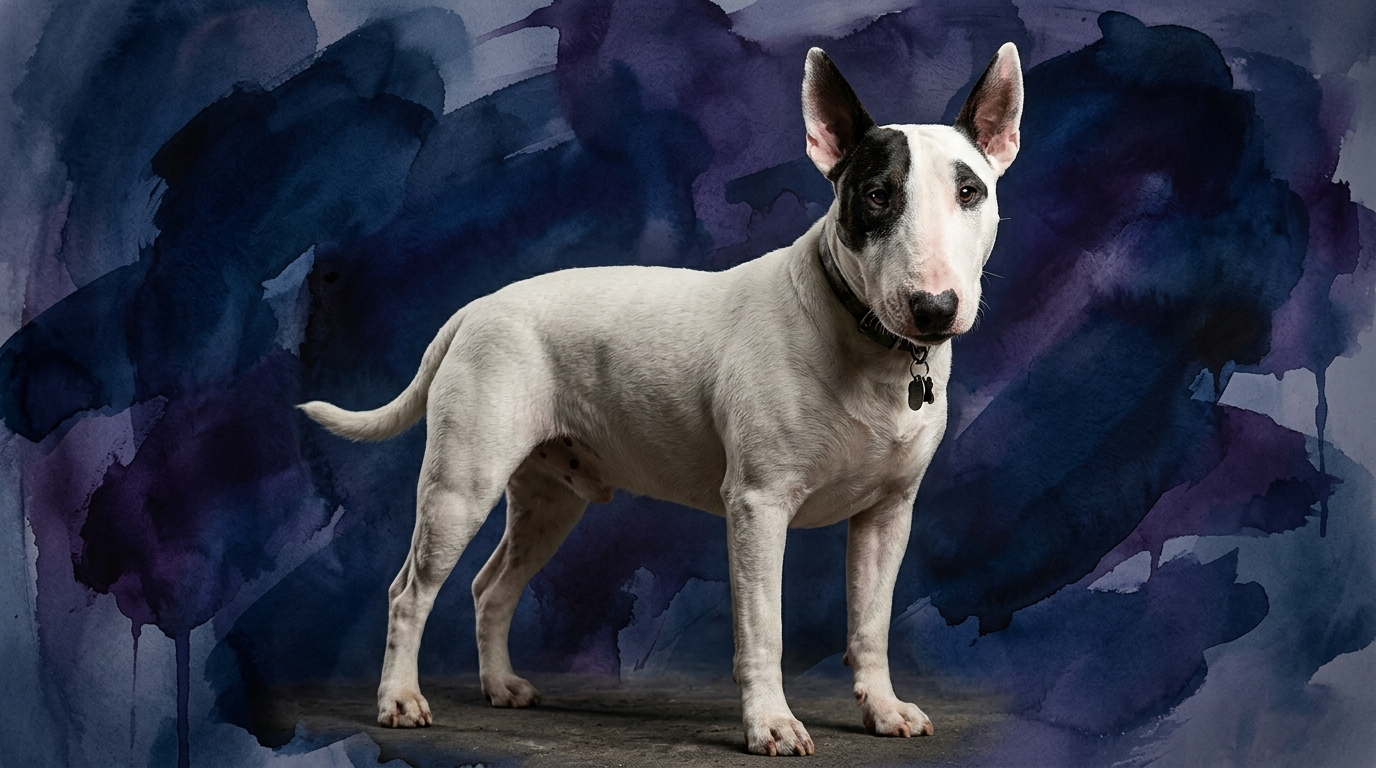
In contrast, the Bull Terrier presents a more balanced cognitive profile across our metrics. Their problem-solving ability scores a respectable 3/5, demonstrating an aptitude for navigating everyday challenges and learning through experience, though perhaps not with the single-minded focus of the Bloodhound. Training speed for the Bull Terrier is a moderate 3/5, meaning they can learn new commands and routines at an average pace, provided the motivation and consistency are present. Social intelligence is also a 3/5, indicating a capacity for forming strong bonds and understanding human cues, albeit sometimes tempered by a strong personality. Their instinctive drive is rated at 3/5, reflecting a general terrier tenacity and prey drive, but not the specialized intensity of a scent hound. Lastly, their memory stands at 3/5, sufficient for retaining learned behaviors and recognizing familiar individuals and places.
Where the Bloodhound's Mind Excels Cognitively
The Bloodhound's cognitive strengths are undeniably rooted in its olfactory sensory system and the mental processes that support it. Their problem-solving score of 5/5 isn't about solving abstract puzzles, but rather about the intricate, multi-layered task of unravelling a scent trail, often across varied terrains and through environmental distractions. This requires a sophisticated form of analytical thinking: distinguishing individual scent molecules, mapping a path through time and space based on fading odors, and ignoring irrelevant stimuli. This specialized cognitive function allows them to perform feats of tracking that are unparalleled, demonstrating a singular focus and mental endurance dedicated to a specific type of sensory information.
Furthermore, the Bloodhound's 5/5 memory score is intrinsically linked to their tracking ability. They possess an extraordinary capacity to remember complex scent patterns and the routes associated with them, even after extended periods. This isn't just about recalling commands; it's about building a detailed, three-dimensional mental map of a scent's journey and retaining that information for future reference, allowing them to pick up a trail even after a significant delay. Their instinctive drive, also 5/5, fuels this mental tenacity, making them relentless in their pursuit once a scent is engaged, showcasing a deep-seated, self-directed cognitive persistence.
Where the Bull Terrier's Mind Shines Cognitively
The Bull Terrier's cognitive advantages lie in its adaptability and social engagement, which are more broadly applicable to a domestic setting. Their 3/5 problem-solving score reflects an ability to figure out how to open gates, retrieve hidden toys, or manipulate objects to achieve a desired outcome, often driven by curiosity or a desire for interaction. This form of problem-solving is less about specialized sensory input and more about practical, everyday challenges within a human environment, requiring a different kind of flexible thinking and ingenuity.
The Bull Terrier's moderate social intelligence (3/5) allows for more nuanced interactions with their human companions and other animals. They are generally adept at reading body language and vocal tones, adjusting their behavior accordingly. This capacity for social learning and responsiveness often translates into a more agreeable companion in diverse social settings compared to the intensely focused Bloodhound. Their balanced instinctive drive (3/5) means they possess a robust, energetic nature that can be channeled into various activities, from play to basic obedience, without being overwhelmingly fixated on a single, specialized task. This versatility in their cognitive application makes them excellent candidates for a wide range of family dynamics and activities, where a more generalist intelligence is often more beneficial.
Training Ease: Bloodhound vs. Bull Terrier Behavioral Differences
When it comes to training, the core behavioral differences between these two breeds become strikingly apparent. The Bloodhound's training speed is rated at 1/5, primarily because their motivation is almost entirely intrinsic and directed towards scent work. They are not inherently driven to please humans through obedience commands in the way many other breeds are. A Bloodhound on a scent trail is operating on a primal instinct, and diverting that focus to sit, stay, or heel requires immense patience, understanding, and often, highly specialized training methods that incorporate their natural drive. Their independent nature means they can be perceived as stubborn, but it's more accurately described as being singularly purpose-driven.
The Bull Terrier, with a training speed of 3/5, is generally more amenable to traditional obedience training. While they possess a strong, sometimes headstrong personality characteristic of terriers, they often enjoy engaging with their owners and can be motivated by praise, toys, and food. Their social intelligence, at 3/5, means they are more attuned to human expectations and social cues, which aids in the learning process. However, their physical robustness and occasional stubborn streak mean that consistency, positive reinforcement, and clear boundaries are essential. They can learn a broad repertoire of commands and tricks, but their focus might waver if training sessions are not kept engaging and varied. Therefore, the Bull Terrier is generally easier for the average owner to train in basic obedience, whereas training a Bloodhound requires a deep commitment to understanding and working with their unique, specialized drives.
Suitability for Active vs. Relaxed Owners
The Bloodhound's cognitive profile suggests suitability for a specific kind of active owner. Their 5/5 instinctive drive and problem-solving prowess in scent work mean they thrive when given a 'job' that engages their nose and mind. This breed is not for the casually active owner; they require an owner who is dedicated to providing consistent, challenging scent work, whether through formal tracking, search and rescue, or extensive scent games. A relaxed owner who cannot commit to regular, rigorous mental and physical stimulation centered around their powerful sense of smell will likely find a Bloodhound challenging, as their pent-up energy and unfulfilled drives can lead to undesirable behaviors. Their independent nature and reserved social intelligence mean they are not typically seeking constant human interaction in the same way a more companion-oriented breed might.
The Bull Terrier, with its balanced cognitive scores, is more adaptable to a wider range of owner lifestyles, leaning towards active but not necessarily specialized. Their 3/5 instinctive drive means they need regular exercise and mental engagement to prevent boredom, but this can manifest in various forms: brisk walks, playtime in a securely fenced yard, or participation in dog sports like agility or obedience. They suit an owner who enjoys an active lifestyle and wants a robust, playful companion to share it with. While they can enjoy periods of relaxation, a truly relaxed, sedentary owner might find their energetic bursts and need for engagement overwhelming. Their moderate social intelligence means they thrive on interaction and being part of family activities, making them a good fit for owners who want an engaged, present canine companion.
The Verdict
Choose a Bloodhound if you are a dedicated, patient individual eager to immerse yourself in the world of scent work and can provide a consistent outlet for their unparalleled tracking abilities.
Opt for a Bull Terrier if you seek a robust, playful, and adaptable companion who thrives on social engagement and varied activities, and you're prepared for consistent, positive reinforcement training.
🧠 Find Your Pet's IQ Score
Our Pet IQ Lab assessment covers 25+ tests across 5 cognitive dimensions — personalized to your breed.
Take the Full IQ Test →Frequently Asked Questions
Do Bloodhounds make good family pets despite their low social intelligence score?
Bloodhounds can be affectionate and gentle family members, especially with children, but their lower social intelligence score indicates they are often more focused on their scent tasks than on constant human interaction. They appreciate companionship but might not be as overtly demonstrative or socially attuned as other breeds, requiring owners to respect their independent nature.
Are Bull Terriers prone to destructive behavior if not mentally stimulated?
Yes, Bull Terriers can become destructive if their need for mental and physical stimulation isn't met. Their moderate instinctive drive and problem-solving abilities mean they require regular engagement to prevent boredom, which they might otherwise alleviate by chewing, digging, or other undesirable behaviors. Consistent training and varied activities are key.
Can a Bloodhound be trained for tasks other than scent tracking?
While Bloodhounds can learn basic obedience commands, their specialized cognitive wiring and low training speed score (1/5) mean that teaching them tasks unrelated to scent work can be particularly challenging. Their deep-seated drive for tracking often overshadows motivation for other forms of training, requiring extraordinary patience and creative, scent-based reward systems.