
Side-by-Side IQ Profile: Bloodhound vs. English Bulldog
The Cosmic Pet Pet IQ Lab data provides a nuanced look at the cognitive makeup of these two distinct breeds. The Bloodhound, a dog from the Hound group, holds a Coren rank of #74, indicating a specific type of working intelligence. Its IQ profile shows: Problem Solving 5/5, reflecting an extraordinary capacity for unraveling complex scent puzzles; Training Speed 1/5, highlighting their independent nature and focus on instinct; Social Intelligence 2/5, suggesting their primary attention lies elsewhere than human social cues; Instinctive Drive 5/5, an overwhelming urge to track; and Memory 5/5, for retaining intricate scent information.
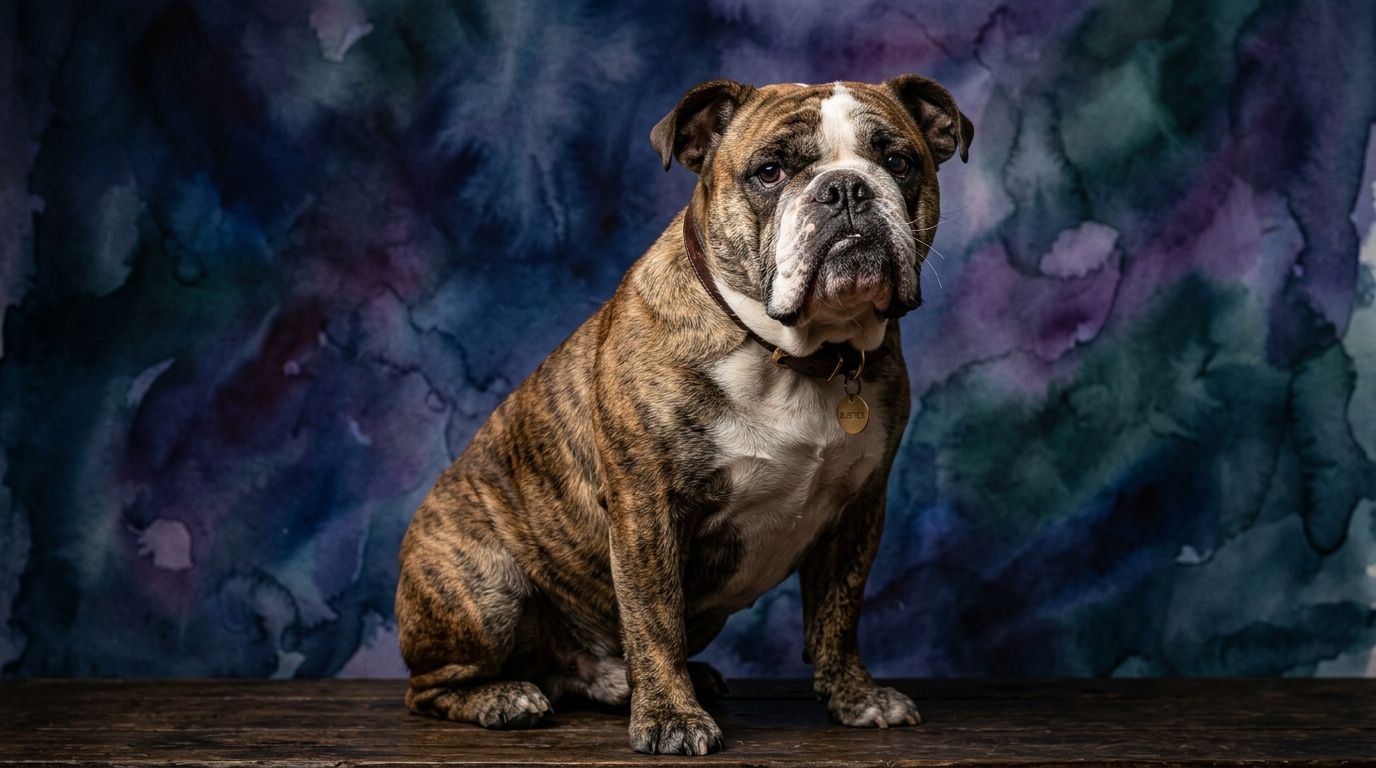
In contrast, the English Bulldog, a dog from the Non-Sporting group, ranks #77 on the Coren scale, placing it in a similar tier but with a very different cognitive emphasis. Its IQ profile includes: Problem Solving 2/5, indicating a less strategic approach to novel challenges; Training Speed 2/5, demonstrating a moderate pace of learning often requiring patience; Social Intelligence 4/5, revealing a strong connection to human companionship and emotional cues; Instinctive Drive 3/5, a moderate level of intrinsic motivation not tied to specific tasks; and Memory 2/5, suggesting a capacity for routine recall rather than complex information storage.
Where the Bloodhound's Cognition Excels
The Bloodhound's cognitive superiority is almost entirely centered on its olfactory prowess and the complex problem-solving it entails. Scoring a perfect 5/5 in both Problem Solving and Memory, their intellect is a marvel of specialized sensory processing. This isn't about solving abstract puzzles; it's about interpreting a microscopic world of scent molecules, distinguishing individual odors amidst environmental noise, and constructing a chronological narrative of movement from faint traces. Their ability to follow a scent trail for miles, over varied terrain, and after considerable time has passed, involves continuous hypothesis testing, recalibration, and an incredible memory for the specific scent signature they are tracking. This single-minded dedication, reflected in their 5/5 Instinctive Drive, means their brain is hardwired for this specific task, making them the undisputed champions of scent-based cognition.
Where the English Bulldog's Cognition Shines
While the Bloodhound's genius lies in its nose, the English Bulldog's cognitive strengths are profoundly social and emotional. With a Social Intelligence score of 4/5, they excel at understanding and responding to human nuances, making them highly attuned companions. Their intelligence manifests not in tracking a lost person, but in sensing a family member's mood, offering comfort, or subtly communicating their desires for attention or a cozy spot. This breed navigates its world primarily through social interaction, valuing companionship and emotional connection above all else. Their moderate Instinctive Drive (3/5) allows them to be present and engaged with their human family without being constantly distracted by external stimuli, fostering a deep, empathetic bond that is a hallmark of their cognitive profile.
Training: A Tale of Two Temperaments
Comparing the ease of training between these two breeds reveals significant differences stemming directly from their cognitive profiles. The Bloodhound, with a Training Speed of 1/5 and an Instinctive Drive of 5/5, presents a substantial challenge for conventional obedience training. Their overwhelming drive to follow a scent means that once they've picked up a trail, commands often become secondary. It's not a lack of capacity to learn, but rather an intense, specialized focus that makes redirection difficult. Training a Bloodhound requires immense patience, creativity, and an understanding that their nose will always be their first priority, necessitating high-value rewards and engaging, scent-based activities to maintain focus. Their low Social Intelligence (2/5) means they're less driven by pleasing their human than by fulfilling their innate purpose.
The English Bulldog, scoring 2/5 in Training Speed, is also not considered a 'quick study,' but their challenges differ. Their moderate Instinctive Drive (3/5) means they are less likely to become singularly focused on an external stimulus than a Bloodhound. However, they can be prone to stubbornness or disinterest if training isn't engaging. Their higher Social Intelligence (4/5) can be an advantage, as they generally enjoy being part of family activities and appreciate positive human interaction. Training them effectively relies on short, fun sessions, positive reinforcement, and making the learning experience feel like a game or a bonding activity, rather than a chore. While neither breed is for the novice trainer seeking immediate results, the Bulldog's social nature might make them marginally more responsive to a patient, relationship-focused approach than the intensely driven Bloodhound.
Owner Lifestyles: Active Pursuit vs. Relaxed Companionship
The ideal owner for a Bloodhound is someone who embraces an active lifestyle, particularly one that involves dedicated scent work. These dogs require not just physical exercise, but substantial mental stimulation through tracking and 'nose work' activities. Owners must be prepared for long walks, secure environments (due to their strong drive to follow a scent), and consistent engagement with their specialized cognitive needs. They thrive with owners who understand and respect their profound instinctive drive, providing outlets for their natural talents rather than attempting to suppress them. A Bloodhound owner is often an enthusiast of canine sports like tracking or search and rescue, or simply someone who appreciates a dog whose world is defined by its extraordinary sense of smell.
In contrast, the English Bulldog is perfectly suited for more relaxed owners who prioritize companionship and comfort. While they need regular, moderate exercise to stay healthy, their energy levels are generally lower than many breeds. Their high Social Intelligence makes them ideal family dogs who enjoy being central to household activities, whether that's lounging on the sofa or a gentle stroll around the neighborhood. Owners who appreciate a sensitive, affectionate, and sometimes comically stubborn companion will find the English Bulldog a delightful fit. They are less about strenuous activity and more about stable, loving presence, thriving in environments where they can bond closely with their humans and enjoy a comfortable routine.
The Verdict
Choose a Bloodhound if you are an experienced dog owner passionate about scent work, prepared for a dog with intense, specialized drives, and value a companion whose world revolves around their nose and the thrill of the chase.
Choose an English Bulldog if you seek a devoted, sensitive, and relatively low-energy companion who excels at social bonding, and you appreciate a dog with a charmingly stubborn, affectionate personality.
🧠 Find Your Pet's IQ Score
Our Pet IQ Lab assessment covers 25+ tests across 5 cognitive dimensions — personalized to your breed.
Take the Full IQ Test →Frequently Asked Questions
Are Bloodhounds stubborn?
Bloodhounds can appear stubborn due to their extreme instinctive drive for scent (5/5). When they've picked up an interesting trail, their single-minded focus overrides human commands, which can be interpreted as defiance rather than specialized cognitive engagement.
Do English Bulldogs enjoy training?
English Bulldogs have a moderate training speed (2/5) and can be slow to learn new commands. They respond best to short, positive, and engaging sessions, as their social intelligence (4/5) means they appreciate interaction but can be easily bored by repetition.
How do their Coren ranks compare?
The Bloodhound ranks 74th and the English Bulldog 77th, placing both in the lower tier of Stanley Coren's intelligence scale. However, Coren's ranking primarily measures obedience and working intelligence, which doesn't fully capture the specialized cognitive strengths of either breed, especially the Bloodhound's olfactory genius or the Bulldog's social acumen.