Side-by-Side IQ Profile: Bloodhound vs. Rough Collie
The Cosmic Pet Pet IQ Lab provides a nuanced framework for understanding canine cognition, moving beyond simple 'smart' labels to specific cognitive dimensions. The Coren rank, a measure primarily of obedience and working intelligence, immediately highlights a difference: the Rough Collie ranks #16, indicating rapid command acquisition and compliance, while the Bloodhound sits at #74, suggesting a different cognitive priority. Let's delve into their individual IQ dimensions to understand this disparity.
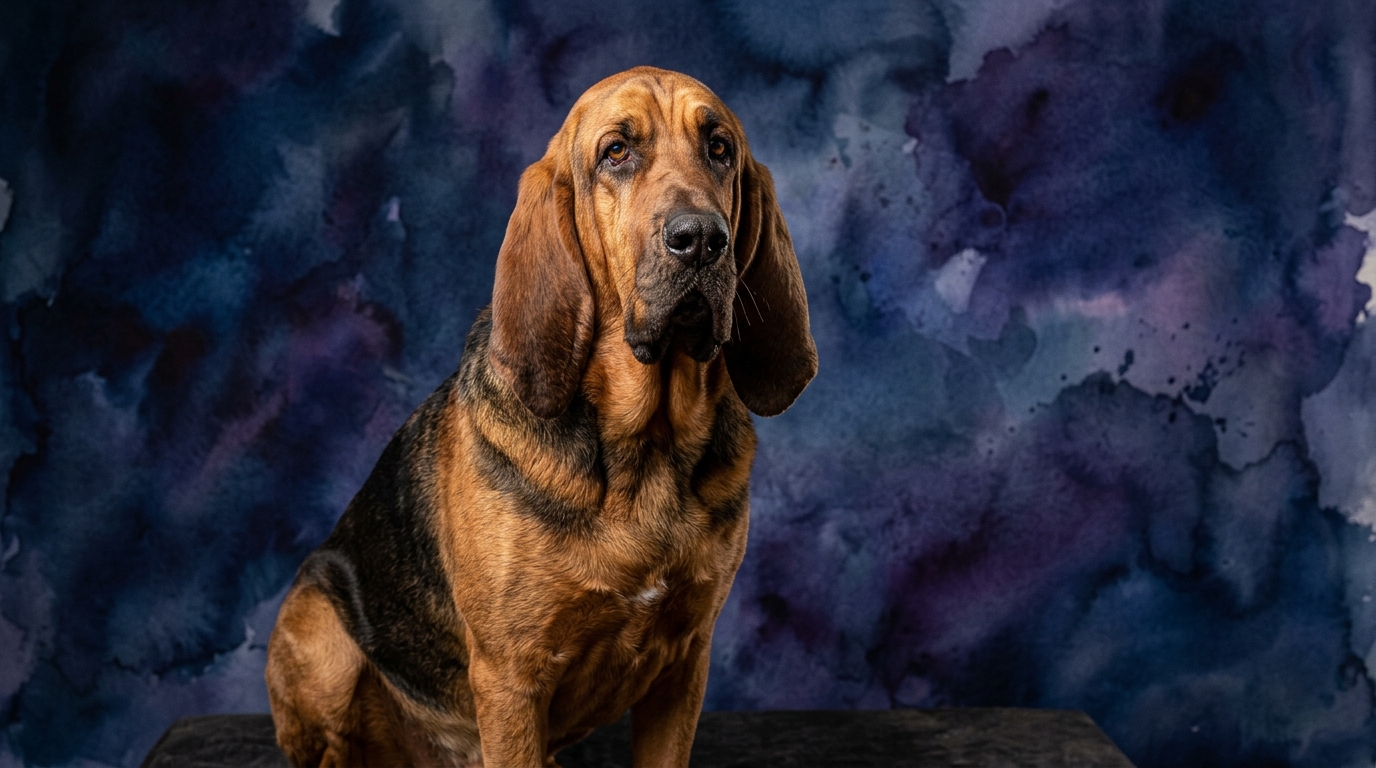
The **Bloodhound** profile paints a picture of a specialized cognitive athlete. Their Problem Solving is rated 5/5, reflecting an unparalleled ability to decipher and follow complex scent trails independently. However, their Training Speed is 1/5, indicating a strong independent streak and a focus that often diverges from human-directed commands. Social Intelligence is 2/5, suggesting they are less attuned to nuanced human social cues, often prioritizing their olfactory mission. Their Instinctive Drive is a perfect 5/5, representing an overwhelming and unwavering dedication to scent work. Remarkably, their Memory is also 5/5, allowing them to recall intricate scent patterns and environmental details over long periods.
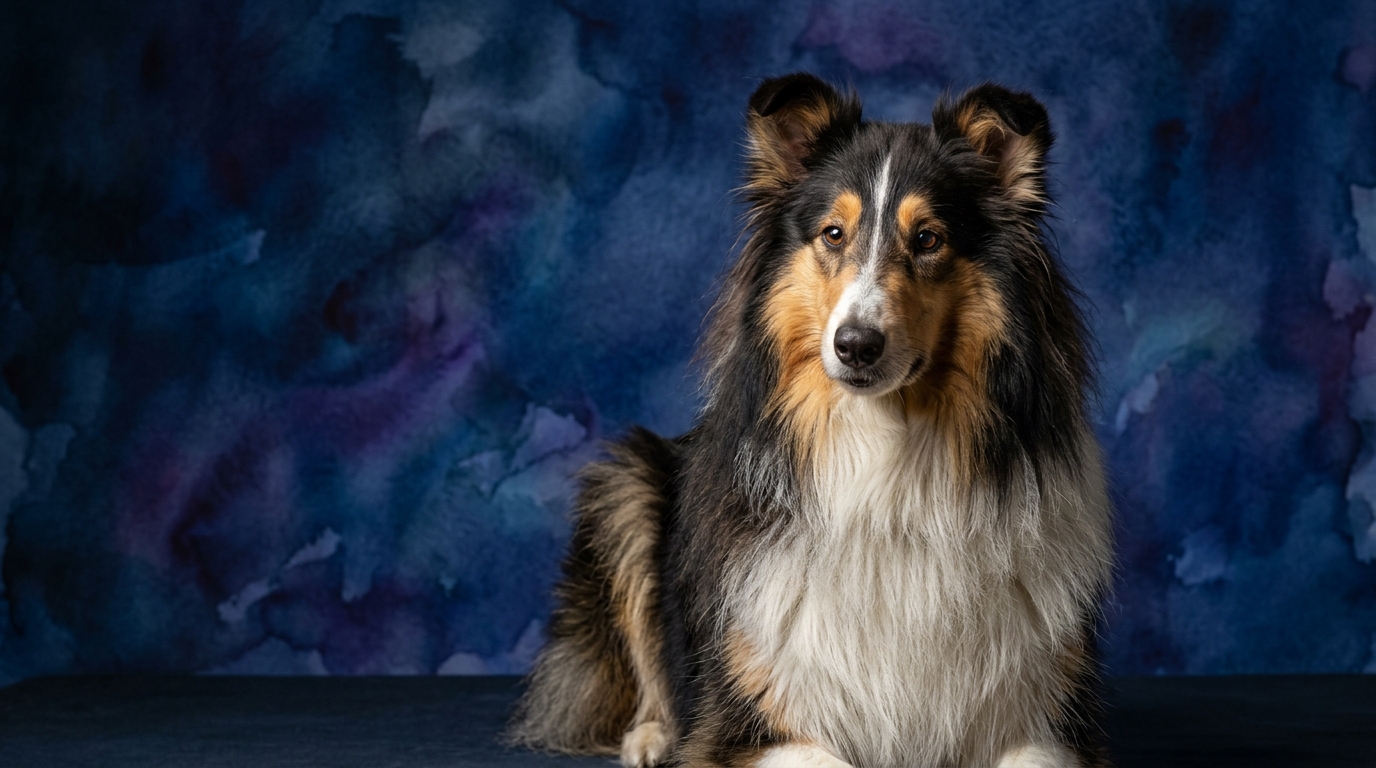
In contrast, the **Rough Collie** exhibits a more cooperatively oriented cognitive profile. Their Problem Solving is 4/5, indicating a strong capacity for understanding complex tasks, often in collaboration with a handler. Their Training Speed is 4/5, demonstrating a keen eagerness and aptitude for learning and executing commands quickly. Social Intelligence stands at 3/5, reflecting a good understanding of human emotions and intentions, fostering strong bonds. Their Instinctive Drive is 3/5, a manageable herding instinct that can be channeled constructively. Like the Bloodhound, their Memory is 5/5, crucial for retaining a vast repertoire of commands and social interactions.
Where the Bloodhound Excels Cognitively
The Bloodhound's cognitive superiority lies in its specialized olfactory intelligence, a domain where few, if any, can compete. Their 5/5 Problem Solving isn't about opening cabinets; it's about navigating an invisible world of scent, distinguishing individual human odors from a myriad of environmental distractions, and following a trail that might be hours or even days old. This requires an intricate analytical process of olfactory data, constantly evaluating, re-evaluating, and committing to a path based on the faintest molecular cues.
This profound problem-solving ability is intrinsically linked to their 5/5 Instinctive Drive. This isn't merely a strong urge; it's the fundamental lens through which a Bloodhound perceives and interacts with its environment. Their entire cognitive system is optimized for scent detection and tracking. This relentless drive fuels their persistence, allowing them to remain focused on a singular scent mission for hours, ignoring discomfort, fatigue, and other sensory input that would derail most other breeds. This drive transforms into an unwavering mental fortitude.
Furthermore, their 5/5 Memory plays a critical role in their scent work. A Bloodhound doesn't just 'follow' a trail; they actively process and remember the nuances of a scent over time, how it degrades, and how environmental factors like wind or terrain affect it. This memory allows them to 'map' a scent journey, recalling specific points of interest or challenge, making them exceptionally effective in complex tracking scenarios, such as search and rescue or law enforcement applications.
Where the Rough Collie Excels Cognitively
The Rough Collie's cognitive strengths lean towards cooperative intelligence and adaptability within a human-centric world. Their 4/5 Training Speed is a significant advantage, reflecting a rapid capacity to understand and execute commands. This isn't just about rote memorization; it's about an eagerness to engage with human instruction, anticipate cues, and generalize learned behaviors to new situations. They process new information quickly, allowing for a broad range of advanced training in obedience, agility, or even complex service tasks.
Their 3/5 Social Intelligence is another key cognitive asset. While not as singularly focused as the Bloodhound, the Collie is attuned to human emotional states, body language, and vocal inflections. This enables them to form deep, responsive bonds with their families and respond appropriately in various social contexts. This social acumen makes them excellent companions, therapy dogs, or even actors, as they can interpret and react to human intentions with a nuanced understanding.
The Rough Collie's 4/5 Problem Solving manifests differently from the Bloodhound's. It's often collaborative and involves understanding sequences, spatial relationships, and cause-and-effect within a structured environment. They can quickly learn to navigate an agility course, understand the flow of a herding pattern, or figure out how to manipulate objects to achieve a desired outcome, often with an eye towards pleasing their handler. Their memory (5/5) synergizes with this, allowing them to retain complex sequences and adapt strategies based on past experiences.
Trainability: A Tale of Two Motivations
When it comes to ease of training, the Rough Collie (Training Speed 4/5) clearly holds the advantage over the Bloodhound (Training Speed 1/5). The Collie's higher social intelligence and inherent desire to work cooperatively with humans mean they are typically eager to please and quick to pick up new commands. Their herding instinct, while present, is often pliable and can be channeled into constructive activities like obedience or agility, where their focus and responsiveness shine. They find intrinsic satisfaction in successful collaboration and positive reinforcement from their handler.
The Bloodhound's low training speed, however, is not a sign of a lack of cognitive capacity, but rather a reflection of their overwhelming 5/5 Instinctive Drive for scent. Once a Bloodhound catches an interesting scent, their cognitive focus narrows almost entirely to that olfactory input. Human commands become secondary, often unheard or disregarded, as their primary motivation takes over. Training a Bloodhound requires immense patience, creativity, and often involves integrating scent work into their training regimen, rather than trying to suppress their natural inclinations. Their lower social intelligence also means they may be less motivated by human approval alone, requiring trainers to tap into their deep-seated desire to track.
Lifestyle Suitability: Active & Specialized vs. Active & Versatile
Both breeds require active owners, but the nature of that activity differs significantly. The Bloodhound demands an owner who is not just active, but deeply committed to understanding and engaging their profound scent drive. This means consistent, dedicated scent work – be it tracking, nose work games, or even formal search and rescue training. Their physical stamina is considerable, but their mental stimulation needs are highly specialized. A 'relaxed' owner who expects a Bloodhound to be content with mere walks and occasional play will likely find themselves with a bored, potentially destructive, and certainly challenging companion.
The Rough Collie also thrives with an active owner, but their activity needs are more versatile and often involve shared experiences. They excel in structured exercise like long walks, runs, agility, obedience, or even flyball. Their desire for companionship and cooperative work means they enjoy activities that involve their family. While they need regular physical and mental engagement to prevent boredom and ensure well-being, their needs are generally more adaptable to a typical active family lifestyle compared to the highly specialized demands of a Bloodhound. They are less likely to become single-mindedly fixated on an external stimulus, preferring to engage with their human companions.
The Verdict: Choosing Your Canine Companion
The Verdict
Choose the Bloodhound if you are an owner passionate about profound independent scent work, prepared to dedicate substantial time to engaging their unique olfactory problem-solving abilities and managing their powerful instinctive drive.
Choose the Rough Collie if you seek a highly trainable, socially attuned companion who enjoys cooperative activities, thrives on consistent mental and physical engagement, and excels in a structured family environment.
🧠 Find Your Pet's IQ Score
Our Pet IQ Lab assessment covers 25+ tests across 5 cognitive dimensions — personalized to your breed.
Take the Full IQ Test →Frequently Asked Questions
Is a Bloodhound difficult to live with due to its low training speed?
Bloodhounds present unique challenges due to their powerful scent drive and independent nature, which can make conventional obedience difficult. Their training requires understanding their motivations and integrating scent work, rather than expecting rapid compliance to general commands.
Can a Rough Collie live in an apartment?
A Rough Collie can adapt to apartment living if provided with ample daily exercise and mental stimulation. Their moderate energy levels and desire for companionship mean they need regular walks, playtime, and engaging activities to prevent boredom and ensure their well-being.
How does the 'memory' score of 5/5 differ between the two breeds?
For the Bloodhound, memory primarily relates to their extraordinary ability to recall and interpret complex scent trails over time and distance. For the Rough Collie, their 5/5 memory score reflects their capacity to retain numerous commands, elaborate routines, and social interactions, allowing for advanced cooperative learning.