
Side-by-Side IQ Profile
For the Bloodhound, its Problem Solving (5/5) shines in deciphering complex scent trails, navigating varied terrains, and overcoming obstacles to locate a target, demonstrating sustained focus and adaptive strategy. Its Training Speed (1/5) is notably low due to an independent nature and intense focus on olfactory input, making human-directed commands secondary. Social Intelligence (2/5) is moderate; while affectionate, they are less attuned to subtle human cues, with their world largely dictated by scent. Instinctive Drive (5/5) is an unparalleled urge to track, dictating much of their cognitive effort. Memory (5/5) is exceptional, tied directly to recalling complex scent patterns and past trail experiences with remarkable accuracy.
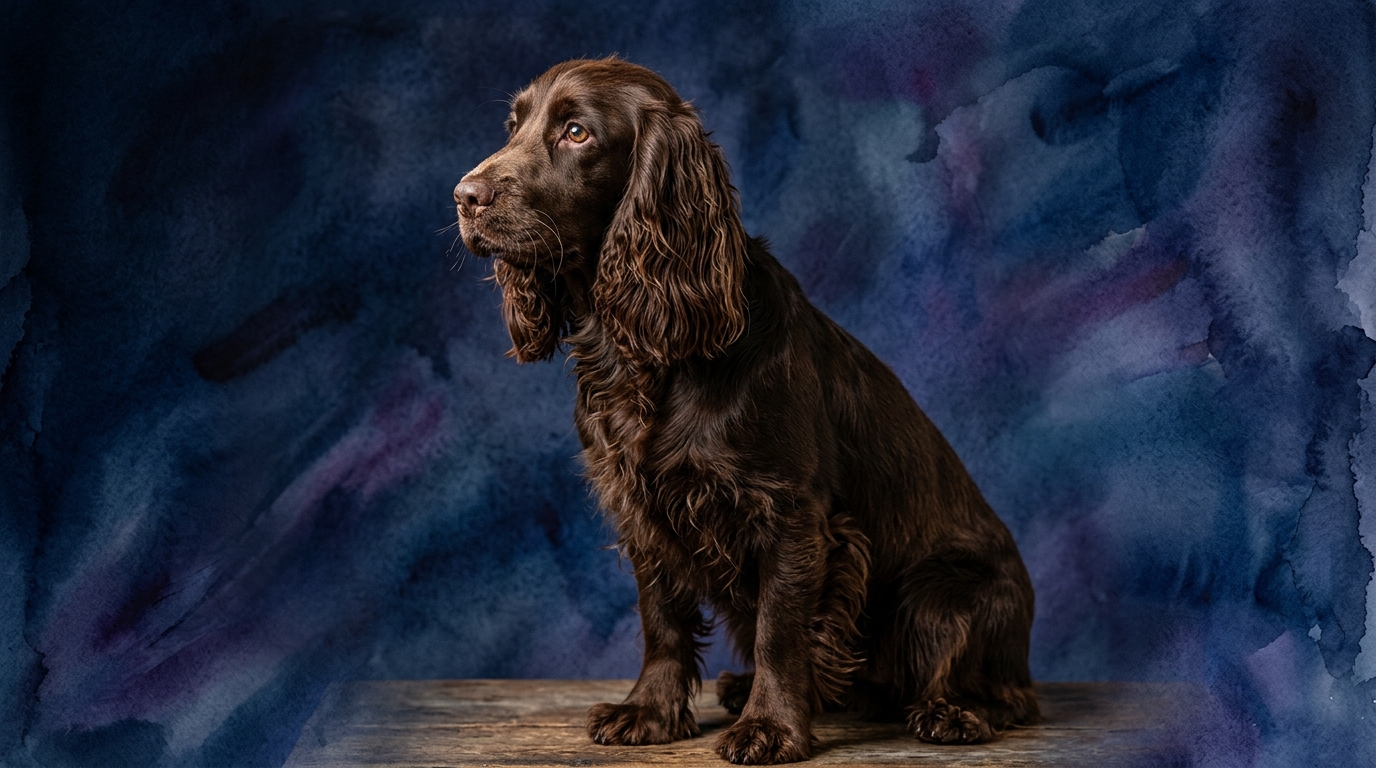
The Field Spaniel shows a more balanced profile. Its Problem Solving (3/5) is moderate, capable of practical tasks and simple puzzles, but not complex abstract thinking. Training Speed (3/5) is moderate, indicating a general willingness to learn new commands with consistent reinforcement, neither exceptionally quick nor slow. Social Intelligence (3/5) is also moderate; they form strong bonds and generally interact appropriately, picking up on human moods without exceptional depth. Instinctive Drive (3/5) is present as a sporting breed, primarily for retrieving and flushing, but it doesn't dominate their cognitive landscape. Memory (3/5) is sufficient for recalling commands, routines, and familiar people, contributing to their adaptability.
Where Bloodhound Wins Cognitively
The Bloodhound's cognitive superiority undeniably lies in its specialized olfactory processing and the mental architecture supporting it. Its Problem Solving score of 5/5, in conjunction with its Memory (5/5) and Instinctive Drive (5/5), allows it to construct and retain intricate mental maps of scent over vast distances and time. This isn't merely following a trail; it involves discriminating between myriad odors, filtering out distractions, and mentally reconstructing a path from fragmented scent particles, often hours or days old. This sustained, complex cognitive effort, driven by an unparalleled instinctive urge, represents a unique form of problem-solving that few, if any, other breeds can match. Their memory for these specific scent signatures and the associated environmental cues is profound, enabling them to pick up an interrupted trail with remarkable accuracy.
Where Field Spaniel Wins Cognitively
While the Bloodhound excels in its niche, the Field Spaniel demonstrates a more balanced and versatile cognitive profile, particularly in areas crucial for general companionship and cooperative work. Its moderate Training Speed (3/5) and Social Intelligence (3/5) position it favorably compared to the Bloodhound. The Field Spaniel's ability to quickly grasp and respond to human commands, coupled with its capacity to read and adapt to social cues, makes it a more fluid partner in various activities. This breed's cognitive strengths lean towards adaptability and biddability, allowing it to integrate seamlessly into diverse family dynamics and participate in a wider array of dog sports or tasks that require close human-dog collaboration, where the Bloodhound's independent drive might be a hindrance.
Which is Easier to Train and Why
When considering ease of training, the Field Spaniel emerges as the more straightforward choice due to its balanced cognitive scores. Its Training Speed of 3/5 indicates a willingness to learn and a responsiveness to conventional methods, reinforced by its 3/5 Social Intelligence, which means it generally seeks to understand and comply with human expectations. Real behavioral differences highlight this: a Field Spaniel is often eager to engage in training sessions, motivated by praise, treats, and the desire to work alongside its owner. In contrast, the Bloodhound's Training Speed of 1/5 and lower Social Intelligence (2/5) mean its primary motivation is its nose, not necessarily human instruction. A Bloodhound will often prioritize an interesting scent over a 'sit' command, making training a lesson in patience and creative motivation, often requiring the trainer to leverage its scent drive rather than fighting against it. Its strong instinctive drive makes redirecting its focus a significant challenge.
Which Suits Active Owners vs. Relaxed Owners
The choice between a Bloodhound and a Field Spaniel largely depends on an owner's lifestyle and their capacity to meet specific cognitive and physical needs. A Bloodhound is unequivocally suited for highly active owners who are prepared to engage deeply with its singular, powerful drive. These dogs require extensive, mentally stimulating exercise centered around scent work, prolonged walks, or tracking activities that allow them to utilize their 5/5 Problem Solving and Instinctive Drive. A 'relaxed' owner would quickly find themselves overwhelmed by the Bloodhound's stamina and relentless pursuit of scent. The Field Spaniel, with its more moderate 3/5 scores across the board, is better suited for moderately active owners. They thrive on daily walks, playtime, and engaging activities like retrieving or agility, but are also content to settle down and be a calm companion indoors, making them more adaptable to a wider range of household energy levels than the intensely focused Bloodhound.
The Verdict
Choose a Bloodhound if you are a dedicated, active owner passionate about canine scent work, prepared to channel its unparalleled problem-solving and memory into tracking, and patient with its independent training pace.
Opt for a Field Spaniel if you desire a versatile, moderately active companion who is more biddable and socially attuned, capable of adapting to various family activities and enjoying a balanced training experience.
🧠 Find Your Pet's IQ Score
Our Pet IQ Lab assessment covers 25+ tests across 5 cognitive dimensions — personalized to your breed.
Take the Full IQ Test →Frequently Asked Questions
Do Bloodhounds struggle with basic obedience commands?
Bloodhounds can learn basic obedience, but their Training Speed of 1/5 means the process is often slow and requires immense consistency and patience. Their powerful instinctive drive to track often overrides their desire to comply with human commands, making them seem stubborn.
Is a Field Spaniel a good choice for first-time dog owners?
A Field Spaniel can be a good choice for first-time owners who are committed to consistent training and daily exercise. Their moderate training speed and social intelligence make them generally responsive and adaptable, though they still require dedication.
How can an owner best stimulate a Bloodhound's mind?
To stimulate a Bloodhound's mind effectively, focus on activities that engage its exceptional scenting abilities. Tracking games, scent work, and long walks where they are allowed to follow interesting odors are paramount, directly leveraging its 5/5 Problem Solving and Instinctive Drive.